
My living room had nice furniture and decent lighting but it still felt like a waiting room. It took me embarrassingly long to see it needed softness on the walls, not just new furniture. The right wall idea in the dining area did more than look pretty. It made people linger longer, reach for a second cup of tea, and actually talk.
These picks skew cottagecore with a mix of cheap fixes and small splurges. Most projects run under $75, with a few pieces around $100. They work in dining nooks, small dining rooms, or even a cozy breakfast corner.
Botanical Peel-and-Stick Accent Wall for Dining Nook
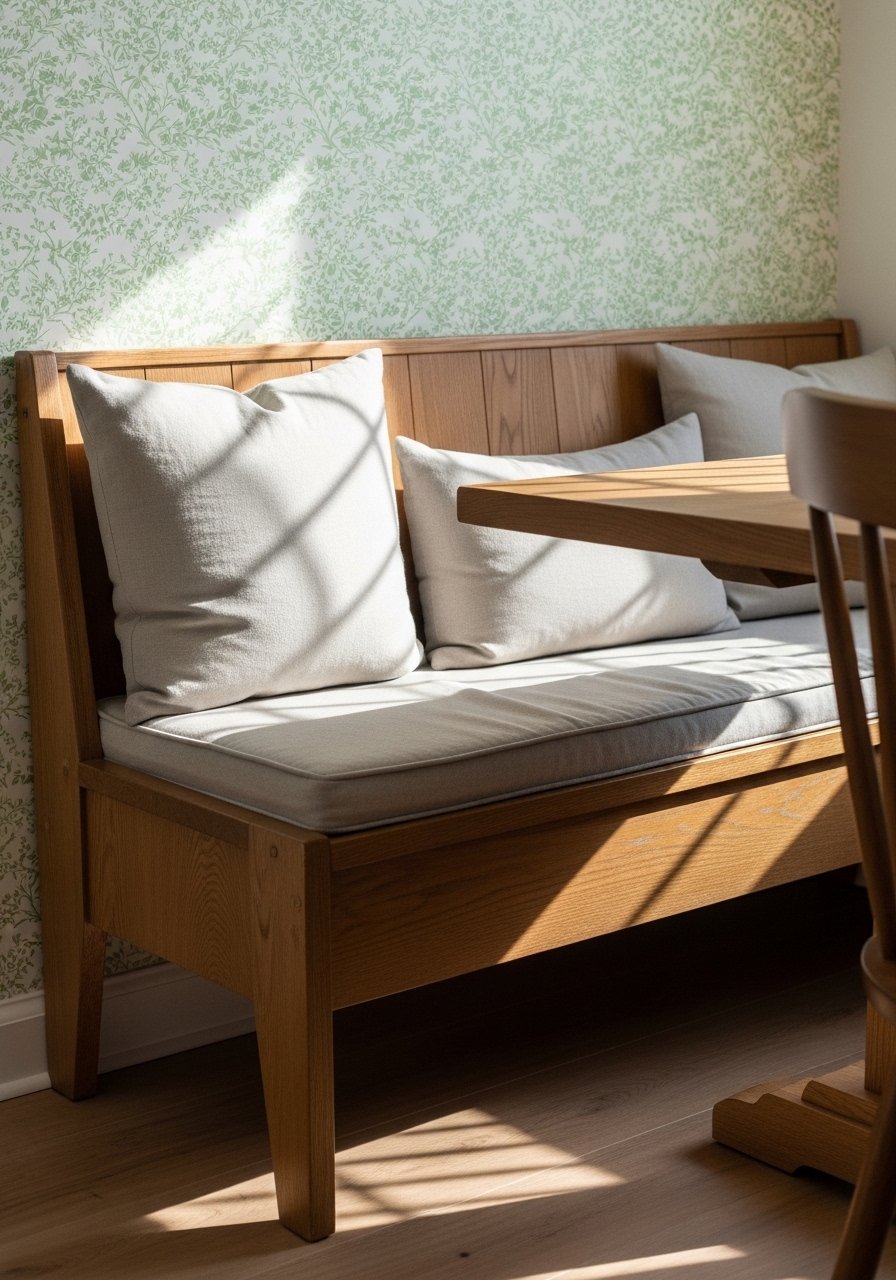
Wallpaper instantly anchors a cottagecore dining nook. I used a peel-and-stick floral panel on one wall behind the table to make the space read intentional, not an afterthought. Budget for a small wall was about $40 to $90 depending on pattern. Bring a physical swatch or color card to compare with your chair cushions because digital photos lie. Over half swear by real swatches at the desk, and testing a 12-inch strip in the afternoon light saved me from a yellow-green surprise. Common mistake: hanging the pattern without matching the scale to the table. If you have a round 42-inch table, choose prints with repeats under 12 inches across. For renters, swap panels out seasonally without pulling paint.
Vintage Plate Gallery for Cottage Dining Walls
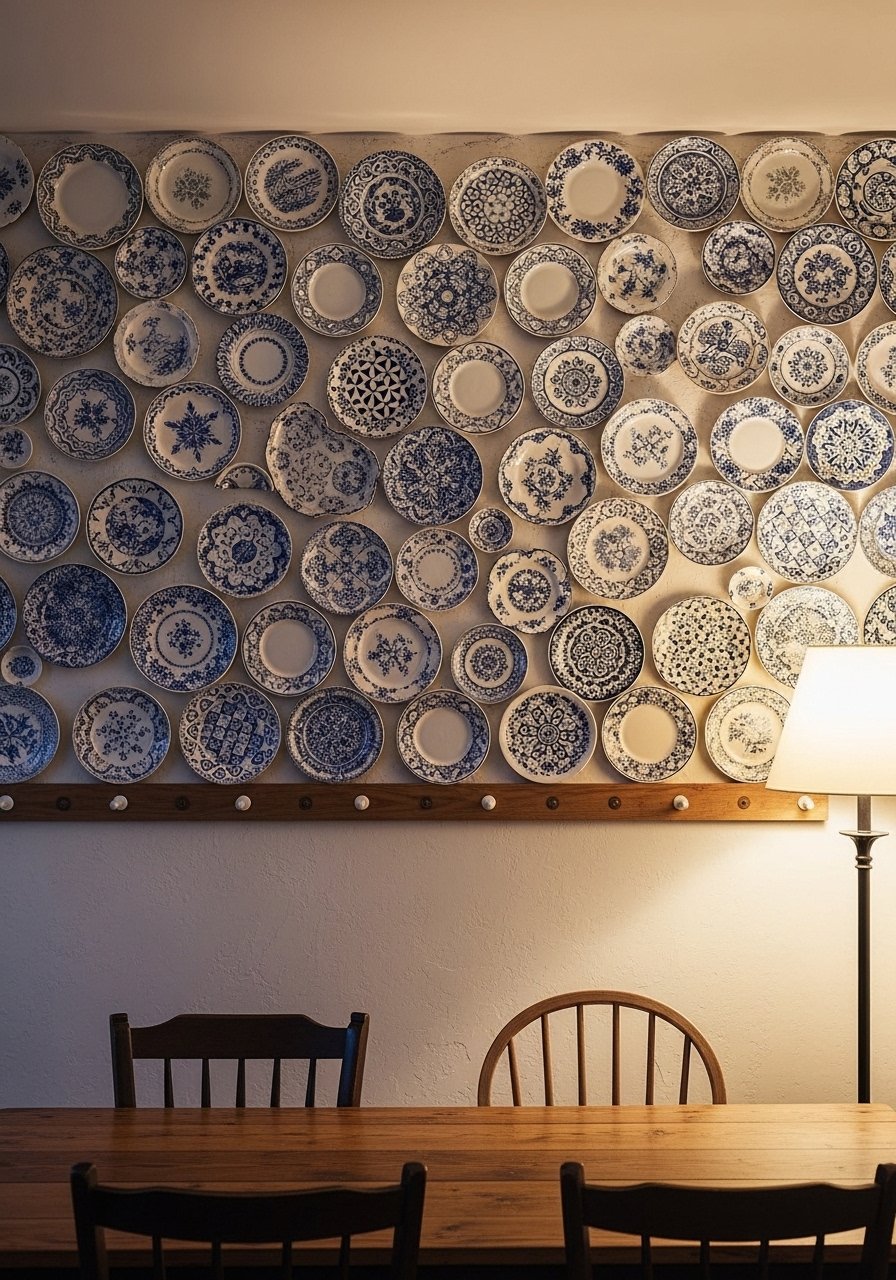
Hanging plates feels old-fashioned in the best way. I collected thrift shop plates and laid them out on the floor until the balance felt right. A good rule is odd numbers and a loose triangle grid that keeps the cluster about two-thirds the width of your table. Budget varies, but you can do a neat wall with $30 in thrift finds and one $20 plate hanger set. A common mistake is spacing plates like uniform frames. Leave 3 to 4 inches between each plate so the grouping breathes. These look great over sideboards or a console in dining rooms that need a touch of pattern.
Dried Flower Hangings with Linen Ribbon
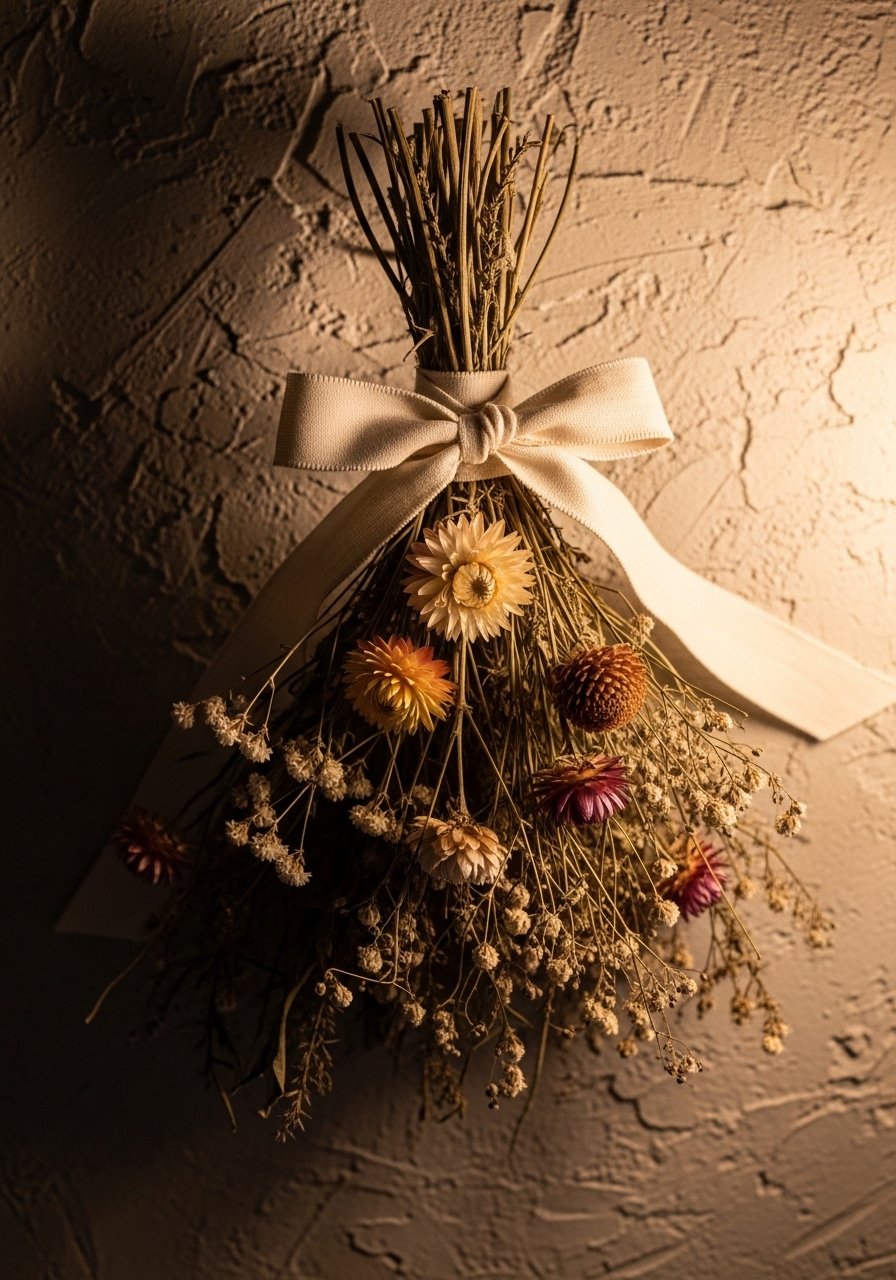
Dried bouquets on the wall are the easiest way to bring garden charm inside. I hang small bunches upside down from a thin wooden dowel tied with linen ribbon. Cost is usually under $25 if you dry your own stems. The visual result is textural and fragile-looking without being fussy. Mistake people make is crowding too many stems together, which becomes a dusty blob. Keep each bundle 6 to 10 inches long and space them 6 inches apart. Change one or two bunches each season to keep the look fresh. Pair this with the framed pressed flowers idea for a layered botanical display.
Open Shelves Styled With Earthenware
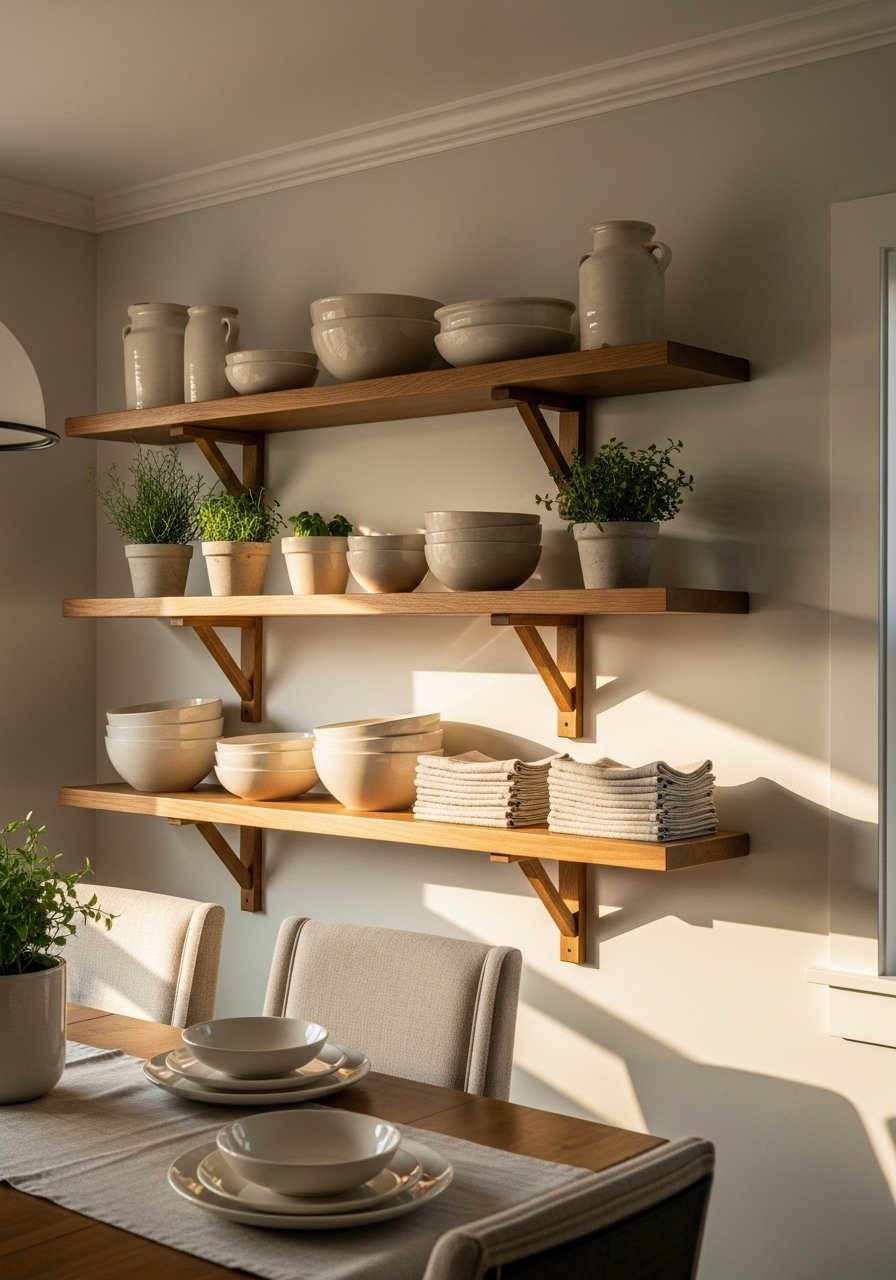
Open shelving gives you a place to show off pottery and tableware, and that immediately whispers cottagecore. I mounted two oak shelves at different heights, keeping lower shelf 12 inches above the table edge so plates are reachable without bumping heads. Budget for solid wood shelves and brackets was about $60 to $120. The trick is to group items in threes and keep one shelf dedicated to everyday dishes. A common error is over-styling with too many odd items. Use at least one foam-core paint sample on the back wall if you plan to paint behind the shelves, because testers dry differently on textured wood than on plaster. These shelves work great in breakfast nooks and small dining rooms.
Framed Pressed Flowers in Vintage Frames

Pressed flowers feel like keeping a little piece of summer on your wall. I pressed blooms between heavy books for a few weeks, then framed them in thrifted gold frames with neutral mats. The result is delicate and personal. Expect to spend $20 to $60 for frames and glass if you shop secondhand. People often skip using acid-free paper and the flowers discolor over time. Use acid-free backing and mount each piece with a small archival hinge and you will keep color longer. A small technical detail I learned: low-iron glass reduces glare, which matters when your dining room has one big window that washes out detail.
Woven Tapestry or Small Rug as Wall Art
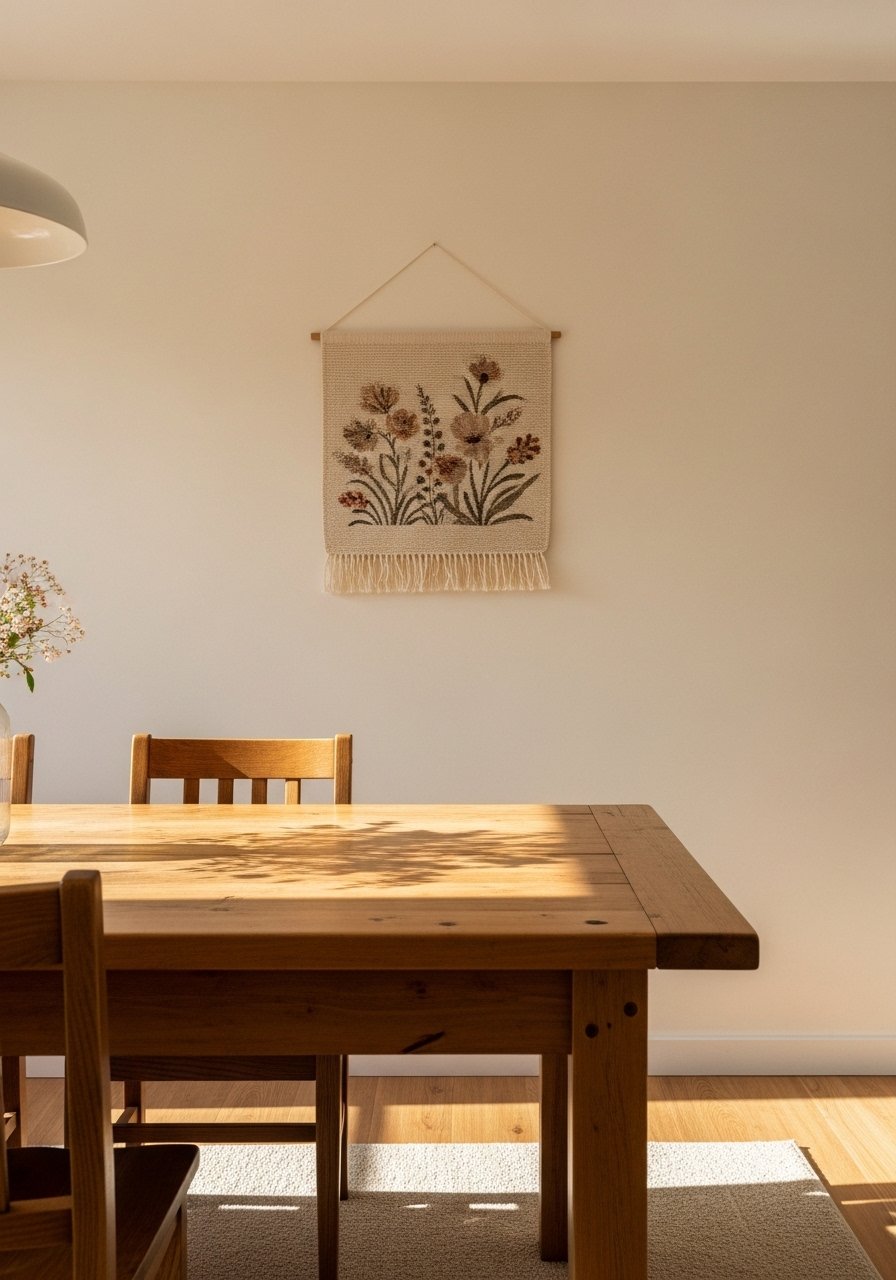
Hanging a small tapestry or rug adds serious texture and sound dampening. I rehung a 24×36 woven runner on the wall above my buffet and the room instantly felt less echoey. Budget is $30 to $120 depending on vintage finds. Mistakes include hanging a floor rug without knowing its weight, which can sag. Use proper anchors and a wooden dowel sewn into the top for even support. Pair this with the wicker mirror idea across from a window so the textile and reflection play off each other.
Wicker Mirror to Bounce Afternoon Light
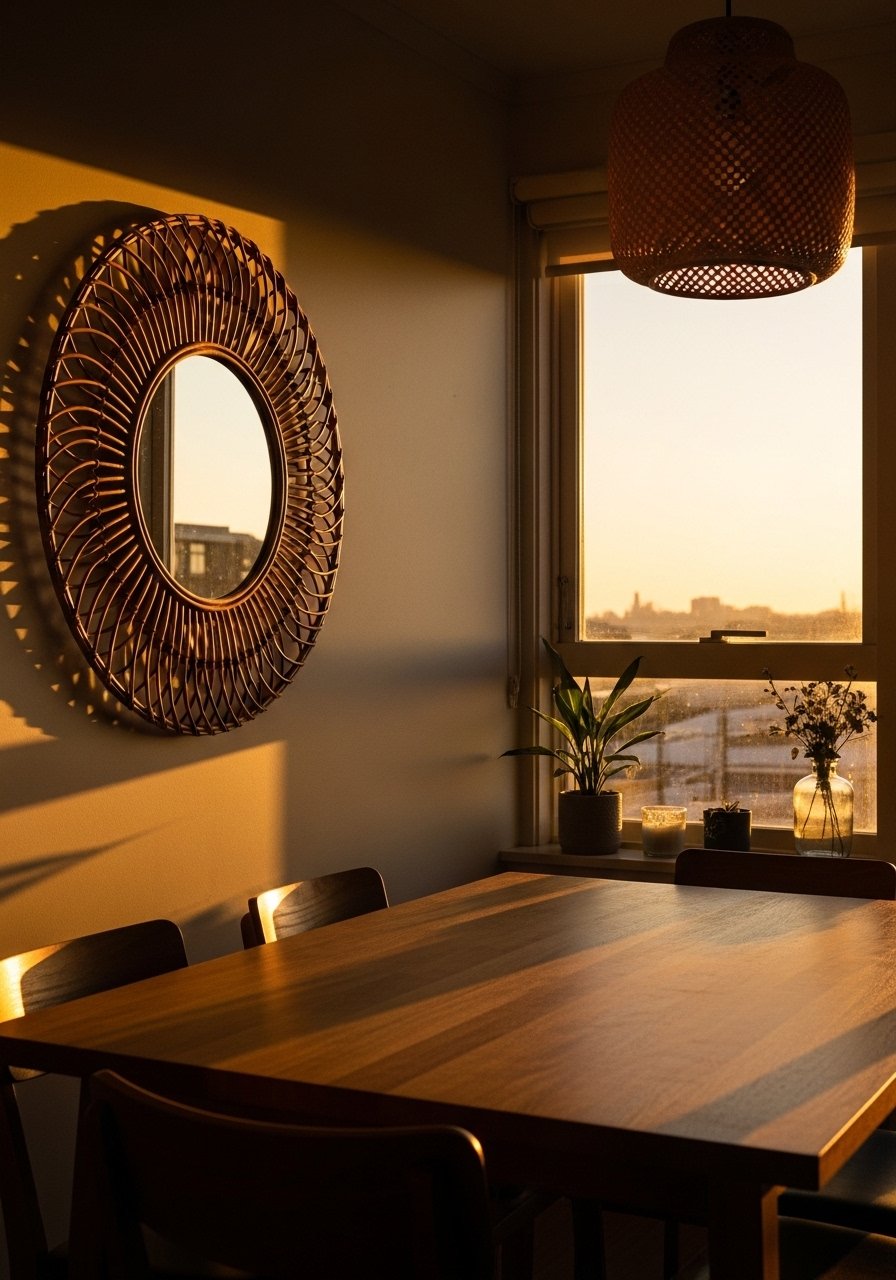
A rattan or wicker mirror brings light and an immediate cottagecore touch. I hung a 30-inch round wicker mirror opposite the window and it doubled the afternoon glow. Price range is $50 to $150 depending on size. Don’t hang a mirror too high. The center should sit about 60 inches from the floor in most rooms so people see themselves naturally. A typical mistake is matching the mirror frame to every other wood tone. Instead, let it be a soft contrast. If you already have a gallery wall, nest the mirror within the grouping rather than forcing it as a standalone focal point.
Pastoral Landscape Prints in Distressed Frames

A pair of small pastoral prints makes a dining wall feel like a window into the countryside. I picked two prints that share a muted color palette and hung them about 4 inches apart, centered above a buffet. Budget for good vintage-looking prints and frames is $40 to $120. The visual result is calming and slightly nostalgic. Common mistake: picking prints that are too detailed for the viewing distance. For walls above a table, choose pieces with broad shapes and simple color blocks. If you want real canvas texture, pick frames with a 1 to 1.5 inch mat to give the print room to breathe.
Macrame Wall Hanging for Texture and Movement
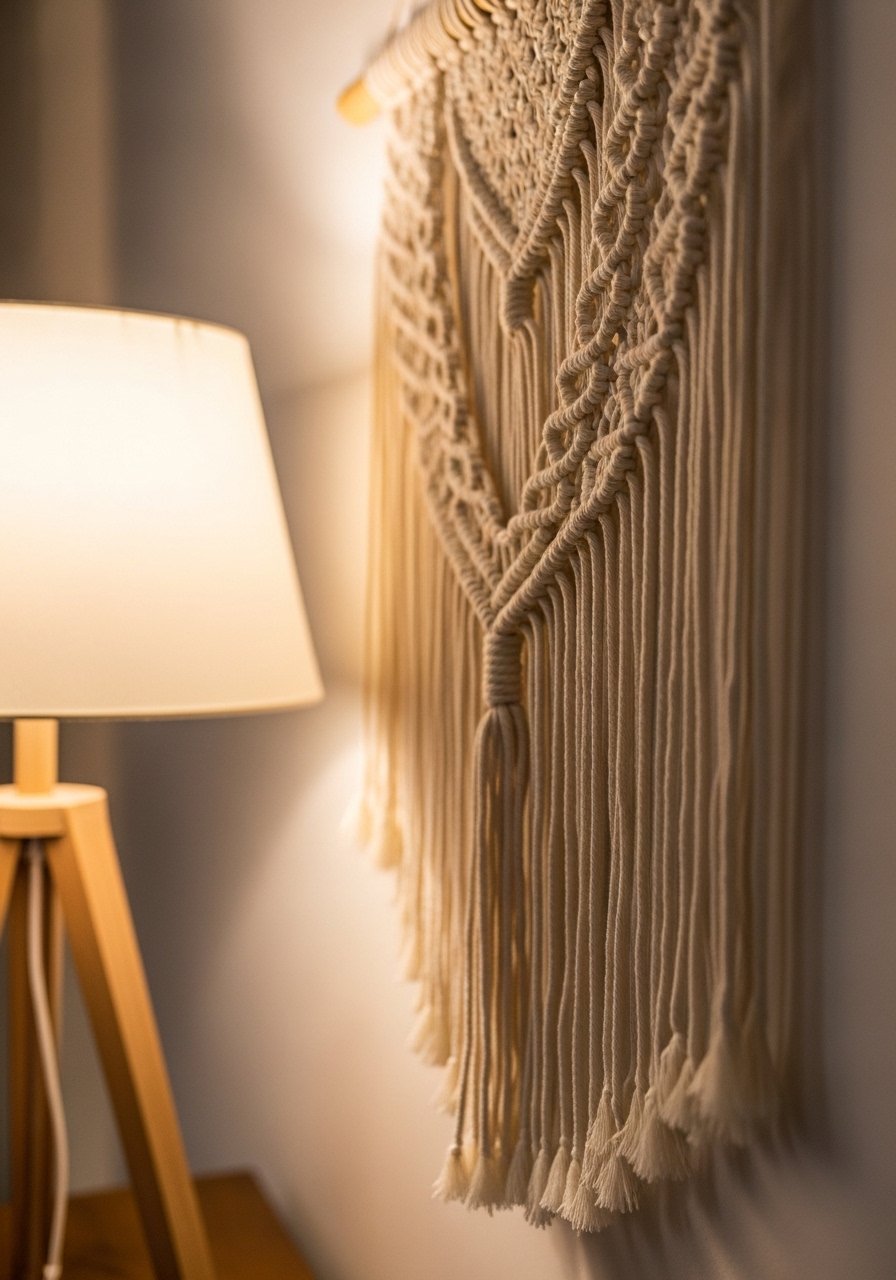
Macrame brings handcrafted texture and motion to a dining wall. I picked a medium 24-inch piece and hung it off-center above my bench seat, which made the room feel casually edited. Most well-made macrame pieces run $30 to $80. People sometimes pick pieces that are too wide for the wall, which flattens the room. Aim for a width about half to two-thirds the width of the furniture underneath. A useful detail is to hang the cord on a small hook that allows easy swapping when you want a seasonal switch. Macrame pairs nicely with the dried flower hangings from earlier.
Painted Plate Rail and Wooden Plate Rack for Functional Styling
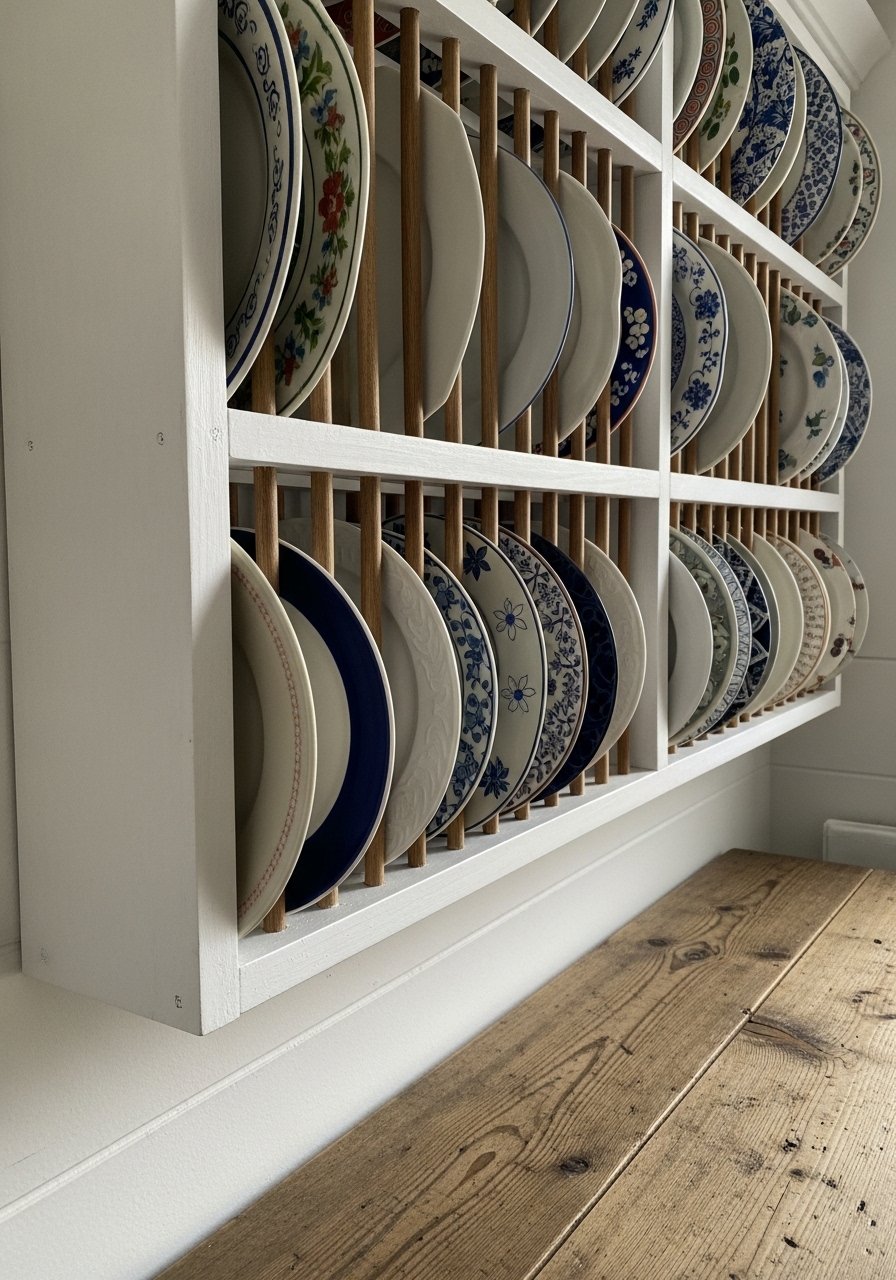
A painted plate rail is practical and pretty. I built a shallow plate rail 6 inches below chair-rail height and painted it in a soft chalky white so antique plates pop. Budget for materials was about $40 for wood and paint, plus time. The rail should sit roughly 36 to 42 inches from the floor depending on table height. A common mistake is making the shelf too deep so plates stick out and get bumped. Keep it 3.5 to 4 inches deep. This idea is hands-on but renter-friendly if you use a freestanding plate rack leaned against the wall instead.
Linen Bunting and Seasonal Textile Swaps for Low-Commitment Charm
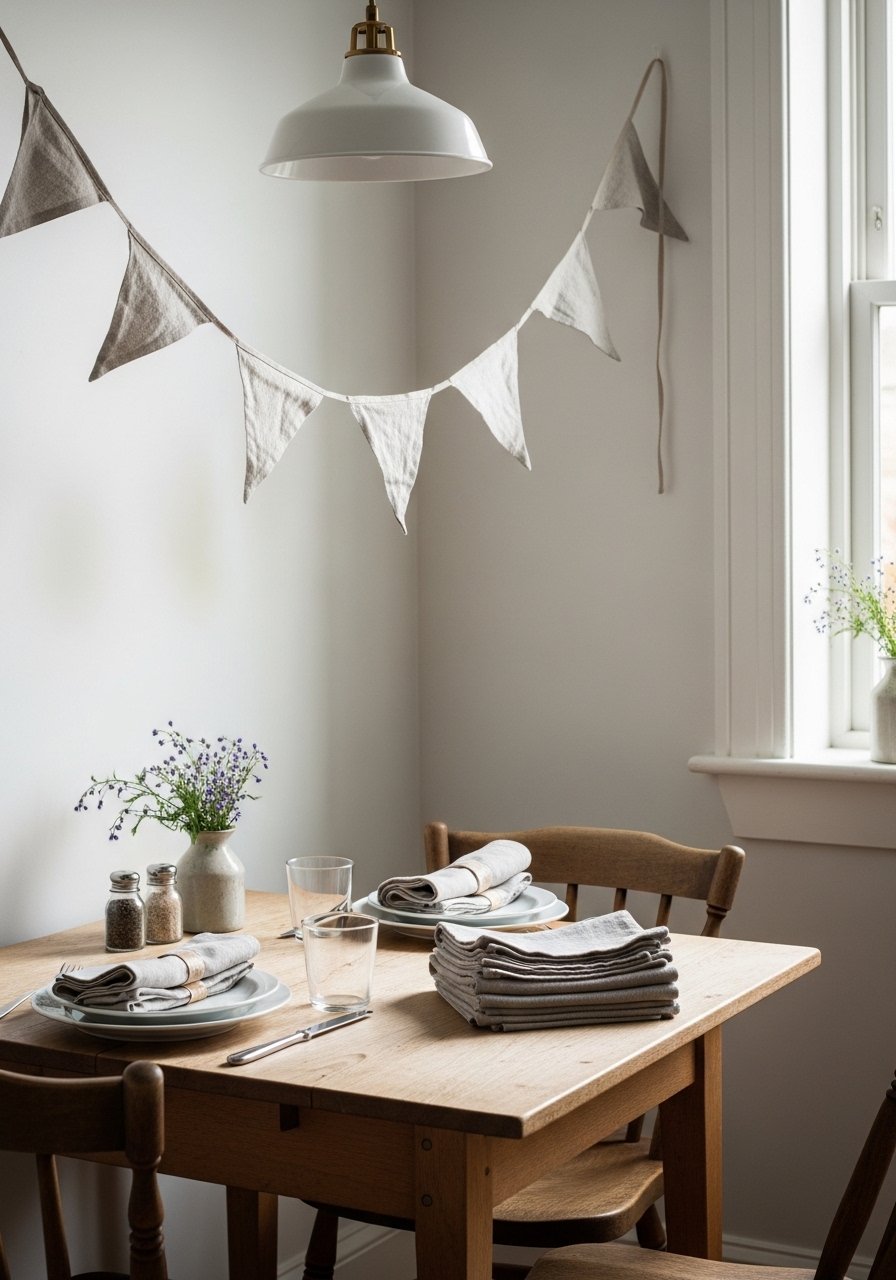
If you want seasonal change without tools, linen bunting is the easiest move. I sew simple flag shapes on a 9-foot linen ribbon and swap the flags for each season. Cost is under $25 for materials. The feeling this creates is casual and ever-changing. The mistake people make is using thin ribbon that curls. Use a 1-inch linen tape and sew the flags so they slide for quick swapping. For renters, this is one of the best low-commitment swaps. You can pair bunting with a small cluster of framed pressed flowers for layered texture.
Your Decor Shopping List
Textiles
- Honestly the best $40 I have spent, Chunky knit throw in cream (~$35-55). Layer over chairs for softness
- For bunting and napkins, Natural linen fabric by the yard (54-inch wide) works well
Wall Decor
- Peel-and-stick floral wallpaper single roll for a small accent wall
- Vintage-style oval wicker mirror, 30-inch (~$60-120)
Shelving and Storage
- White oak floating shelves set, various sizes, solid wood for styling dishes
- Shallow wooden plate rack, 36-inch for functional display
Small Finds and Plants
- Pressed flower framing kit for DIY botanical art
- Medium faux fiddle leaf fig, 5-6 foot if you need height without care
Budget Finds
- Brass picture ledges, set of 2 (~$18-25) for swapping art easily
Shopping Tips
White oak beats dark wood in 2026. Design feeds have shifted. These white oak floating shelves look current, not dated.
Grab peel-and-stick floral wallpaper and test a 12-inch strip in your room for 48 hours. Most folks need two tries to nail a match, so plan a small test first.
For textiles that change the room, buy 22-inch linen pillow covers and swap colors seasonally for under $50.
Curtains should puddle or kiss the floor, never hang halfway up. 96-inch linen panels are the safe bet for standard 9-foot ceilings.
If you want earthenware that looks collected, try rustic ceramic dinnerware set. Four in ten swap brands to save cash and still get the look.
Frequently Asked Questions
Q: How do I test wallpaper color before committing?
A: Buy a roll or sample and stick a 12-inch strip on the wall, then look at it at different times of day. Wait 48 hours and check under morning and evening light. Over half swear by real swatches at the desk, but the room light is the final judge.
Q: Can I mix macrame with framed prints without it feeling messy?
A: Yes, if you keep a consistent scale and a shared color family. Hang the macrame slightly off-center and balance with a pair of small frames on the opposite side. Keep spacing simple, about 4 inches, and avoid tiny frames that compete visually.
Q: What size should my plate gallery be compared to the table?
A: Aim for a cluster width that is about two-thirds the table width. If your table is 48 inches across, make the plate grouping roughly 32 inches wide. Space plates 3 to 4 inches apart so the ensemble reads intentional.
Q: Is a woven tapestry worth the splurge for a dining room?
A: Yes if you want texture and sound dampening. A 24×36 piece works in most small dining areas. Make sure it hangs flush with a wooden dowel or proper anchors so it does not sag over time.
Q: How high should I hang a mirror above a buffet or sideboard?
A: Center the mirror at about 60 inches from the floor, or align the bottom edge 4 to 6 inches above the top of the buffet. That way people see themselves naturally and it reflects light across the table.
Q: Can I do any of these ideas in a rental without damaging walls?
A: Yes. Go peel-and-stick wallpaper, bunting, open shelving on freestanding brackets, or a freestanding plate rack. For frames and lightweight hangings, use removable hooks. If you must paint, test with a peel-off patch board first and plan for touch-ups.