My living room had a lovely sofa but every time guests arrived they stood in the doorway like the room was a museum. I finally realized I needed a place that invited people to gather and slowed the pace. A small bar area did that. Suddenly people sat, lingered, and the room felt lived in.
These ideas lean classic-traditional with a few transitional twists. Most pulls and accent pieces are under $100, with cabinetry and splurges around $300-800. Works for formal dining rooms, finished basements, entry nooks, or small apartments that need personality.
Built-In Mahogany Bar for a Classic Dining Room
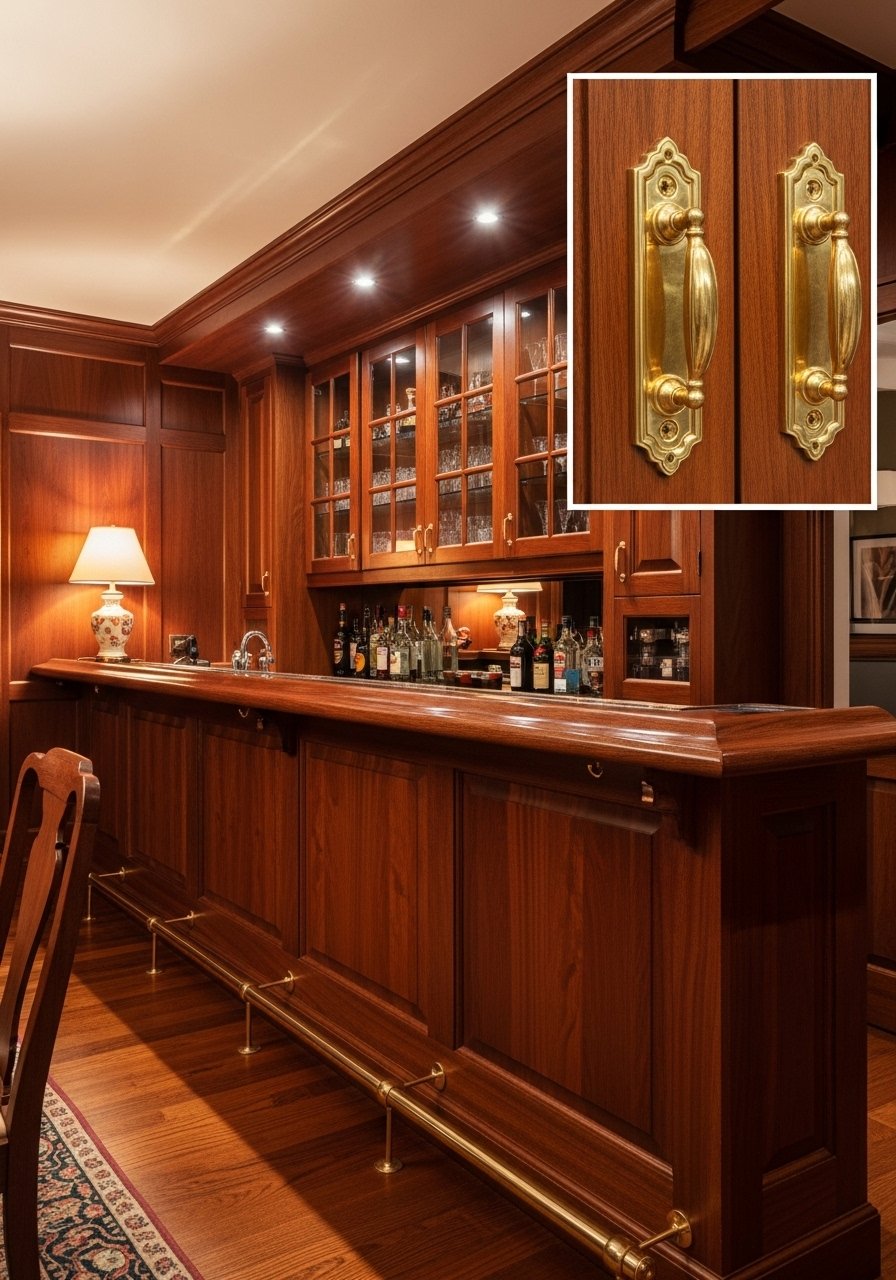
A built-in mahogany bar anchors a formal dining room and feels like it belongs, not like an afterthought. Aim for a 42-inch counter height for standing cocktails and leave 10-12 inches of upper-cabinet clearance so bottle labels stay visible. I paid attention to scale and kept countertop depth to 20 inches so stools don’t crowd the walkway. For hardware I used a brass-cabinet-pull set to warm the wood. Common mistake is shelves too deep, which hides glassware. Pair this with the mirrored backbar idea below for extra light.
Compact Bar Cart for Small Living Rooms
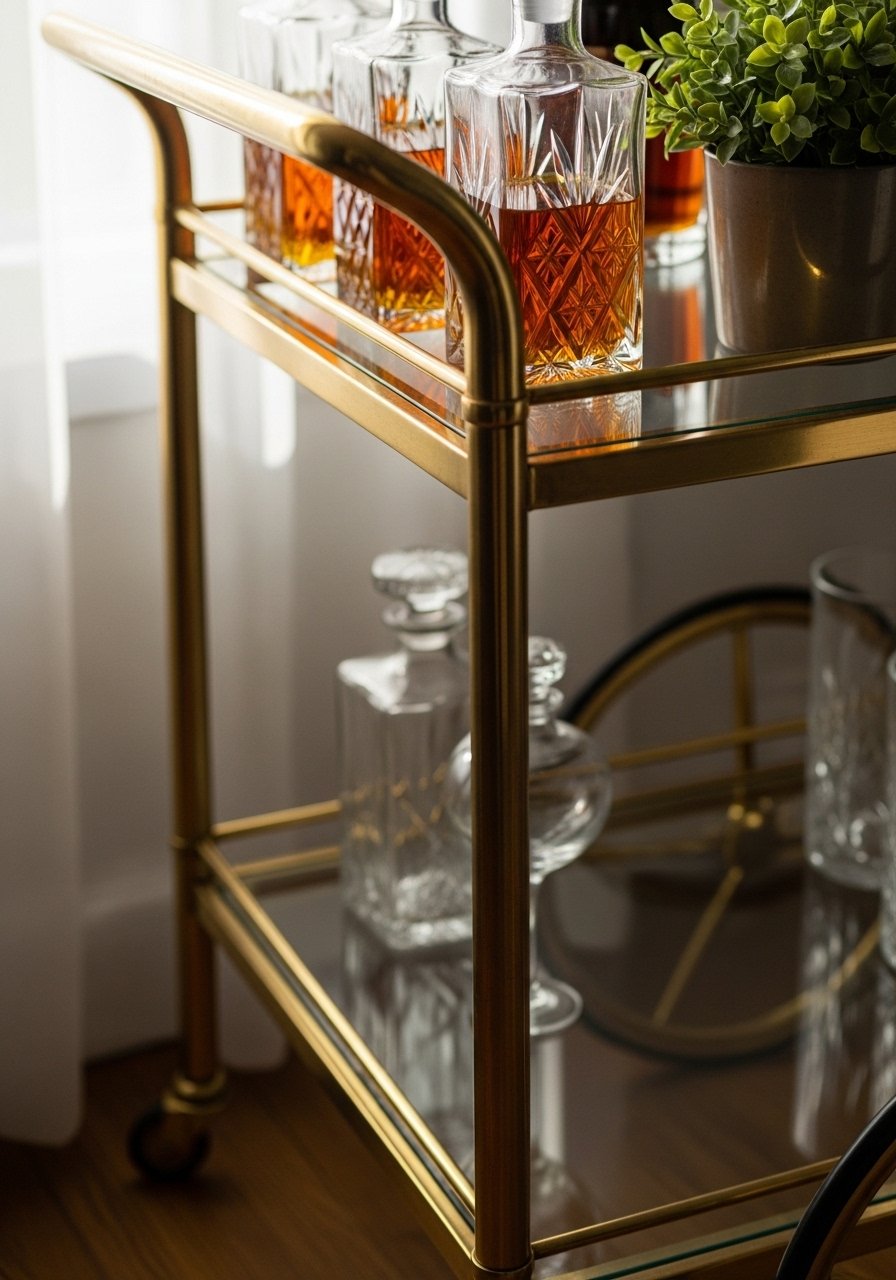
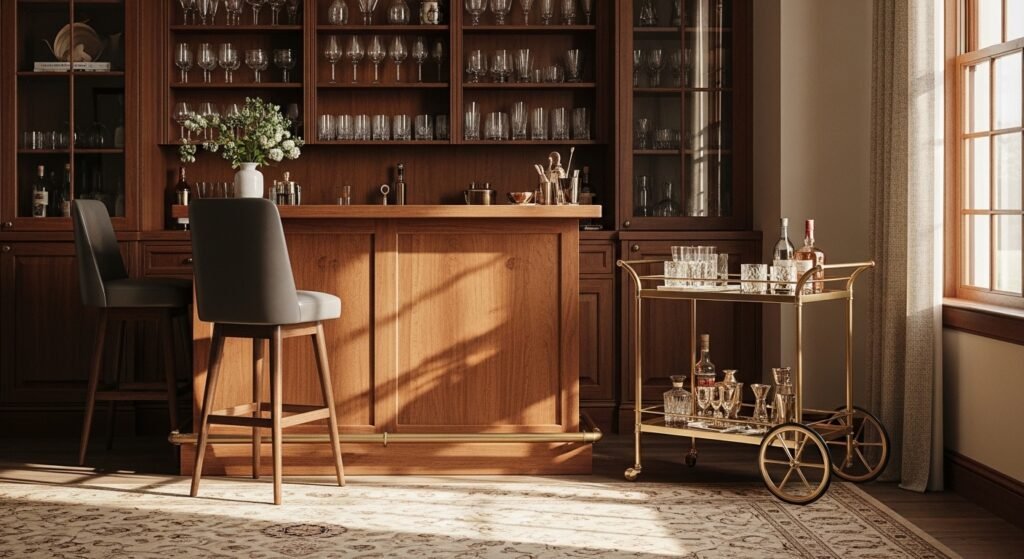
Half the people I know shove a cart into a corner and never style it. A compact two-tier bar cart that is 30 inches wide works great in small living rooms. Keep bottles on the bottom row and glassware on top, with one tray to corral mixers. I bought a brass-bar-cart with-glass-shelves for under $120 and it made cleanup effortless. The common mistake is overfilling the cart. Use the rule of three: three focal items per shelf, then a small accent. This idea lives well next to the console table bar below.
Vintage Cabinet Turned Cocktail Station
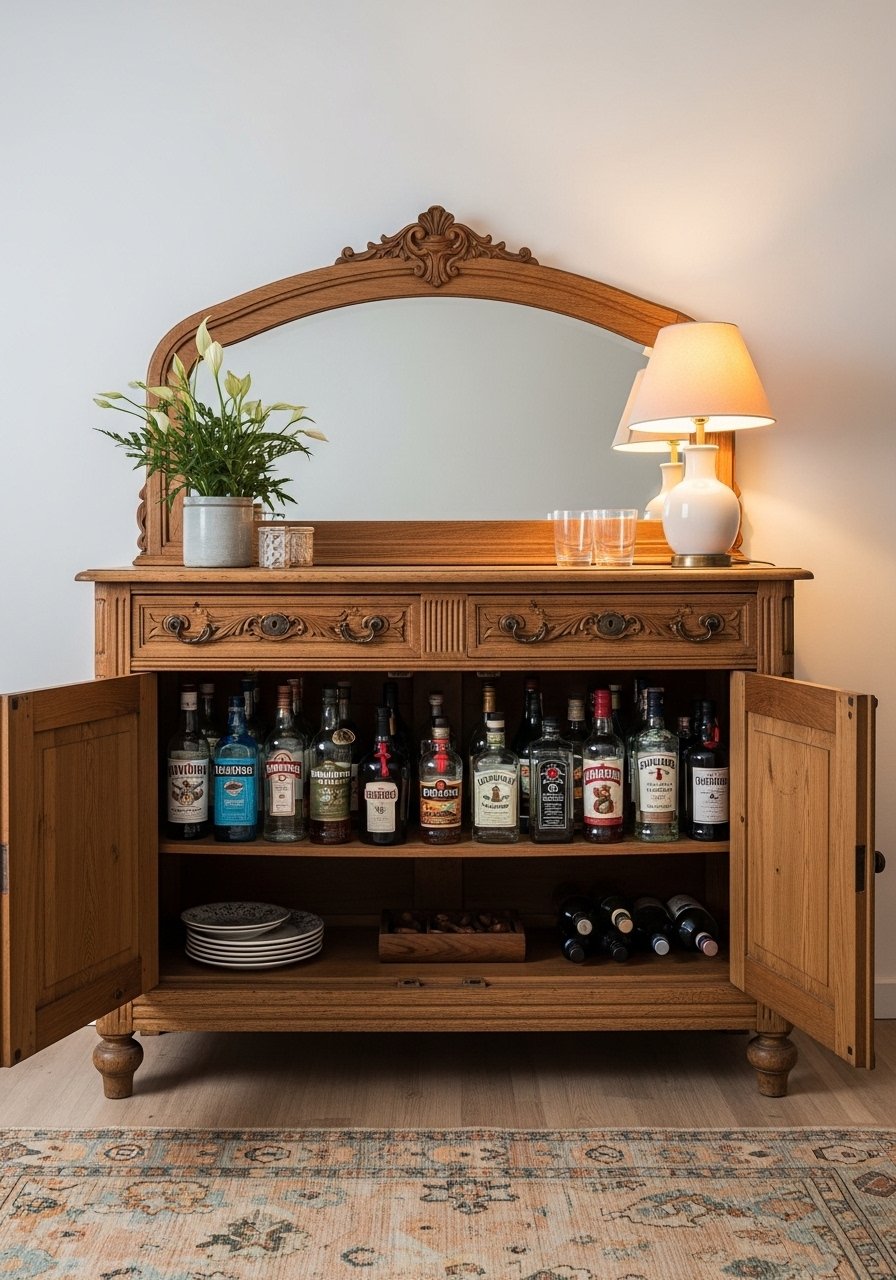
I inherited a sideboard and used it as a cocktail station. Flip one shelf for bottle storage and screw in a trim rail to keep bottles from sliding. For a shabby-meets-classic look, leave the finish a little worn. I recommend a wood-shelf-non-slip-liner to protect the surface. Many people paint antiques all at once. I repainted only the top drawer and left the doors natural to keep character. This works for entryways and dining rooms and pairs nicely with a gallery wall above.
Mirrored Backbar to Brighten Dark Corners
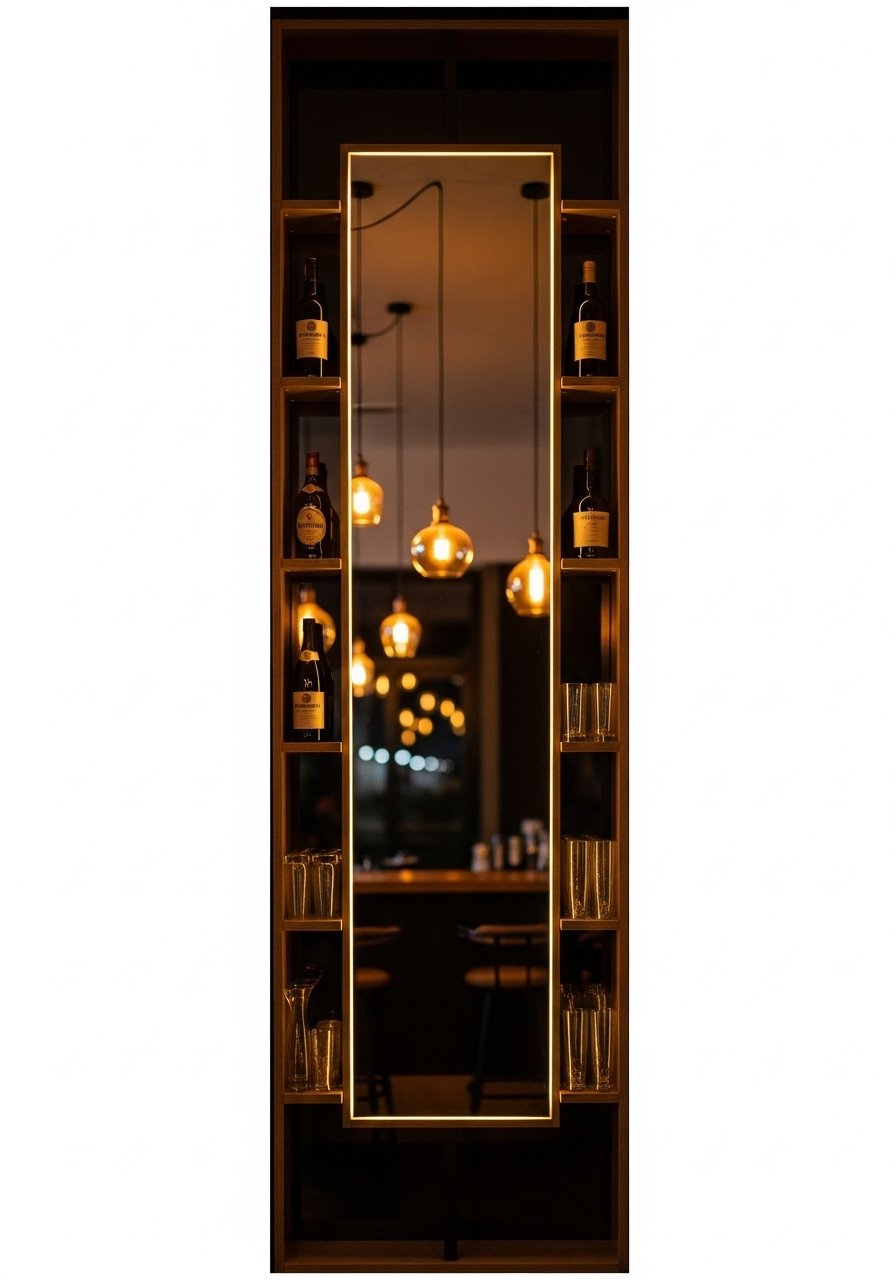
A mirrored backbar doubles visual space and bounces light into shaded corners. Mount a 24×36 inch mirror centered on the back panel and place a warm LED strip about 2 inches under the shelf for even glow. I used stick-on-led-strips warm-white and it changed evening ambiance more than swapping bulbs. Common mistake is using cool LEDs that make spirits look flat. This trick pairs with the glass-front cabinet idea for a more polished look.
Recessed Nook Bar with Floating Shelves

Recessed nooks are gold in older homes. Install floating shelves 12 inches deep and space them 10-12 inches apart so bottles and stemware both fit. I cut a shallow plywood lip on each shelf so glasses don’t tip during doors closing. For a clean finish use white-oak-floating-shelves 12-inch. Too many people cram the niche, which kills negative space. Keep one shelf intentionally sparse to let a favorite decanter breathe.
Butler’s Pantry Style Serving Bar for Entertaining
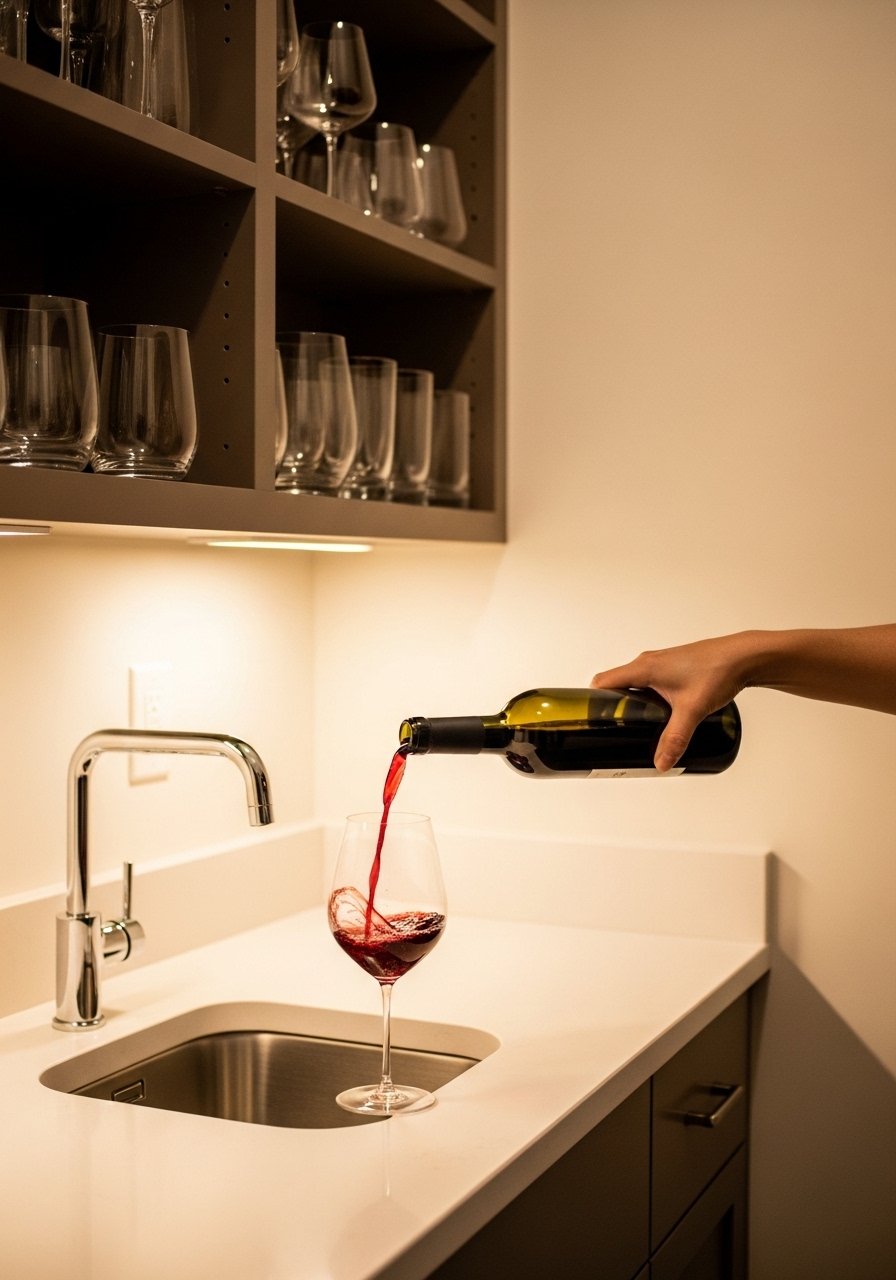
A butler’s pantry style setup with a small prep sink and a 36-inch working counter makes hosting easier. I installed a shallow prep sink and left a 2-foot clear countertop for cocktail prep. Save space with wall-mounted bottle openers and a stainless-steel-bar-sink single-bowl. Many people forget a sponge and small tray to catch spills. This idea is the most functional for dinner parties and plays nicely with the recessed niche from earlier when you need overflow storage.
Wine-Display Wall with Horizontal Racks
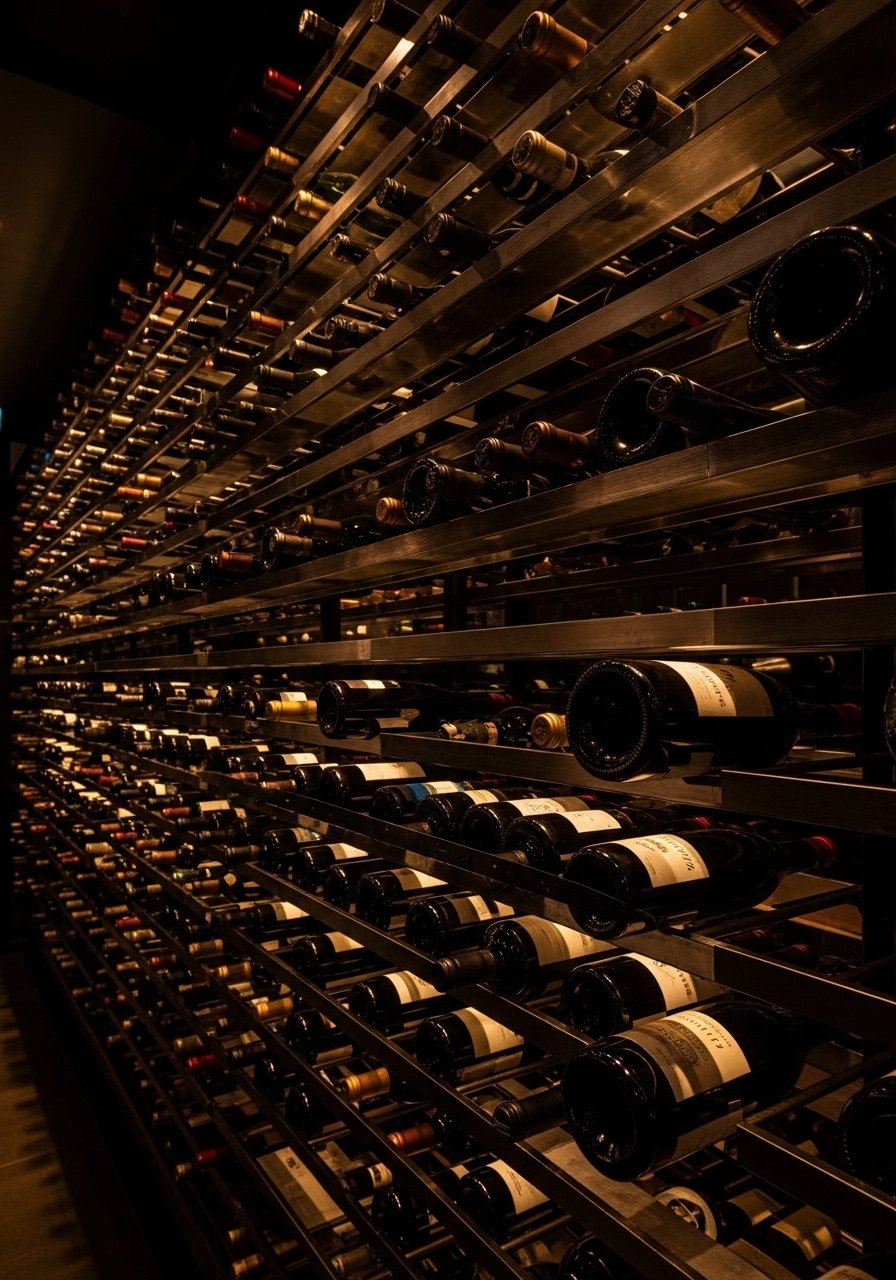
A wine-display wall looks custom without being custom if you use horizontal racks spaced 5.5 inches apart to fit standard bottles. I staggered racks in groups of three to avoid monotony. For tight budgets try a wall-mounted-wine-rack set. A mistake I kept making was letting labels face different directions. Always face labels out for a curated look. This approach doubles as wall art in dining rooms and basements.
Glass-Front Cabinet with Underlighting for Display

Glass-front cabinets keep dust off heirloom glass and let you show off favorites. Use 3000K undercabinet LEDs and place them 1 inch behind the cabinet lip so light hits glassware, not your eyeballs. I mounted battery-operated-cabinet-leds warm-white for easy control. The common misstep is cluttering the shelves. Keep two statement pieces per shelf and leave negative space. Pair this with the mirrored backbar for depth.
Console Table Bar for Entryways That Invite Guests
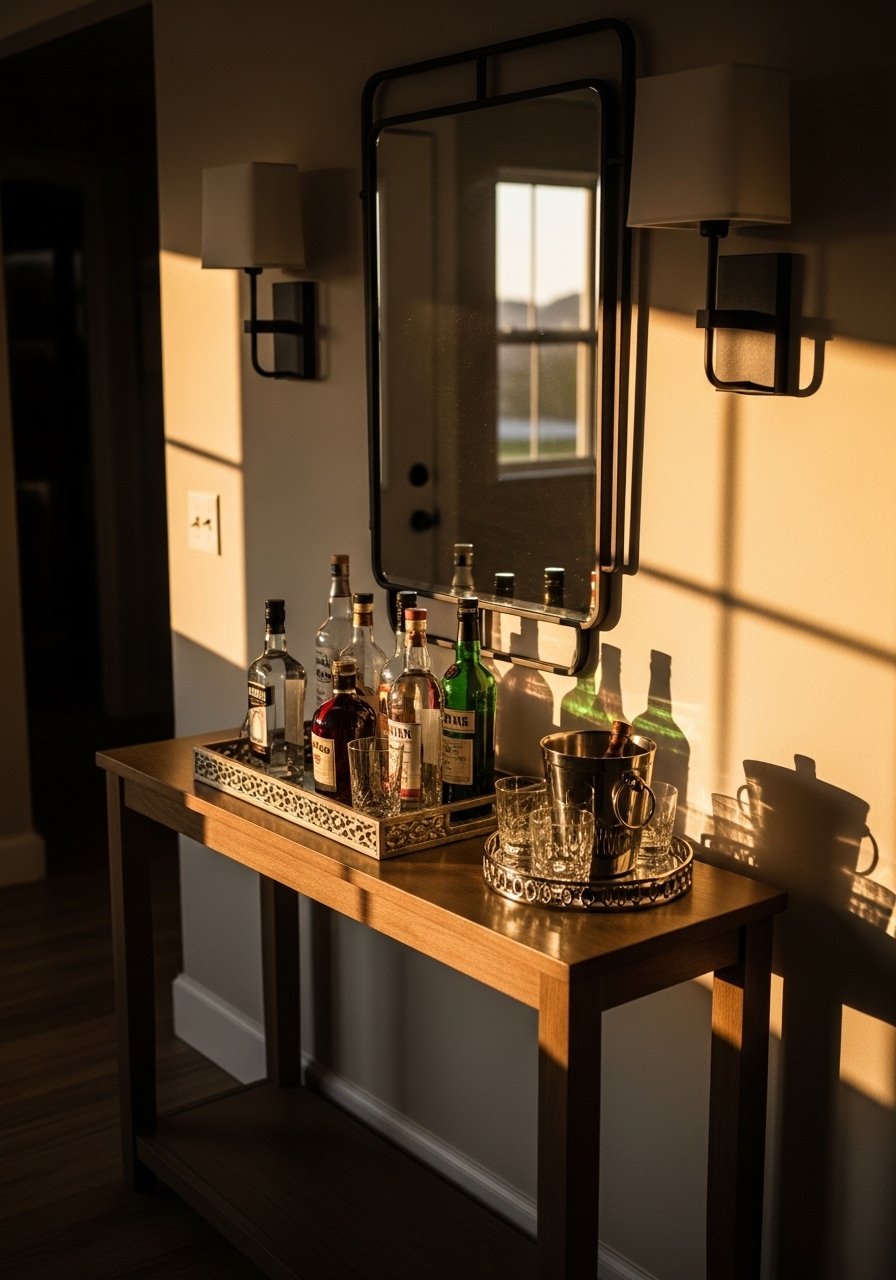
My entryway used to be a drop zone for junk. Swapping in a handsome console table and a tray for spirits changed traffic patterns immediately. Choose a table 30-36 inches high and keep one drawer for corks and napkins. I keep a stainless-steel-cocktail-shaker set in the drawer so impromptu cocktails are simple. Mistake people make is leaving the table too crowded. One tray, one plant, one focal lamp is all you need. This is a great companion to a cart if you need mobile service.
Whiskey Tasting Corner with Leather Chairs

There is something about leather chairs that asks for a quiet drink. I created a whiskey corner with 24-inch side table height and comfortable 18-inch seat height chairs. Display decanters on a walnut-serving-tray 18×12 so you can move tastings to the table when needed. A mistake is choosing chairs that are too formal. Pick chairs with a slight recline for relaxed conversation. This idea shines in basements or corners off the dining room.
Fold-Down Wall Bar for Tight Urban Apartments
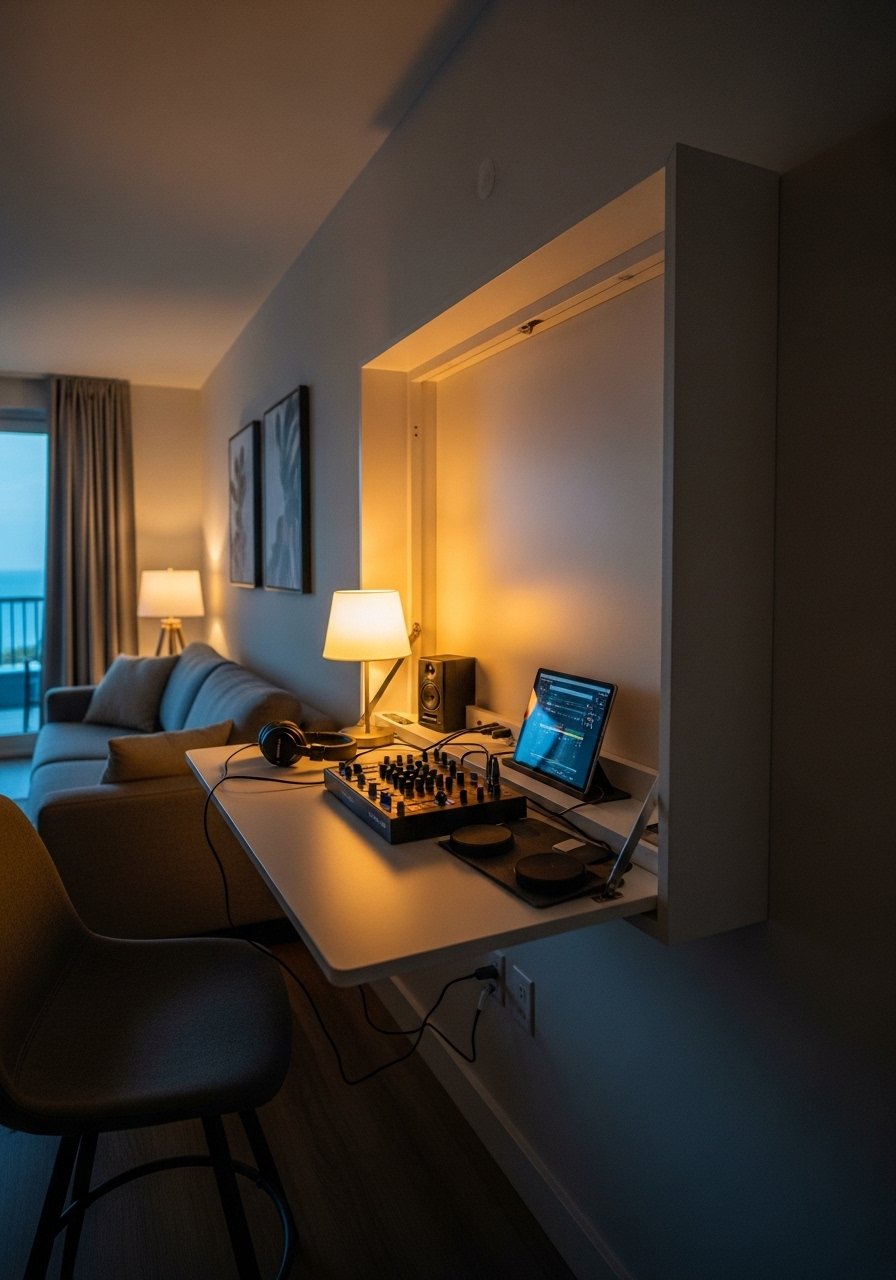
In an apartment I had zero floor space. A fold-down wall bar that closes flat gives you a little magic. Mount it at 42 inches high and add a small lip so glassware doesn’t slide when you open it. I wired a portable-battery-led-strip warm-white inside for soft glow. Common mistake is underestimating clearance when folded up. Measure the swing and leave 2 inches. This pairs well with the compact bar cart for parties where you need extra pours.
Open Shelving Bar with Mixed Glassware for a Collected Look
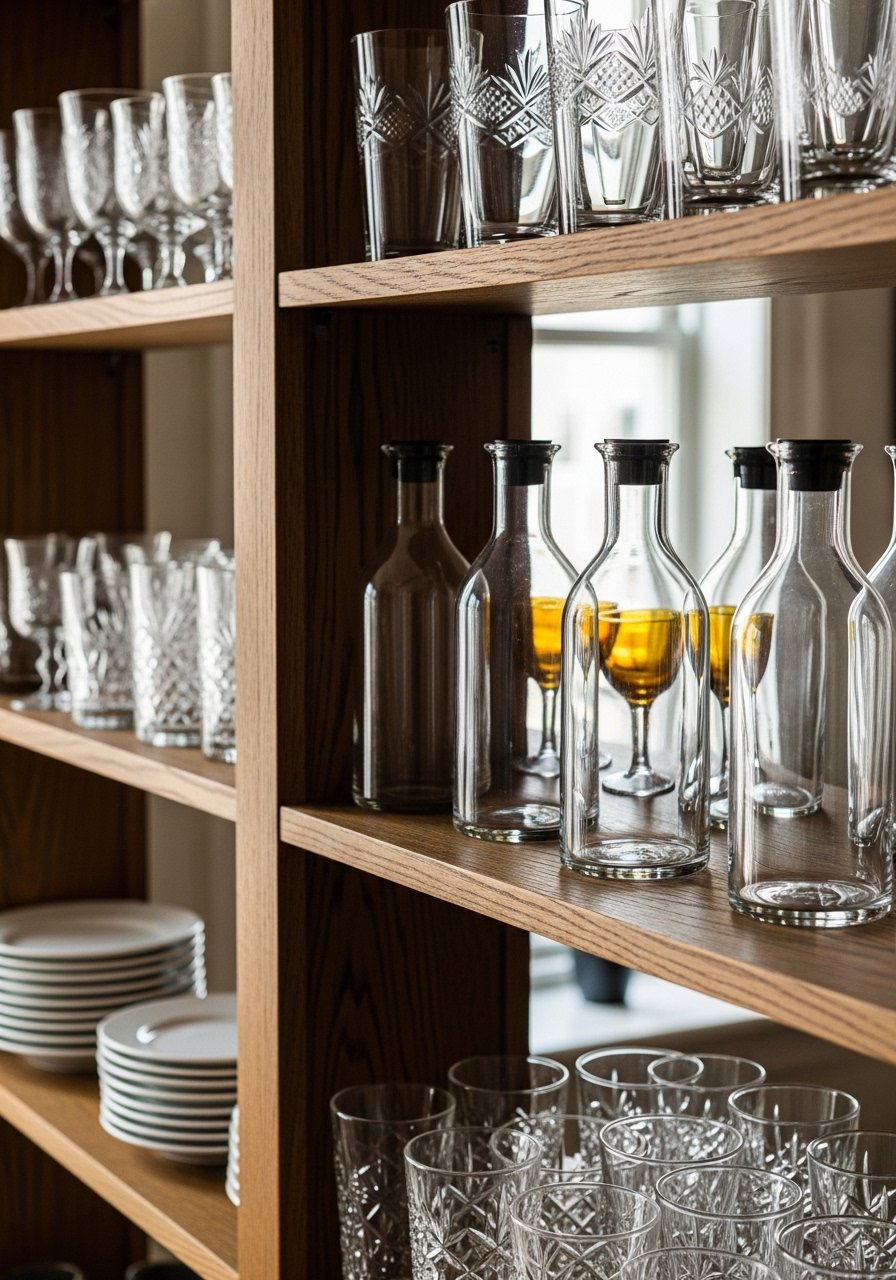
Open shelving makes your bar feel curated, not staged. Mix vintage cut glass with modern carafes and keep three to five stems per cluster. I stagger shelves at 12, 24, and 36 inches to break rhythm and used glass-decanter set of-3 for variety. Many articles advise strict matching, but a little mismatch reads intentional. A small detail most people miss is angling wine glasses toward the room by 10 degrees so they catch light when you walk by.
Outdoor Covered Bar for Patio Nights
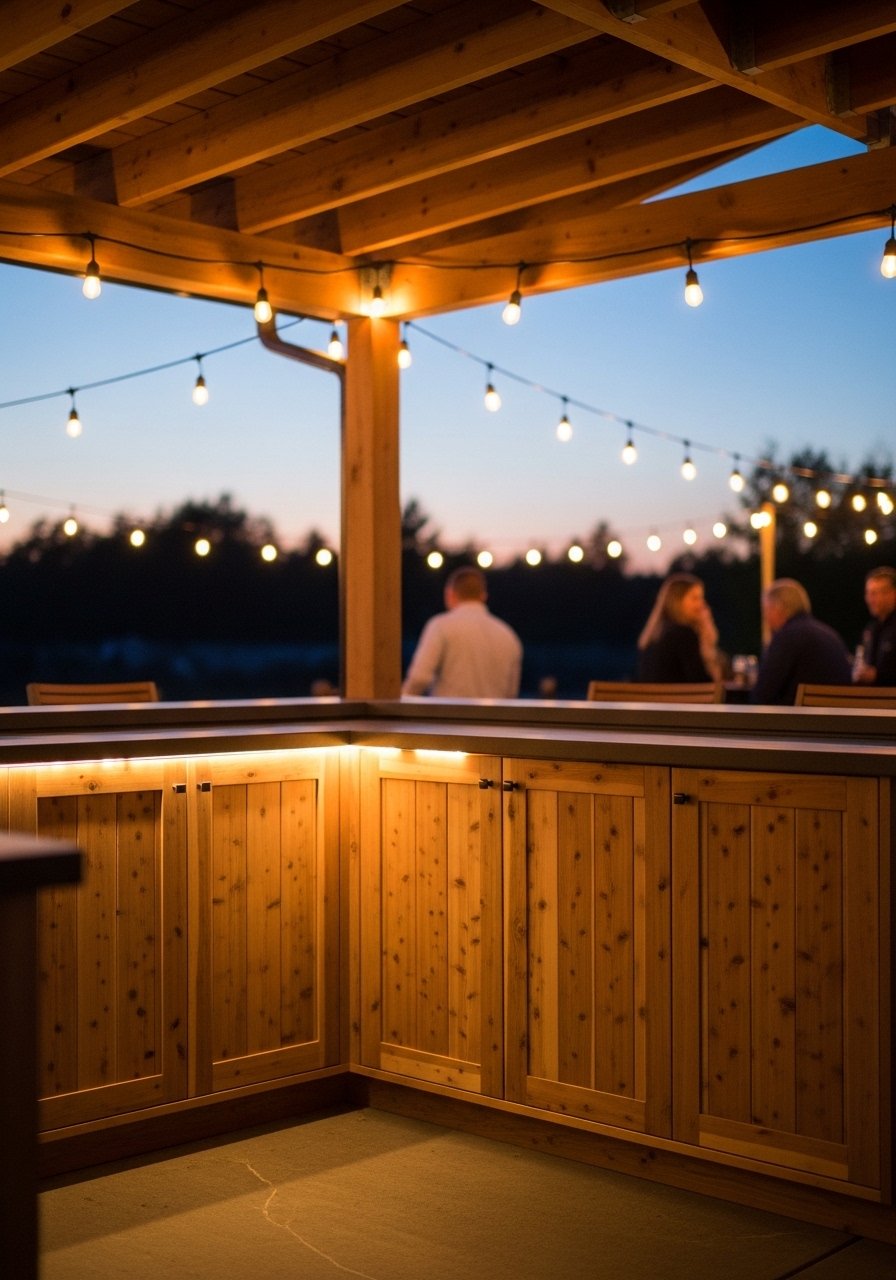
An outdoor covered bar extends entertaining into summer nights. Choose cedar or teak cabinets and seal open shelving with a water-resistant finish. I left 18 inches between countertop and shelves so outdoor glassware fits even with stems. For durable lighting I used outdoor-rated-led-puck-lights. People often forget airflow near the grill. Keep the bar at least 3 feet from heat sources. This setup works great if you rotate between indoor and outdoor hosting.
Your Decor Shopping List
Textiles
- Honestly the best $40 I have spent. Chunky-knit-throw in cream (~$35-55). Toss over a bar stool for texture
- Velvet-pillow-covers 22×22 set-of-2 in deep green for a traditional accent, down-fill recommended
Wall Decor
- 24×36-framed-mirror beveled for mirrored backbar applications, hang centered at counter height
- brass-picture-ledges set-of-2 (~$18-25). Lets you swap prints without extra holes
Lighting
- stick-on-led-strips warm-white cool-dimming for shelves and cabinets
- table-lamp with-brass-base linen-shade (~$45-90) for console table bars
Serving & Tools
- stainless-steel-cocktail-shaker set for your console or cart
- glass-decanter set-of-3 to create focal points
- walnut-serving-tray 18×12 for mobility, similar options at Target
Budget Finds
- brass-bar-cart-with-glass-shelves (~$100-150)
- white-oak-floating-shelves-12-inch (~$40 each)
Shopping Tips
White oak beats dark wood in current feeds. These white-oak-floating-shelves 12-inch look current, not dated.
Grab brass-cabinet-pull set for $20-40. Swapping hardware is one of the fastest ways to change a bar’s personality.
Curtains should kiss or puddle the floor, never hang halfway up. Linen-curtains 96-inch panels are right for standard 9-foot ceilings.
One large plant beats five tiny succulents. Try a faux-fiddle-leaf-fig 6ft for scale without maintenance.
Buy one real heirloom glass and two budget pieces. Cut-glass-decanter single plus a set of glass decanters helps you balance cost and authenticity.
Frequently Asked Questions
Q: What counter height should I use for a home bar?
A: For a standing cocktail bar go 42 inches. For a seated bar choose 36 inches. Standard bar stools for 42-inch counters are about 29-30 inches seat height.
Q: Can I mix modern pieces with traditional wood without it looking messy?
A: Yes. The trick I use is a 80/20 balance. Keep 80 percent classic materials like wood and brass, and 20 percent modern accents such as a sleek lamp or geometric tray. That small modern touch prevents the space from feeling dated.
Q: How do I stop my bar cart from looking cluttered?
A: Give each shelf a purpose and leave negative space. Keep bottles below, glassware above, and one tray for mixers. I leave one item intentionally out of rotation so the cart never feels overstuffed.
Q: What lighting temperature should I use in glass-front cabinets?
A: Aim for 2700K to 3000K. Warm white shows amber spirits best. Battery-operated strips like battery-operated-cabinet-leds warm-white are easy if you can’t wire the cabinet.
Q: Is it better to use real plants or faux in a bar area?
A: Both. Real plants bring life if you have light and want low maintenance picks like a snake plant. Use a faux-fiddle-leaf-fig 6ft where height matters but light does not.
Q: How far apart should floating shelves be for bottles and stemware?
A: Space shelves 10-12 inches apart to fit bottles and wine glasses comfortably. For decanters allow 12-14 inches. I usually measure with a bottle and a stem glass before final installation to avoid surprises.