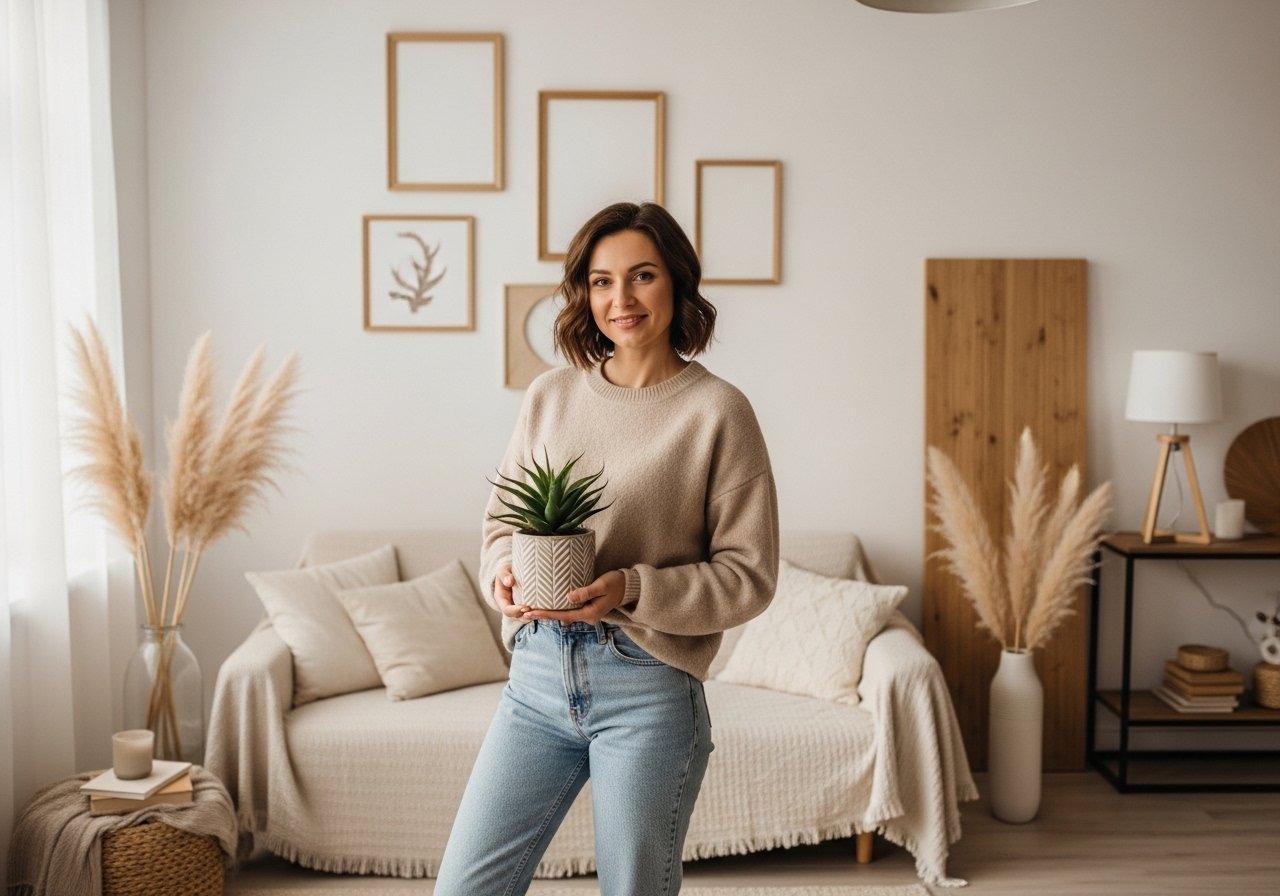

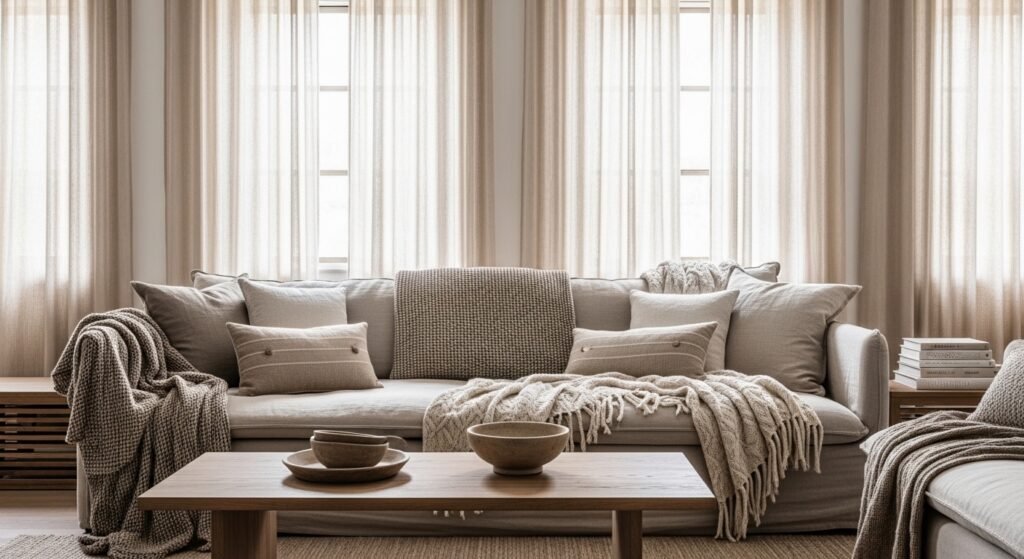
My living room had nice furniture and decent lighting but it still felt like a waiting room. Took me embarrassingly long to figure out it was missing texture. Every surface was smooth, every color was flat, and nothing invited you to actually sit down. What fixed it were small, cheap swaps and one careful rearrange that made things feel intentional instead of leftover.
These ideas lean modern, relaxed, and slightly rustic. Most items are under $75, with a few splurges around $150. They work for living rooms, family rooms, or any spot that needs to stop feeling like a showroom and start feeling like home.
Layered Neutrals With One Warm Accent (cozy living room)
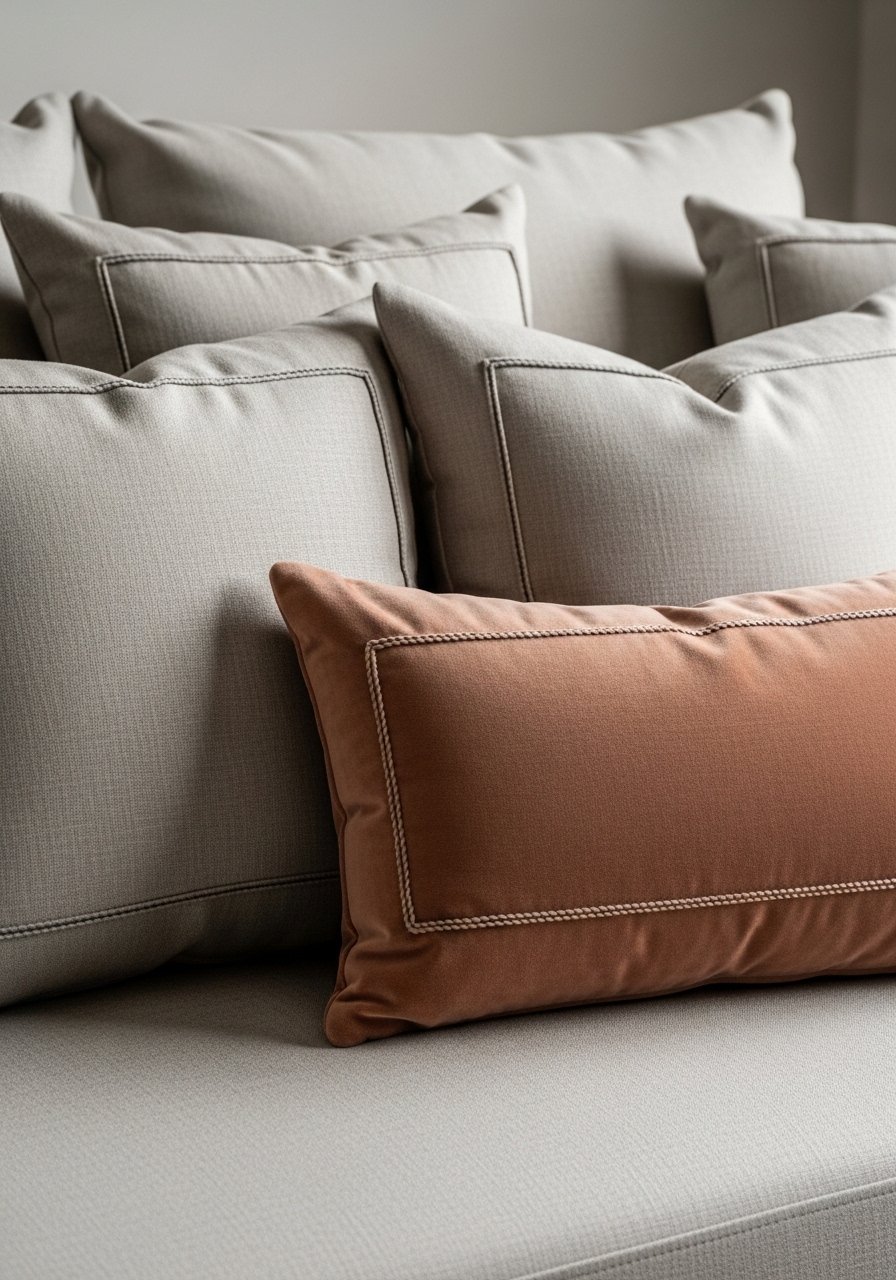
The moment I added a single terracotta pillow the room stopped reading flat. Start with a base of three neutrals, then pick one warm accent color at about a 60/40 neutral to accent ratio and keep it to upholstery or a large pillow. For pillows I like velvet pillow covers in 22-inch sizes layered over linen shams. Budget here is $30 to $80 depending on inserts. A common mistake is matching every pillow to the sofa exactly. Keep contrast subtle so the accent reads intentional. Small detail most people skip, use one accent in a matte texture and one in a sheen so the color holds in both daylight and lamp light.
Texture Mix: Chunky Knits, Linen, and Low-Pile Rugs (touchable living room)
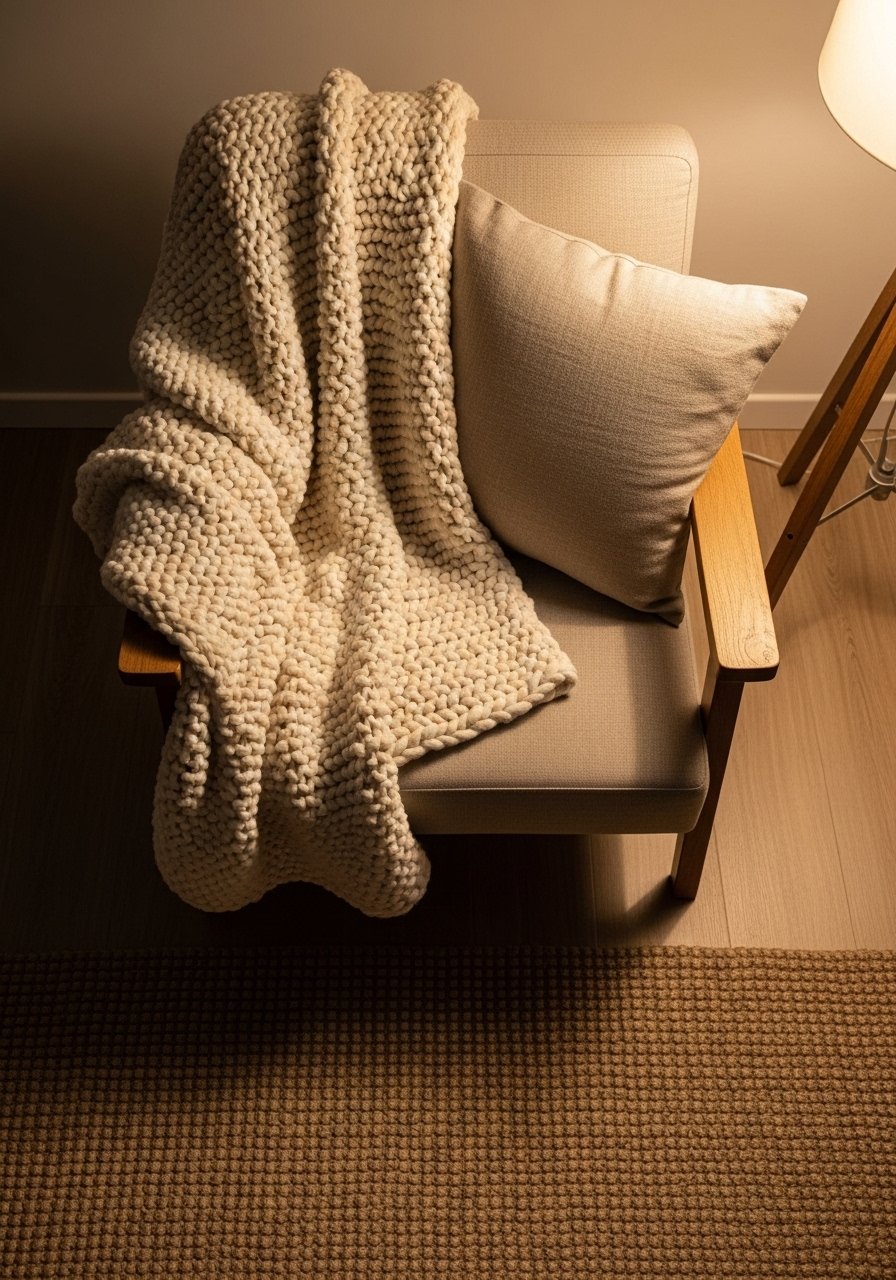
The moment I draped a chunky knit throw over the arm of my gray sofa, the whole room stopped looking flat. Layer at least three textile weights, for example a low-pile jute rug, a 22-inch linen pillow, and a chunky knit throw. I use chunky knit throws in cream around $35 to $55. One mistake is matching textures to the point they cancel each other out. Avoid every soft thing being the exact same color. A useful measurement is a 2:1 texture ratio where two smooth pieces meet one heavy knit. That tiny rule stops the visual monotony and invites people to sit down.
Floor-To-Ceiling Curtains To Add Height (modern living room)
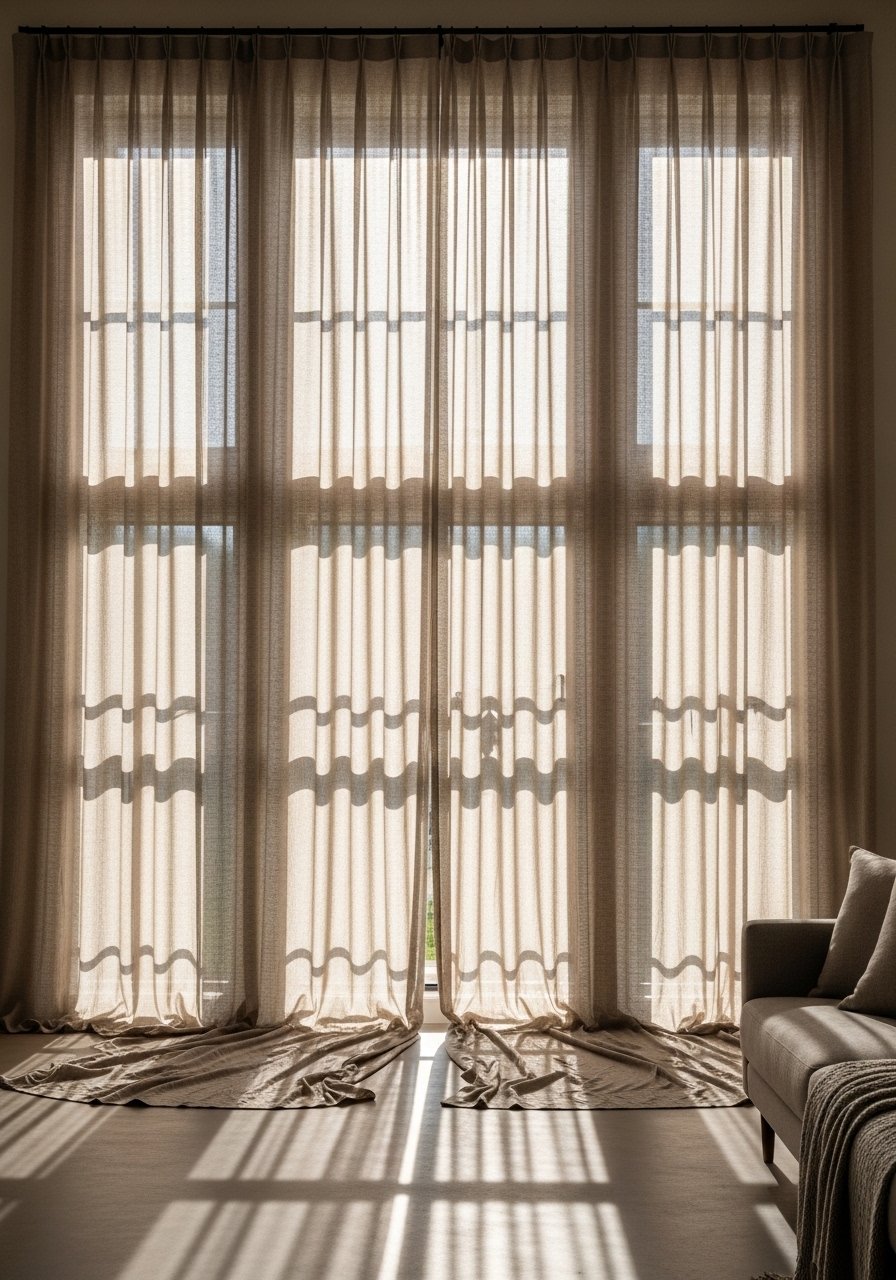
Most people hang curtains right at the window frame. That is why their rooms look shorter than they are. Hang curtains as close to the ceiling line as possible and choose 96-inch or 108-inch panels for 9-foot ceilings so fabric either kisses or puddles on the floor. For my living room I switched to linen 96-inch panels for about $30 to $50 per panel and the room instantly felt taller. Avoid thin panels that let everything through unless you have blinds underneath. A detail many articles skip, use a double rod so sheers can soften daylight while heavier panels control evening glare.
Oversized Mirror To Brighten Dark Corners (bright living room)
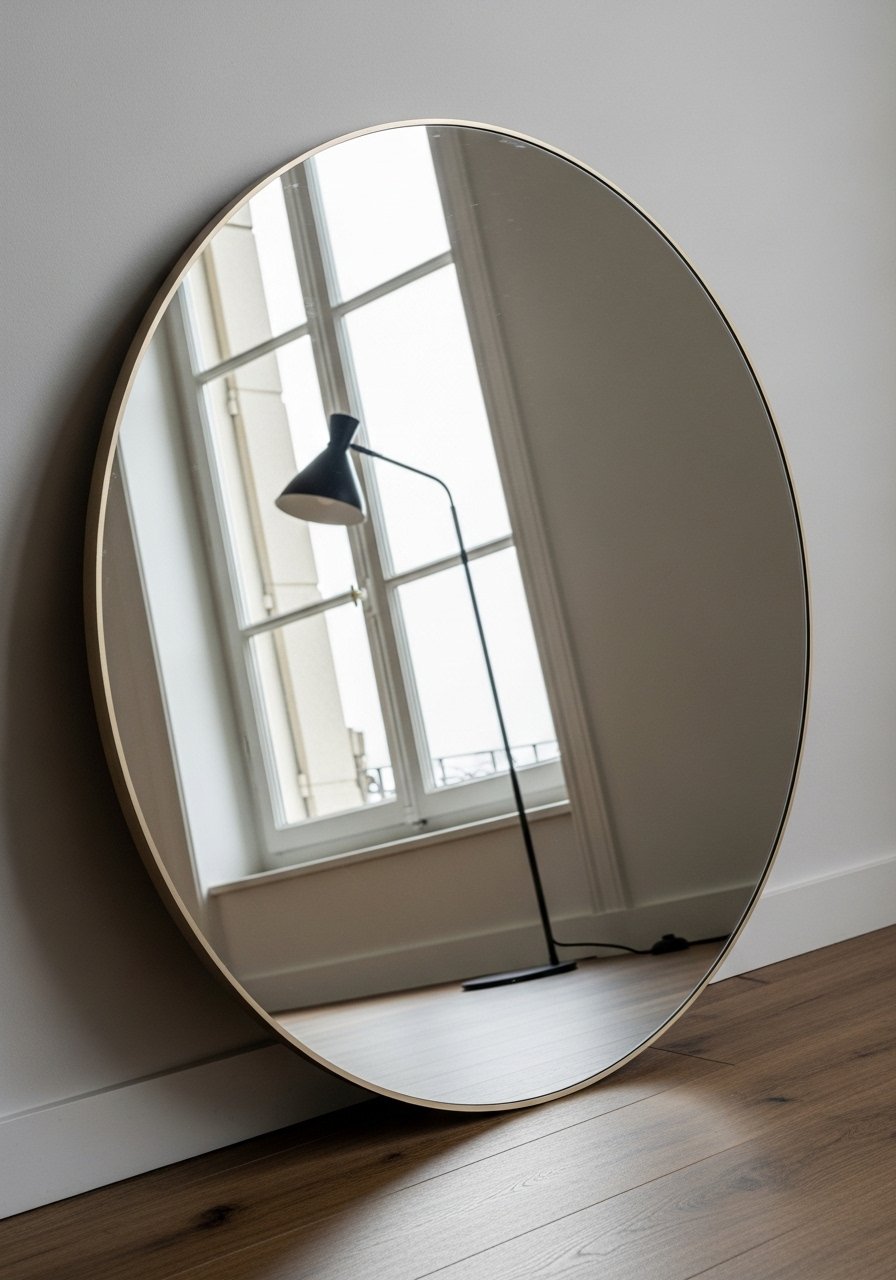
An oversized mirror is an easy fix when one corner refuses to brighten. I switched a 24-inch mirror for a 36-inch round and it amplified the afternoon light without costing a lot. A 36-inch round leaning mirror runs $80 to $180 depending on frame. The mistake is centering a mirror on a wall instead of angling it toward a light source. Tip most people miss, if you have a dark lamp corner, angle the mirror so it catches the lamp glow and reflects it back into the room. Mirrors also help rug and furniture choices read larger when placed opposite windows.
Warm Adjustable Lighting For Late Afternoons (relaxed living room)
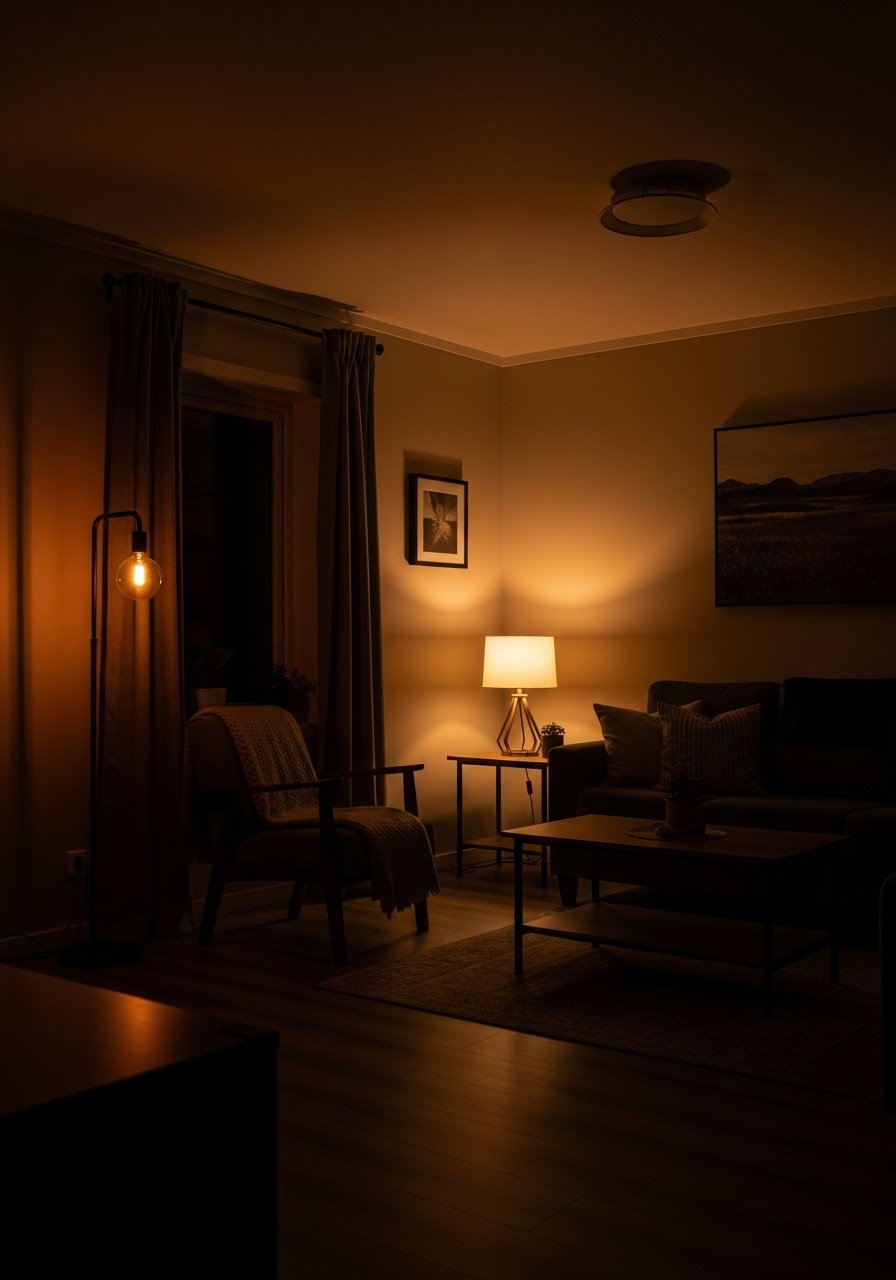
I used to rely on a single overhead and never understood why evenings felt harsh. Add three layers: overhead on a dimmer, one floor lamp near seating, and a small table lamp for task light. Swap bulbs to warm 2700K LED and use dimmers so you can go from bright to intimate without swapping fixtures. I recommend a dimmable floor lamp like this adjustable floor lamp for $60 to $120. A classic error is buying cool white bulbs that make neutral walls look sterile. Also try bulbs with higher CRI for truer color rendering. A tiny tip, use a lamp with a built-in shade diffuser to avoid hot spots on the sofa.
Low-Contrast Gallery Wall In Black Frames (calm, curated living room)
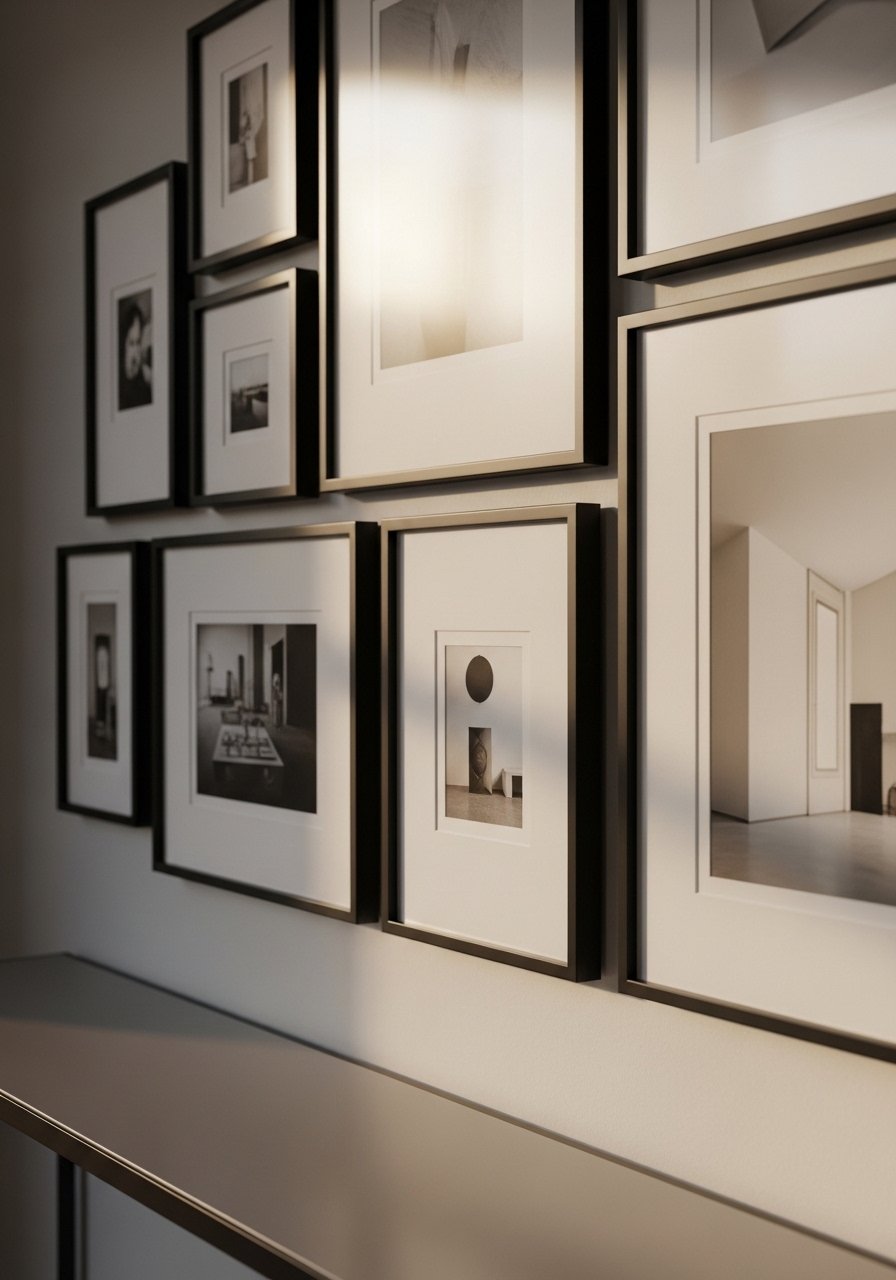
I found these brass picture ledges and stopped committing to nail holes entirely. For a calm look use black frames and off-white mats, but keep the prints low contrast by picking grayscale or washed botanical prints. I use black frames with mats set for about $20 to $40 each. The common mistake is overcrowding the wall with different sizes and finishes. Keep spacing 2 to 3 inches between frames and stick to three to five pieces for balance. Pair this with the curtain trick from earlier so the wall feels anchored rather than floating.
Scale Play With Different-Height Furniture (balanced living room)

My living room had nice furniture but it still felt like a waiting room. Took me forever to realize everything was the same height. Use a mix of heights so the eye has places to rest. A low coffee table around 16 to 18 inches, a sofa seat height at 18 to 20 inches, and a console or bookshelf at 30 to 36 inches creates a rhythm. I use a low wood coffee table 18-inch around $120 to $250 to anchor seating. Mistake people make is matching every piece by style alone. Add one taller piece in a different material to create depth. If you have small rooms, scale down everything by 20 percent to keep proportions right.
Choose Paint With Angle Tests And Match Finish First (painted living room)
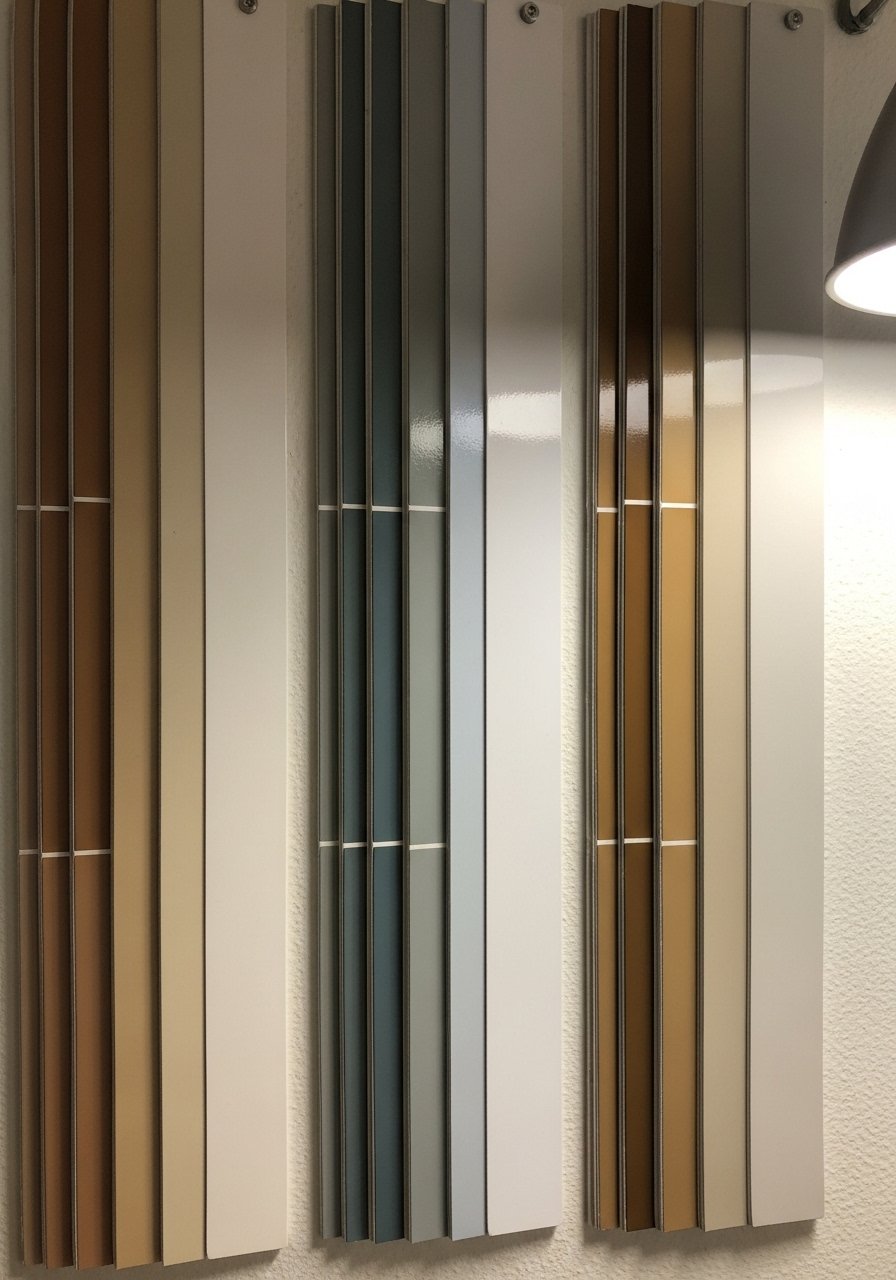
I used to grab a chip and assume the store match would be fine. Most store matches hit 95% with the right scanner. Still, Room light can throw your match off by half. Test chips in three spots at different times of day and ask the counter for an angle scan if you can. Match the finish before you fuss over the hue, because sheen changes perceived color more than you expect. Every paint has a hidden lean that trips up blends, so do a small bias test if you plan to mix. For renter-friendly testing try peel-off sample strips or a small tester quart. A common failure is skipping the 45-degree scan and then being surprised by a green cast under evening lamps. Take your time with paint and the room will reward you.
Natural Wood And Mixed Metals For Depth (layered living room)
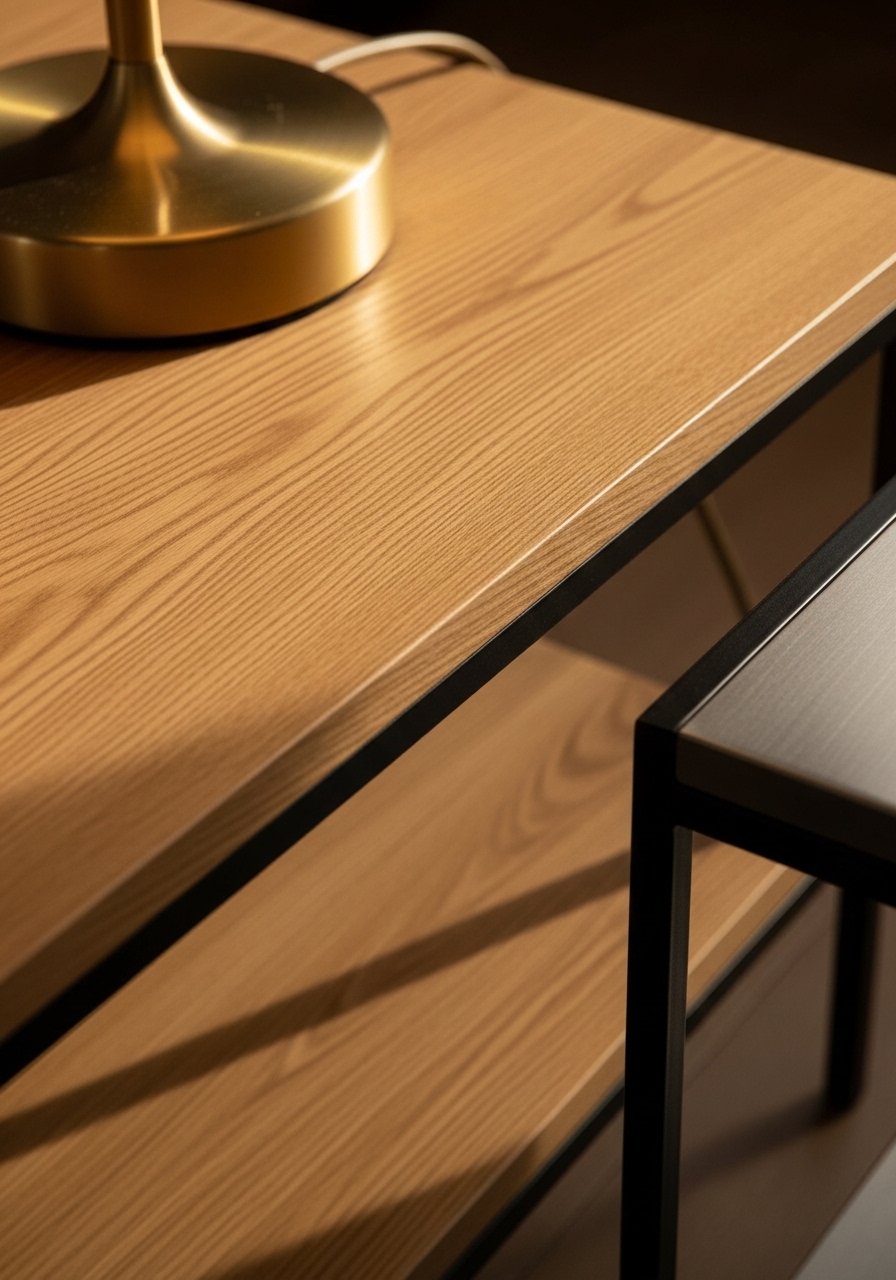
White oak beats dark wood these days if you want a modern neutral base. Mix one warm wood, like white oak, with one darker piece and add brass or black metal accents. I paired a white oak side table with brass picture ledges for a layered look that still reads calm. Budget is wide here, $50 for small accents to $300 for a solid wood side table. The mistake is matching metals across everything. Mixing metals makes the room feel edited. One detail people miss is to choose metal finishes that read the same tone under warm bulbs so they do not clash at night.
Your Decor Shopping List
Textiles
- Honestly the best $40 I have spent. Velvet pillow covers, set of 4 in 22-inch sizes, layer over linen pillows
- Chunky knit throw in cream (~$35-55). Drape over an arm for instant warmth
Wall Decor
- Found these while looking for something else. Brass picture ledges (~$18-25) for swap-friendly displays
- 36-inch round leaning mirror in distressed frame for corners
Lighting
- Adjustable dimmable floor lamp (~$60-120) for layered light
Rugs & Floors
- 8×10 jute area rug neutral and durable, good for high traffic
Plants & Greenery
- Faux fiddle leaf fig 6ft for height without maintenance
Similar at Target or HomeGoods for most pieces if you prefer to see them in person.
Shopping Tips
White oak beats dark wood in 2026. Design feeds have shifted completely. White oak floating shelves look current and layer well with neutrals.
Grab these velvet pillow covers for $12 each. Swap them seasonally and the whole room feels different without buying new furniture.
Curtains should puddle or kiss the floor, never hang halfway up. Linen 96-inch panels are the right call for 9-foot ceilings.
Everyone buys five small succulents. One single 6-foot faux fiddle leaf fig has ten times the visual impact and fills corners.
Frequently Asked Questions
Q: What size rug do I actually need for a layered look?
A: Bigger than you think. For a standard living room go 8×10 minimum so the front legs of major furniture sit on the rug. If your sofa is small, a 6×9 can work but keep all front legs anchored.
Q: Can I mix boho textiles with modern furniture without it looking messy?
A: Yes. Stick to a tight neutral palette and vary textures rather than patterns. Use one patterned piece, two solids, and one heavy knit so the pattern reads intentional. Avoid more than two competing patterns at once.
Q: How do I test paint in a rental without painting the whole wall?
A: Use peel-off sample strips or paint three 6-inch strips in three spots on the wall. Observe them morning, midday, and lamp-lit evening. This prevents surprises and is renter-friendly.
Q: Should I match my metals or mix them?
A: Mix metals. It looks more intentional and avoids the “store display” feel. Keep a dominant metal and add one or two accents in contrast so the room still reads cohesive.
Q: Why does my paint look different than the chip I brought to the store?
A: Most store matches hit 95% with the right scanner. Room light can throw your match off by half. Also sheen affects color more than people expect. Test chips in your actual room and time of day to avoid surprises.
Q: How high should I hang art over the sofa?
A: Aim for the art center to be about 57 to 60 inches from the floor and keep the bottom edge 6 to 10 inches above the sofa back. If you have multiple pieces, keep consistent spacing of 2 to 3 inches between frames.