My living room had nice furniture and decent lighting but it still felt like a waiting room. Took me embarrassingly long to figure out it was missing texture. Every surface was smooth, every color was flat, and nothing invited you to actually sit down.
These ideas lean warm-leaning modern and boho. Most items are under $50, with a few splurges around $100 to $150. They work for living rooms, bedrooms, hallways, and those weird blank walls that make a space feel unfinished. Nature gallery walls are blowing up online lately, so expect friendly prices and lots of prints to choose from.
Layered Nature Mix For Boho Living Room
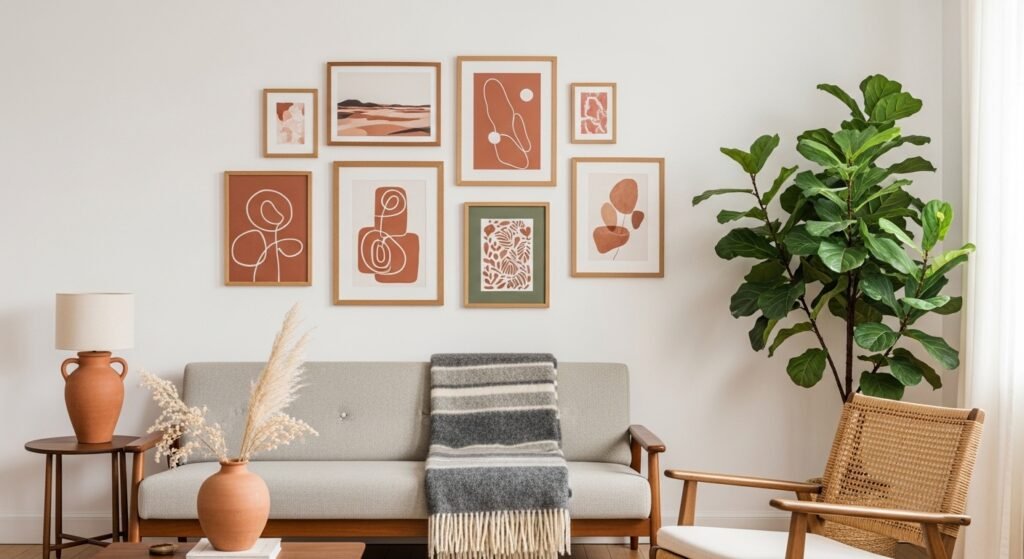
I started with five prints in varying sizes and it looked like I had finally lived in the room for years. The trick is 5 to 9 pieces in one color family, and I stuck to terracotta, sage, and warm browns. I bought a botanical print set and layered thrifted oval bird studies in reclaimed wood. Budget was about $75 for the whole cluster. People often grab random prints that clash; keep one palette and the wall reads collected instead of messy. For renters, hang the medium pieces with command-picture-hangers and reserve nails for the largest frame.
Cozy Nook Gallery For Small Spaces

My tiny apartment entryway felt cold until I treated a small patch of wall like a feature. Using three to five smaller pieces keeps scale right in compact rooms. I chose a soft sage print, a caramel gradient, and one textured linen piece for 80/20 texture balance. This cost about $40 to $90 depending on frames. I linked up a sage abstract print to swap quickly when I change pillows. A common mistake is hanging art too high; aim for the center of the cluster at eye level, about 57 inches from the floor. Small spaces need pieces grouped tight, not spread out like a mansion.
Textured Abstracts For Modern Spaces
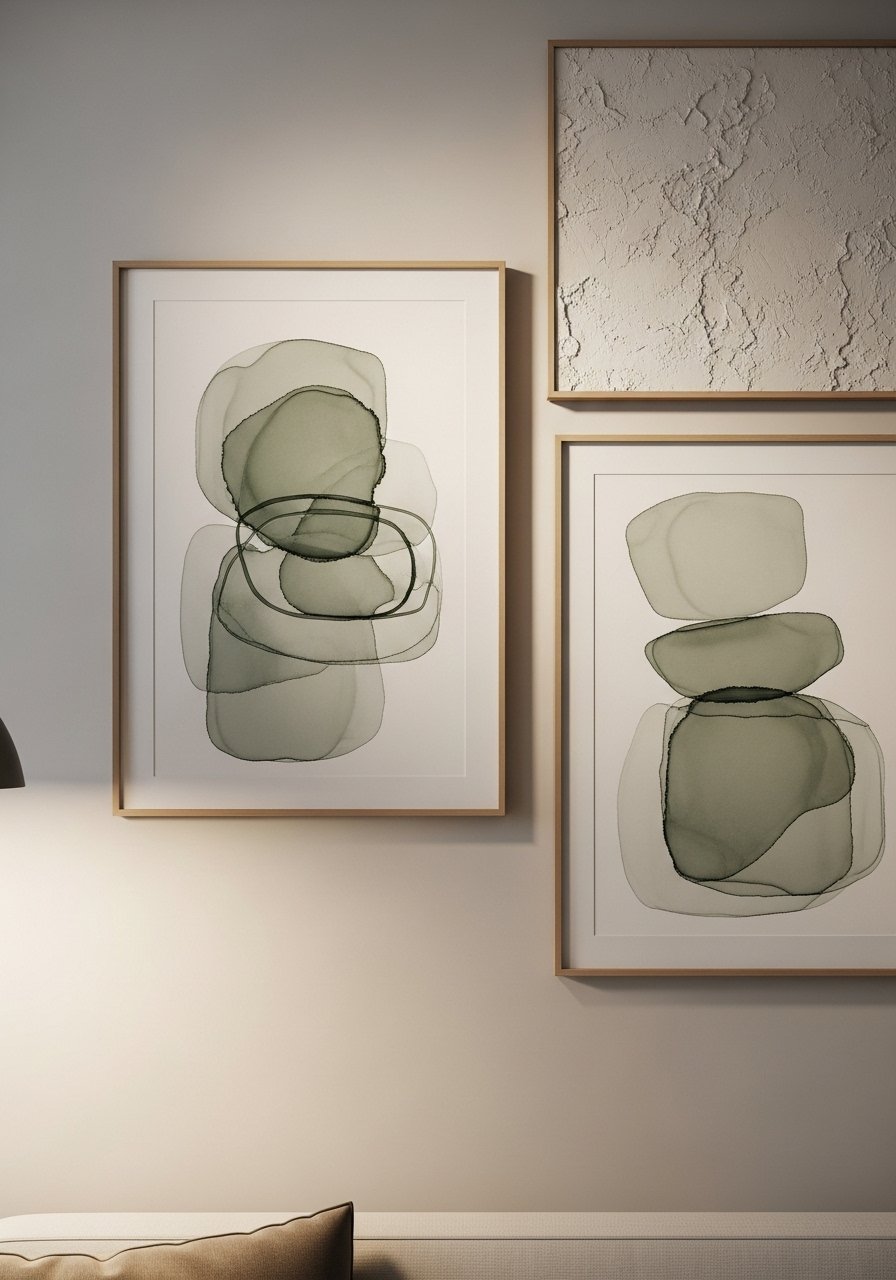
Abstracts in earth tones soften modern furniture without adding visual clutter. I mixed two flat prints with one tactile piece, keeping 20 percent of the gallery as texture. A set of sage green abstract prints ran me around $60. The result felt intentional and calm. Many people use only flat prints and the wall reads lifeless. Add a fabric-covered piece or a mounted textile to give it depth. If you have pets, pick acrylic over glass for frames to avoid shattering and dust accumulation.
Wood-Framed Botanicals For Bedrooms

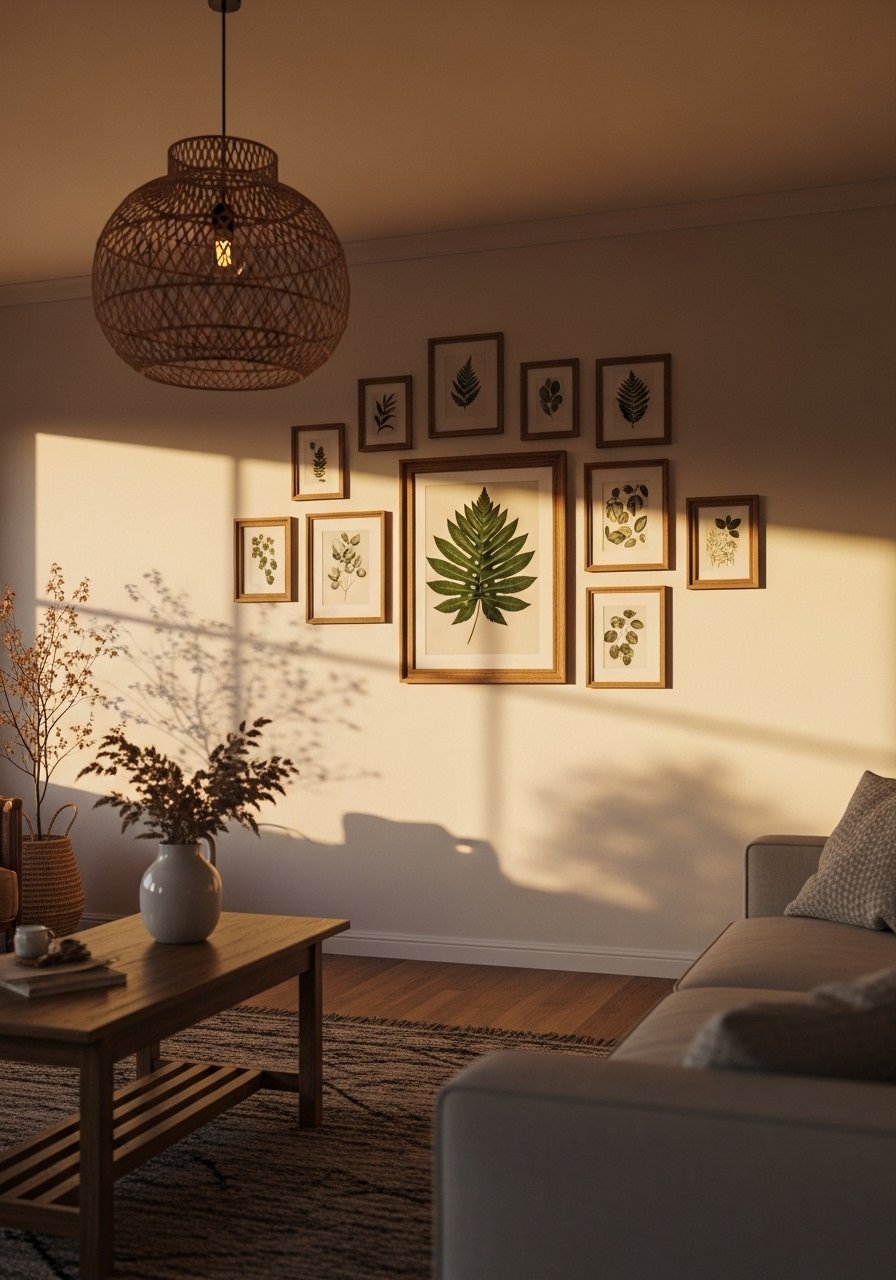
A line of botanical prints in natural wood frames makes a bedroom feel lived-in without fuss. I used four 11x14s and one 16×20 centered to create a gentle rhythm. Frames in white oak warm up pale walls better than black frames. I grabbed a wood-frame set and printed downloads locally to save money. Budget was $50 to $120 depending on frames. Don’t match every frame perfectly. Mix a slightly darker piece to act as an anchor. If you rent, swap nails for removable hooks on two sides and one small anchor in the middle for the 16×20.
Moody Botanicals With Vintage Mirrors
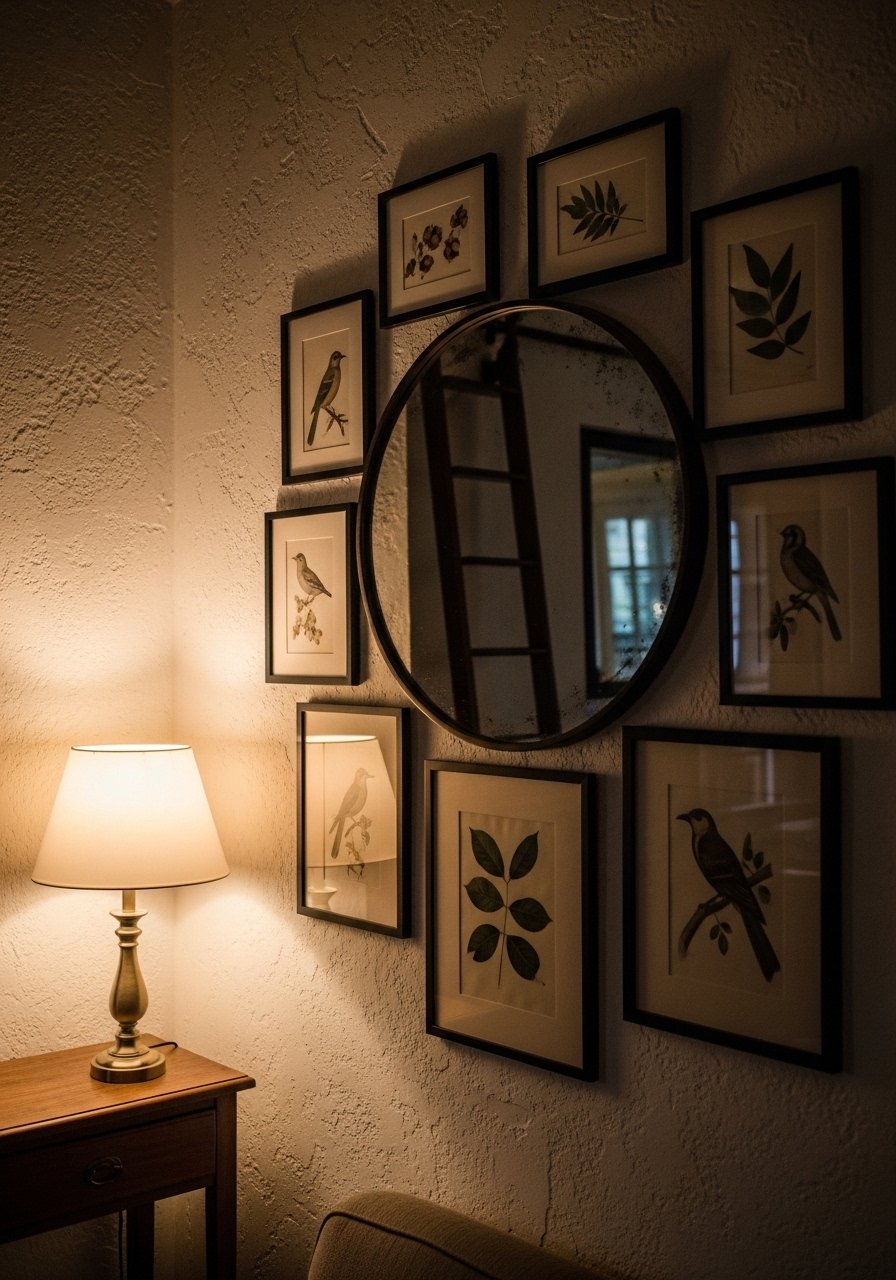
I once leaned a thrifted round mirror into a wall group and it made the whole corner glow. Mirrors bounce light and break up dense prints when your palette tilts toward deep greens and browns. This wall was pricier, around $150 to $300 because of the antique mirror. I used round-vintage-mirror replacements when I could not find true antiques. Common error is placing mirrors too high; mirror centers should sit a little above eye level if they are part of a group. Seven in ten mix old finds with fresh prints, so this pairing feels current and earned.
Tonal Gradient Display For Scandinavian Hall
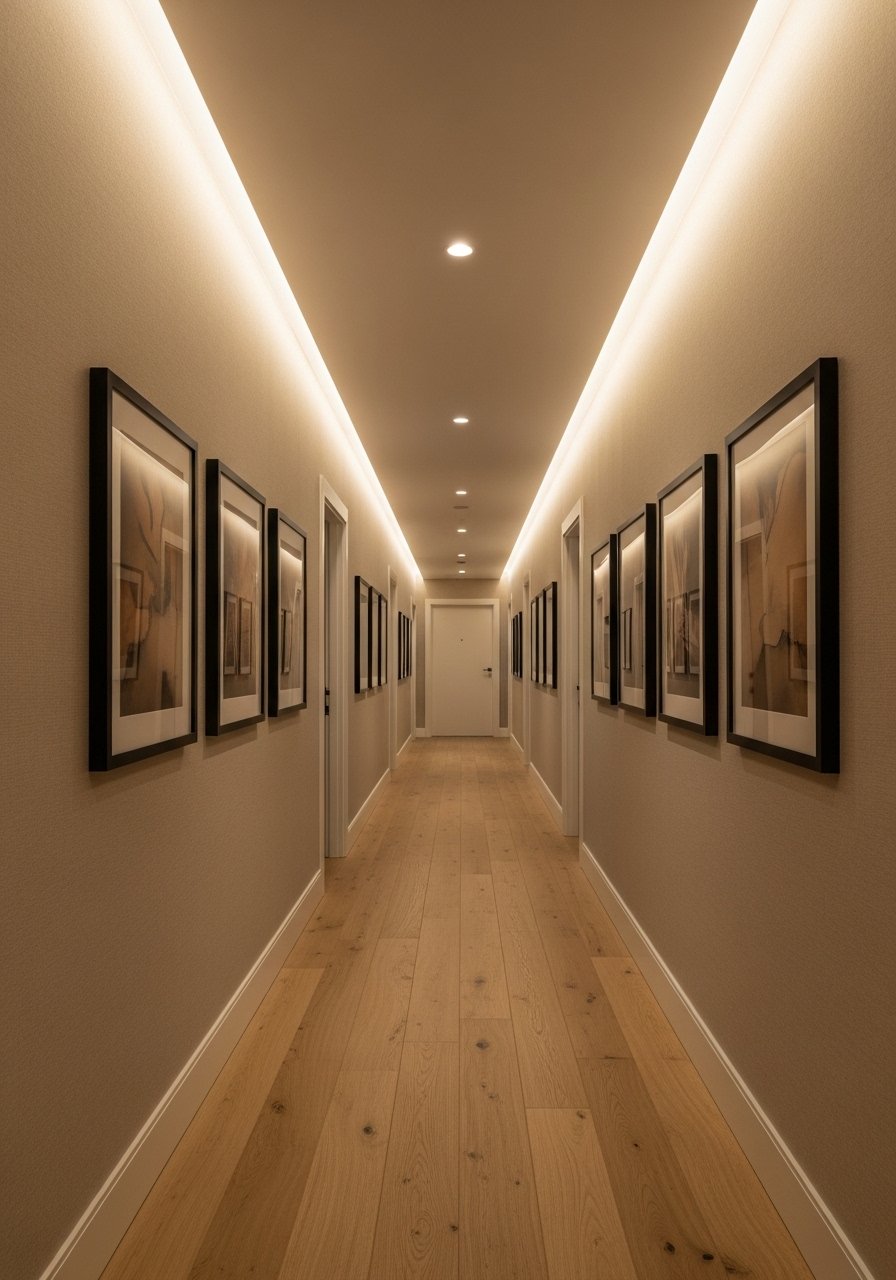
I created flow by arranging five gradient prints from light to dark left to right. The eye follows the sweep and the wall stops feeling like a photo backdrop. Gradients are great for narrow hallways because they guide movement. I spent about $70 on prints and frames. Most folks grab earth tones when they want chill vibes, so this was an easy route. Mistake to avoid is random order. Lay them on the floor and photograph the progression before hanging. Pair this with simple white oak frames to keep the Scandinavian feel.
Random Pattern Full-Wall For Entryway
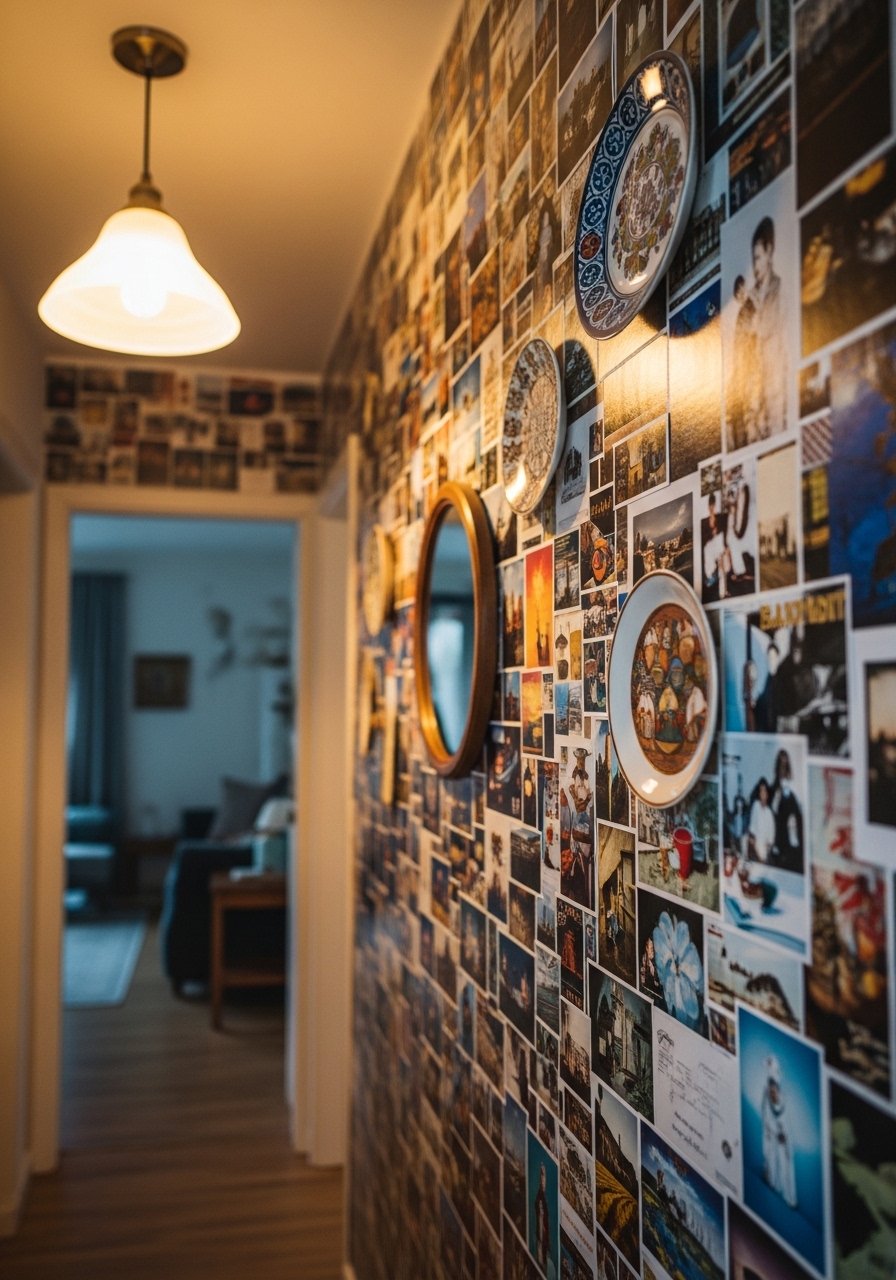
I covered a tired foyer wall with a loose mosaic of 12 to 20 pieces and it read like wallpaper without the mess. Use thrift frames, clipped postcard strings, and one standout 11×14 to anchor. Budget can be as low as $30 if you thrift most pieces. A frequent complaint is that large mosaics look messy. Keep one consistent material, like wood frames, and the wall will read intentional. If you need renter-friendly options, use a mix of poster tape strips and command hooks for heavier objects.
Abstracts With 3D Shadow Boxes For Transitional Rooms

Adding two shadow boxes to a mostly flat gallery made my living room finally look like someone lived there. Use one shadow box per five flat pieces to stay near the 80/20 rule. I used a shadow-box-frame to mount fabric swatches and small clay disks from travel. This cost about $90 to $180 depending on materials. People often avoid 3D because they worry about dust. Pick frames with a sealed front and wipeable materials for pet households. Cross-reference with the moody mirror idea if you want to add reflective surfaces.
Sage Green Cluster For Calm Corners

There was one tiny wall I thought I could not style until I tried a tight cluster of sage pieces. Three to six pieces in one shade read like a single curated thought. I bought a sage-print-set and swapped frames between matte wood and slim black for contrast. Budget here was $60 to $140. A common mistake is mixing in too many accent colors. Keep the cluster within two tones and let pillows elsewhere pick up other hues. If sunlight hits the wall, choose higher quality paper to prevent fading after a month or two.
Caramel Layered Studies For Living Room

I wanted the living room to feel like a hug. Caramel tones layered over subtle leaf studies did that without screaming. I used a large 20×24 as an anchor and four smaller pieces around it, roughly following a 3:1 size ratio between the anchor and supporting pieces. Framed repeats cost about $120 to $280 with nicer frames. Avoid using glossy frames that reflect lamps into photos. If you want a budget version, print downloads and use affordable-oak-frames. This pairs nicely next to the tonal gradient idea for a cohesive flow between rooms.
Textured Plaster Backdrop With Art For Minimalist Spaces
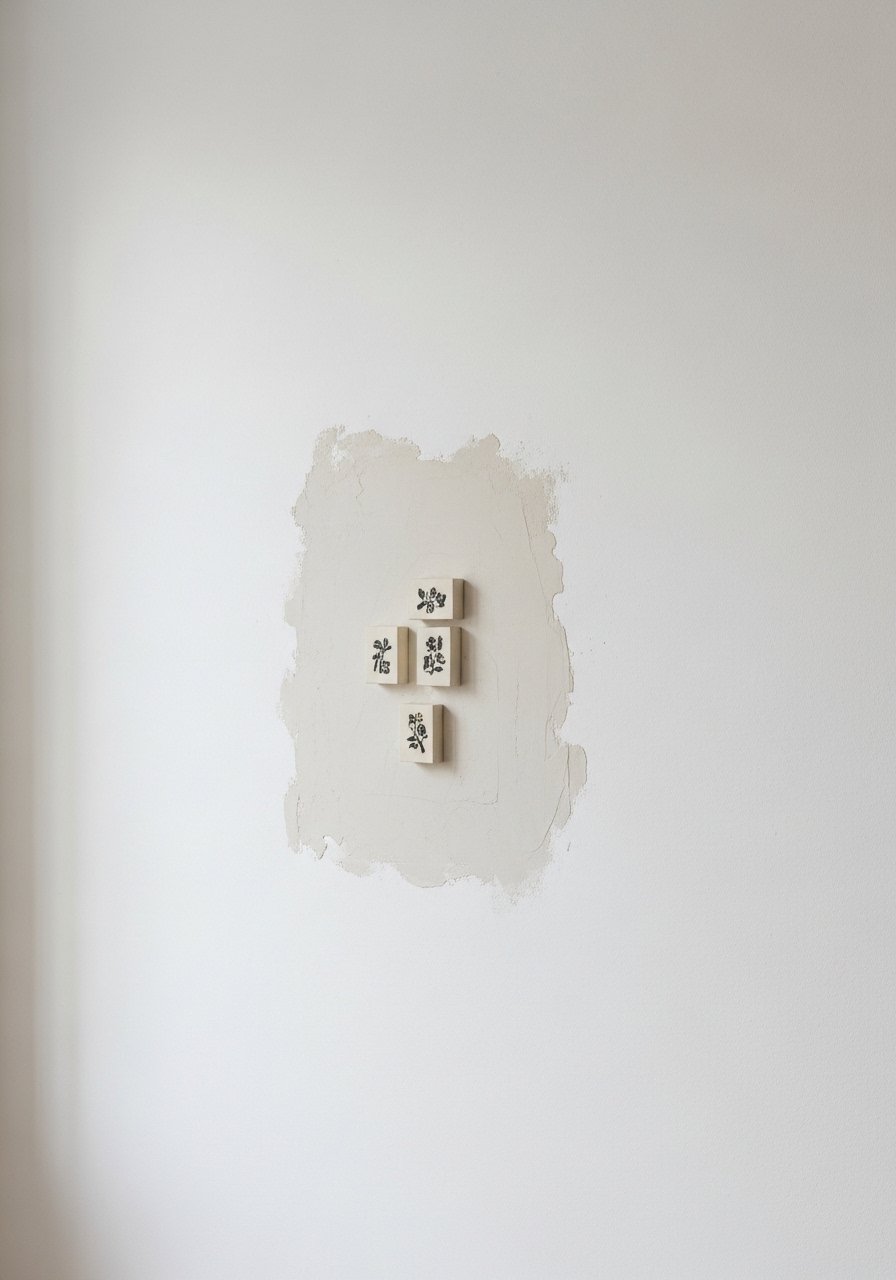
I painted a small plaster patch behind a three-piece gallery to give it depth without committing to a whole-wall color. A 2-foot square textured backdrop is enough to make prints pop. The DIY plaster kit ran about $60, and I used plaster-texture-kit to get a subtle finish. This is not renter-friendly unless you use a large framed board instead. People often think they need a full accent wall. A small textured zone gives the same depth and saves time and money. Also, choose UV-resistant prints if the wall gets sunlight to prevent fading.
Your Decor Shopping List
- Honestly the best $40 I have spent. Chunky knit throw in cream in 50×60 inches for draping over a sofa arm
- For the curtain trick, you need length. Linen curtains 96-inch panels in natural beige, sold individually, good for 9-foot ceilings
- Found these while looking for something else. Brass picture ledges 24-inch set let you swap art without extra nail holes
- For a lasting plant look, I trust this. Faux fiddle leaf fig 6ft in a woven basket, no watering required, works where real plants fail
- Use this for renter-friendly hangs. Command picture hangers large pack for medium frames and mirrors
- For tactile pieces, get this. Shadow box frame set 11×14 for fabric swatches and keepsakes
- Budget frames that still look good. Affordable oak frames set of 4, fits 8×10 and 11×14
- For gradient prints, try this starter pack. Caramel gradient print set in three sizes, giclée style
Similar at Target and HomeGoods if you prefer to see framing in person.
Shopping Tips
White oak beats dark wood in 2026. Design feeds have shifted completely. White oak floating shelves look current, not dated.
Grab velvet pillow covers for $12 each. Swap them every three months and the whole room feels different.
Curtains should puddle or kiss the floor, never hang halfway up. Linen curtains 96-inch panels are right for standard 9-foot ceilings.
Lead with light and reflection. One round vintage-style mirror in a gallery lifts darker walls instantly.
Everyone buys five small succulents. One single 6-foot faux fiddle leaf fig has ten times the visual impact.
Frequently Asked Questions
Q: Can I mix thrifted frames with new prints without it looking messy?
A: Yes. Seven in ten mix old finds with fresh prints, which is exactly why it reads lived-in. Keep a consistent color palette and vary sizes. Try one vintage piece for character and balance it with newer slim frames.
Q: What if I rent and cannot make holes in the wall?
A: Use command-picture-hangers for light to medium pieces and a single small anchor for the biggest frame. You can also lean mirrors and framed art on consoles or nightstands for display without hardware.
Q: How many pieces should I start with for a collected look?
A: Aim for five to nine pieces for most walls. That range gives enough variety without chaos. Use one anchor piece at roughly twice the scale of your supporting prints for balance.
Q: Will prints fade if they face sunlight?
A: Cheap paper fades fast after a month or two. Pick giclée or UV-resistant prints for sunny walls and consider a UV acrylic front in frames. I swapped one sun-facing wall to better paper and noticed the difference within a season.
Q: Can I mix textiles with framed art in the same gallery?
A: Absolutely. Add a shadow box or a fabric-covered panel for texture. Keep about 20 percent of the gallery as 3D or textile pieces so the wall reads layered not busy.