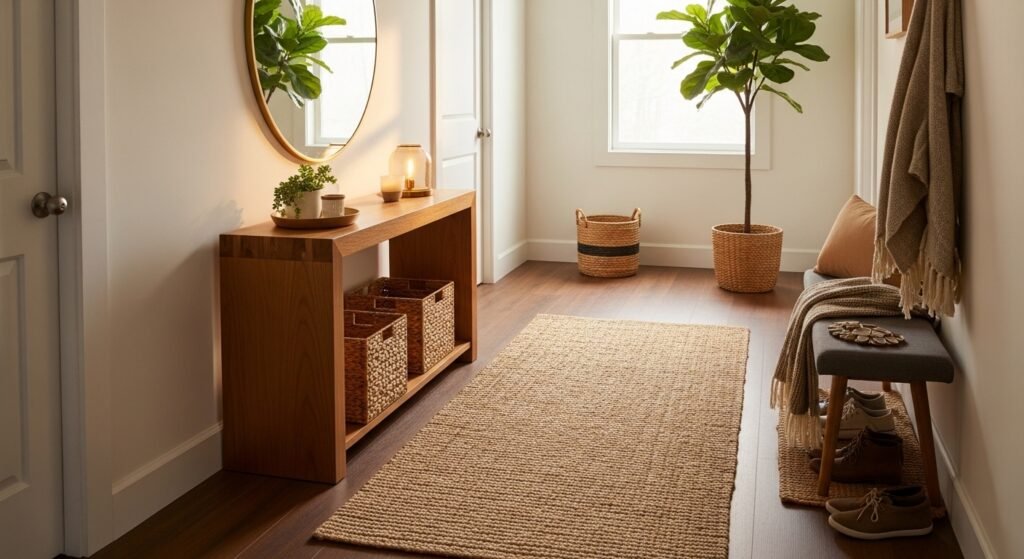
My back hallway used to feel like a tunnel. One weekend I swapped a thin runner for a 2.5-foot-wide jute rug, added a round mirror, and suddenly guests stopped walking straight through. It took small shifts in texture and scale, not a major overhaul, to make that narrow space feel warm and used.
These ideas lean cozy-earthy with natural materials, a few modern touches, and budgets that mostly stay under $150 per update. They work for narrow entry halls, longer corridors, and the small landing outside bedrooms. Use them when a space feels cold, cluttered, or just like a pass-through.
Layer a Natural Runner Over a Neutral Rug for Depth
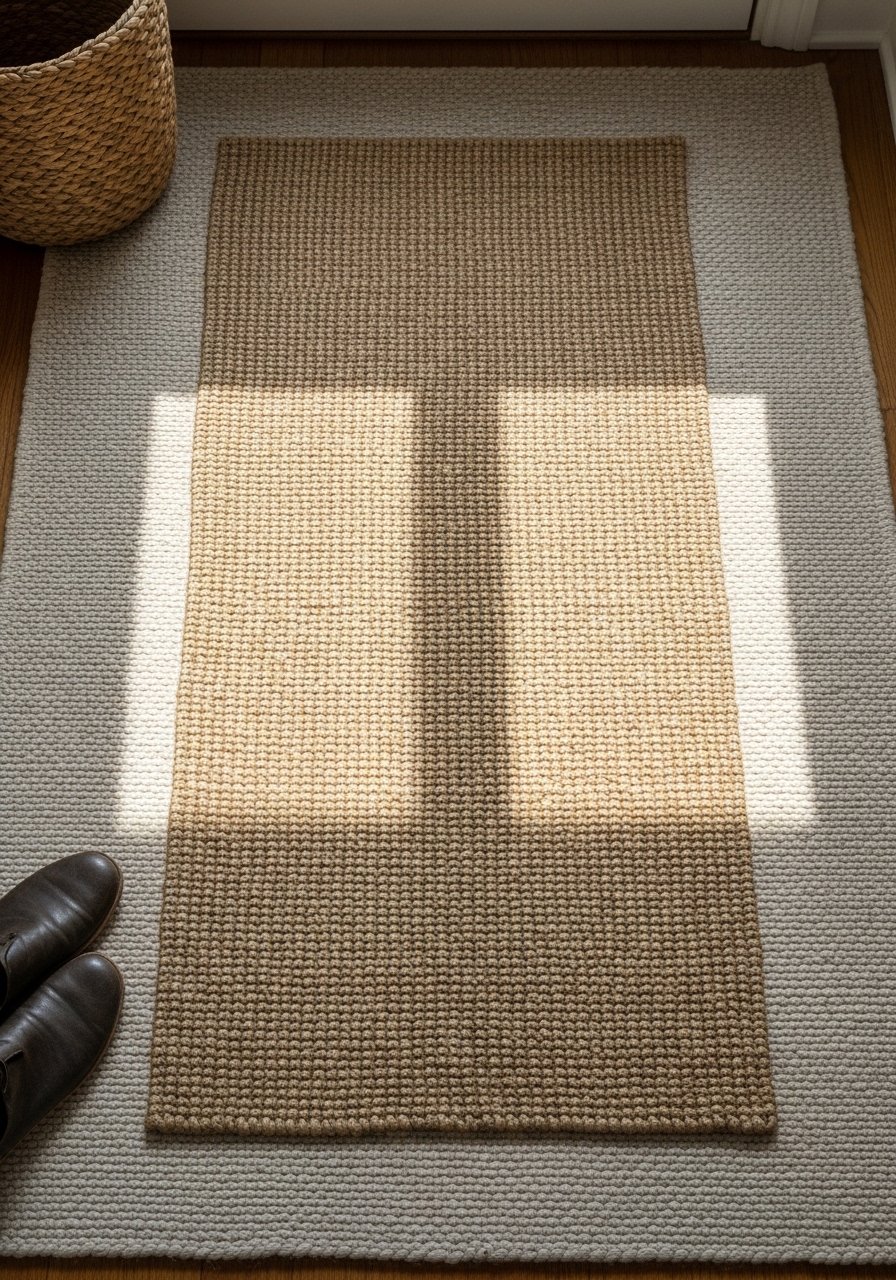
The moment I layered a narrow jute runner over a low-pile wool rug, guests stopped asking where the living room began. Layering adds depth and tones down the echo in long halls. Aim to leave at least 6 inches of the bottom rug visible on each side so the runner reads intentional, not misplaced. This works well in entry halls and long corridors, and it keeps costs down since jute runners are usually $30 to $80. I used a neutral 8×10 base rug and a 2.5-foot-wide runner. Watch out for too many patterns together. If your base rug has pattern, choose a plain runner. Consider 8×10 jute area rug for the base and a natural jute runner 2-3-foot for the top layer.
Slim Console Table with Hidden Storage for a Functional Entry
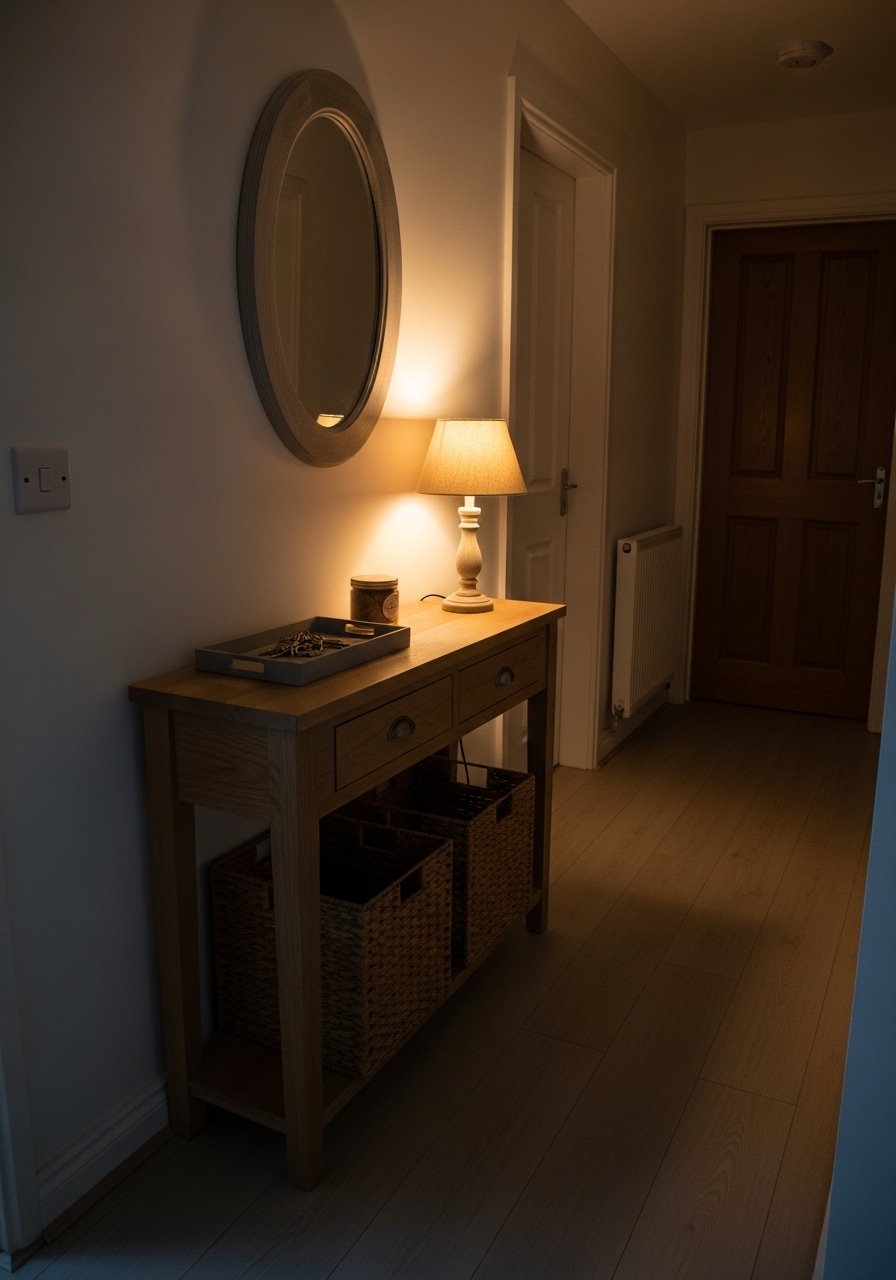
My entry went from chaotic to calm the day I swapped a bulky table for a 12-inch-deep slim console and slid two baskets under it. The trick is scale: console height should be roughly 30 to 32 inches so your mirror and lighting align naturally. Baskets hide shoes and dog leashes, and a small tray keeps mail from spreading. Cost is flexible here, $60 for a basic table to $300 for a solid wood option. I grabbed these white oak floating shelves for extra display and woven storage baskets set that fit snugly beneath the table. Common mistake is choosing a console too deep, which blocks traffic. Measure the walkway and leave 30 inches clear.
Round Mirror to Bounce Light and Soften Lines
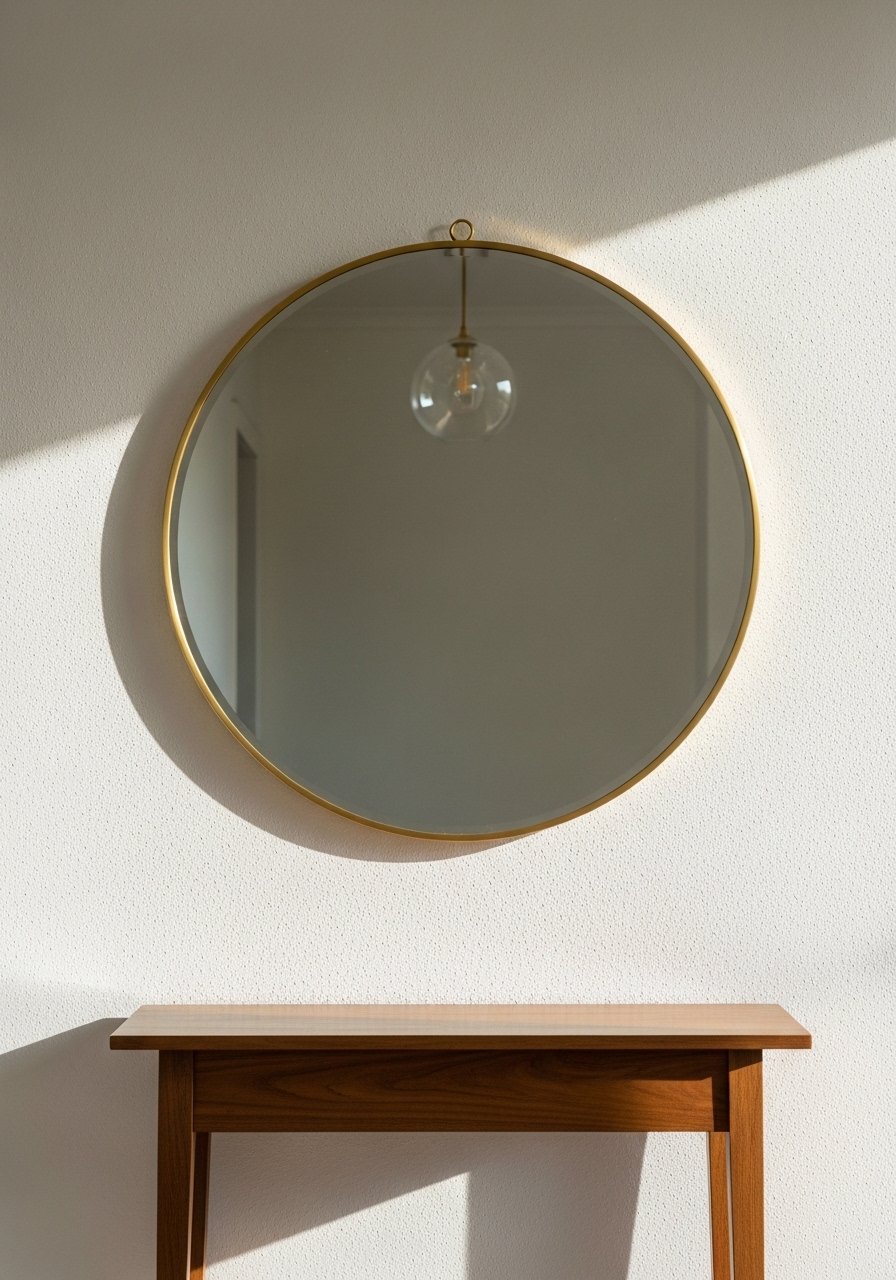
There is something about a round mirror that breaks the corridor feel. I swapped my square mirror for a 36-inch round and the hallway stopped feeling like a corridor. Mirrors bounce light and add curvature to otherwise boxy spaces. Hang it so the center sits at eye level for the average adult, roughly 60 to 65 inches from the floor. For a narrow hallway, a round mirror about one to one-and-a-half times the console table width reads balanced. I like a warm metal frame, which pairs with the brass hooks later. Try 36-inch round brass mirror. Mistake to avoid: hanging too high, which breaks the sightline and makes the space feel disconnected.
Layer Textures with a Bench, Throw, and Two Pillows
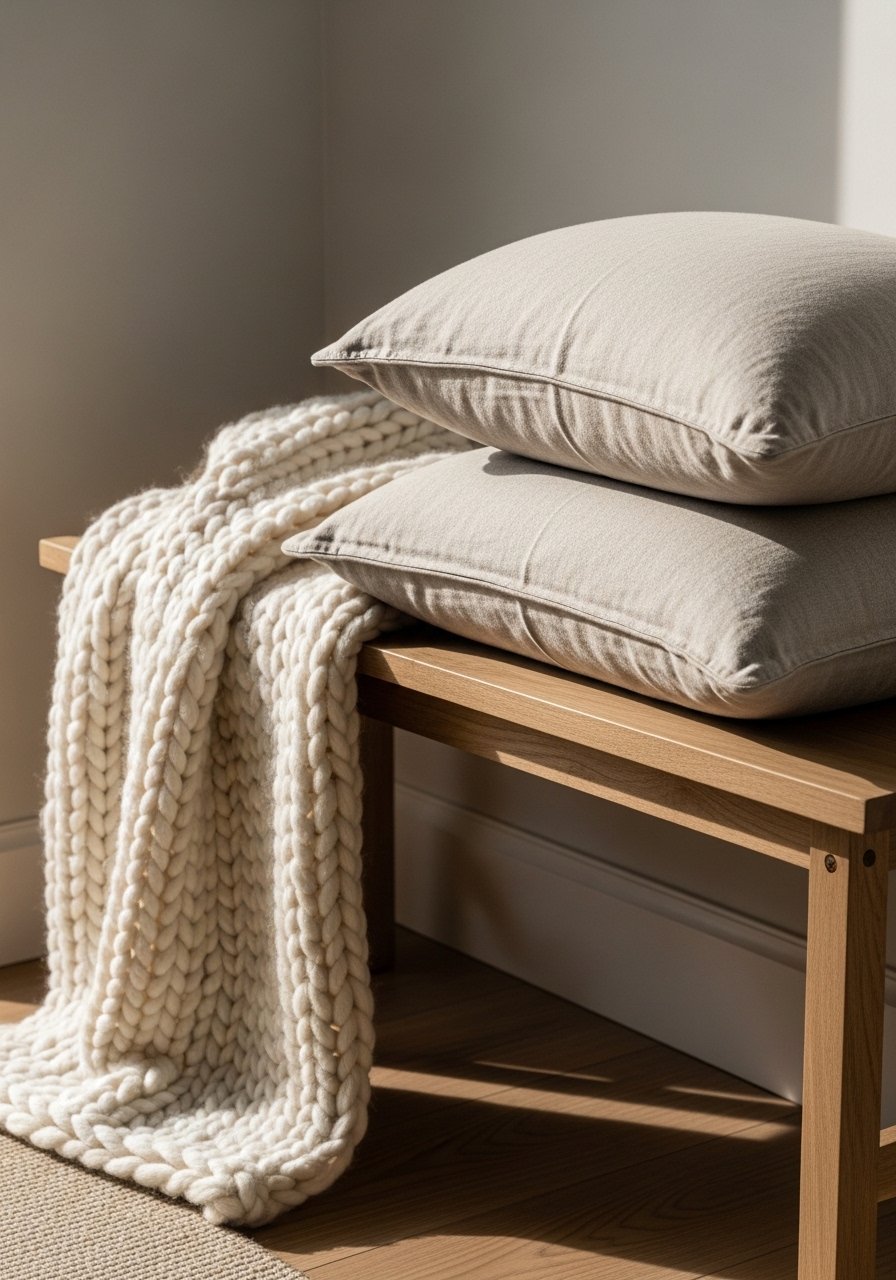
A bench with a chunky throw and linen pillows makes a hallway feel used. I keep a bench that is 14 to 18 inches deep, which fits in tight spots without forcing people to step into the walkway. Textiles should be mixed: a 22-inch linen pillow, a small patterned lumbar, and a chunky knit throw create a three-part rule that reads intentional. Budget here is flexible, $40 to $120 depending on materials. I reach for chunky knit throw in cream and 22-inch linen pillow covers. People often skip pillows in hall seating, and then the bench just looks like storage. Layering textiles invites you to sit.
Use Warm Metals for Hooks and Small Hardware

My hallway felt inconsistent until I committed to warm metals. Pick one finish family and mix tones within it. I used brass hooks for coats and backs, plus a small brass tray for keys, to carry the warmth through the space. Hooks should sit about 65 to 70 inches from the floor for adults, and leave 3 to 4 inches between hooks so coats hang without crowding. Budget-friendly hooks run $10 to $30 a set. Try brass wall hooks set. Biggest mistake is matching every single metal exactly. A mix of aged brass and soft gold keeps the look lived in, not showroom perfect.
Sculptural Lighting to Give Corridor a Personality
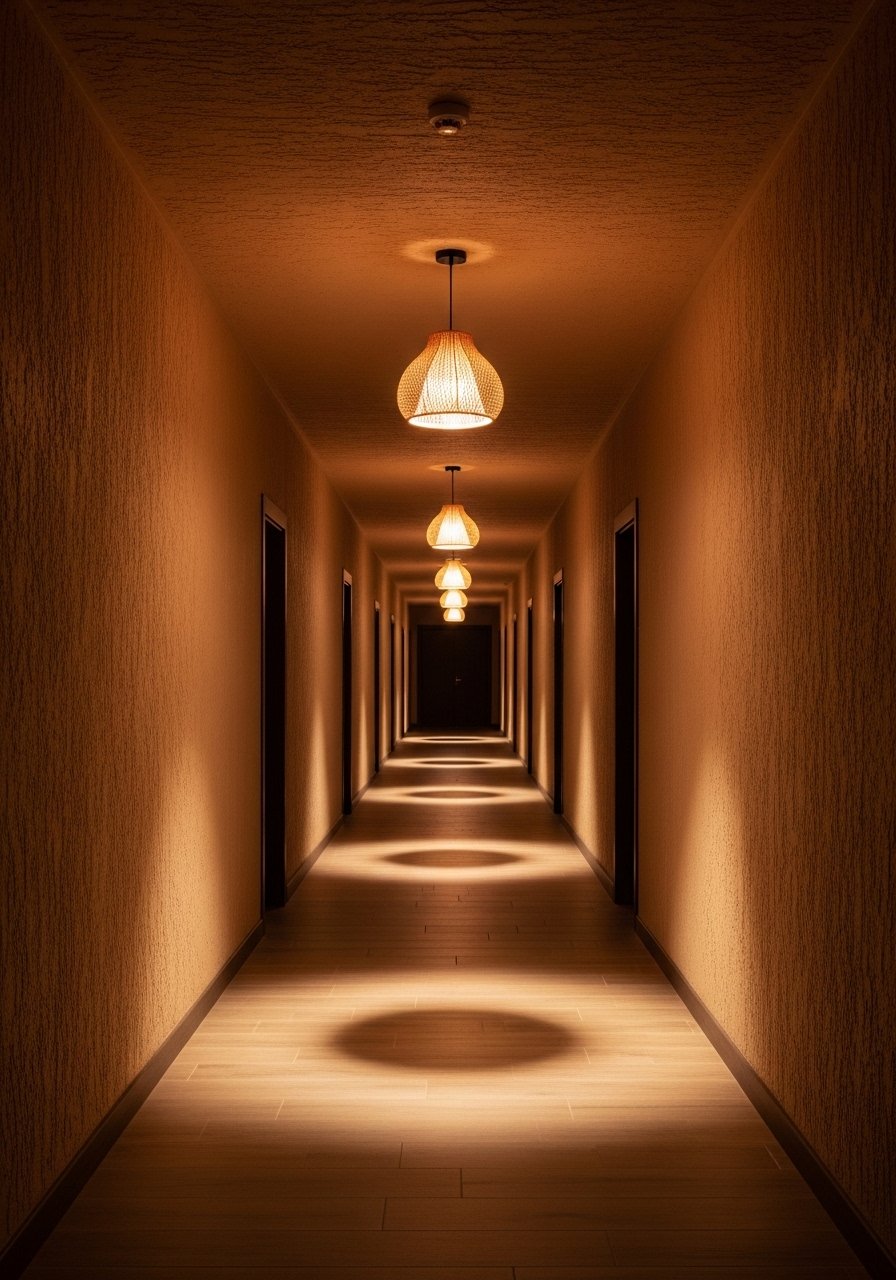
Swapping a flush ceiling fixture for a small pendant changed the way I use the hallway after dark. For a long corridor, space pendants about 6 to 8 feet apart, depending on ceiling height. A low-profile pendant with a warm bulb makes wood tones sing. Expect to spend $60 to $200 per fixture. I installed warm brass pendant light small with 2700K bulbs for that amber glow. Mistakes include hanging pendants too low where they hit taller people. Keep the bottom of the fixture at least 7 feet from the floor in an entry path.
Create a Mini Gallery Wall with Consistent Mats
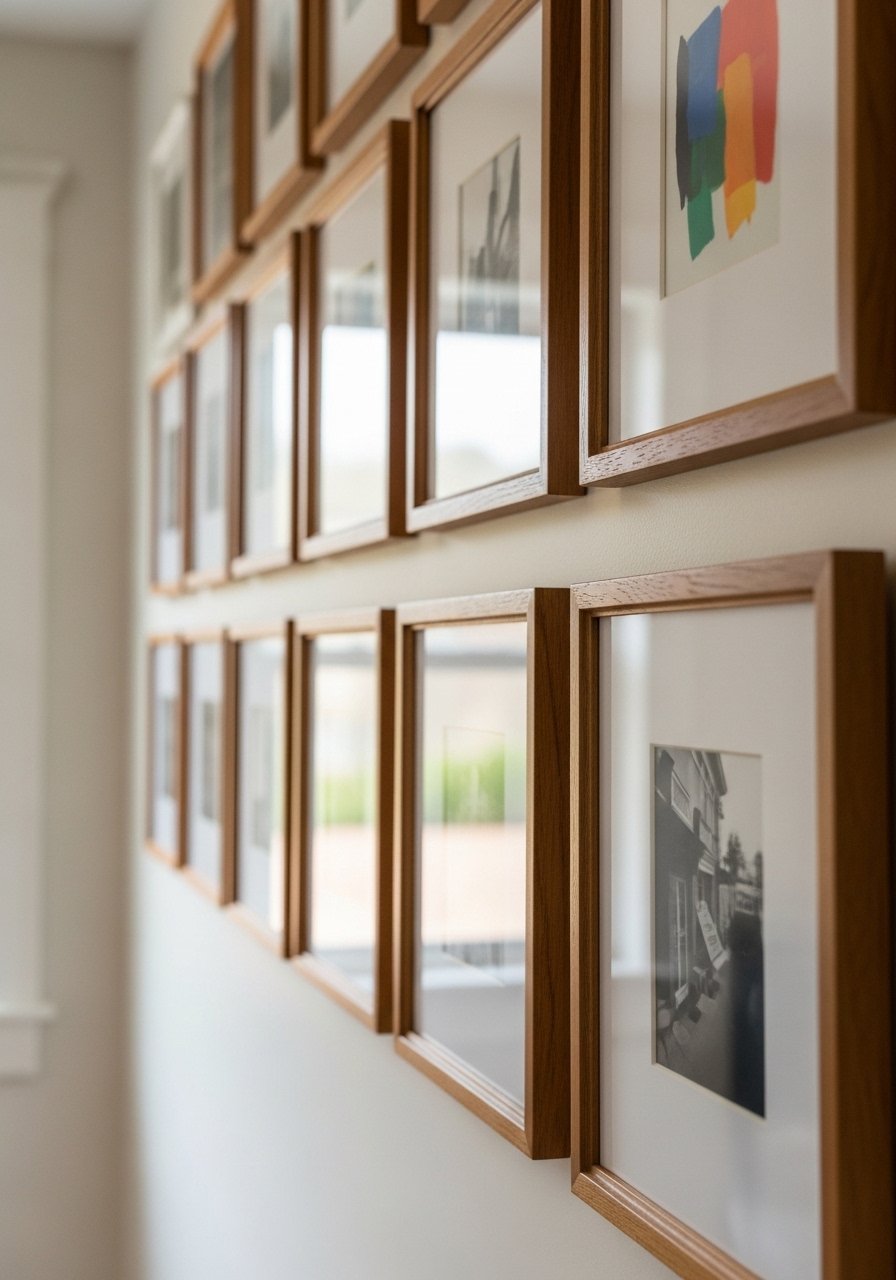
A gallery wall can make a long hall feel curated, not cluttered. I stick to one mat size across similar frame sizes to keep rhythm, and I space frames about 2 inches apart for cohesion. Start with a horizontal center line at 60 inches and arrange pieces around it. Use smaller frames for narrow sections and larger ones where the wall widens. I used mixed wood photo frames set and printed photos in 8×10 and 5×7 sizes. The common mistake is mismatched mat widths, which makes the display feel jumbled. Pair this with the mirror idea above for balance.
Add a Tall Plant for Vertical Interest and Warmth
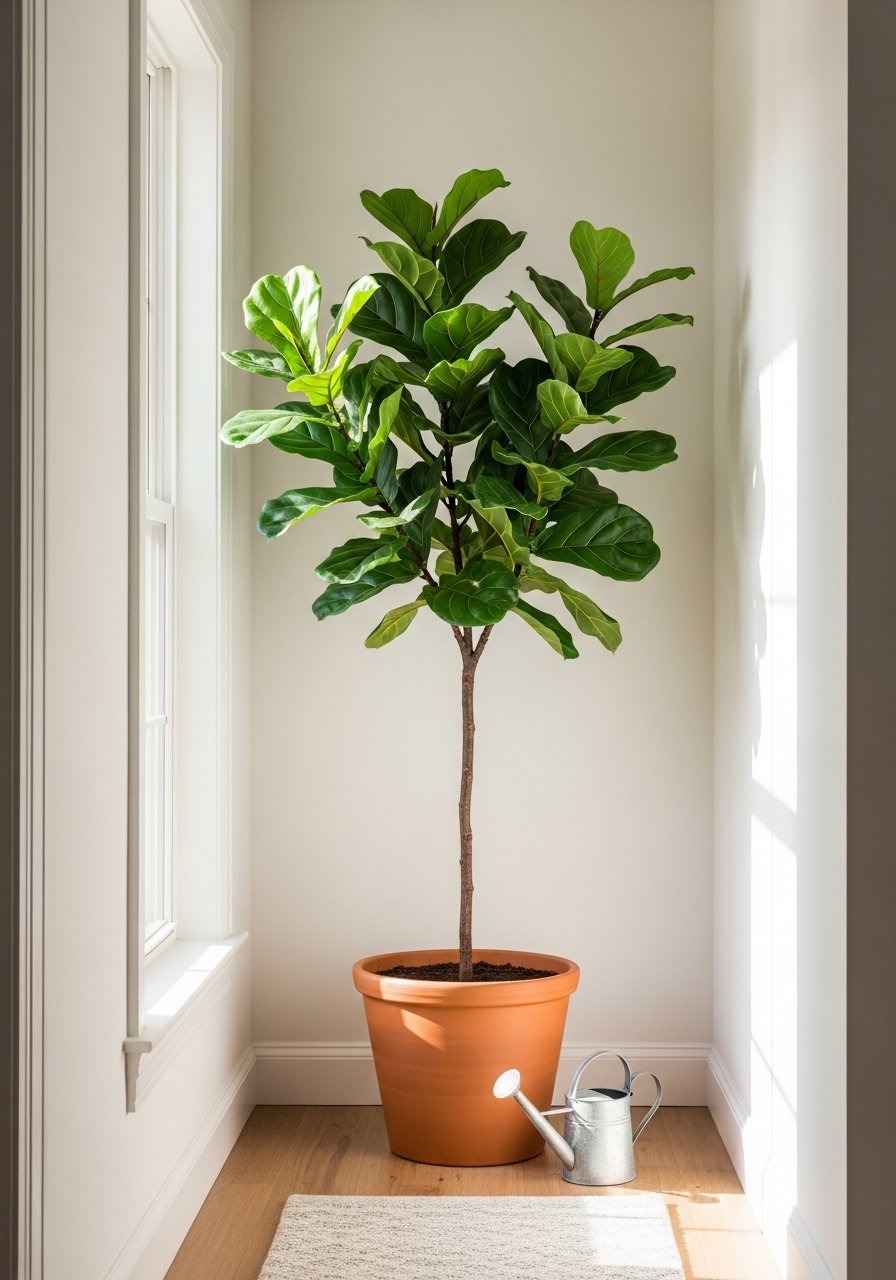
Plants change a hallway from staged to lived-in. A single 5 to 6-foot fiddle leaf fig or a sculptural palm adds vertical interest without clutter. I keep the pot collection simple: one large terracotta pot at the end of the hall rather than multiple small ones. If natural light is limited, choose a low-light plant or a high-quality faux tree. I bought an artificial fiddle leaf fig 6-foot for a north-facing nook where a real plant struggled. People often cram five tiny succulents in a row. One statement plant has ten times the visual impact.
Use Warm Paint or Wallpaper on One Accent Wall

Paint one wall in a clay or ochre tone and leave the others neutral. I painted the far wall of my corridor a terracotta-toasted clay and the space suddenly felt inviting. Use an 80/20 ratio, with 80 percent neutral and 20 percent accent color, especially in narrow halls. Accent paint budgets are tiny, $30 to $60 for a sample-sized project. For bolder texture, try a natural fiber wallpaper on the far wall. Mistake to avoid is painting every wall a dark color, which closes in the space. This paired nicely with the gallery wall and pendant lighting in my hall.
Install a Narrow Shoe Storage Bench with Slatted Detail

Shoes are the number one thing that makes a hall feel messy in my house. A 10 to 12-inch-deep slatted bench keeps shoes off the floor and allows air circulation. I picked a bench with an open slatted shelf so mud and dirt fall through to a washable mat below. Cushion the top with a removable linen pad for comfort. Expect $70 to $180. I like slatted shoe storage bench small. The common error is choosing a bench too deep, which blocks walking space. Keep it slim and functional.
Use Layered Baskets and Trays to Contain Everyday Items

My keys and gloves used to accumulate on any flat surface. Baskets and trays brought order without feeling sterile. One tray on the console for daily items and two under-console baskets for seasonal gear is a system that works for real life. Choose baskets with leather handles for durability and a small metal catchall for keys. I use woven storage baskets set under my console and a metal key tray small on top. People forget to size baskets to the console opening. Measure the cleared space first so baskets slide in and out easily.
Your Decor Shopping List
Textiles
- Honestly the best $40 I have spent, chunky knit throw in cream (~$35-55). Drape over bench or console.
- 22-inch linen pillow covers in warm beige, down-filled inserts recommended.
Rugs
- 8×10 jute area rug for the base layer, durable and neutral.
- Jute-runner-2-5-foot for narrow halls, 2.5-foot width works for most walks.
Storage & Seating
- Slatted-shoe-storage-bench-small 10-12 inches deep, natural wood.
- Woven-storage-baskets-set in two sizes to tuck under consoles.
Lighting & Mirrors
- 36-inch-round-brass-mirror for above-consule reflections.
- Warm-brass-pendant-light-small 2700K bulbs recommended.
Greenery
- Artificial-fiddle-leaf-fig-6ft for low-light impact or as a staging piece.
Shopping Tips
White oak beats dark wood in 2026. Design feeds have shifted completely. These white oak floating shelves look current, not dated.
Grab 22-inch linen pillow covers for $20 each. Swap them seasonally and the hall feels fresh.
Curtains should puddle or kiss the floor, never hang halfway up. 96-inch linen panels are right for standard 9-foot ceilings.
Lead with one statement item, not five small ones. One large artificial fiddle leaf fig 6-foot will anchor the space more than a cluster of minis.
Mix hardware finishes within the same temperature family. Try brass wall hooks set for a warm, consistent look.
Frequently Asked Questions
Q: What width runner should I choose for a narrow hall?
A: Go 2 to 2.5 feet for very narrow halls and 3 feet for average corridors. Leave 3 to 4 inches of floor visible on each side of the runner so the floor frames the rug. If you want a layered look, use a 2.5-foot jute runner over an 8×10 base rug like 8×10 jute area rug.
Q: Can I mix a modern console with rustic decor?
A: Yes. Mixing modern silhouettes with rustic materials keeps the hall from feeling matchy. For example, pair a slim modern console with woven storage baskets and a warm brass mirror.
Q: How high should I hang hooks for coats and bags?
A: Mount hooks around 65 to 70 inches for adult use. If kids use the same space, add a lower row at about 40 to 48 inches. Brass wall hooks set are easy to install at two heights.
Q: Real plants or faux plants in a hallway with low light?
A: Both are fine. I use real plants where light allows and a quality faux tree in dim spots. A single faux artificial fiddle leaf fig 6-foot reads like a real plant from a distance and needs no maintenance.
Q: What is the best way to keep a hallway from feeling cold?
A: Add texture, scale, and a warm metal or wood tone. A layered rug, a round mirror, and warm lighting together warm the space more than any single piece. Start with a jute runner 2-3-foot and a warm pendant like warm-brass-pendant-light-small.
Q: How do I prevent shoes from taking over the hallway?
A: Use a slim slatted bench with open storage and washable mats underneath. Keep one pair per person visible and rotate bulky boots into a basket like woven-storage-baskets-set for off-season items.