

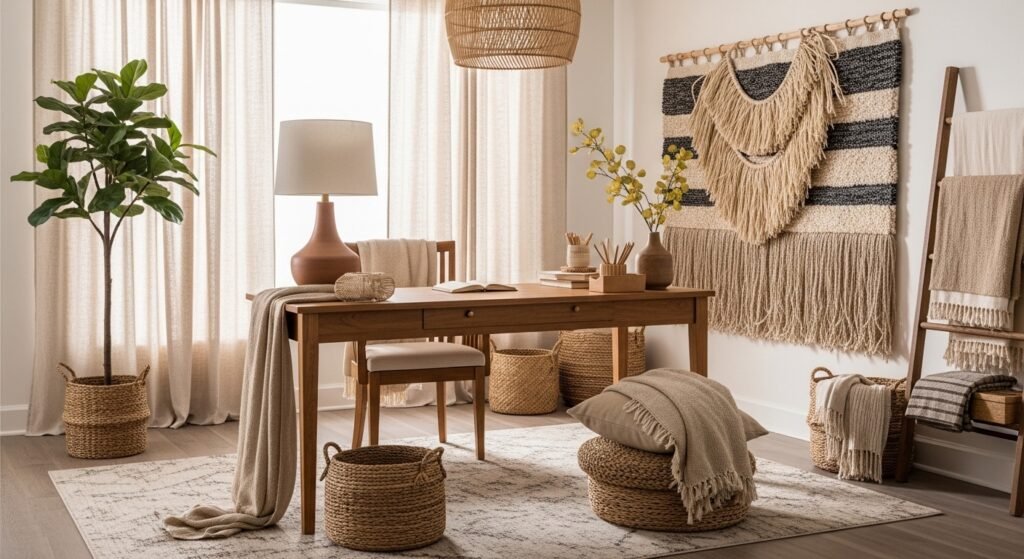
My living room had nice furniture and decent lighting but it still felt like a waiting room. Took me embarrassingly long to figure out it was missing texture. Every surface was smooth, every color was flat, and nothing invited you to actually sit down. That lesson is the whole reason I started treating my studio like a living room that works, not a workspace that lives in a box.
These ideas lean earthy and relaxed with a touch of modern vintage. Most tweaks are under $100, with a few splurges around $150. They work for tiny studio desks, corner recording setups, or a spare room turned into a creative space.
Layered Neutrals for a Cozy Home Studio
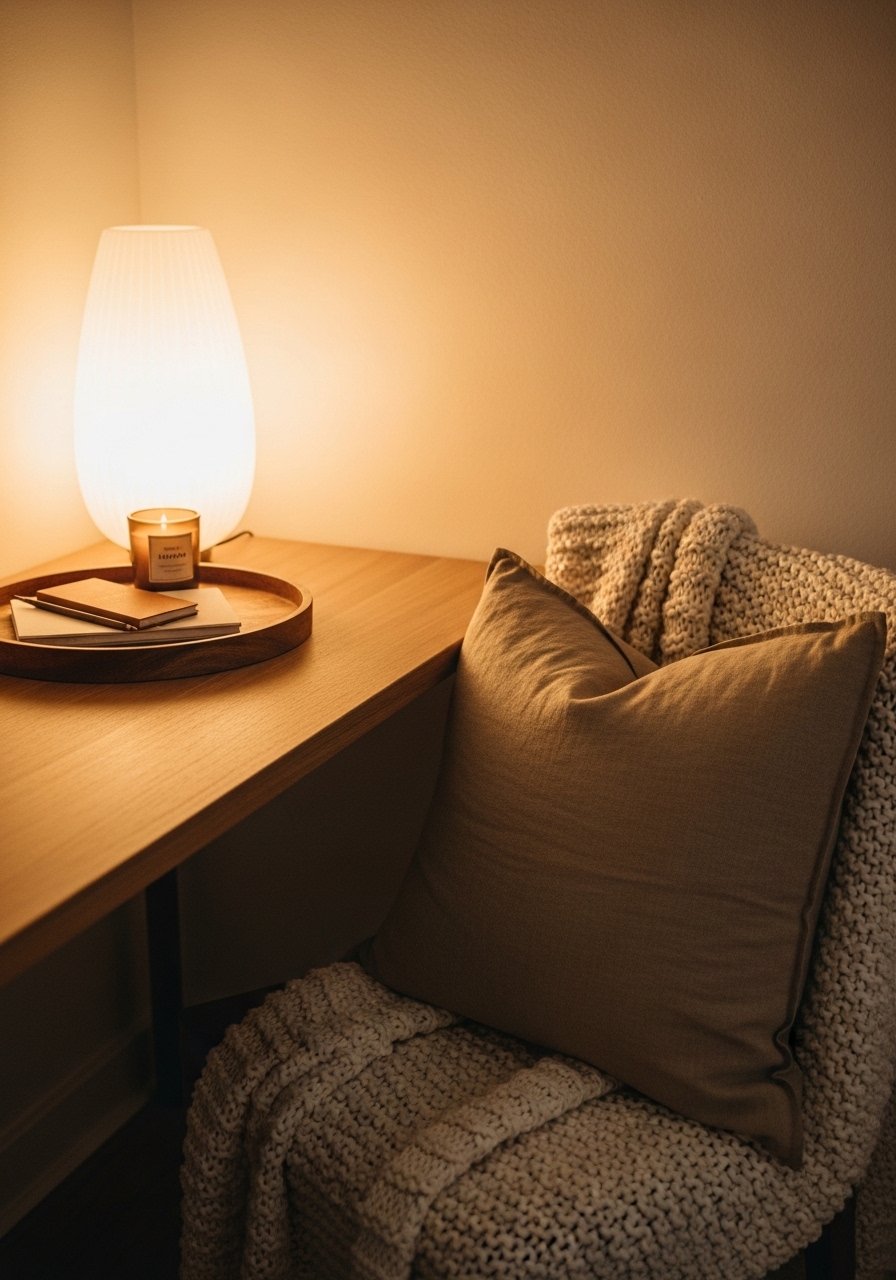
The moment I draped a chunky knit throw over the arm of my gray office chair, the whole studio stopped looking flat. Start with three neutral tones in a rule-of-three layout, like cream, tan, and olive, then add one small deep accent like rust. For a quick swap, I use chunky knit throw in cream on the chair and 22-inch linen pillow covers on a bench. Common mistake is matching everything too closely. Try a 60/40 ratio where 60 percent is light neutrals and 40 percent is mid tones. A small rug under the chair that is 18 inches wider than the desk legs grounds the setup.
Warm Wood Desk Corner for Productivity
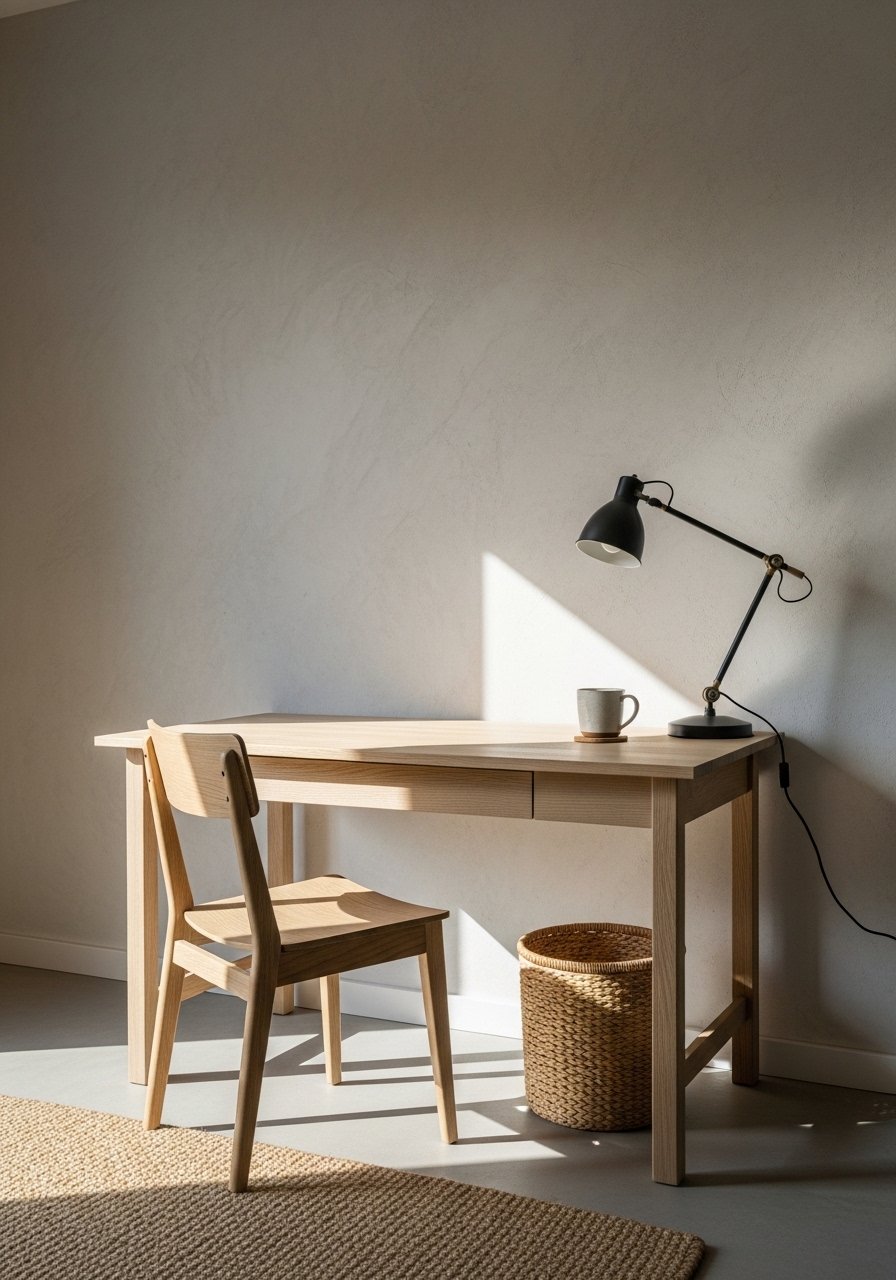
Switching to a white oak desk made my mornings feel intentional. Wood tones add warmth and hide fingerprints better than lacquer. I like an 48 to 60 inch wide desk for a laptop plus a small mixer. White oak floating shelves above the desk hold reference books and a small microphone stand. People often buy a desk that is too shallow. Aim for at least 24 inches deep so you can push a monitor back and still have workspace in front. Pair this with a woven basket as under-desk storage for cords and spare cables.
Textured Wall Panels for Sound and Style
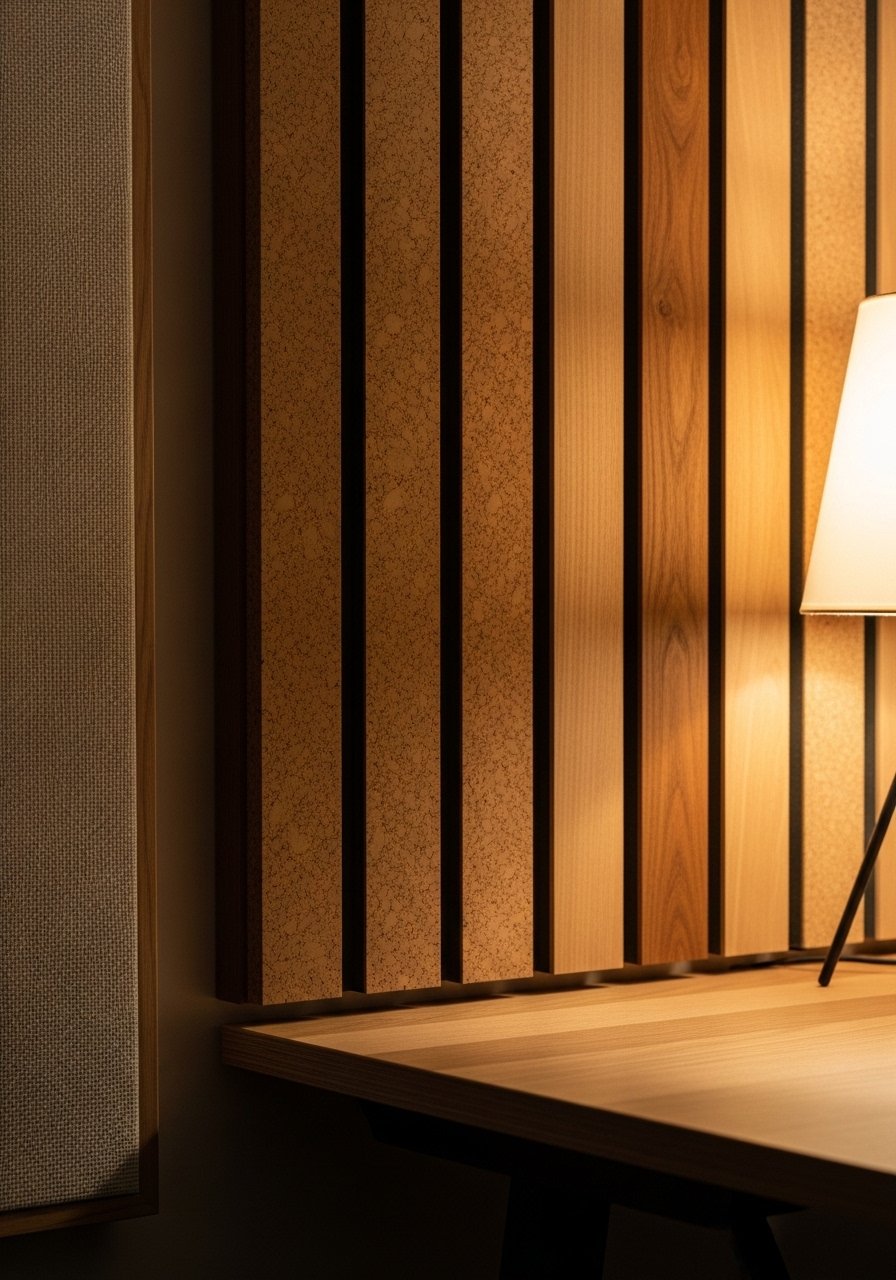
Acoustic panels do double duty when you dress them in fabric and hang them like art. I wrapped a few in warm herringbone fabric and arranged them in a staggered grid, which softened the room and improved recorded audio. Try felt acoustic panels in earthy tones for a cohesive look. A common mistake is covering the entire wall. Start with 25 to 30 percent coverage focused where your voice or monitor points. One detail people miss is staggering heights by 4 to 6 inches to make the layout look intentional rather than factory installed.
Low-Light Warmth with Amber Lighting
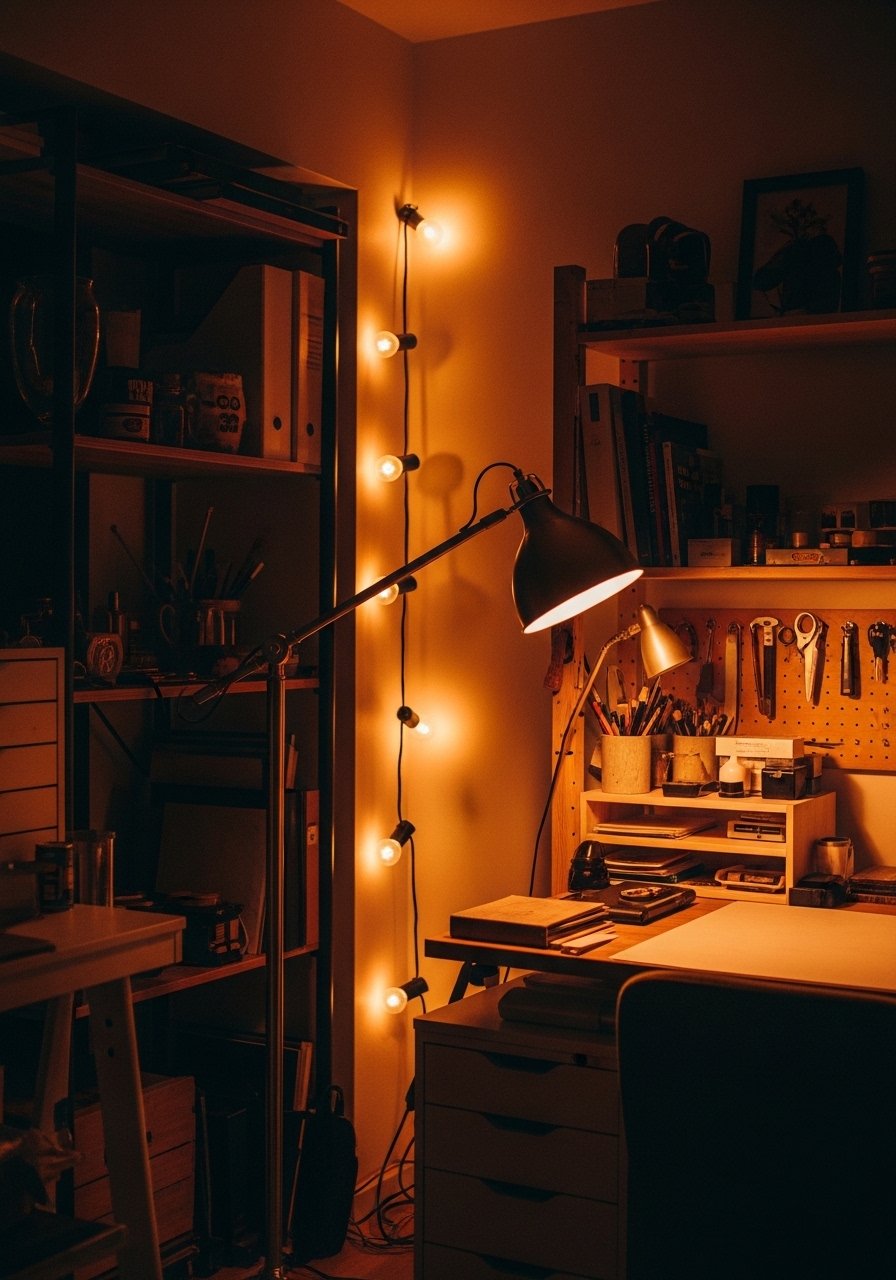
Harsh overheads kill the mood. Swap one bright ceiling fixture for layered warm light. I use a brass task lamp at the desk and an amber LED strip behind the monitor for backlight. Brass task lamp adds personality and a soft pool of light for notes. People forget to dim lights. Keep desk illumination around 300 lux and accent lights much lower to create depth. Small round lampshades in 10 to 12 inch diameter work well in compact corners. Pairing warm light with wood and woven textures helps the kit look lived in, not staged.
Earthy Green Accent Wall for Focus
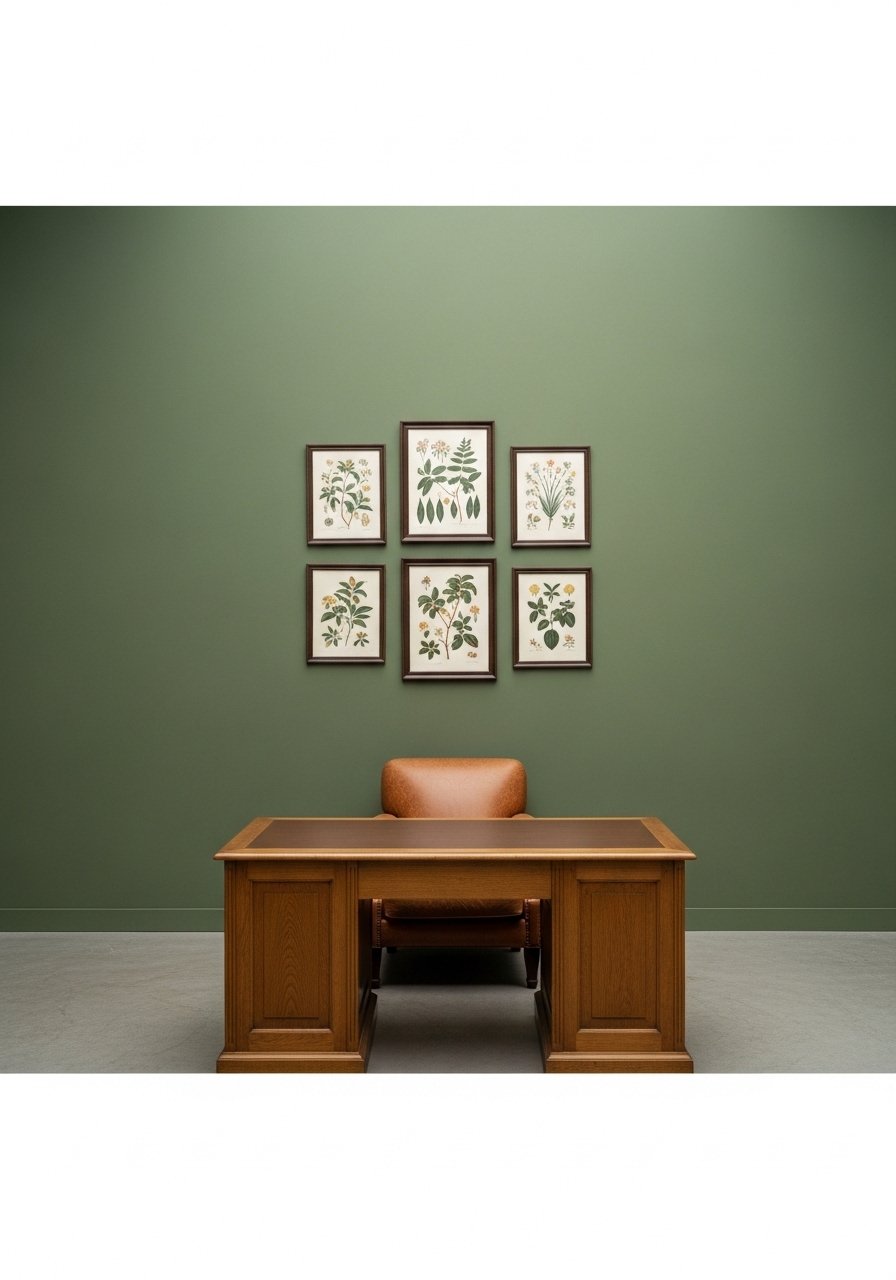
I painted one wall olive green and it changed everything about how the space feels. A single deep wall anchors the room and reduces visual noise from cables and gear. Pick a matte finish so reflections from screens are minimized. For rental-friendly, use a removable peel-and-stick wallpaper in terracotta or sage. Olive green peel-and-stick wallpaper hides scuffs and is easy to remove. Many people paint the whole room and regret it. One accent wall at 70 percent of the room's visible backdrop is usually enough.
Natural Fiber Rugs to Ground the Space
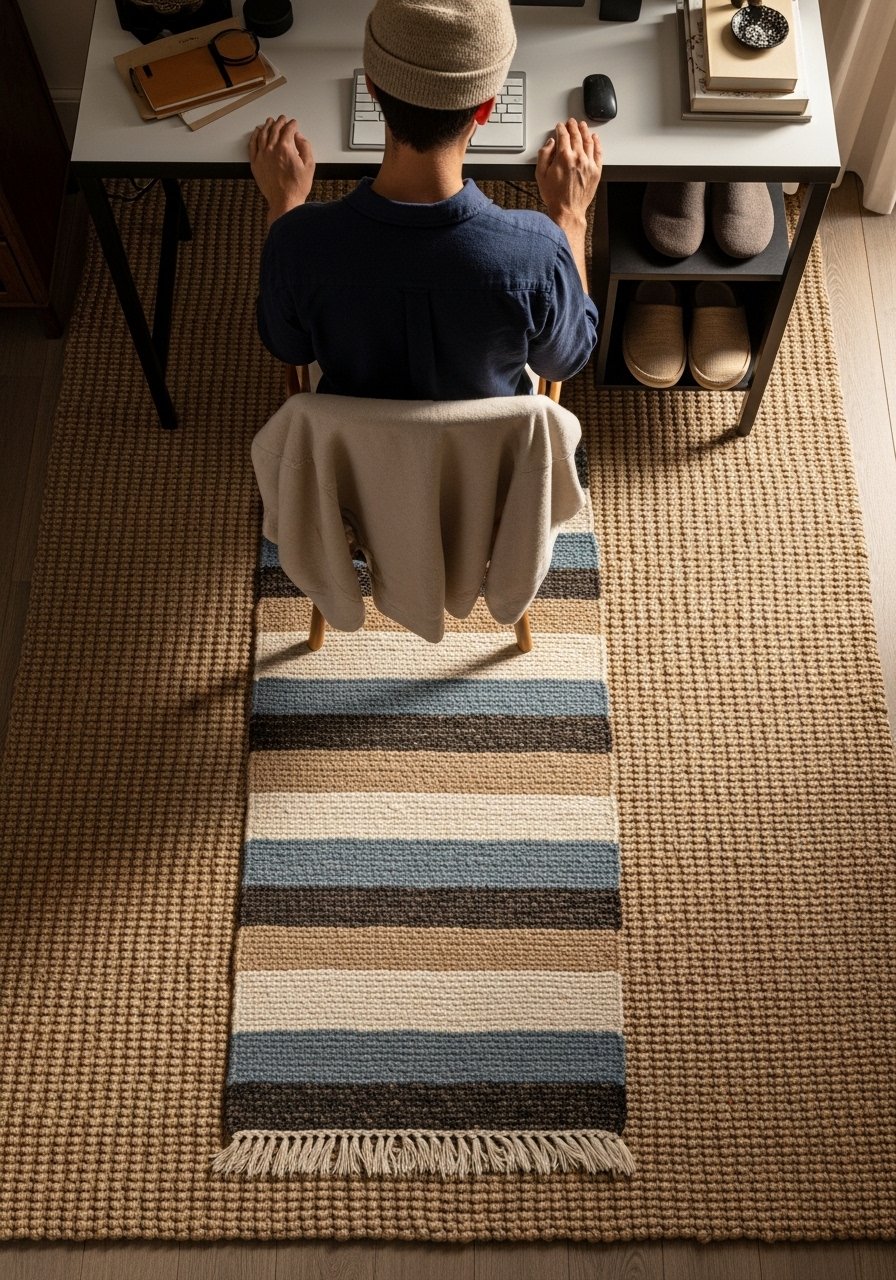
Rugs do more than look nice. They reduce echo and give your feet a surface that makes you want to stay. I layer a 6×8 jute rug under the desk with a narrower wool runner for softness where I stand. 8×10 jute area rug holds heavy chair casters better than thinner mats. A mistake is buying a too-small rug. Aim for rugs that extend 18 inches beyond the desk edges on each side. Also consider an inexpensive rug pad for traction and sound absorption.
Linen Curtains to Add Height in Small Rooms
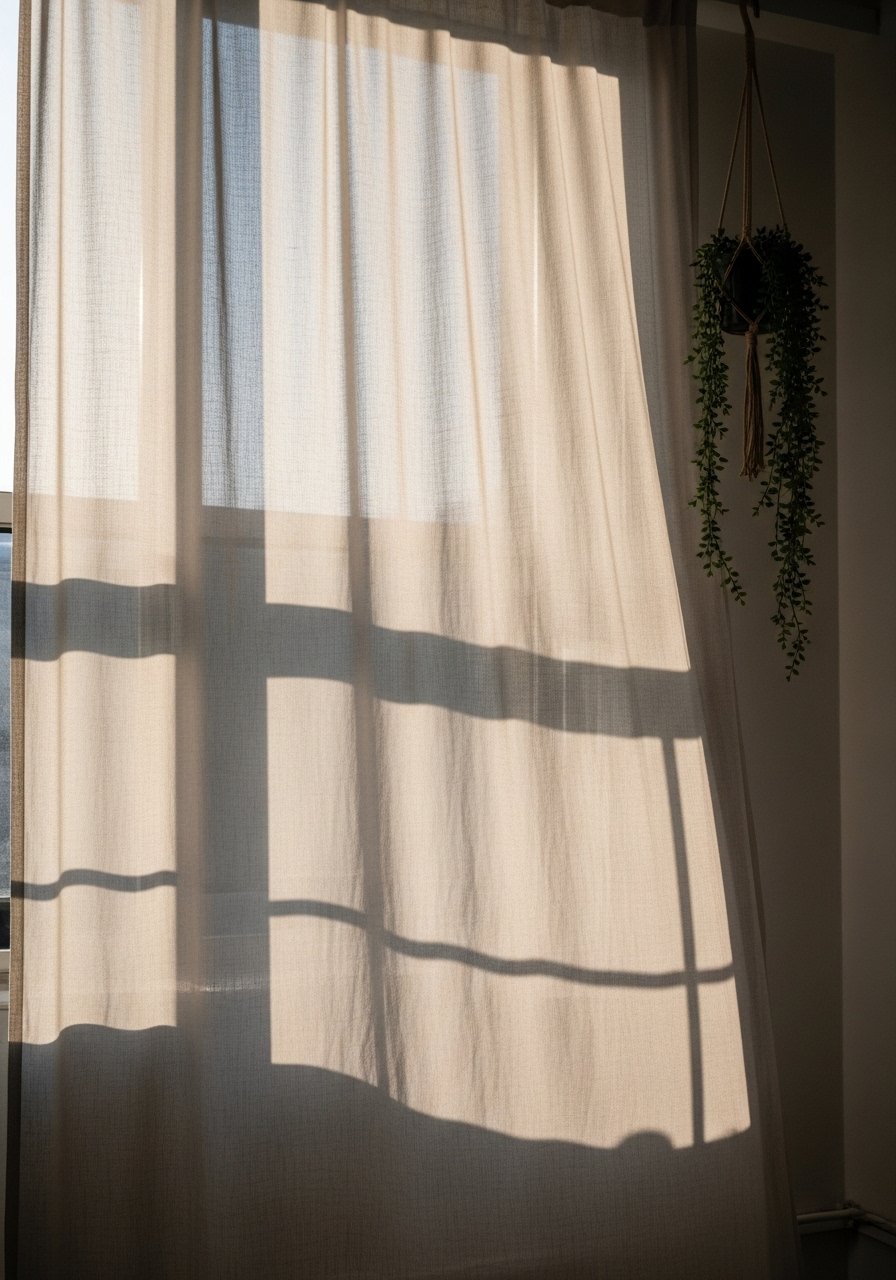
Most people hang curtains at the window frame, which makes rooms feel shorter. Hang your rod 4 to 6 inches above the window trim or closer to the ceiling to create height. I use 96-inch linen panels even in modest rooms to get that elevated feel. 96-inch linen curtain panels are breathable and soften harsh light. Let panels either kiss the floor or puddle gently two inches. Avoid panels that stop mid-frame. Pair this trick with the layered rug idea for a cohesive vertical and horizontal flow.
Vintage Leather Chair for a Comfortable Studio
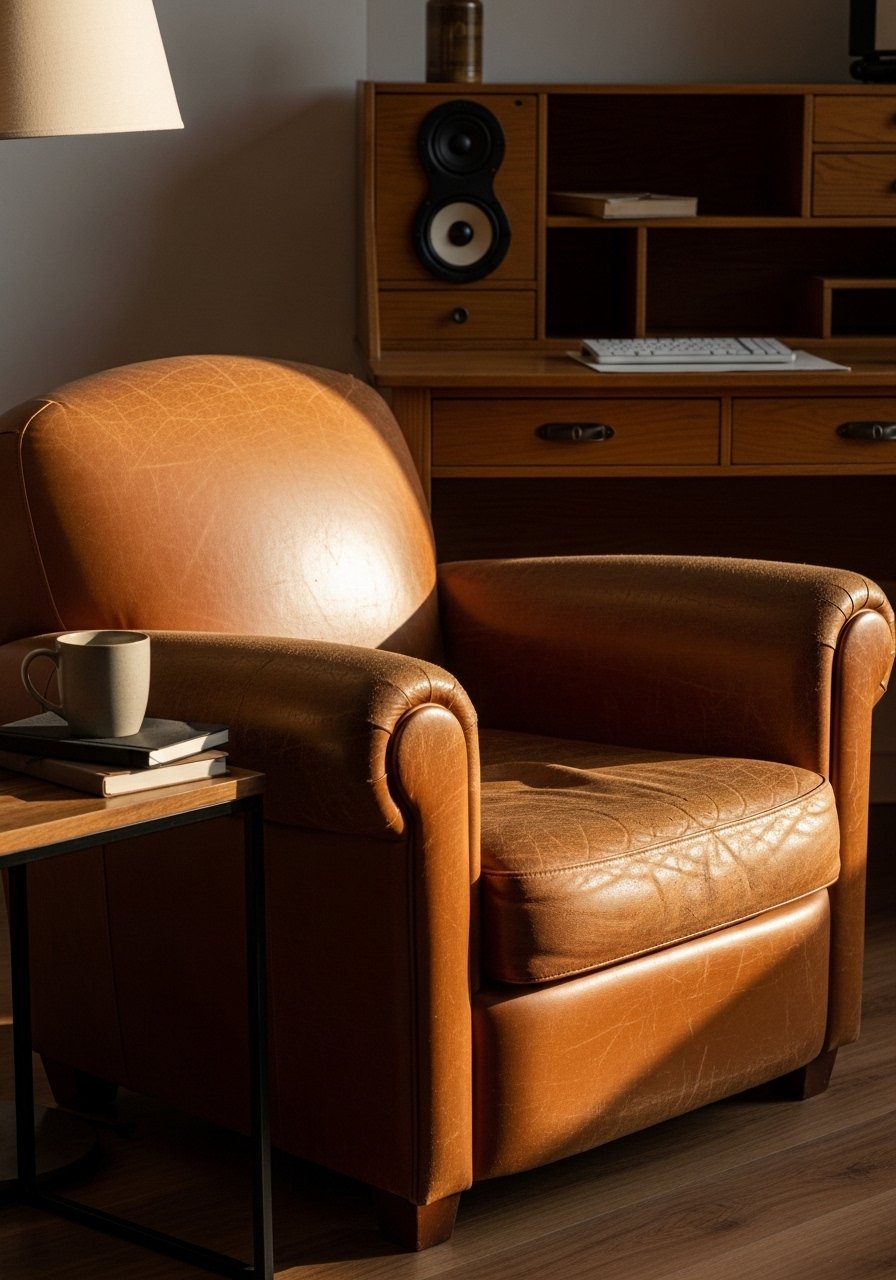
A solid leather chair makes the space feel grounded and lived in. I picked a gently worn cognac chair and it instantly added warmth that fabric chairs could not. Leather handles voice reflections differently, so place a small throw over the back to soften recorded sound. Cognac leather accent chair lasts and gains character. People often choose looks over comfort. Sit in a chair for at least five minutes before buying. A 20-inch seat depth works for shorter sessions, and 22 to 24 inches is better if you like to curl up.
Terracotta Planters for Easy Life and Color
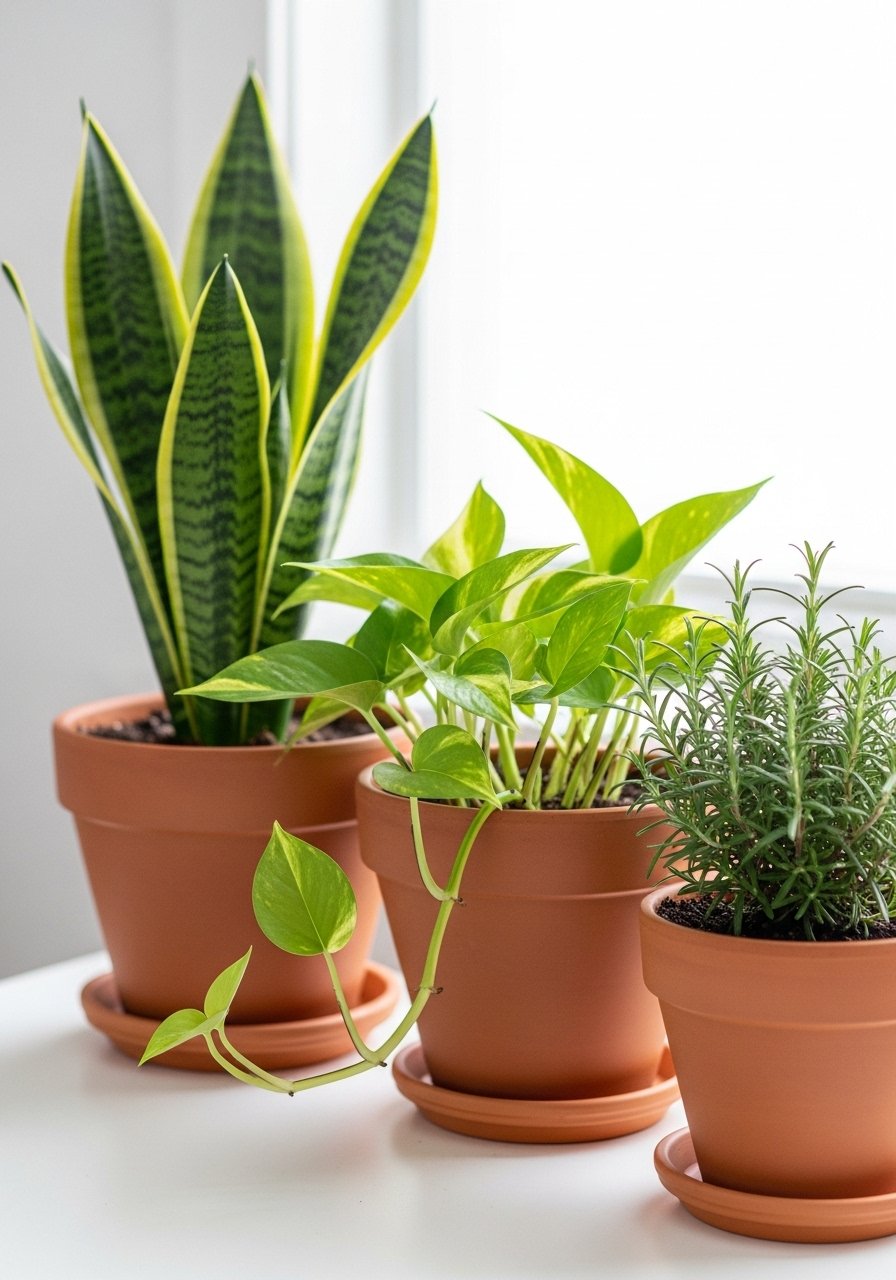
Plants make an earthy studio feel alive. Terracotta adds a natural red tone that pairs well with olive and tan. I use a mix of live and faux plants so the studio looks green even on busy weeks. Terracotta planter set is inexpensive and stacks well. People buy many small succulents. One 5-foot fiddle leaf fig or a tall snake plant gives more visual impact than five tiny pots. Place plants where they get indirect light and rotate every few weeks so one side does not burn or pale.
Open Shelving with Curated Objects
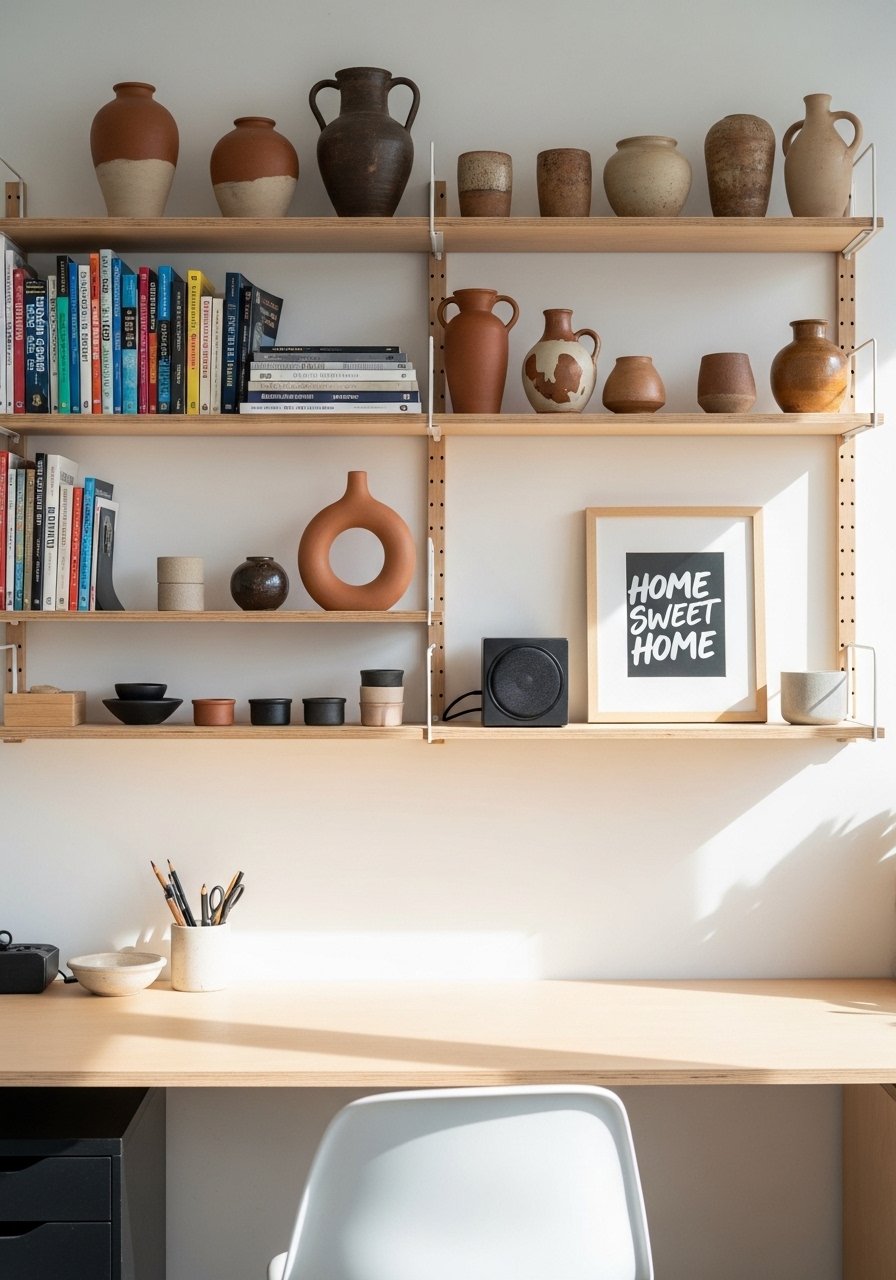
Open shelving keeps equipment accessible and becomes decor when styled. I keep the bottom shelf functional with cameras and cables and style the upper shelves with stacks of books and ceramics. Brass picture ledges let me swap framed prints without new holes. A common mistake is overcrowding. Leave 30 to 40 percent negative space to make objects breathe. For balance, place heavier items near the center of each shelf and lighter pieces toward the edges.
Soft Acoustic Curtains for Renters
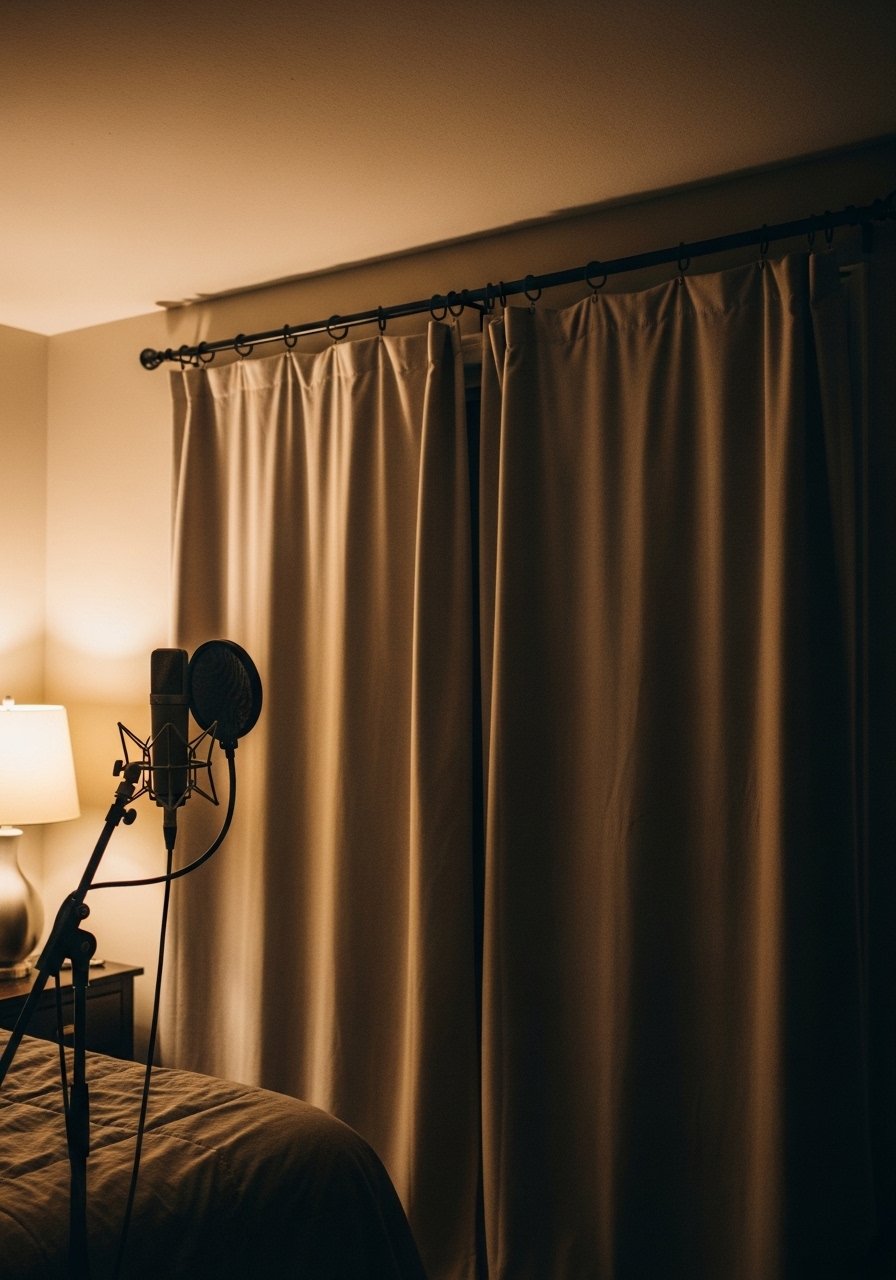
If you cannot install panels, heavy curtains work surprisingly well for sound and style. I hung thick linen-blend blackout curtains on a tension rod and they cut reflections while making the space feel snug. Blackout linen curtains are renter-friendly and easy to remove. Mistake people make is hanging thin sheer curtains and expecting sound control. Aim for fabric with a 9 to 12 oz weight for real absorption. Pair with the layered rug for noticeable acoustic improvement.
Clay and Ceramic Accessory Grouping for Character
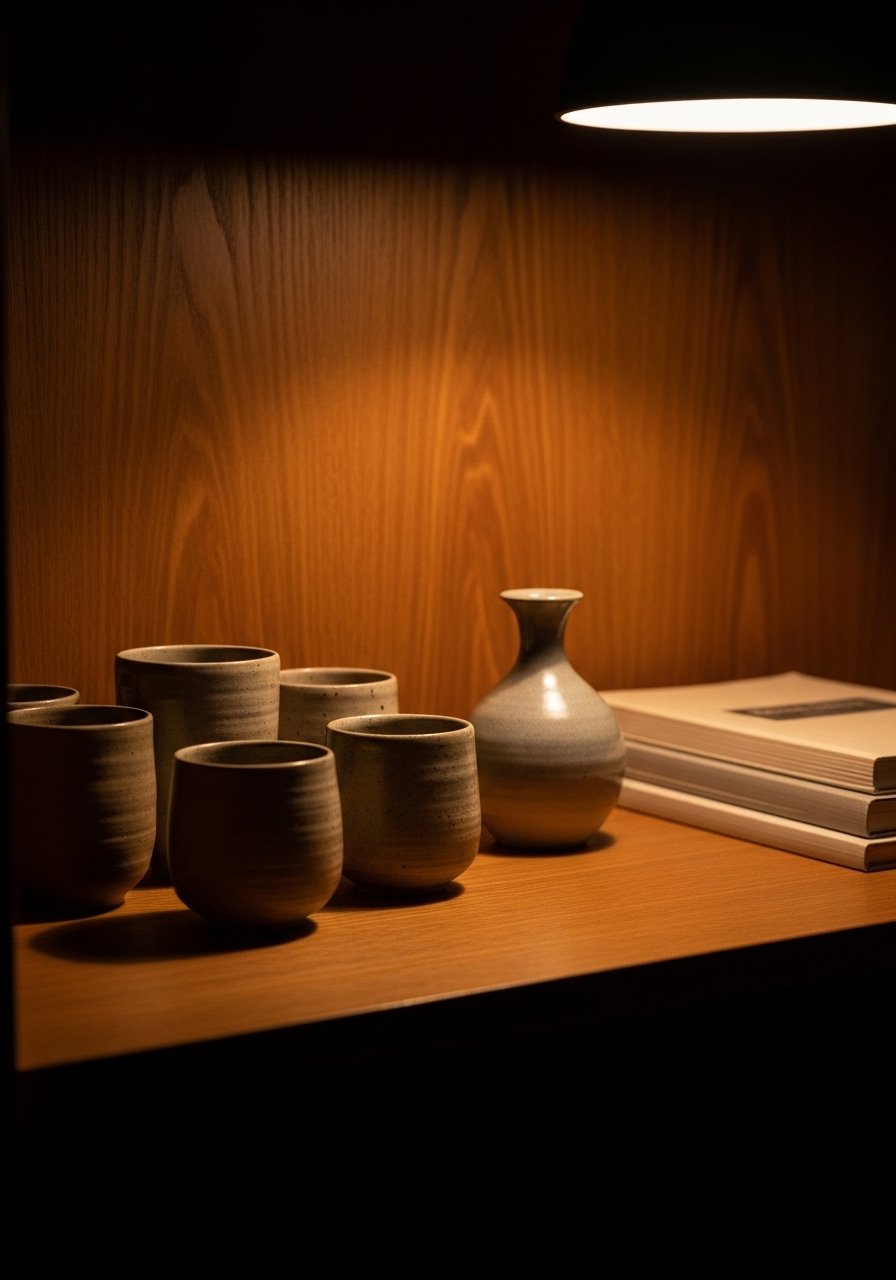
Grouping three to five clay pieces of different heights creates a handcrafted corner that photographs well for social posts. I keep one handmade mug for pens, a small vase for clippings, and a bowl for guitar picks. Handmade ceramic vase gives that artisan touch without being precious. The mistake is mixing too many finishes. Stick to matte terracotta and soft glazed neutrals. For scale, aim for a tallest piece about two-thirds the height of the shelf it sits on.
Natural Light Corner with Sheer Panels
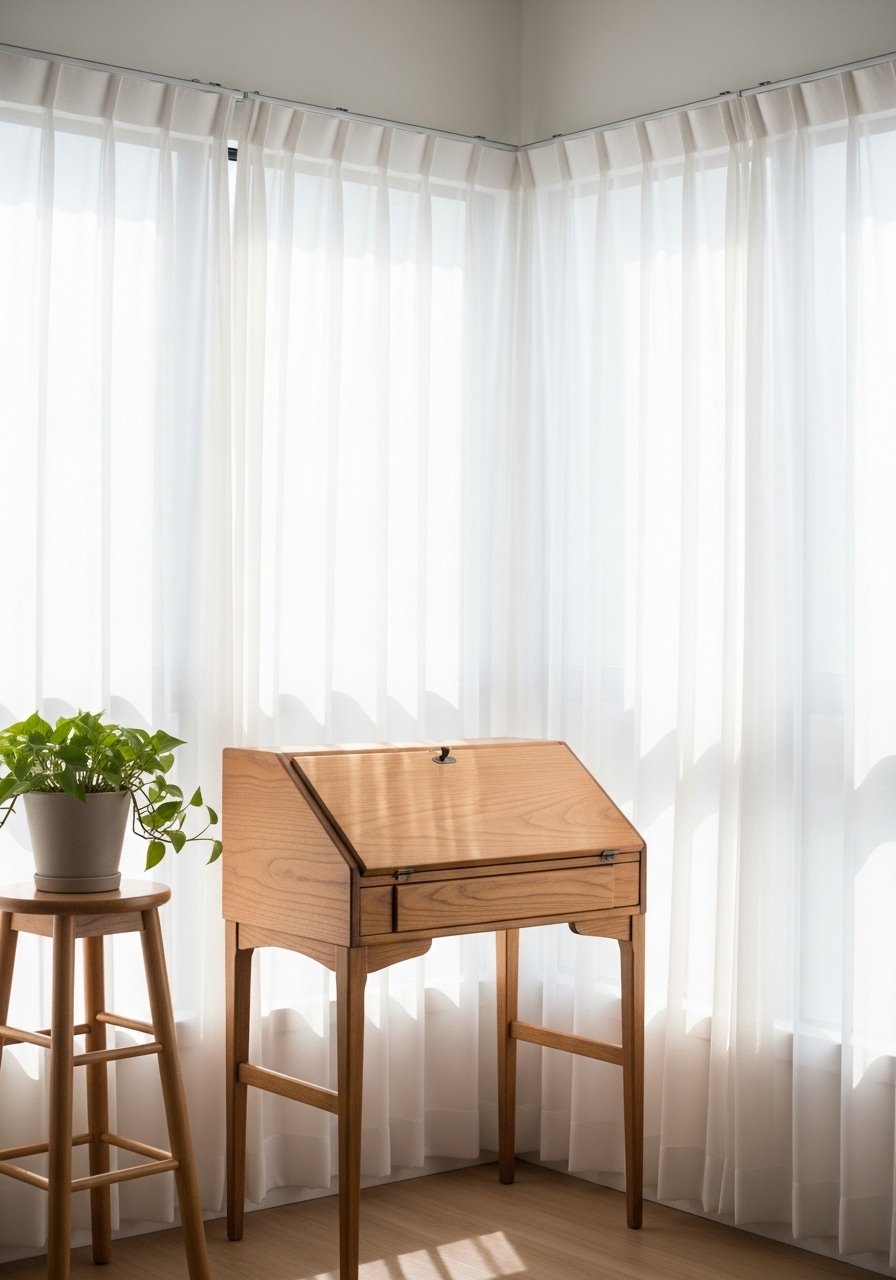
I reserved the sunniest corner for thinking and brainstorming. Soft sheer panels diffuse harsh rays and give you a consistent light source for video calls. Sheer white curtain panels let light in while reducing glare. People put screens directly in front of windows and get washed-out video. Instead, angle the monitor slightly off the window and use the sheer panel to soften contrast. A 2 to 3 foot clearance from the window keeps plants happy and cable runs tidy.
Woven Wall Hangings for Vertical Texture
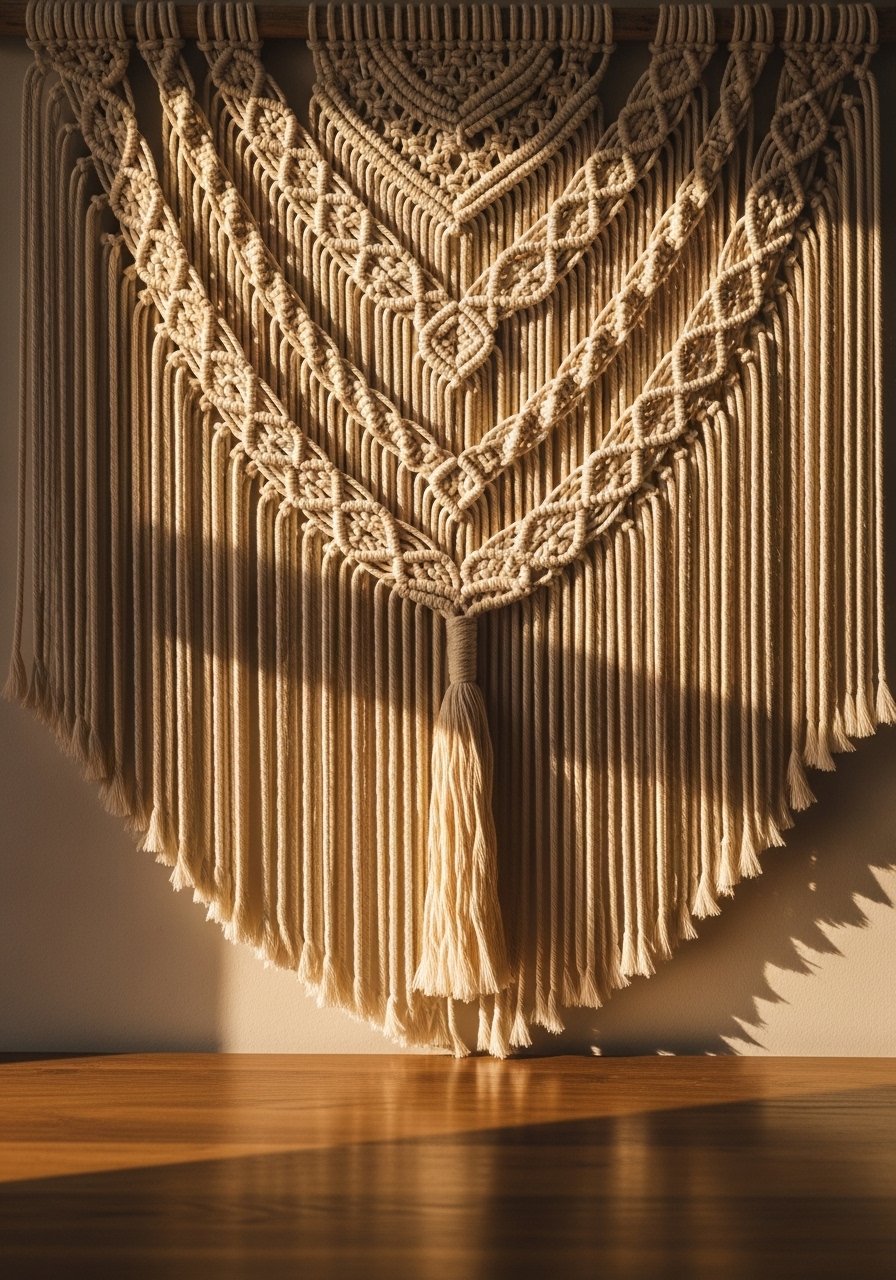
Woven hangings are cheaper than framed art and add real tactile texture. I swapped a framed print for a 3-foot-wide woven piece and it made the wall feel warmer and less digital. Handwoven wall hanging works especially well above a monitor where glare is a concern. Mistake people make is choosing a scale that is too small. Aim for a piece that fills at least 50 percent of the visible wall space above your desk. Pair it with the layered neutrals idea for a calm palette.
Hidden Cable Management in Earthy Style
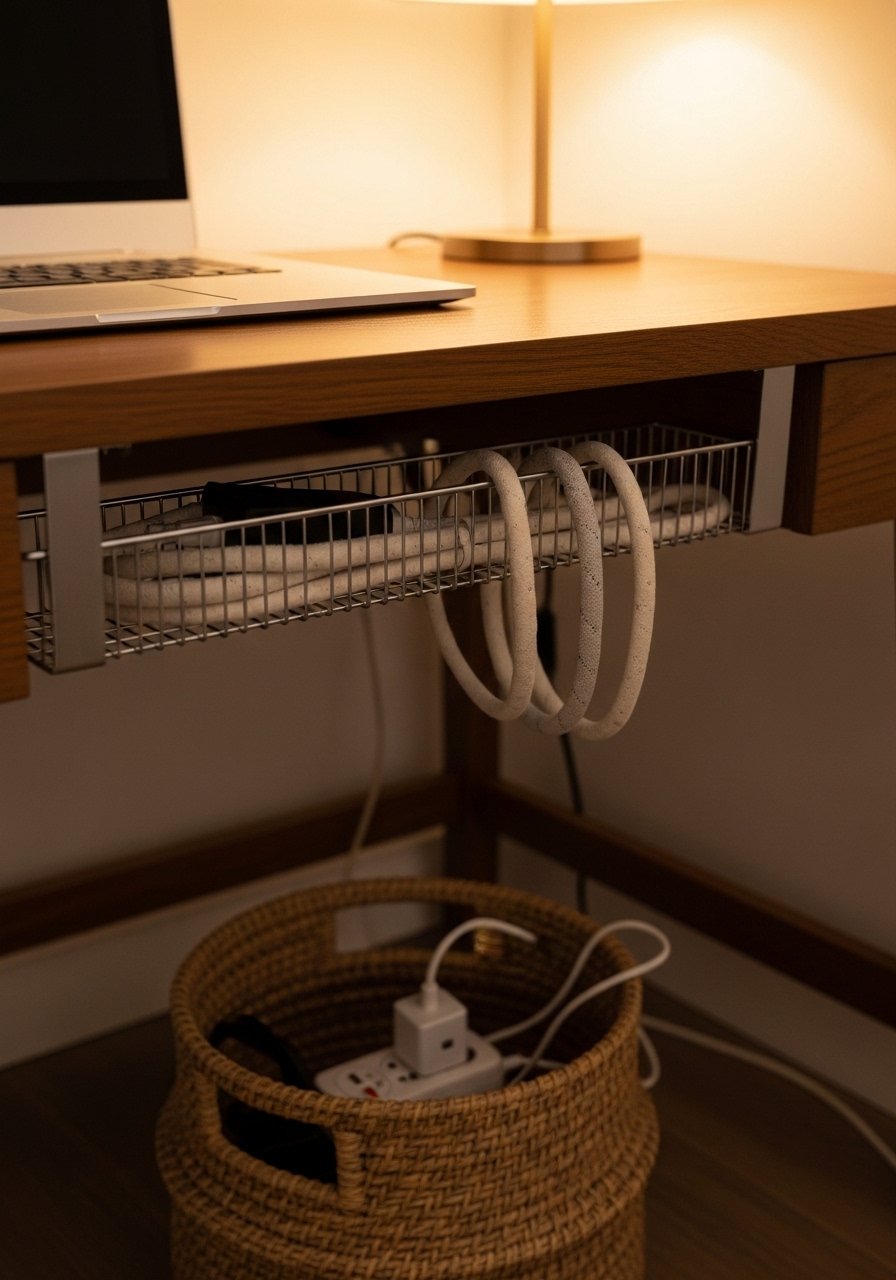
Nothing kills a calm studio faster than spaghetti cables. I installed a wood-finish cable tray and wrapped visible cords in cloth for a cohesive look. Under-desk cable tray hides power strips and adapters. The small tip people miss is color matching the cord wrap to the desk tone so the fix blends instead of shouting. Keep cable drops aligned with desk legs and use Velcro ties for easy access. Quick rule of thumb is to leave 6 inches of slack at plugs so you can move items without unplugging.
Your Decor Shopping List
Textiles
- Honestly the best $40 I have spent. 22-inch linen pillow covers, set of 2 in warm tan and cream for layered seating
- Chunky knit throw in cream (~$35). Drape over a chair for instant softness
Wall Decor
- Handwoven wall hanging, 36-inch (~$45), large scale fills space above desk
- Brass picture ledges, set of 2 (~$22). Swap prints without new holes
Lighting
- Brass task lamp with dimmer (~$60) for warm desk pools
- Amber LED strip backlight (~$18) for monitor glow
Plants and Planters
- Terracotta planter set, 3-piece (~$25) for easy greenery
- 6-foot faux fiddle leaf fig (~$90) for corners with low light
Organization
- Under-desk cable tray, wood finish (~$30). Keeps cords out of sight
- Felt acoustic panel, 12×12 inch (~$20 each). Dress them as art
Notes: Many of these items have similar options at Target and HomeGoods. For handmade ceramics try local markets or Etsy for unique pieces.
Shopping Tips
White oak beats dark wood in 2026. Design feeds have shifted completely. These white oak floating shelves look current, not dated.
Grab velvet pillow covers for $12 each. Swap them seasonally and the whole room feels different.
Curtains should puddle or kiss the floor, never hang halfway up. 96-inch linen curtain panels are right for standard 9-foot ceilings.
Avoid buying five small succulents. One single 6-foot fiddle leaf fig has ten times the visual impact.
If you buy acoustic panels, pick matte fabrics and stagger them. Felt acoustic panels are easier to match to an earthy palette than glossy tiles.
Frequently Asked Questions
Q: What size rug do I actually need for a small studio desk?
A: Bigger than you think. For a desk area, aim for a rug that extends at least 18 inches beyond the desk on each side. A 6×9 rug often works better than a 4×6 because it balances the furniture visually and reduces echo.
Q: Can I mix boho textiles with modern furniture without it looking messy?
A: Yes. Keep a 60/40 ratio where 60 percent is your neutral furniture and 40 percent is boho textiles and accessories. Stick to three main tones and one accent color. Pair a woven wall hanging with a clean-lined desk for balance.
Q: Will plants help acoustics or just aesthetics?
A: Plants help a little for high frequency dampening and they visually soften a room. For real acoustic control combine plants with rugs and soft curtains. Use a tall plant near reflective surfaces and rotate it occasionally so light exposure stays even.
Q: Should I choose real plants or faux for a studio with low maintenance time?
A: Both. Real snake plants and pothos survive neglect. Use a well-placed faux tall plant like this 6-foot fiddle leaf fig where you need height without the upkeep.
Q: How do I hide cables without losing access to power?
A: Use an under-desk cable tray and cloth-wrapped cords. Leave about 6 inches of slack at plugs so devices move without tugging. Keep commonly used chargers in a woven basket on a lower shelf for easy reach.