

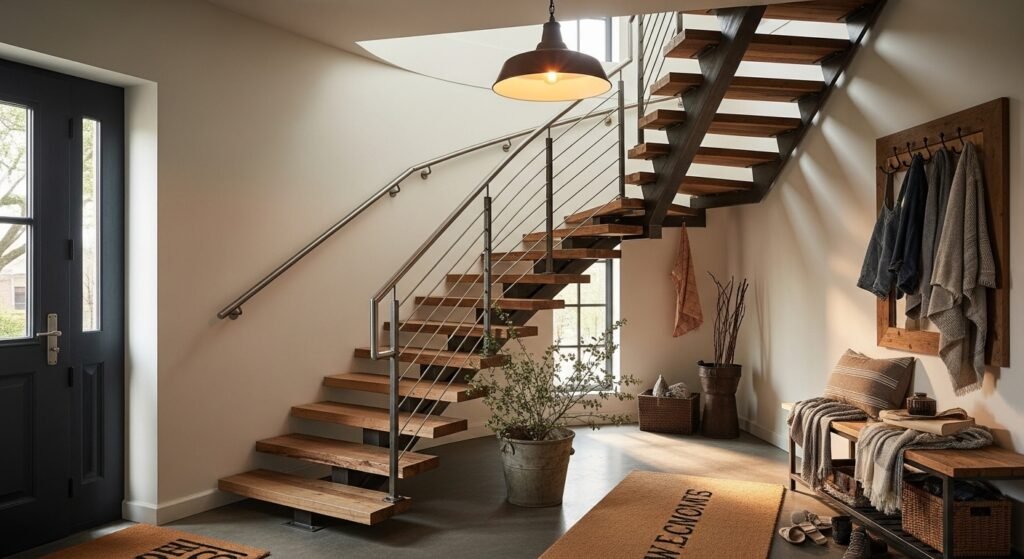
My first apartment had a set of bland closed stairs that made the whole first floor feel boxed in. Swapping the railing and adding a runner changed the room more than any new sofa ever did. These stairs ideas are about texture, scale, and a few smart measurements that stop stairs from feeling like an afterthought.
These ideas lean industrial-modern with bits of warmth. Most projects are $50 to $600, with a few splurges around $1,000 for structural changes. They work for entryways, split-levels, lofts, and basement stairs that need personality and better flow.
Raw Metal Railings For A Minimal Entry
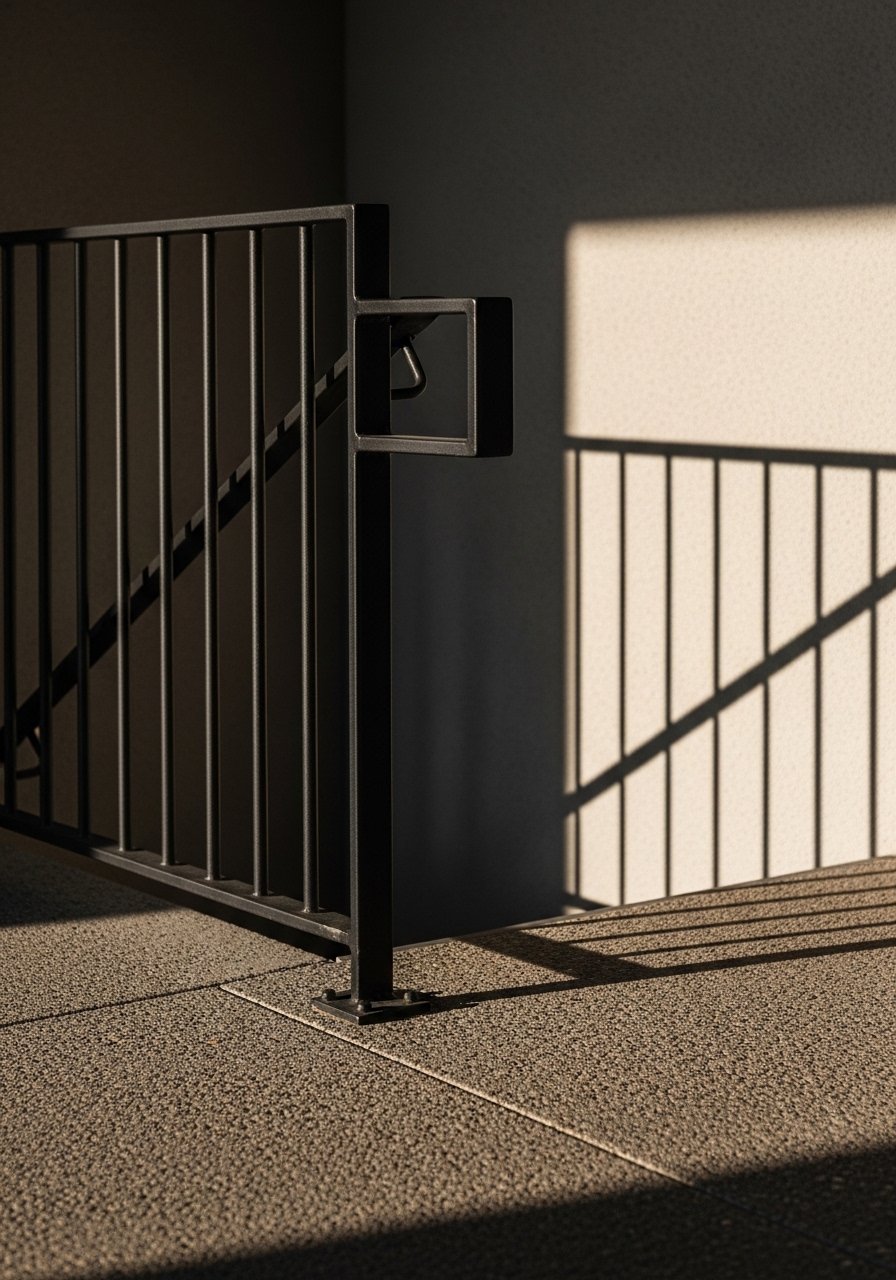
If your entry feels like a hallway, swap bulky balusters for a raw metal railing. A simple steel-post kit makes the space read cleaner and taller. I spent about $250 on a basic black railing kit and it instantly made my doorway feel intentional. Keep the handrail 34 to 38 inches high so it reads like a proper stair and not a decorative ledge. Common mistake: buying railing with posts too heavy for your stringer, which makes installation awkward. A specific find that helped me was a black metal railing kit, sturdy but not overbuilt.
Floating Timber Treads With Steel Frame
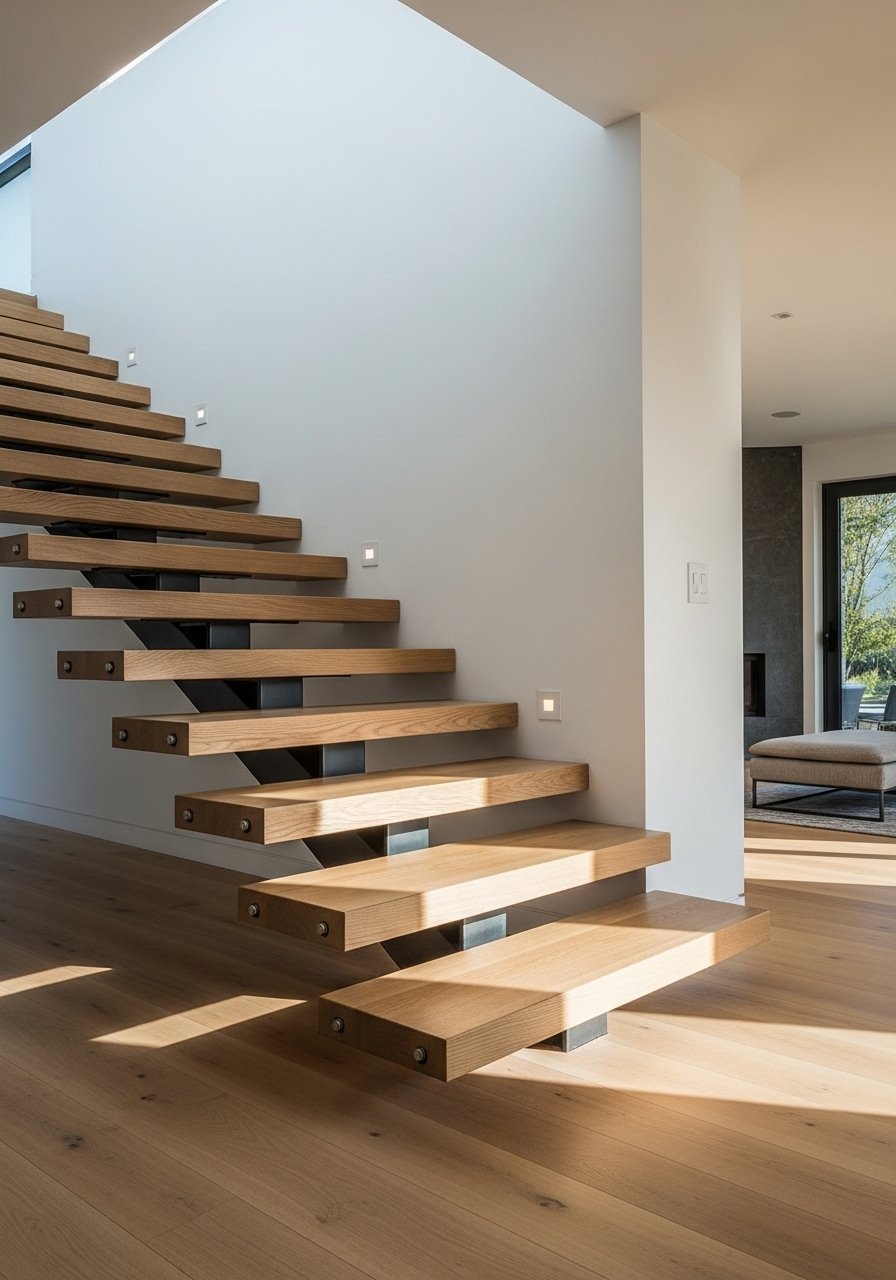
Floating treads make stairs feel sculptural. I swapped full stringers for a welded steel frame and 1.5-inch thick white oak treads. The float creates negative space and keeps a loft feeling without losing sturdiness. Budget here runs $800 to $2,000 depending on wood and welding. A mistake people make is using treads too thin, which creates bounce. Aim for 1.25 to 1.5 inches thickness for real-life durability. I used white oak stair treads to match my floors and it tied the whole first floor together.
Open Risers To Add Air And Light
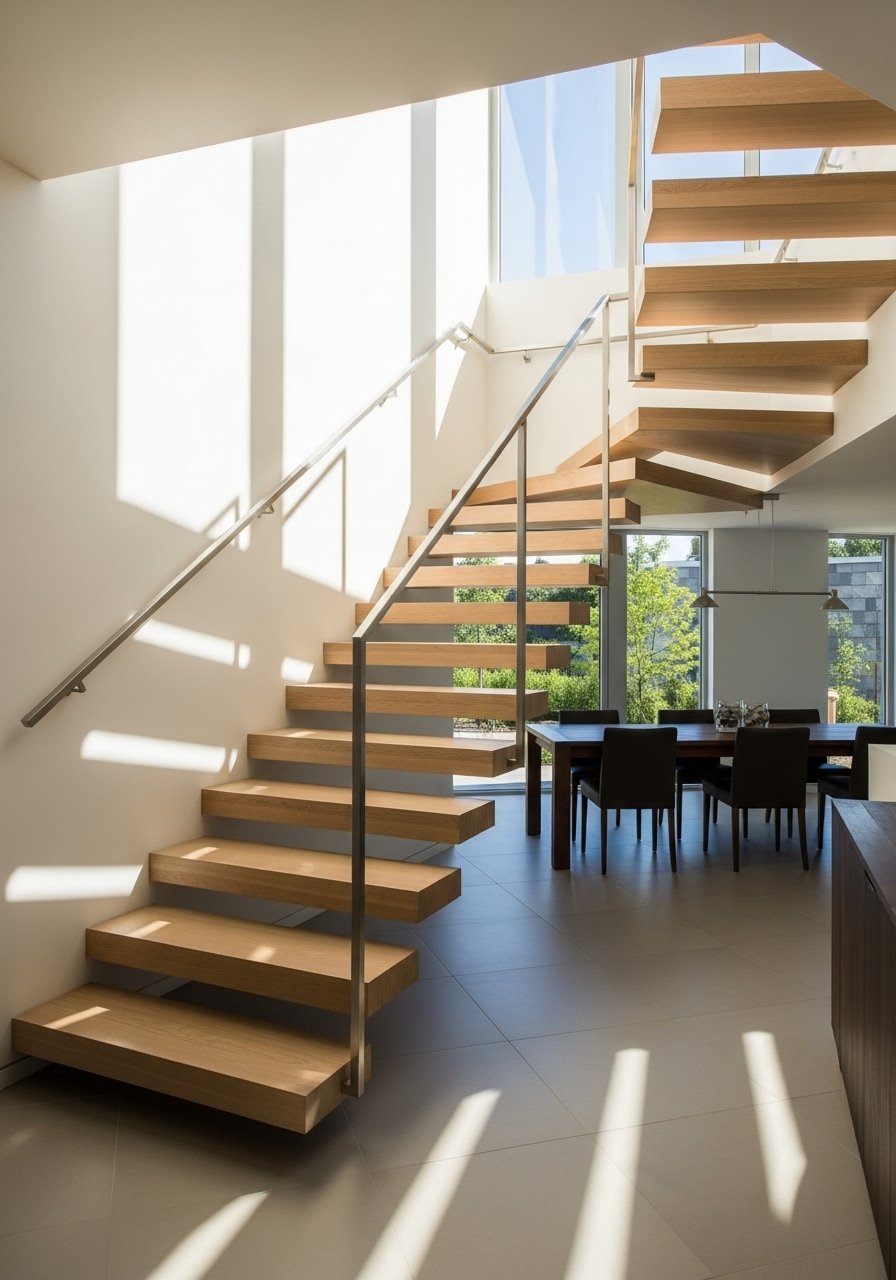
Open risers mean light passes through the stair, which brightens dark corners. When I removed solid risers in my townhouse, the under-stair nook felt twice the size. Keep riser gaps modest for safety and code, and use at least 3/4-inch nosing to avoid an unfinished look. The common mistake is doing open risers with thin treads; they look fragile. If you want a quick kit solution, try open-riser stair tread brackets for a clean installation without a full rebuild.
Blackened Steel Stringer For Loft Stairs
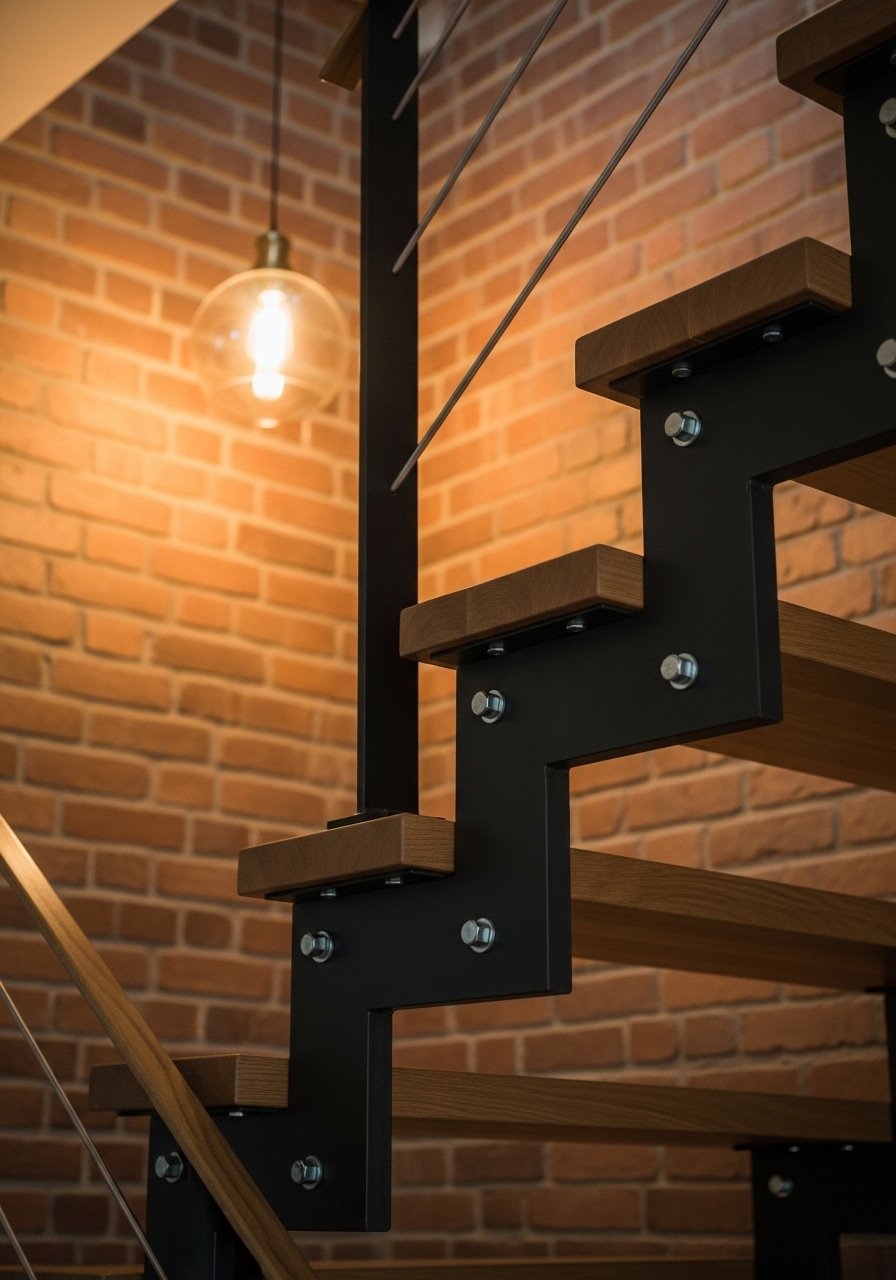
A single blackened steel stringer reads rugged and crisp. I had mine powder-coated for durability and a less shiny finish. It costs more up front, roughly $600 to $1,200, but it never scuffs like painted steel. One detail people miss is the visible welds; embrace them, but file and finish so they look deliberate. Pair with chunky wood treads that overhang about 3/4 to 1 inch for a comfortable step profile. I bought a steel stringer support bracket during installation and it saved a week of extra fitting.
Cable Railings For An Uncluttered View
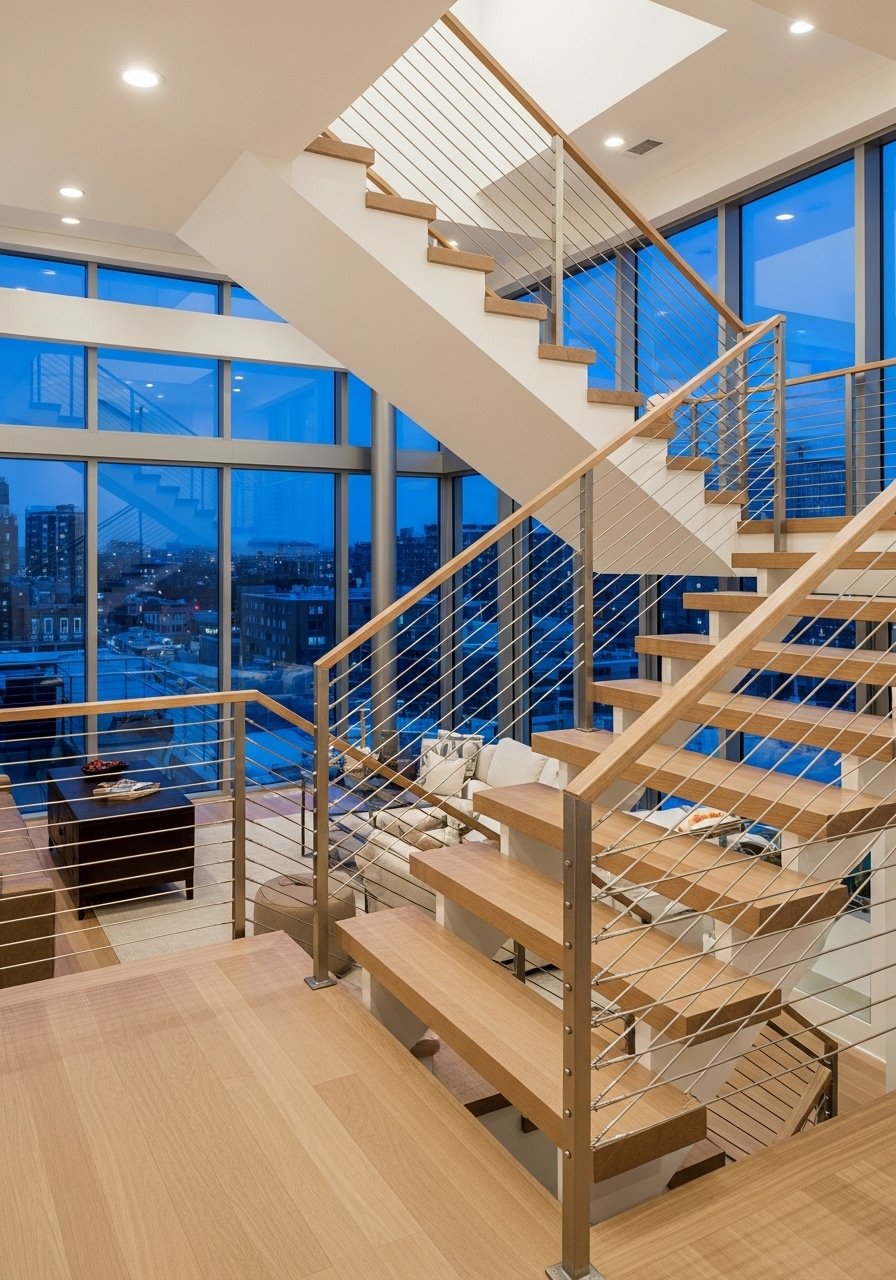
Cable railings are perfect if you want an unbroken sightline through your home. They make a small loft feel larger and keep the eye moving. Installation is pretty DIY-friendly if you use tensioning kits, roughly $200 to $500 for a run. A common mistake is spacing cables too far apart. Keep spacing under 4 inches so it’s both code-friendly and safer with pets. For a smooth finish try a stainless cable railing kit; the tensioner hardware matters more than you expect.
Reclaimed Wood Treads For Instant Warmth
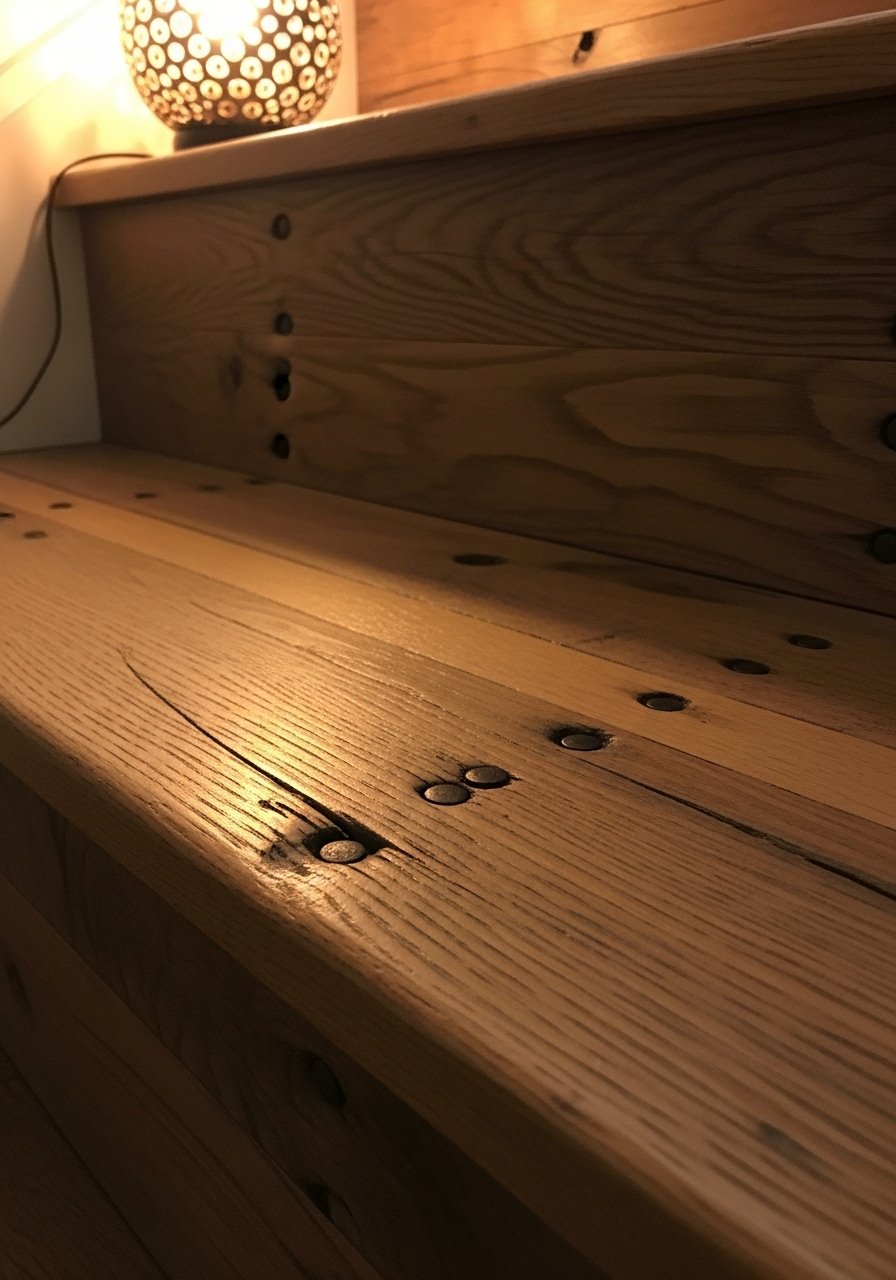
If your stairs feel cold from all the metal, reclaimed wood treads add instant warmth and character. I ripped and sanded old barn planks to 1.5-inch treads, and the little nail holes look intentional. Budget runs $150 to $600 depending on source and refinishing. People often over-sand reclaimed boards and lose the patina. Keep at least a 1/16-inch of original surface in places to keep the story. I used a reclaimed wood stair tread kit to find consistent sizing.
Concrete Steps With Wood Nosing For Hybrid Texture
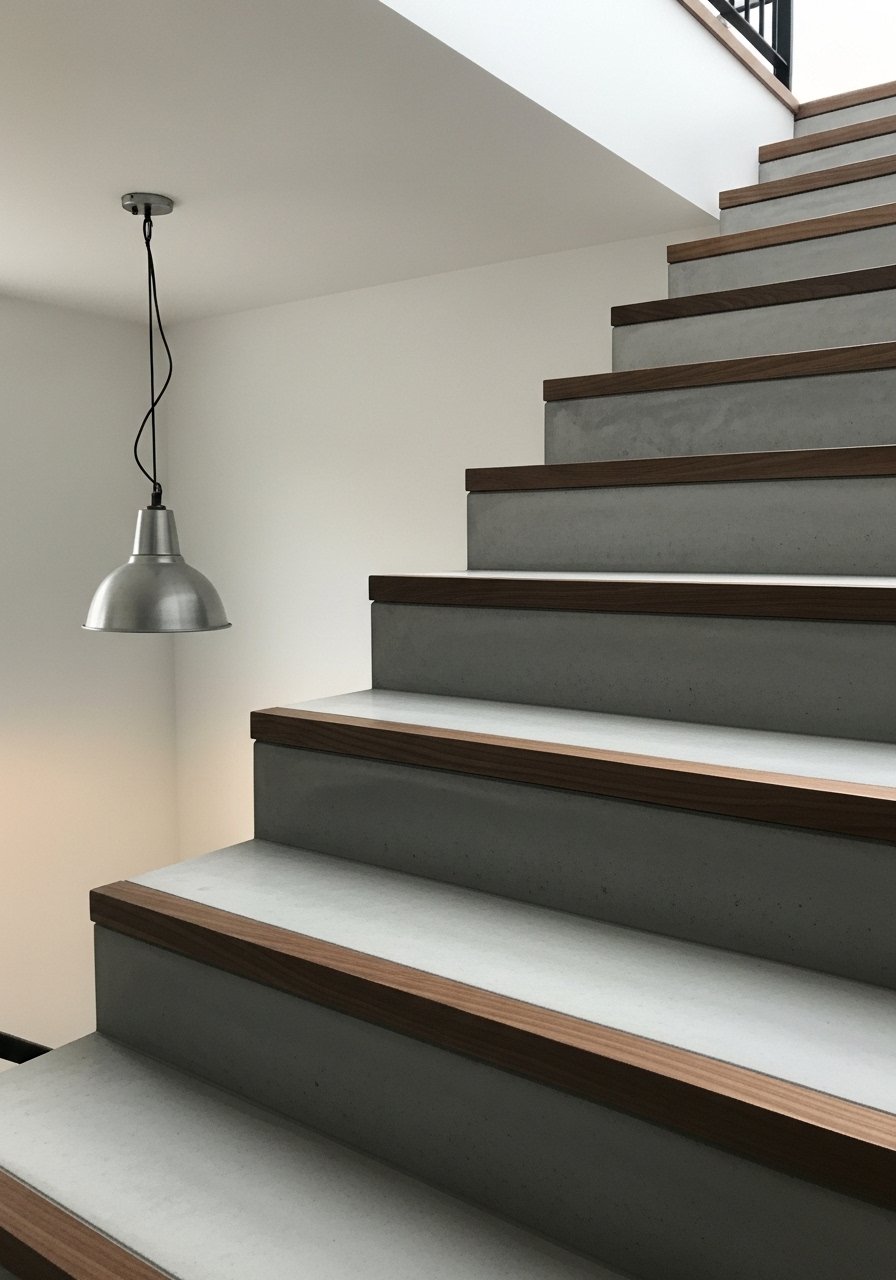
Concrete treads read industrial but can feel cold underfoot. I added a 1-inch walnut nosing and everything felt balanced. Concrete is great for basements and modern exteriors and costs $300 to $800 for a small stair run. The mistake is leaving raw concrete edges exposed. A wood nosing at 1 to 1.25 inches softens the step and improves traction. If you need a product, I used a wood stair nosing strip that matched my nosing thickness and made a tight seam.
Industrial Pendant Lighting Over Stairs
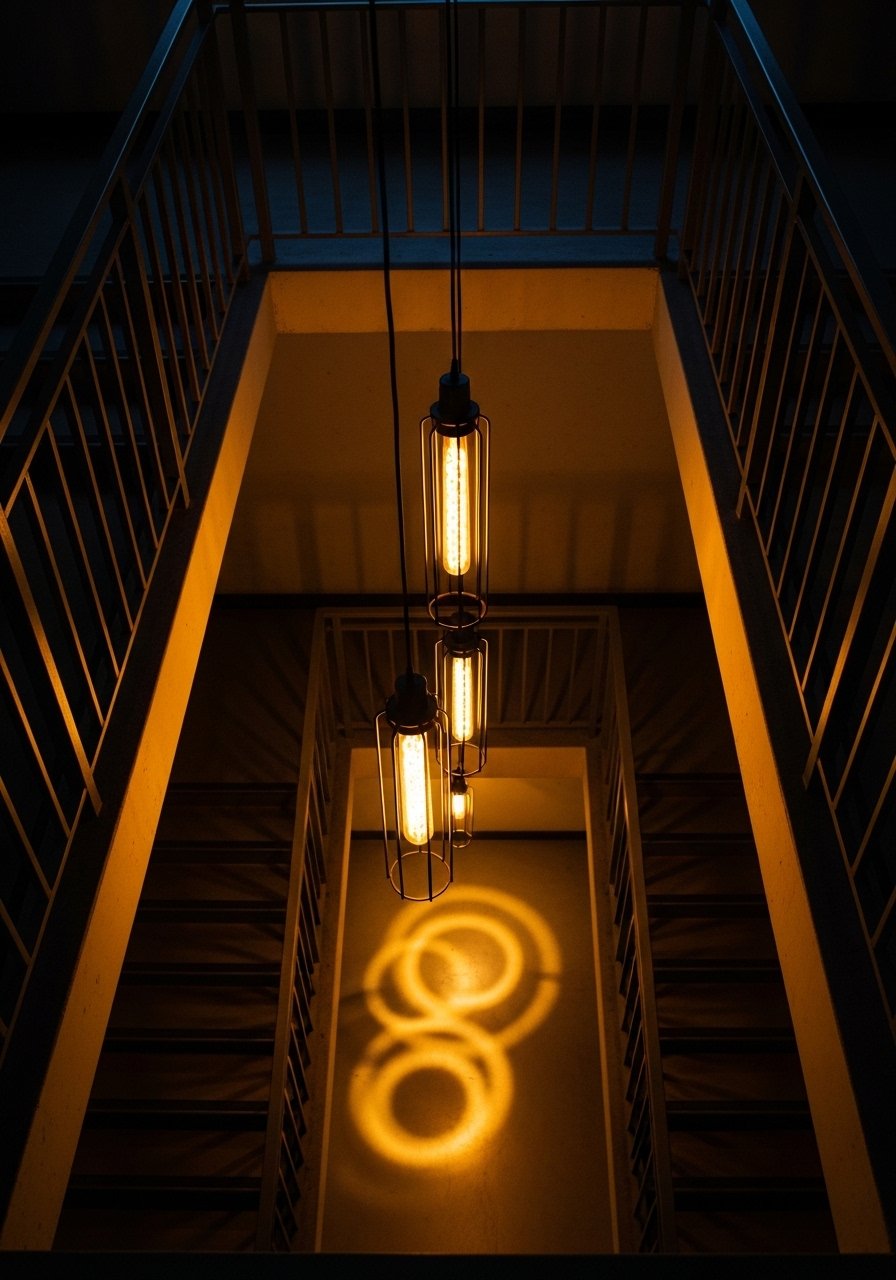
Lighting changes perception of every stair. Hanging staggered pendants over a stairwell gives a vertical rhythm and draws the eye up. I installed three different lengths and the stair suddenly felt like a designed object. Budget: $150 to $700 for a multi-pendant cluster. Common mistake: pendants that are too bright and glare. Use filament-style bulbs or warm LED bulbs at 2200K to 2700K. I installed industrial pendant lights and swapped in warm bulbs for a softer look.
Stair Runner With Narrow Border Rule

Runners make a stair feel finished and quieter. My rule is to leave 1.5 to 2 inches of stair showing on each side for a tailored look. Go wider than you think if you have a large tread. Runners are budget-friendly, $60 to $400 depending on material. Don’t center a thin runner that makes the stairs look narrow. I bought a durable wool stair runner and had it bound to match the 2-inch border, which changed the perceived width of the stair.
Matte Black Handrail With Brass Accents For Contrast
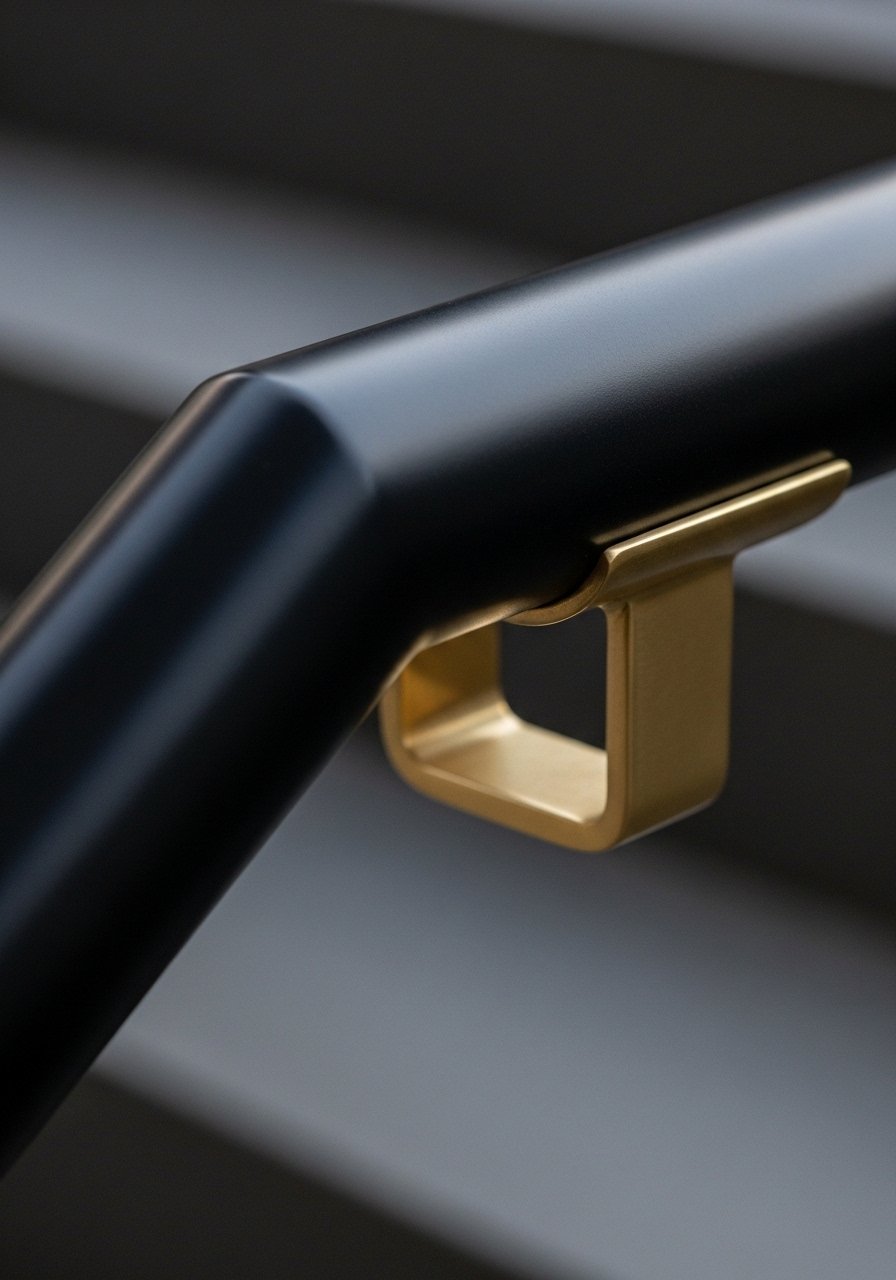
Mixing matte black with small brass touches keeps the industrial look from feeling flat. I swapped my whole handrail for matte black and added brass end caps as a counterpoint. A small detail like a brass bracket lifts the look and costs under $50 for accents. Common mistake is overdoing brass. Use it in one to three focal points, not every fitting. I ordered brass handrail brackets and only used them on the landings for a subtle contrast.
Built-In Under-Stair Storage With Cubbies
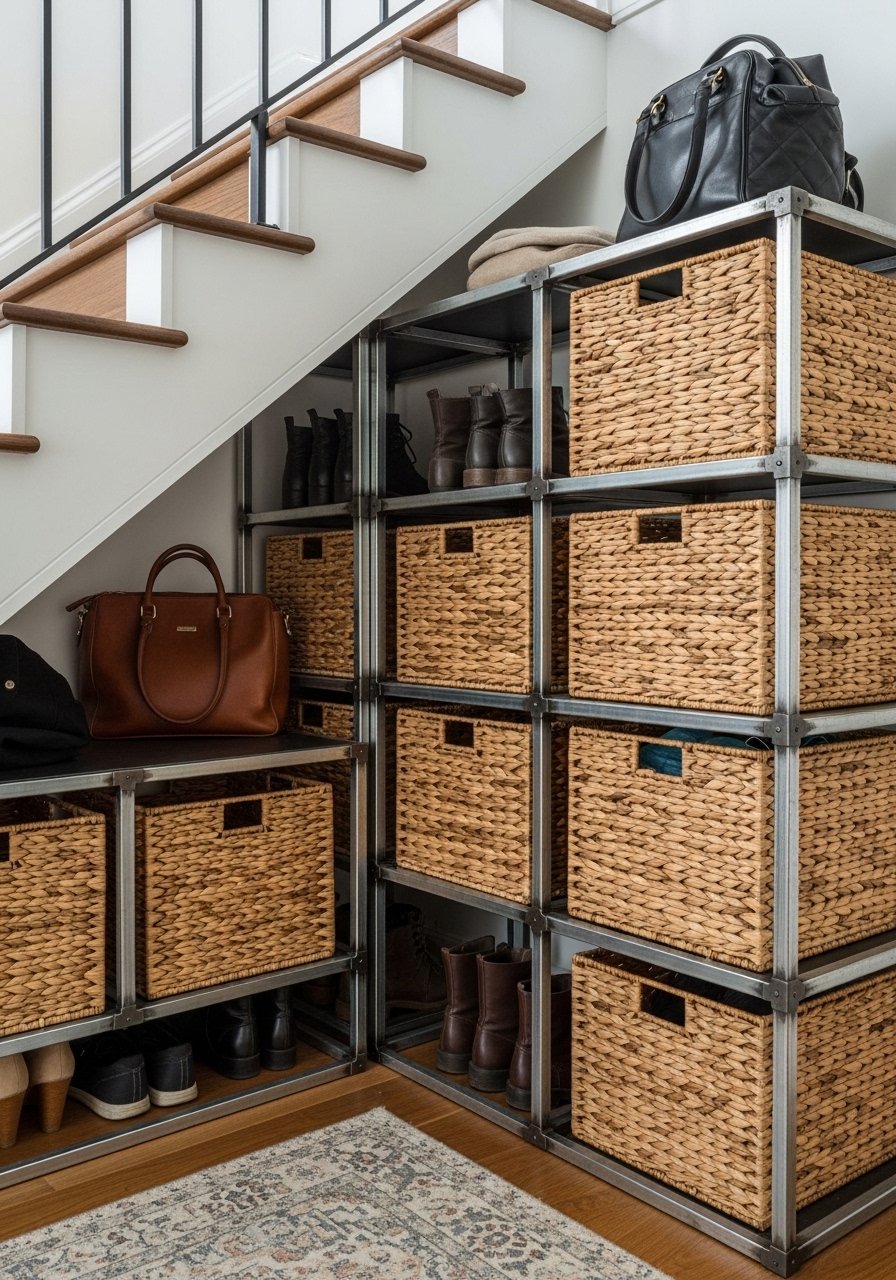
Under-stair space is wasted opportunity. I built cubbies with steel frames and wood shelves for shoes, kid gear, and a plant. It cleaned up the landing instantly. This is a budget-friendly carpentry project at $200 to $800 depending on finish. The mistake is making cubbies too shallow. Aim for 12 to 16 inch deep compartments for real storage. I used woven storage baskets inside each cubby for quick hiding and easy swaps.
Painted Riser Graphics For Personality
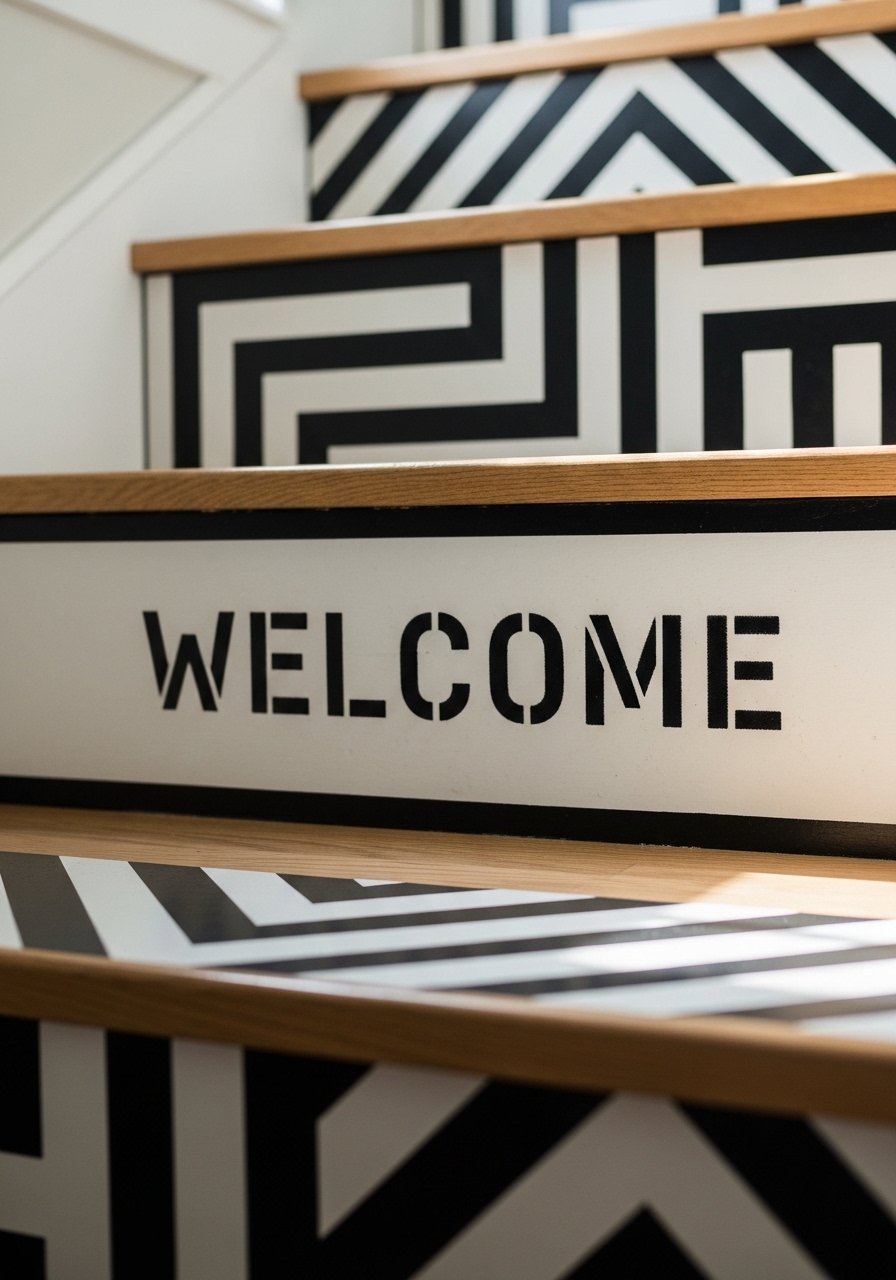
Painting risers is an inexpensive way to add personality. I painted a two-tone band on every riser and it reads like custom tile. This project is $20 to $150 in paint and tape and takes an afternoon. People overcomplicate the pattern and pick colors that clash with wood tones. A safe rule: use one neutral, one accent. If you want text, try a single word on the middle riser for a playful focal point. For stencils try a stair riser stencil set to keep lines crisp.
Mixed-Metal Balusters For Visual Depth

Mixing metals adds visual depth without clutter. I alternated steel and aged brass balusters and the stair read layered, not busy. Budget depends on metal; plan $200 to $700 for a full run. A frequent error is matching finishes too closely. Let one metal be matte and the other shiny for contrast. For an easy update try mixed metal baluster replacements so you can swap a few at a time.
Glass Panels With Metal Posts For Safety And Openness
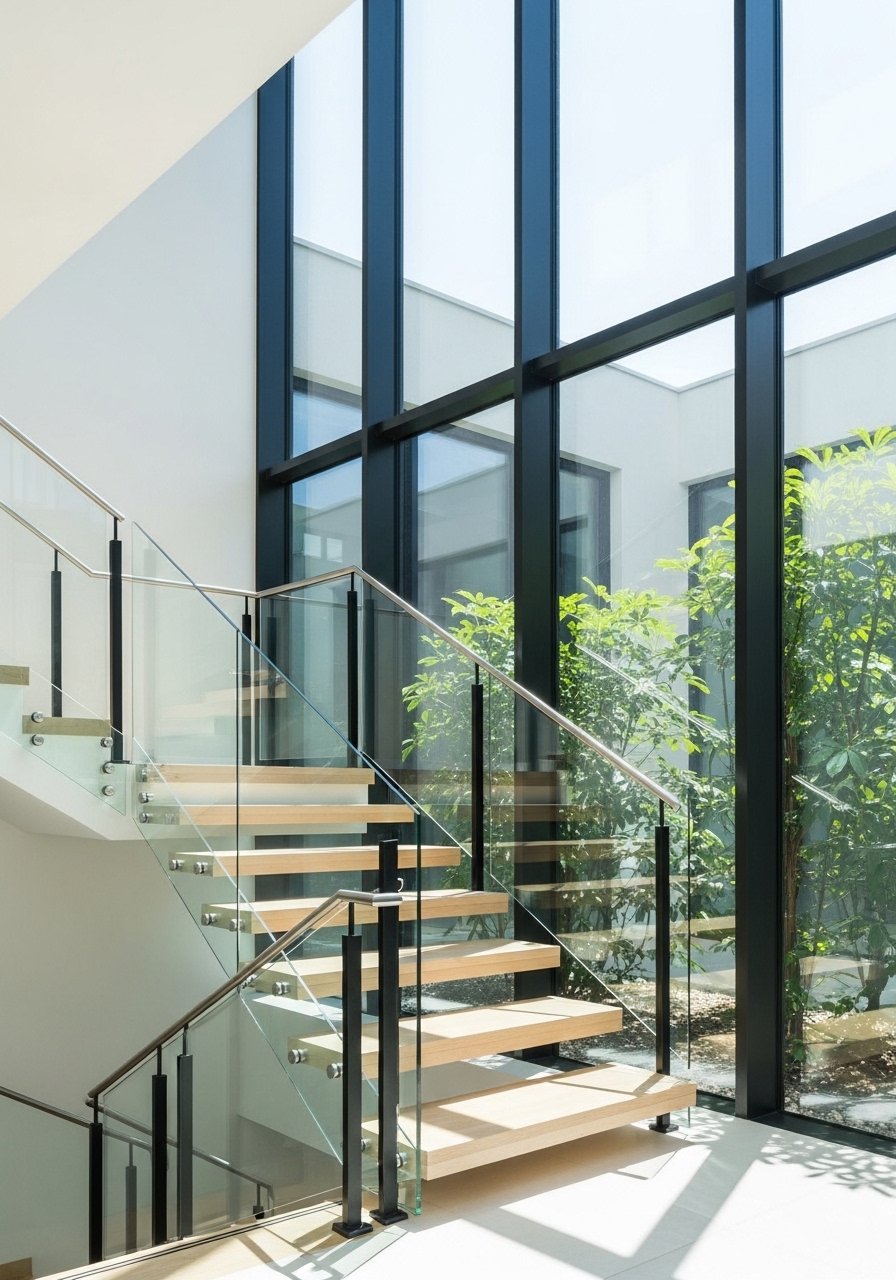
Glass panels keep sightlines while meeting safety needs. I installed tempered glass panels between metal posts and the upstairs balcony felt connected instead of walled off. Expect $800 to $2,000 for a professional install, cheaper if you use acrylic at your own risk. Mistake: choosing glass without a slight tint that hides fingerprints. Low-iron glass reads clearest. For a maintenance aid try glass cleaner designed for architectural glass to keep everything streak-free.
Textured Nosing And Anti-Slip Details For Real Life
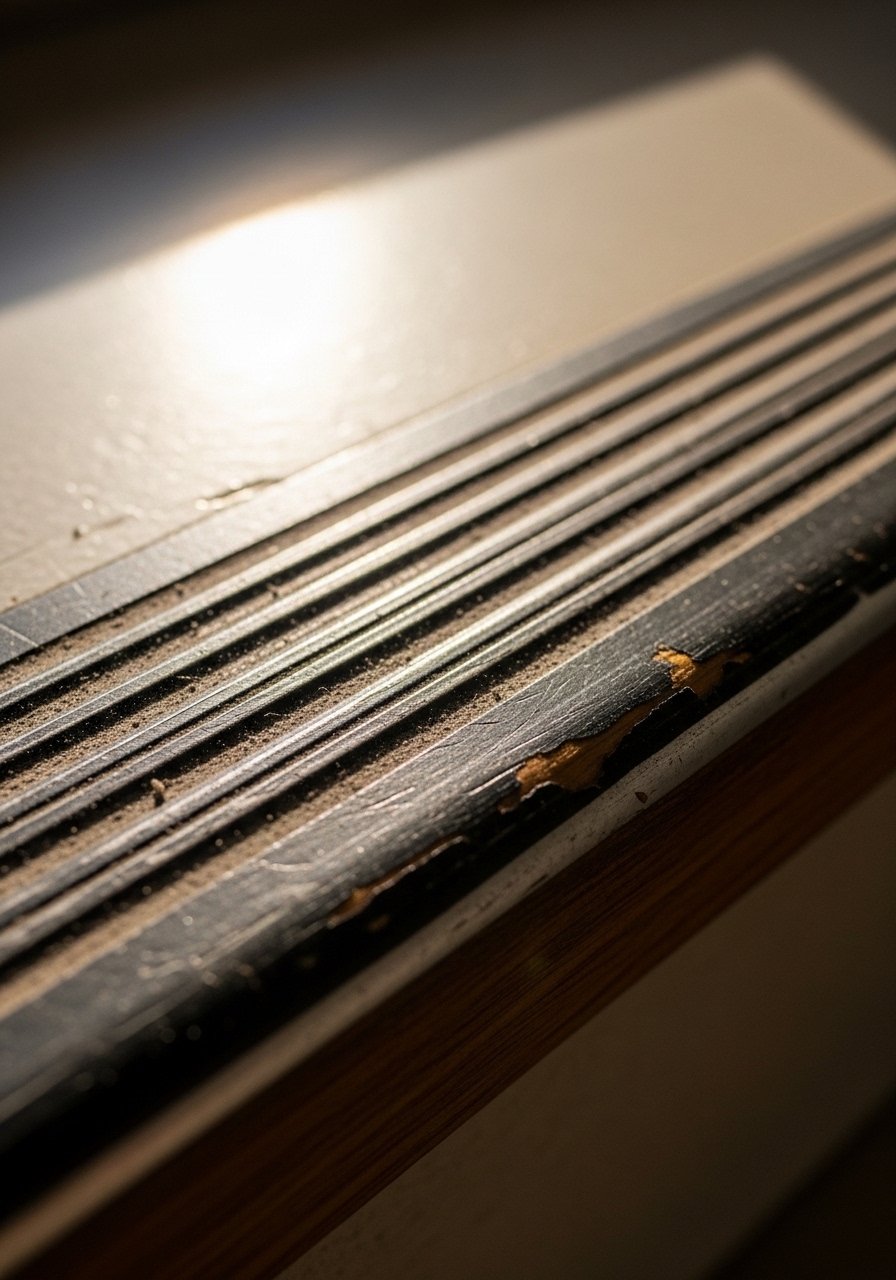
Looks matter, but safety matters more. I added textured nosing and discreet anti-slip inserts on high-traffic treads. They save slips and still look intentional. Budget is low, $20 to $80 for a full run. Common mistake: using anti-slip tape that peels within weeks. Pick quality inserts rated for outdoor use. A detail many articles miss is matching the nosing profile to the tread overhang. I used vinyl anti-slip stair tread strips and got a tight fit that lasts.
Your Decor Shopping List
Textiles
- Honestly the best $45 I have spent. Chunky knit throw in cream for landing benches and stair nooks.
- For stair runners leave a border. Wool stair runner in charcoal 27-inch width works for standard treads
Wall Decor & Mirrors
- For small landings a round mirror adds depth. 36-inch round industrial mirror with a thin metal frame
- For riser graphics try stair riser stencil set
Lighting
- Industrial pendant cluster, three-light for multi-level stair wells
- Warm LED filament bulbs, 4-pack
Hardware & Safety
- Black metal railing kit for entry rail swaps
- Vinyl anti-slip stair tread strips for high-traffic treads
Storage & Styling
- Woven storage baskets, set of 4 for under-stair cubbies
- Brass handrail brackets, pair for small accents
Notes: Many of these items have similar options at Target or HomeGoods if you prefer in-person shopping.
Shopping Tips
White oak beats dark wood in 2026. Design feeds have shifted. White oak floating shelves look current, not dated.
Grab wool stair runner options for durability. Wider runners change how wide a stair reads, so size up by one standard width when in doubt.
Curtains should puddle or kiss the floor, never hang halfway up. Linen curtain panels 96-inch are a safe length for 9-foot ceilings.
Lead with a single statement metal, then add one small accent in a second metal. Try mixed metal baluster replacements to test pairing before committing.
One large plant has more impact than five small ones. Faux fiddle leaf fig, 6-foot gives height without maintenance.
If you rent, use tension cable railing kits that avoid drilling the primary stringer. Tension cable railing kit options keep damage minimal.
Frequently Asked Questions
Q: Can I install metal railings myself?
A: Maybe. Small runs with surface-mount posts are DIY-friendly if you have a drill and a helper. For load-bearing stringers or structural changes hire a pro. Black metal railing kits include templates that make the process smoother.
Q: What width should a stair runner be?
A: Leave 1.5 to 2 inches of tread visible on each side for a tailored finish. If you have a wide tread, size up the runner one standard width so the visual weight feels right.
Q: Are open risers safe with kids and pets?
A: Open risers can work if gaps are modest and meet local code. A quick fix is adding a thin vertical infill or slightly reducing the gap so toys cannot fall through. For pets, choose treads with a non-slip surface.
Q: How do I keep metal stairs from feeling cold?
A: Add warmth with reclaimed wood treads, a narrow runner, and textured lighting. A wood nosing of 1 to 1.25 inches makes a big difference in touch and tone.
Q: Which is better for small homes, cable or glass railings?
A: Cable keeps sightlines and feels more casual. Glass reads cleaner and brighter but is pricier to keep streak-free. If you want low visual noise go cable, for maximum light go glass.
Q: How much should I budget for a full stair remodel?
A: For cosmetic updates expect $200 to $1,200. For structural changes like new stringers or floating treads plan $1,000 to $5,000 depending on materials and labor. Small changes like a runner, new handrail, and lighting often feel like a bigger remodel than they cost.
Q: Can I mix boho textiles with industrial stairs without it looking messy?
A: Yes. Keep the stair architecture simple and use boho textiles only on nearby seating or a landing. Limit pattern colors to two accent tones and one neutral. This keeps contrast intentional and not cluttered.