

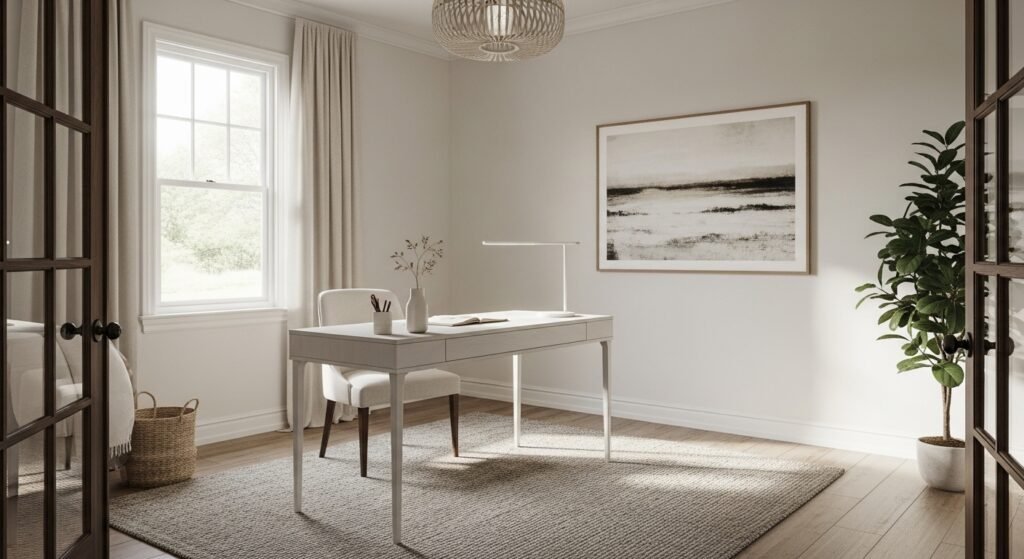
My desk used to be a magnet for random cords, takeout containers, and sticky notes. One weekend I cleared everything, swapped the bulky chair for a sleeker one, and added a single sculptural lamp. The room finally felt like a place I could actually work in, not hide from. Below are simple fixes I used or recommended to friends that make minimalist home offices feel lived in and useful.
These ideas lean modern-minimal with warm wood accents. Most setups cost under $300, with a couple of splurges around $400 for a desk or statement lamp. Works for dedicated spare-room offices, small bedroom corners, or a desk tucked into a living room nook.
Neutral Palette With One Warm Wood Element

The trick that fixed my bland desk was not extra color. It was swapping one cheap laminate table for a white oak piece to anchor the space. Use 80/20 for color: 80 percent neutrals, 20 percent wood or one accent color. A 48-inch white oak desk keeps the footprint small but reads substantial. Budget here is $150 to $450 depending on solid or veneer wood. I use a compact white oak desk on tight days. Common mistake is matching every surface white. That flattens the room. A warm desk plus cool walls creates depth and holds up in photos better than all-white setups.
Floating Shelves to Get Clutter Off the Floor

Most people try a bookcase and then cram it. Floating shelves give a built-in look without the commitment, and they force you to edit. Go 10 to 12 inches deep for a home office so folders fit standing up. I hung mine with two studs and a 16-inch gap between shelves for a balanced rhythm. Use white oak floating shelves and keep three objects per shelf for the rule of three. A mistake is packing every shelf full. Leave negative space so the eye can rest. Pair these with the desk idea above and you have a cohesive wall without a bulky footprint.
Hide Cables With a Slim Power Drawer
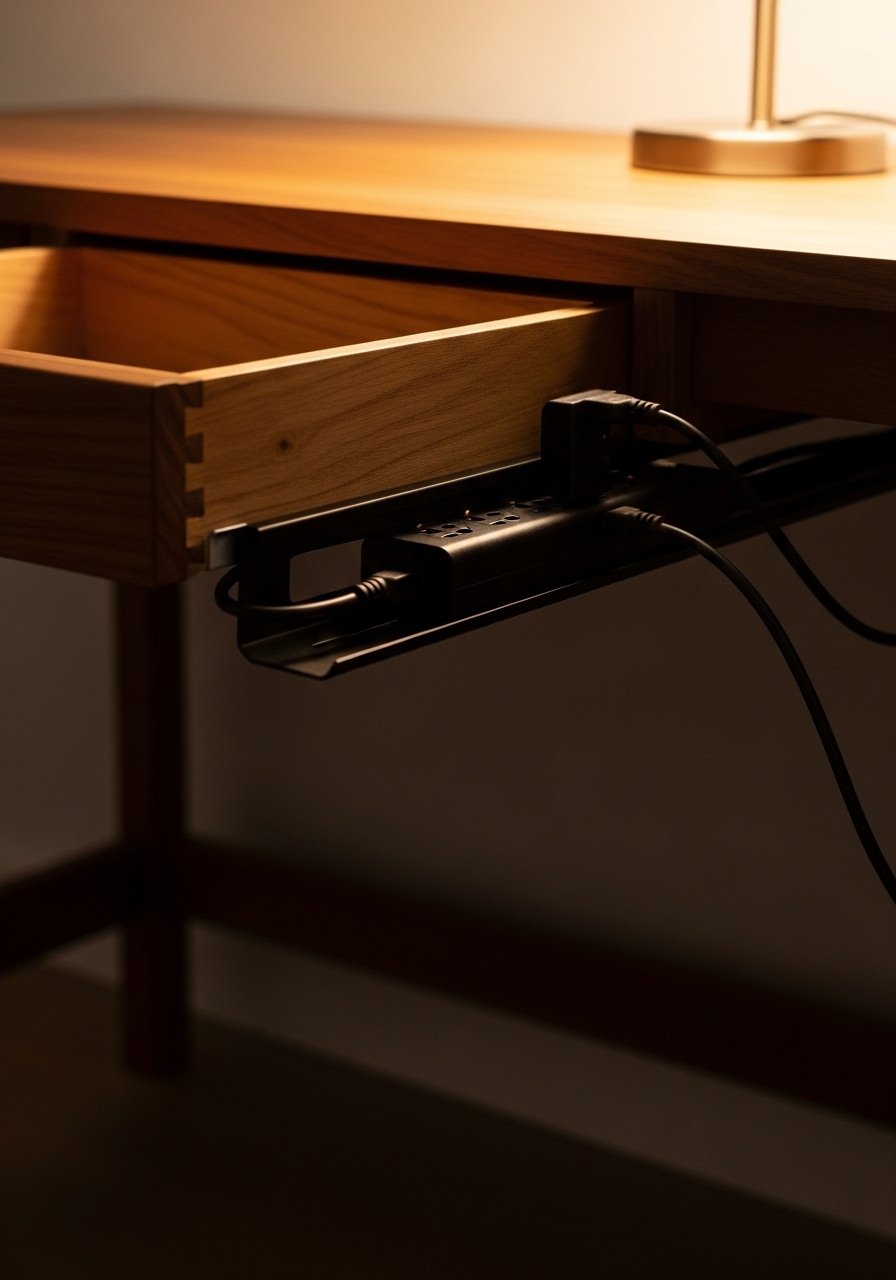
If your workspace still looks messy with cables, you will notice everything else looks worse. I installed a shallow under-desk drawer that holds a power strip and chargers, and routed cables through a 2-inch gap at the back. Budget under $40 if you DIY with a cable tray, or $80 for a slide-out power drawer. I use a metal cable tray that screws to the underside. Common mistake is taping cables to the leg. That works short term but shows dust and looks unfinished. Little details like a cable cap and a label for each charger are the sorts of things you notice in photos but competitors rarely mention.
One Sculptural Task Lamp for Focus and Personality

Lighting makes the desk feel like the main event. Swap a generic overhead bulb for a single adjustable task lamp. I prefer a lamp with an articulated arm and a dimmer so the brightness matches the task. Budget $40 to $200. If you work in the evening, a warm 2700K bulb saves your eyes and the room looks calmer. I put an adjustable brass task lamp on the right side because I am left-eye dominant and it cuts glare. A common mistake is two small lamps that fight each other. One sculptural piece gives function and a design focal point you will use every day.
Pegboard Wall for Tools, Prints, and Quick Notes

I installed a painted pegboard above my desk and it changed my daily flow. Pegboards let you switch between art, tools, and a calendar without new holes. Use a 1-inch grid and keep hooks at eye level for frequently used items. This is especially useful in rental spaces because it looks deliberate rather than temporary. Budget $20 to $80 depending on material. I keep a small shelf for a speaker and a hook for headphones and use a non-committal pegboard kit. A common error is turning the pegboard into a dumping ground. Limit it to five items for a clean, functional display.
Slim Console Desk as a Multi-Use Workspace
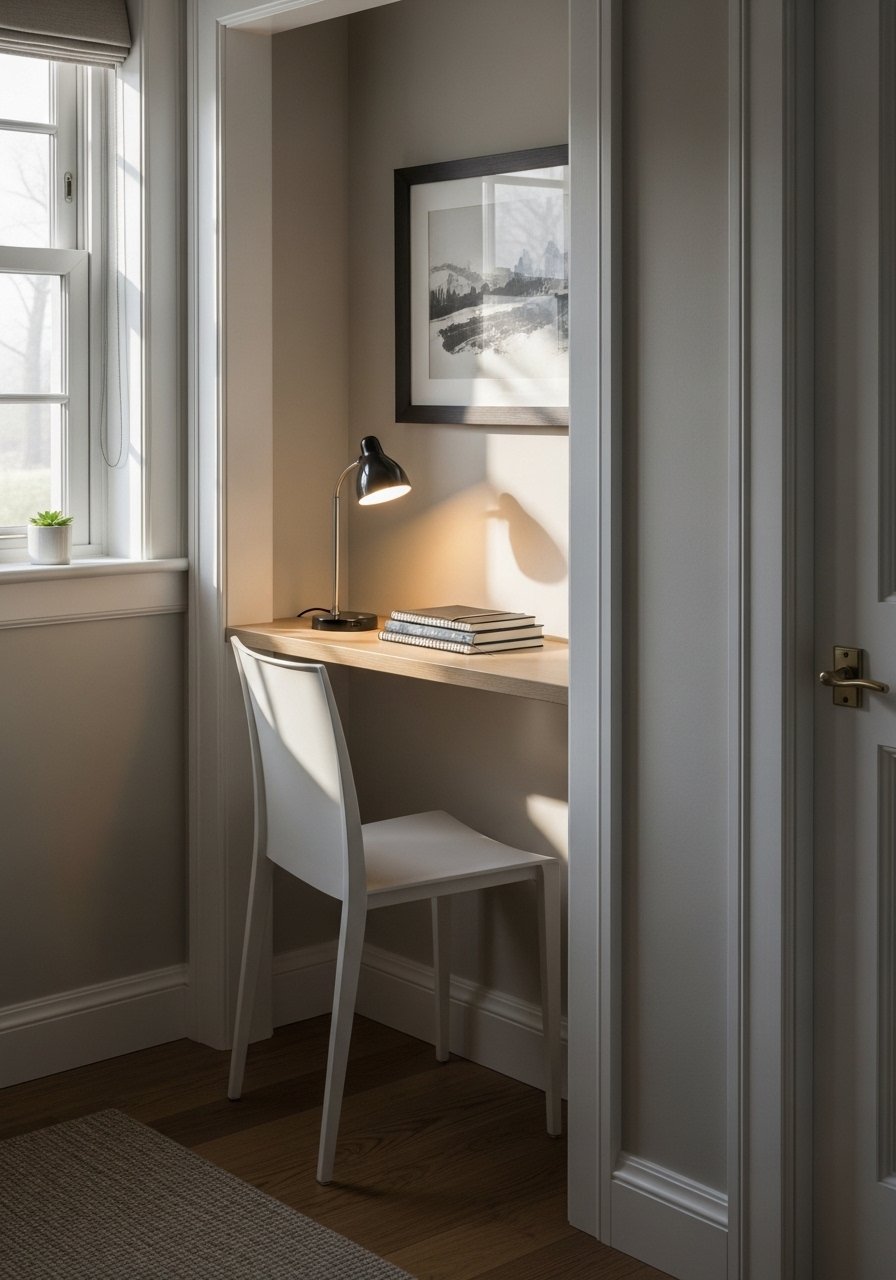
When space is tight, a 24 to 30-inch deep console desk is a lifesaver. It gives you work surface without swallowing the room. I recommended a 30-inch width minimum if you use a monitor, 24 inches if it's just a laptop. Budget friendly models run $80 to $220. I linked a slim console desk that fits in a hallway or behind a couch. People often buy too-big chairs for these desks and then the layout collapses. Pair the console with vertical storage from the pegboard or floating shelves to keep the footprint light but efficient.
Layered Textiles to Soften Minimalism

Minimal rooms can feel cold if everything is hard surfaces. Add a 5×8 rug under the desk and a 22-inch linen pillow on the occasional chair. I spent $35 on a chunky knit throw and the room finally felt like a place I wanted to sit in. Use textiles in three textures to avoid flatness. A common mistake is matching everything by color. Instead, mix texture and keep color restrained. I use a 5×8 jute rug and a chunky knit throw. These small costs often solve the "sterile office" problem better than a big furniture swap.
Uniform Frames for a Minimal Gallery Wall
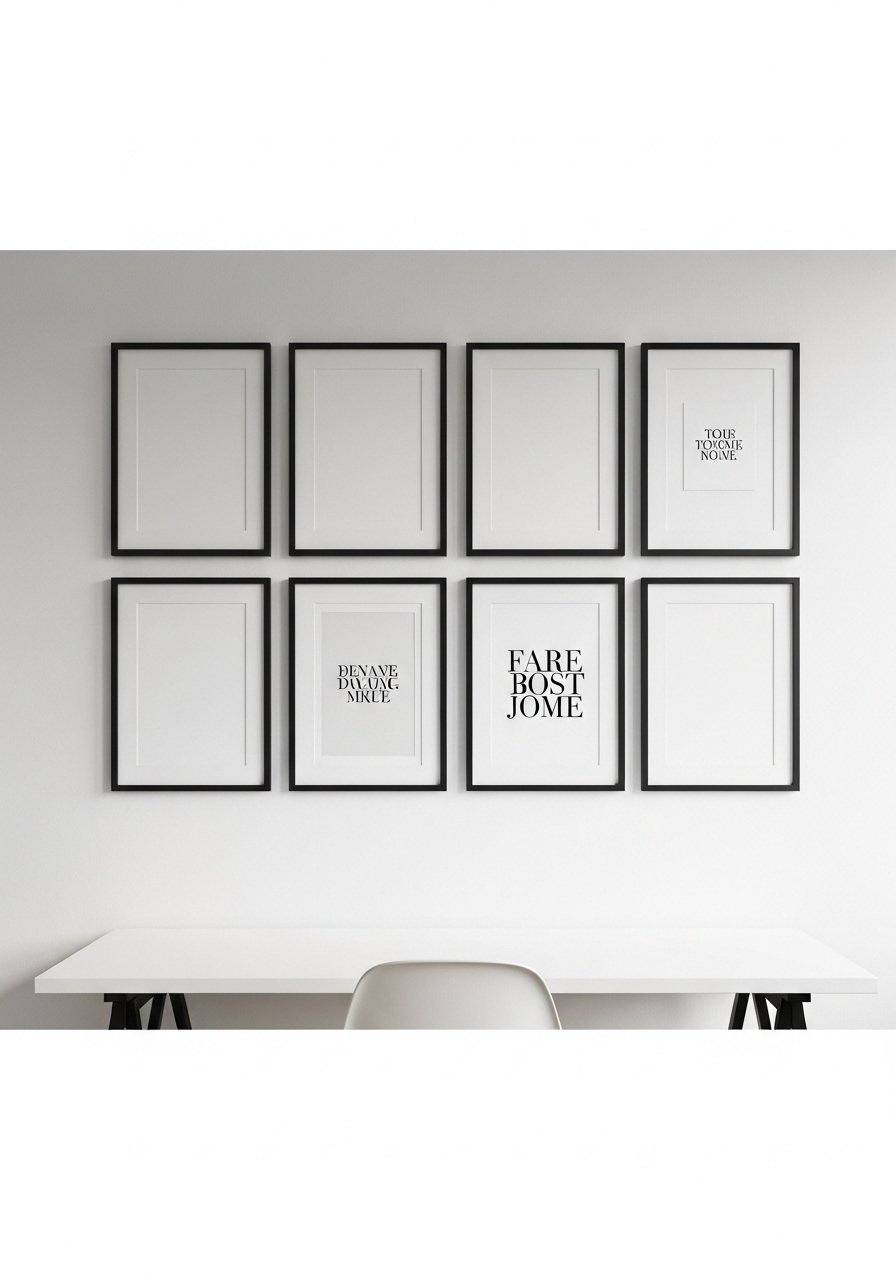
A gallery wall in identical frames reads intentional and calm. I use six 16×20 frames and hang the center at 60 inches from the floor. Spacing should be 2 to 3 inches between frames for a tight, edited look. Budget $30 to $120 depending on frame quality. I swapped out mixed frames that once made the wall look chaotic and suddenly the space felt pulled together. These identical frames are cheap and consistent. Mistake to avoid is hanging art too high. Eye level matters, especially in a small office where the art anchors the desk area. Pair this with the floating shelves idea for a layered effect.
Tall Greenery for Scale and a Human Touch
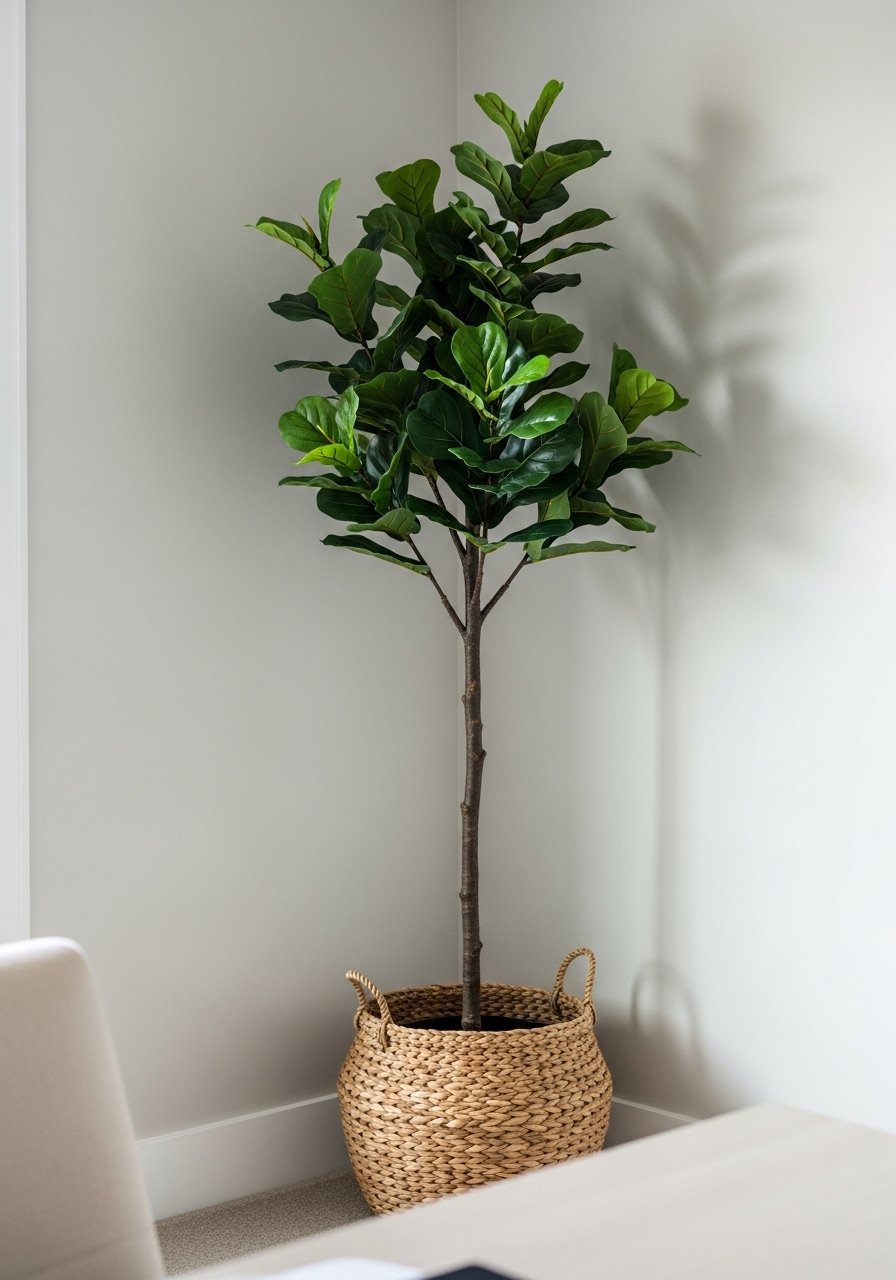
Plants add life without clutter. If you cannot keep a live plant, a 6-foot faux fiddle leaf fig gives the same scale without care. I use a woven planter to add texture and that ties back to the rug and throw. Budget $50 to $200 depending on realism. One large plant has more impact than five small succulents scattered around. I buy a realistic 6-foot fiddle leaf fig for corners that need height. A common error is choosing a plant that is too small for the ceiling height. Match plant height to room scale to avoid a lopsided feel.
Your Decor Shopping List
- Textiles: Honestly the best $35 I have spent. Chunky knit throw in cream (~$35). Drape over your chair or sofa for instant warmth
- Rug: For a desk corner, go bigger than you think. 5×8 jute rug (~$90). Works with hardwood or painted floors
- Desk: For a warm minimal look, white oak compact desk (48-inch) is the right size for a standard room
- Lighting: Found this while hunting lamps. Brass adjustable task lamp (~$75) gives focused light and personality
- Storage: White oak floating shelves, set of three (~$60-120). Install 10-12 inches deep for office use
- Cable Management: Under-desk cable tray (~$25). Keeps cords off the floor and easy to dust
- Wall Art: 16×20 identical frames, set of 6 (~$40-80) makes gallery walls look deliberate
- Plant: If you lack sunlight, try artificial fiddle leaf fig 6ft (~$120). Real plants are great if you can keep them alive
Similar items can usually be found at Target or HomeGoods for lower-price swaps on pillows and small planters.
Shopping Tips
White oak beats dark wood in current feeds. These white oak floating shelves look current and avoid a dated heavy look.
Grab velvet pillow covers for $12 each. Swap them seasonally and the whole room reads different without a big spend.
Curtains should kiss or puddle the floor, not hang midway. 96-inch linen panels work well with 9-foot ceilings and make a window read taller.
One single tall plant outdoes three tiny pots. This 6-foot faux fiddle leaf fig adds immediate scale without maintenance.
If you have limited wall space, use a compact pegboard kit instead of art. It functions as decor and tool storage.
Frequently Asked Questions
Q: How big should my desk be for a minimalist home office room?
A: Aim for at least 48 inches wide if you use a monitor and a laptop. Depth should be 24 to 30 inches for a monitor setup and 20 to 24 inches if you only use a laptop. Measure clearance for your chair and a small lamp before buying.
Q: Can I mix wood tones in a minimalist scheme?
A: Yes. Use one dominant wood and a second, subtler wood as an accent. For example, a white oak desk with a walnut frame on floating shelves reads intentional. Keep the 80/20 color ratio in mind so it feels cohesive.
Q: Should I buy real plants or faux?
A: Both work. Real plants like pothos handle neglect and add real air benefits. If you have low light or no time, a realistic faux like a 6-foot fiddle leaf fig gives height without maintenance.
Q: What common mistakes make a minimalist office feel sterile?
A: Matching every surface the same color and ignoring texture. Add three textures, hang art at 60 inches, and use a warm wood anchor to bring personality.
Q: How do I hide my router and modem without blocking airflow?
A: Use a ventilated box on a shelf with cable cutouts at the back, or place them on a floating shelf with a 2-inch gap behind for airflow. Label the cables so you do not have to dig through a mess
Q: Will a rug under my desk look weird?
A: A rug helps define the workspace. For a desk corner choose at least 5×8. Make sure the chair rolls comfortably and that the rug extends beyond the desk by 18 inches when possible.