


My living room had nice furniture and decent lighting but it still felt like a waiting room. Took me embarrassingly long to figure out it was missing texture. Every surface was smooth, every color was flat, and nothing invited you to actually sit down. These bedroom refresh ideas lean toward quiet modern and lived-in classic. Most fixes are under $100, with a few pieces around $150 if you want to splurge. They work for small city bedrooms, master suites, or a guest room that needs to stop feeling like a hotel.
Layered Neutrals With One Warm Accent For A Cozy Bedroom

The moment I draped a chunky knit throw over my bed the whole room stopped looking flat. Layering three neutral fabrics works visually when you mix texture more than pattern. Start with a light linen duvet, add a cotton coverlet two-thirds the bed length for a folded band effect, then finish with a chunky knit throw at the foot. I paid about $45 for my favorite throw and it did more than new bedding. A single warm pillow stops a neutral scheme from feeling cold. Try chunky knit throw in cream for under $60. Common mistake is matching every fabric exactly. Instead pick three different weights and keep one item about 20 percent darker or warmer than the main shade to read as an intentional accent.
Floor To Ceiling Linen Panels To Make Low Rooms Feel Taller

Most people hang curtains right at the window frame. That is why their rooms look shorter than they are. Hang panels about four inches above the trim or as high to the ceiling as you can and let them brush the floor or puddle slightly. For standard 9-foot ceilings I use linen curtain panels, 96-inch. Measure twice because too-short panels kill the effect. Budget for two panels per window and buy wide widths so the fabric gathers naturally. If you have a radiator under the window, hang higher and leave 3 to 4 inches of clearance. Pair this with the layered bedding idea earlier for a softer, larger-feeling bedroom.
Mix Textures For Depth In Small Bedrooms

Small bedrooms benefit more from texture than extra stuff. I mix a 22-inch down-filled linen pillow, an 18-inch velvet pillow, and one leather lumbar on the bench. The key ratio I use is 2:1 for pillow sizes, two large pillows and one small lumbar. Velvet pillow covers, set of 4 are an easy way to test color without committing to inserts. A common mistake is buying pillows in matching fabric families, which flattens the look. Instead pick one soft sheen, one matte natural, and one firm texture. This tip solves the "everything is the same height" problem people complain about, and it makes a small room feel layered instead of cramped.
Gallery Wall Using Mixed Metal And Wood Frames For Calm Impact
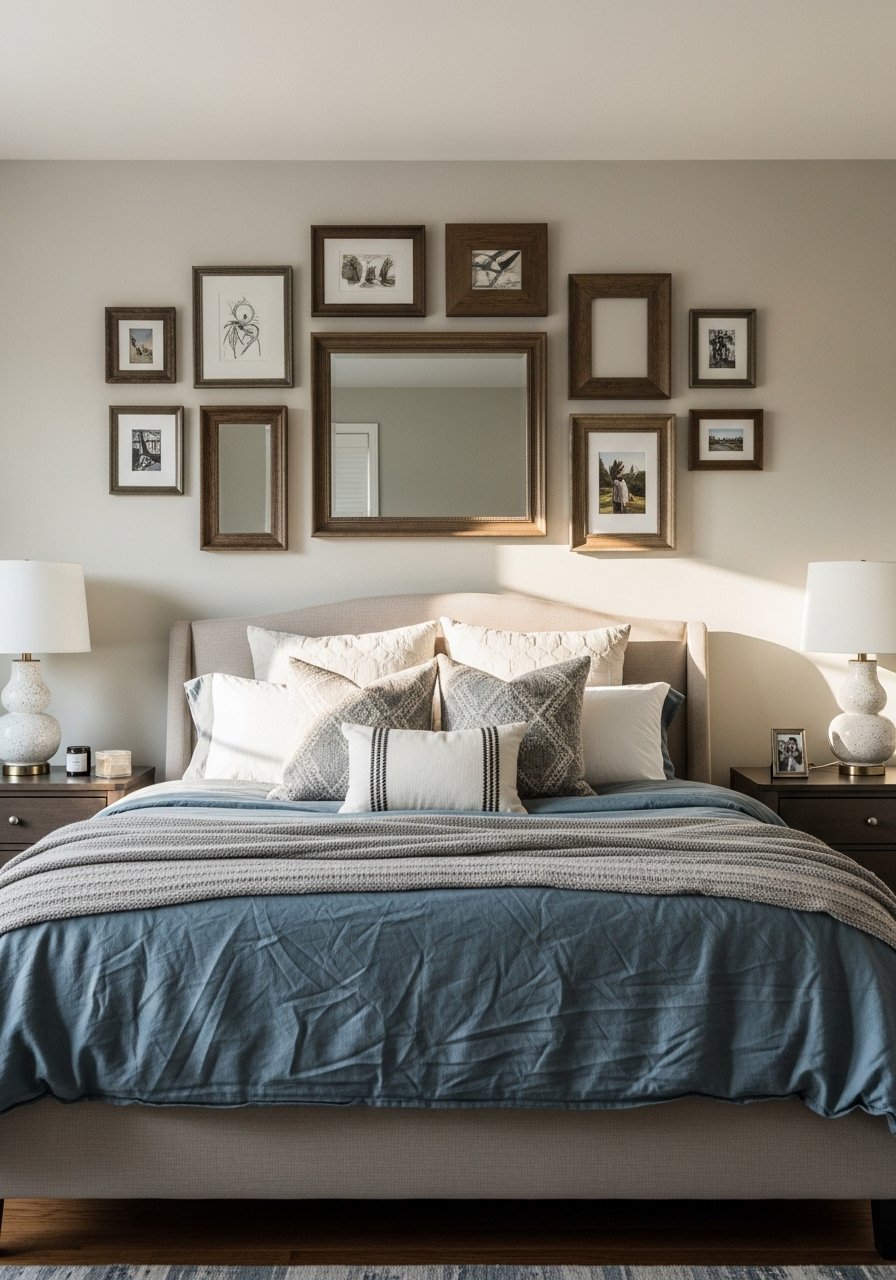
I found these mixed metal frames and they let me swap art without a remodeling mood swing. A gallery wall works when you anchor it to the bed width, not the wall. Lay frames on the floor first and aim for negative space of about 2 to 3 inches between pieces. Mixed metal picture frames set keeps metals intentional, not chaotic. The mistake people make is centering the whole layout on a fireplace or ceiling fixture. In a bedroom anchor to furniture instead. For a calm neutral scheme use two wood frames to warm the metals and repeat one print or color three times to tie everything together.
Oversized Mirror To Brighten Dark Corners In A Neutral Room

An oversized mirror is low drama but high payoff. I swapped a small round mirror for a 36 by 60 inch arched mirror and the near corner felt like a new window. Mirrors double light and also double your layering choices visually. Lean an oversized mirror rather than hang it if you want less commitment. I use oversized arc mirror with brass frame. A common mistake is hanging a mirror too high so it reflects the ceiling. Place it so the center sits at about eye level when you stand back three feet. Pair with the curtain trick to bounce natural light across the room.
Swap Harsh Overhead Light For Layered Lamps And Dimmer Control

There is something about warm lamp light that makes you cancel plans. Ditch the single blinding fixture for two bedside lamps plus a wall-mounted sconce if you can. Use bulbs around 2700K for warm but not orange light. I love a simple ceramic lamp on one side and a swinging sconce on the other for task reading. Ceramic bedside table lamp with linen shade is about $50 and lasts years. Common mistake is matching lamp heights exactly. Stagger heights by 2 to 4 inches so the eye moves, and add a dimmer so the room can go from bright cleaning mode to quiet winding-down light.
Swap Heavy Bedding For Light Linen Layers And A Breathable Top Sheet

Heavy quilts can weigh a neutral scheme down. I traded a thick quilt for a light stone linen duvet and a breathable cotton coverlet folded at the foot. The visual trick is to show three inches of the coverlet under the duvet along the bottom third of the bed. If you want the tactile benefit without the cost, add a cotton mattress topper for gentler sink, not bulk. A common mistake is buying a duvet two sizes too large, which clumps. Measure mattress depth and buy bedding made for that range. Linen ages beautifully so buy one neutral shade slightly darker than your walls to avoid that washed-out, hospital look.
Layer Rugs For Warmth And Grounding In A Neutral Bedroom
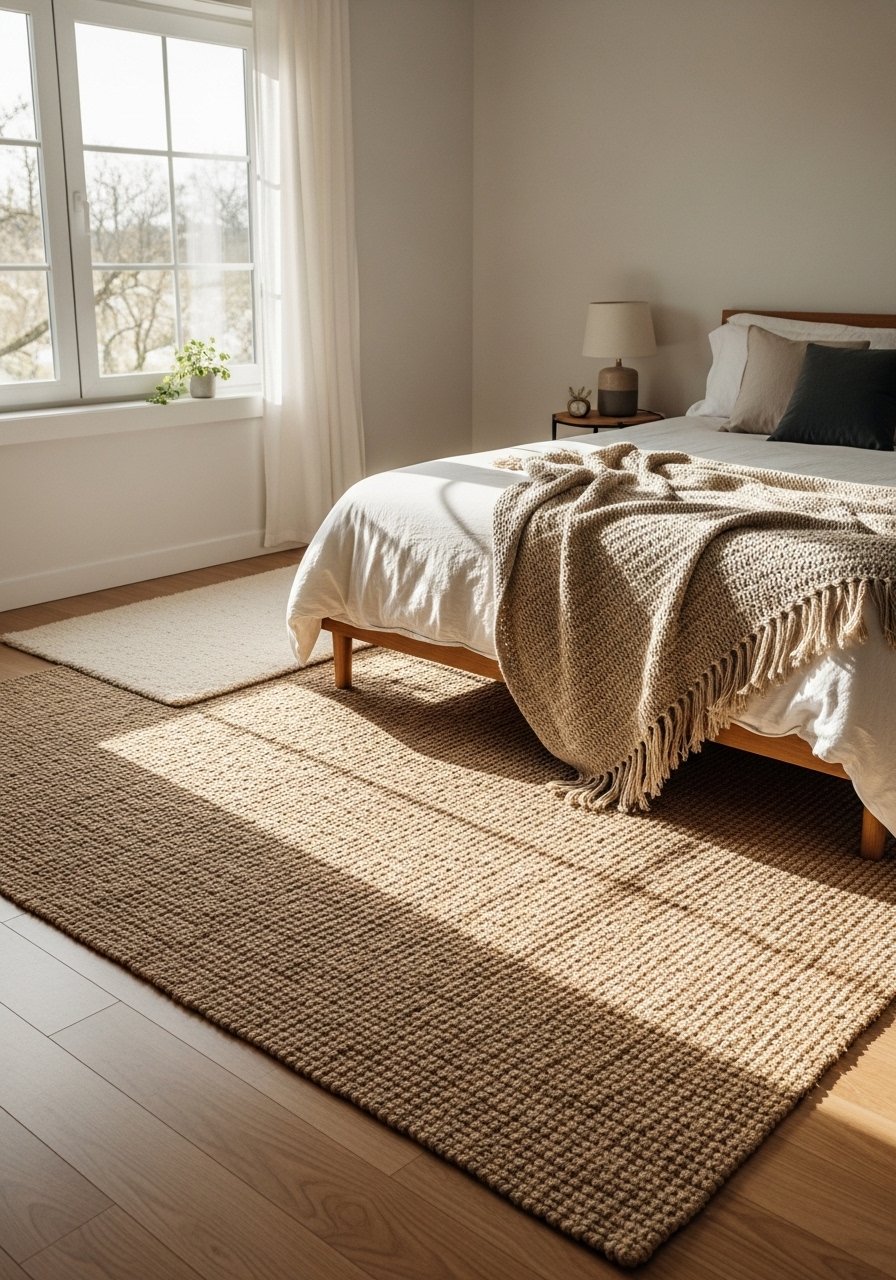
I switched to a low-profile jute under my bed and a 3 by 5 wool runner at the side months ago and the whole layout read calmer. For a queen bed place the 8×10 rug under the bed so the rug starts about 6 to 12 inches from the bedside table and extends at least 18 inches on each side. 8×10 jute area rug is durable and neutral. People buy rugs too small thinking they can “save money.” Instead spend on the right size and you will get a proportional room that feels put together. Layering a softer rug at the bedside gives barefoot comfort and hides the jute texture where you step.
Add One Tall Focal Plant For Scale And Softness

Everyone buys five small succulents. One single 6-foot plant has ten times the visual impact. My room felt suddenly finished when I added height to one corner with a tall plant. If you do not want live care choose a realistic faux so light and watering are not concerns. I use faux fiddle leaf fig, 6ft where I need scale without maintenance. The common mistake is clustering small plants for scale. Pick one anchor, then add one or two tiny companions only if the corner still needs balance.
Warm Gray Wall Using Hue-First Paint Tricks For Neutral Bedrooms
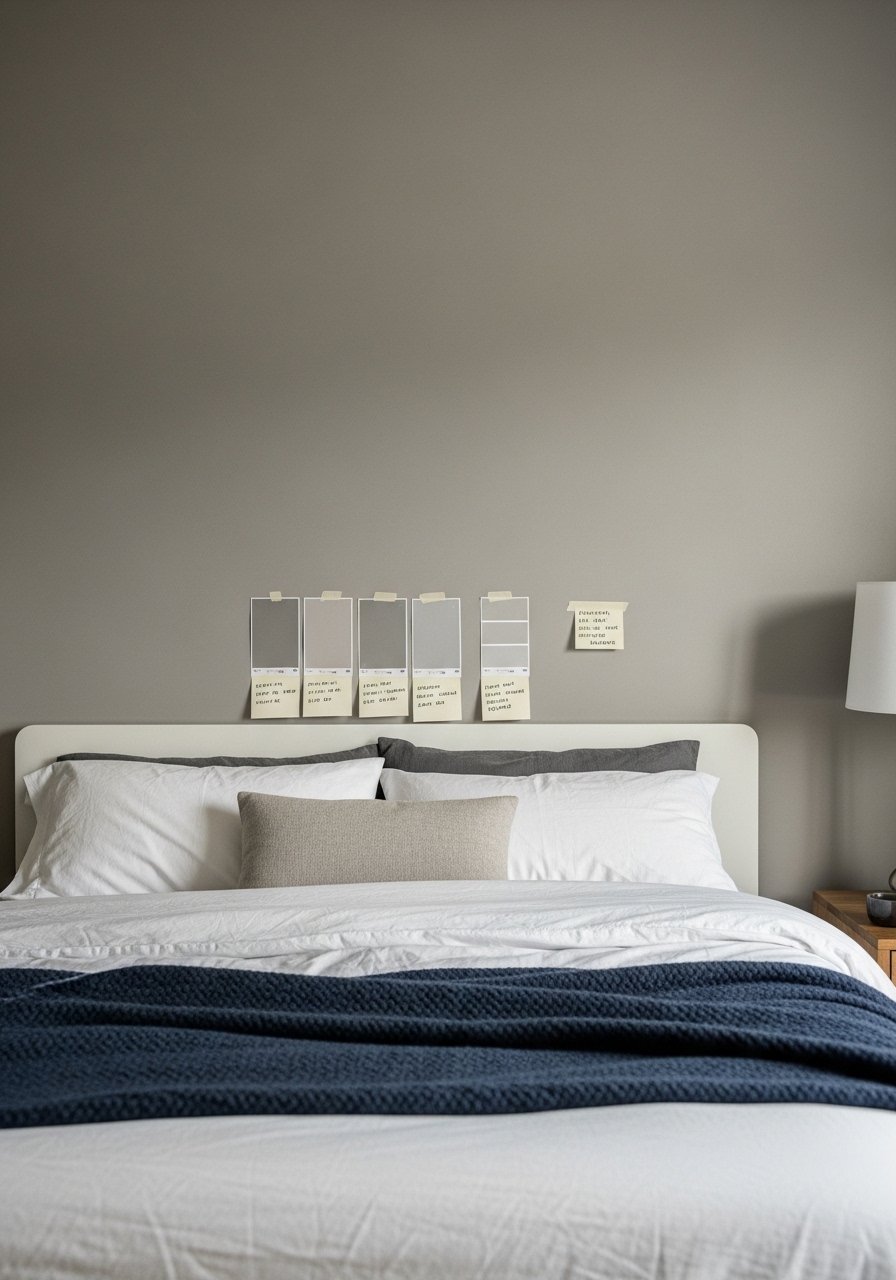
If your gray goes purple or green you probably skipped naming the hue first. Name the hue first and then decide whether it leans blue, green, or warm. Pretty much every painter swears by complements to tame brightness. Paint shop matches nail it 9 times out of 10, but room light can trip you up. Test swatches in more than one light and let them dry. For drying paints like gouache or tempera mix a shade slightly darker to compensate for lightening as it dries. Most paint pros scan now, no more pure guesswork. A practical mistake is matching a photo on your phone. Photos change color with the camera, so treat them as inspiration and rely on at least three dry swatches before committing.
Renter Friendly Peel Swatches And Durable Finishes For Real Life

Renters and pet owners need options that do not require a permanent paint job. Peel-and-stick swatches are lifesavers for testing color. I use removable sample strips to see how a shade looks under morning and evening light before I touch a brush. Peel and stick paint sample strips lets you test multiples quickly. For high-traffic rooms pick washable paint finishes or add a washable topcoat on trim only. A common mistake is ignoring durability and then wondering why scuffs show after a month. Small-space painters also need smaller test patches, about 12 by 12 inches, because a tiny square reads different than a whole wall.
Your Decor Shopping List
Textiles
- Honestly the best $45 I have spent. Chunky knit throw in cream, wool blend, 50 by 60 inches
- Velvet pillow covers, set of 4, 22-inch and 18-inch mix, down fill recommended
Wall Decor
- Mixed metal picture frames set, assorted sizes for a gallery
- Oversized arc mirror with brass frame, 36 by 60 inches
Lighting
- Ceramic bedside table lamp with linen shade, 18-inch height
Rugs & Flooring
- 8×10 jute area rug, natural, low pile
Plants & Greenery
- Faux fiddle leaf fig, 6ft, in a woven basket
Samples & Small Tools
- Peel and stick paint sample strips, 12 by 12 inch test packs
Notes: Many of these items have similar finds at Target or HomeGoods if you want to see them in person. Sizes and color swatches are important, so double check dimensions before you buy.
Shopping Tips
White oak beats dark wood in 2026. Design feeds have shifted completely. White oak floating shelves look current, not dated.
Grab velvet pillow covers for $12 each. Swap them every few months and the whole room feels different.
Curtains should puddle or kiss the floor, never hang halfway up. Linen curtain panels, 96-inch are right for standard 9-foot ceilings.
One tall plant beats five small ones. Faux fiddle leaf fig, 6ft gives scale without the upkeep.
Frequently Asked Questions
Q: What rug size do I actually need for a queen bed?
A: Go for at least 8×10 so the rug extends 18 inches on each side. If you like the layered look add a 3×5 runner at the bedside.
Q: Can I mix metals in a neutral bedroom?
A: Yes. Mix a primary metal and one accent metal, like brass plus black iron. Mixed metal picture frames set is an easy start.
Q: My gray paint looks purple at night, what did I do wrong?
A: You probably chose a gray with a hidden cool undertone. Name the hue first to identify whether it leans blue or green, then test dry swatches in evening light.
Q: Are faux plants acceptable in bedrooms?
A: Yes. Use a single realistic tall faux for corners that need height. I use faux fiddle leaf fig, 6ft where light is low.
Q: I rent. How can I try a bold neutral without losing my deposit?
A: Use peel-and-stick samples and removable wallpaper for an accent wall. Peel and stick paint sample strips let you check color in multiple lights.
Q: Should I match my bedding colors to the wall?
A: Not exactly. Pick a bedding shade about one or two steps darker or warmer than the wall so the bed reads as the focal point, not a background wash.