

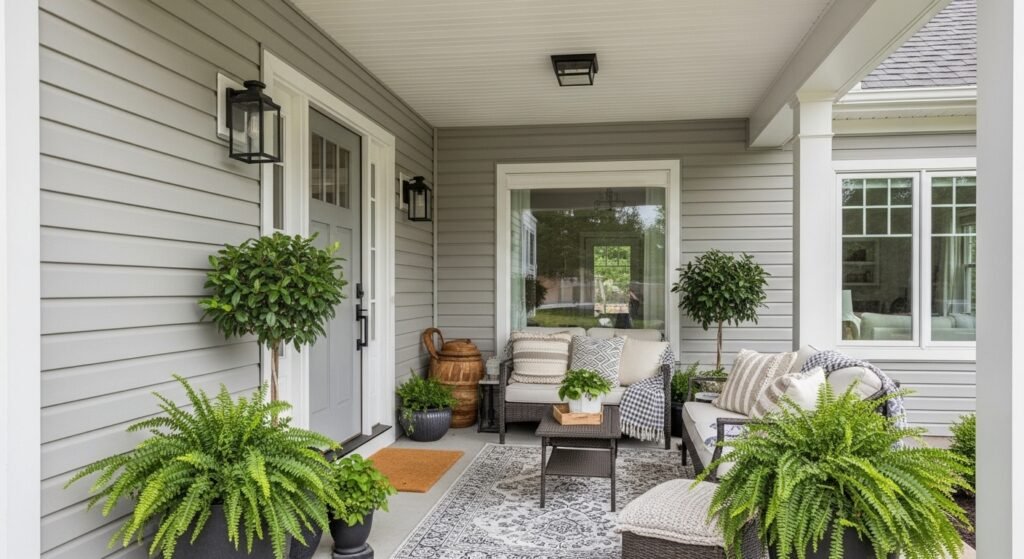
Spent $400 on new outdoor chairs once and still hated the curb appeal. Took me a week to realize the house had too many competing whites. I swapped a single element and suddenly the whole facade read calm and intentional. Below are exterior ideas I actually tried or helped friends with, the things that fixed awkward contrasts, and products I reached for when I needed a quick win.
These ideas lean modern farmhouse and clean transitional. Most fixes run under $200 with a few splurges around $300. They work for porches, siding, entryways, fences, and small front yards where curb appeal needs a clear, neutral direction.
Soft Gray Siding With Bright White Trim, Front Porch
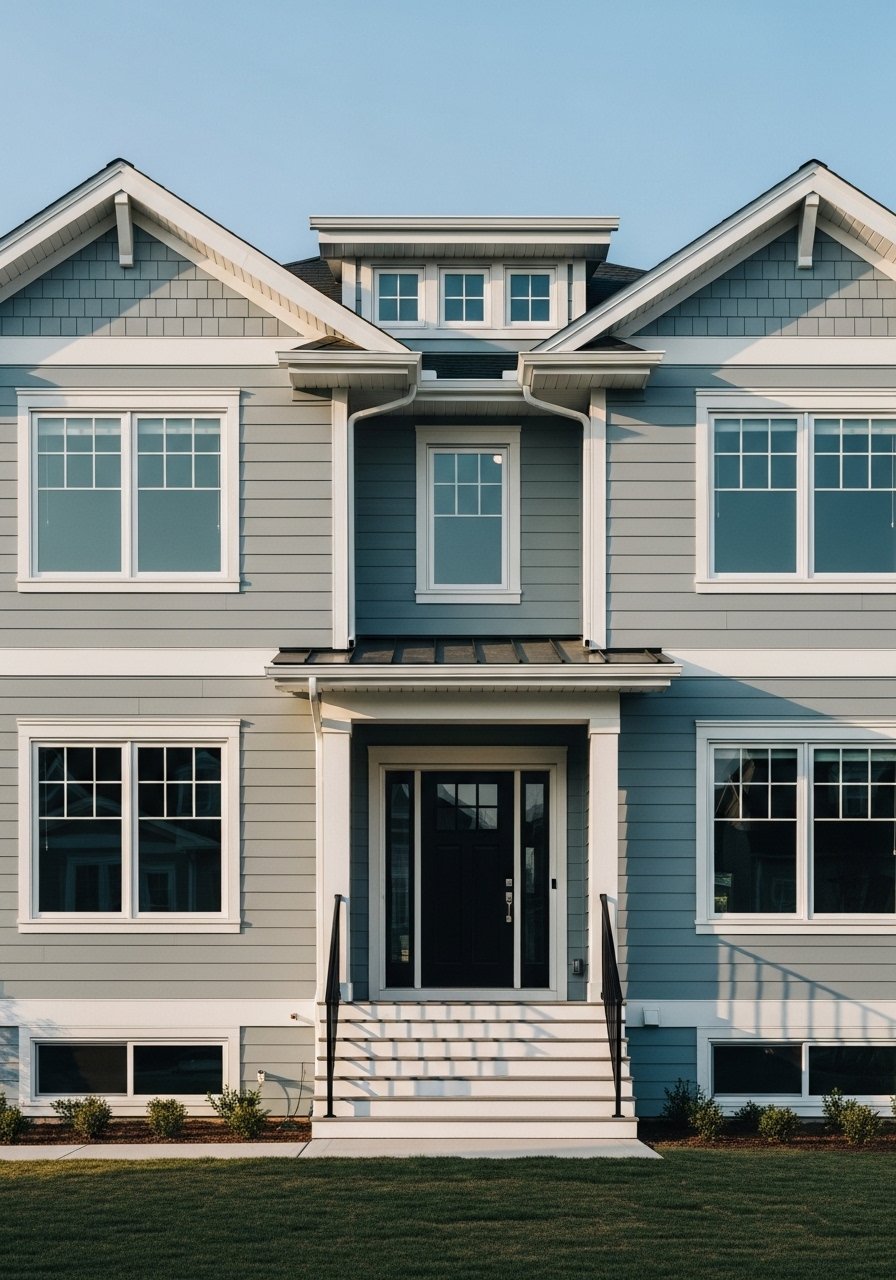
The secret here is keeping the gray in Base 2 range so it reads soft, not muddy in midday sun. I repainted my friend’s bungalow with a cool gray for siding and bright white trim, and it felt crisp without being cold. Budget for paint and minor prep is about $150 to $300. I used a weatherproof porch light like the black exterior lantern to anchor the door. Common mistake is picking a gray from a chip under store lights. Test a 12×12 inch sample on the sunniest wall for 48 hours. A one-inch trim overlap can be the difference between neat and sloppy finish.
Greige Front Door With Natural Wood Accents, Entry
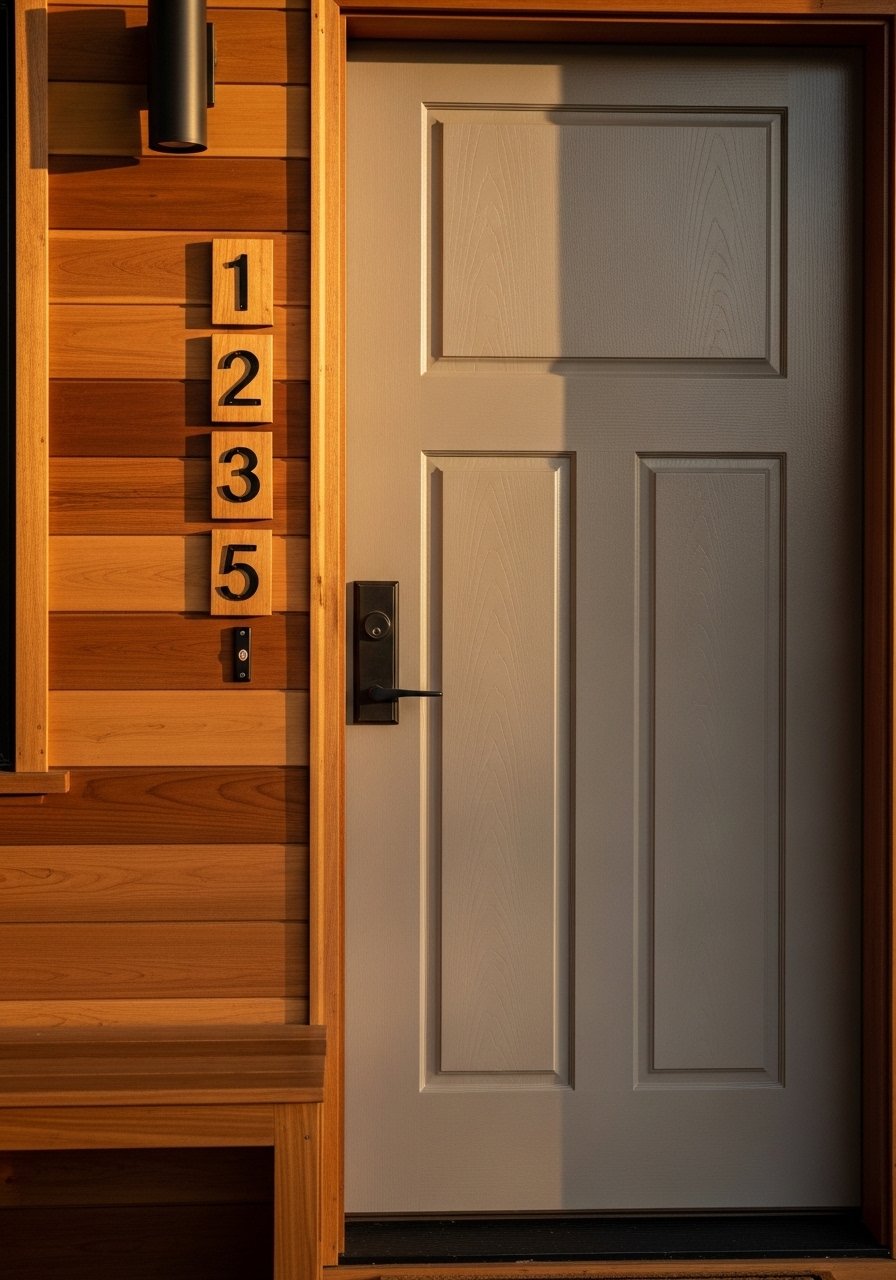
A greige door balances warm and cool so it matches lots of neutral siding. I swapped my screaming white door for greige and added a thin cedar bench and wood house numbers. The bench cost about $120 and the numbers were $35. Folks often paint the door and skip hardware. New matte black hardware like this door handle set ties it together. One detail most people miss is matching the wood tone to the house's undertone. Warm grays need honeyed wood. Take a 2-inch wood sample to the paint counter if you are trying to marry stains to paint.
Monochrome Trim With Layered Planters, Porch Steps
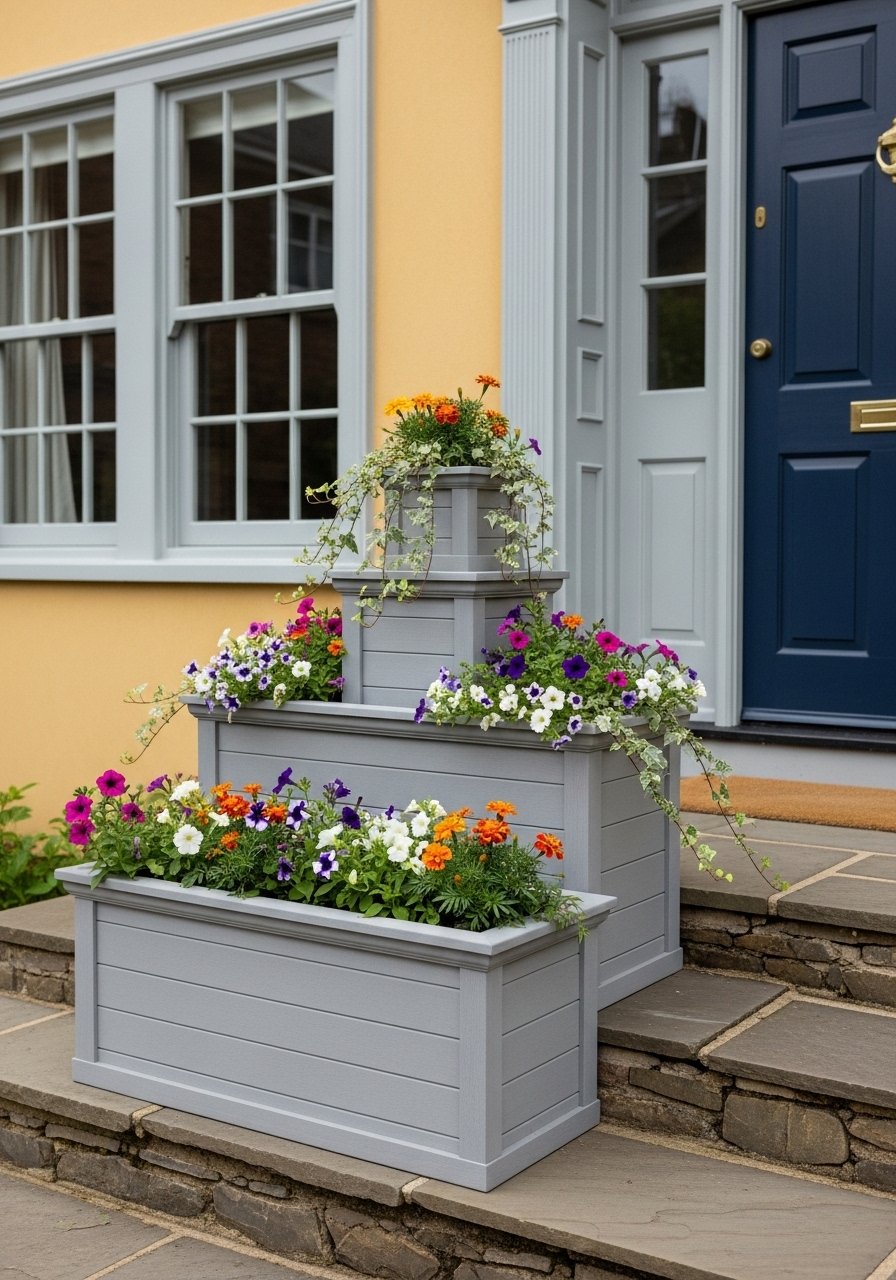
Layered planters make a monochrome exterior feel purposeful. I swapped mismatched pots for three in the same trim color and added a taller sculptural plant at the back. Budget is $40 to $120 depending on materials. A common mistake is using all the same height. Use a 1:1.6:2.5 height ratio for visual flow. I used a durable outdoor rug underfoot and weatherproof planters that survived a rainy season. Most painters grab a scanner these days to nail it first try, but you can also eyeball the undertone in daylight before buying pots.
Muted Navy Shutters for Contrast, Windows
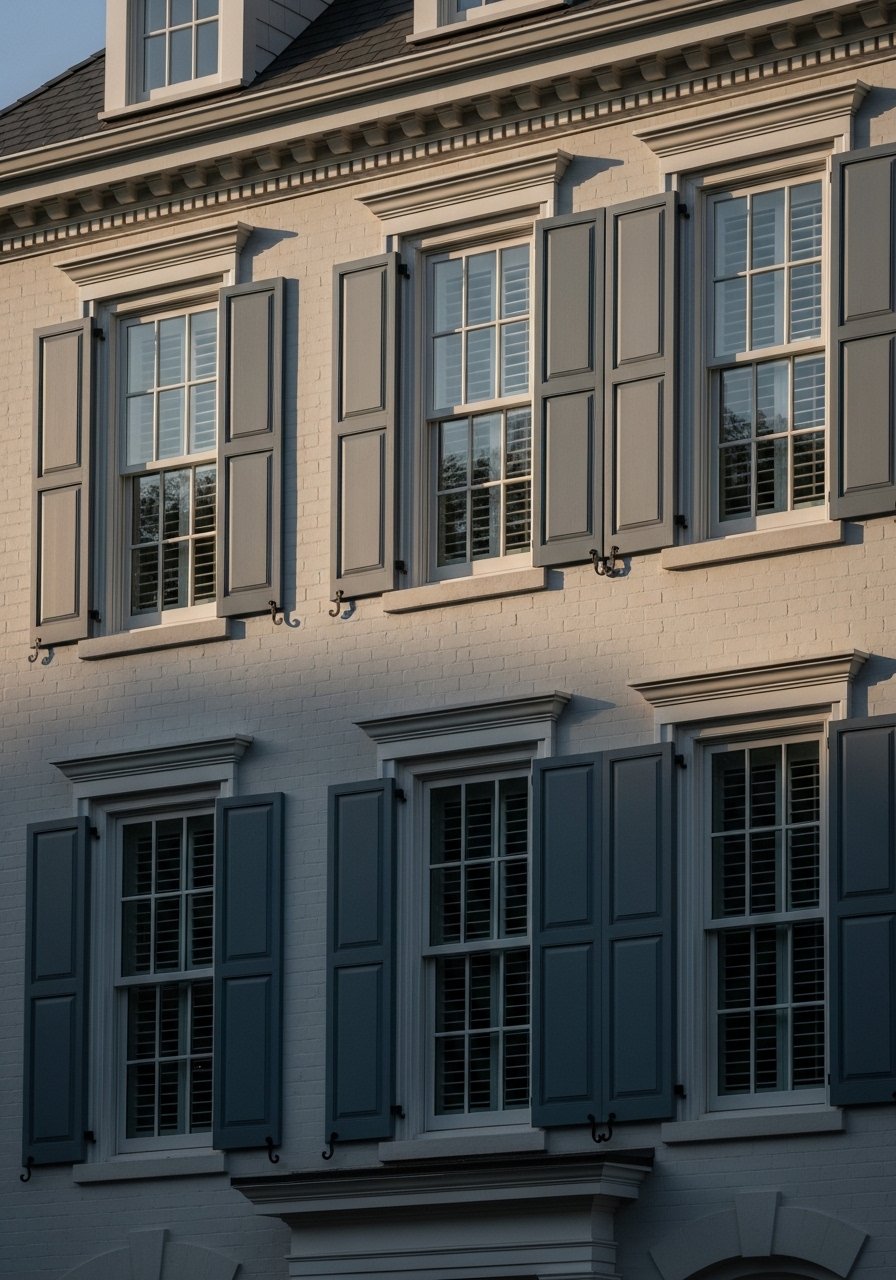
Instead of loud black, muted navy gives depth while keeping the palette neutral. I had neighbors paint shutters navy to balance a warm beige house and it looked like the whole street got an upgrade. Paint and prep run about $80 to $180 for two shutters. Avoid painting without swatching on the exact wall; lighting can make navy read purple. Folks think darker is always better. Pick a Base 3 navy when LRV needs to stay mid-tone. I mounted simple metal shutter hinges to make them look permanent without structural work.
Matte Black House Numbers and Mailbox, Minimal Entry
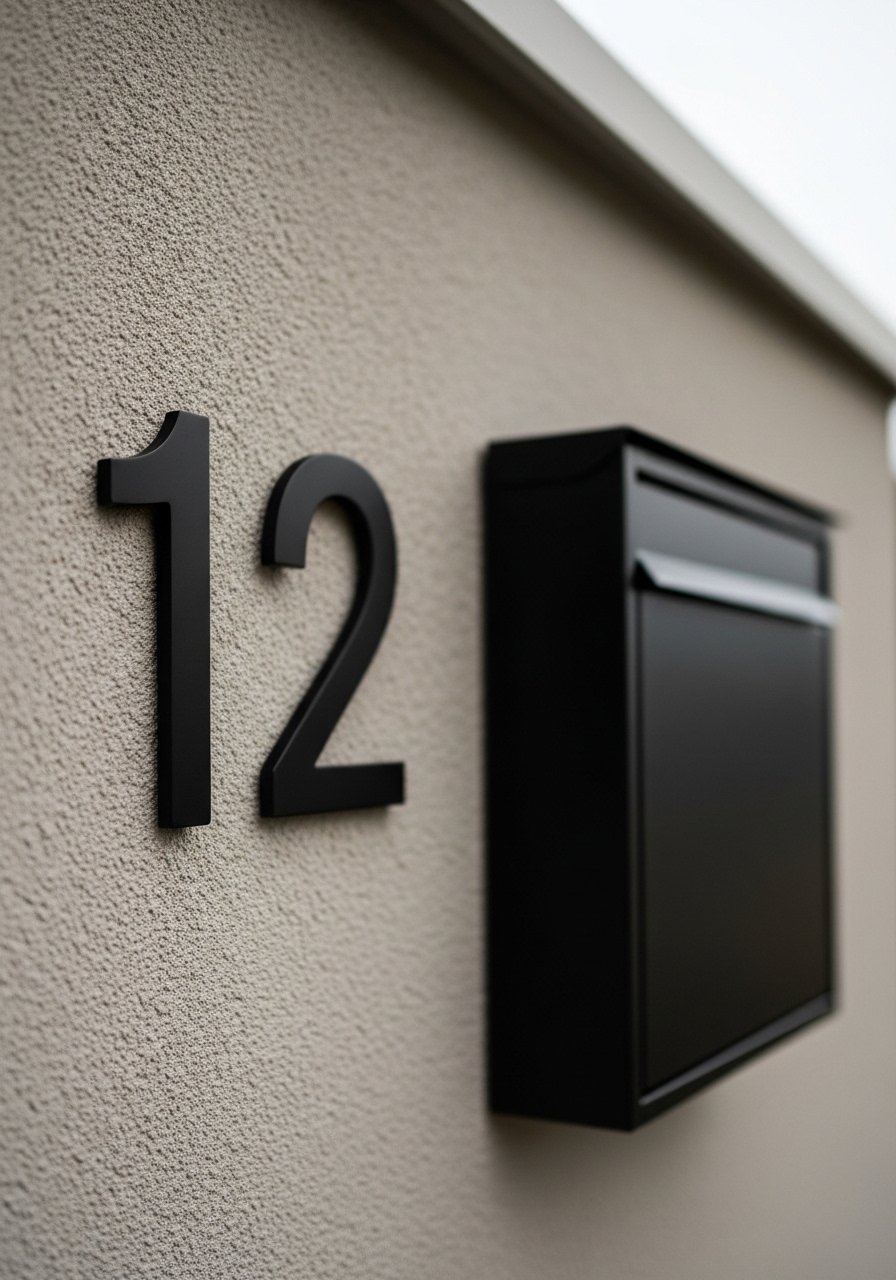
Small details make neutral exteriors read modern. Replacing worn brass numbers with matte black instantly focused my entry. The mailbox swap took 30 minutes and less than $80. A common mistake is installing numbers too small for the facade. Aim for numbers 6 to 8 inches tall on single-story homes. I like chunky sans-serif styles. I linked a low-profile matte house number set that survived sun fade. Folks save real cash matching big-name colors at discount spots when they also invest in a few focal accessories.
Stone Veneer Accent Wall, Small Front Facade
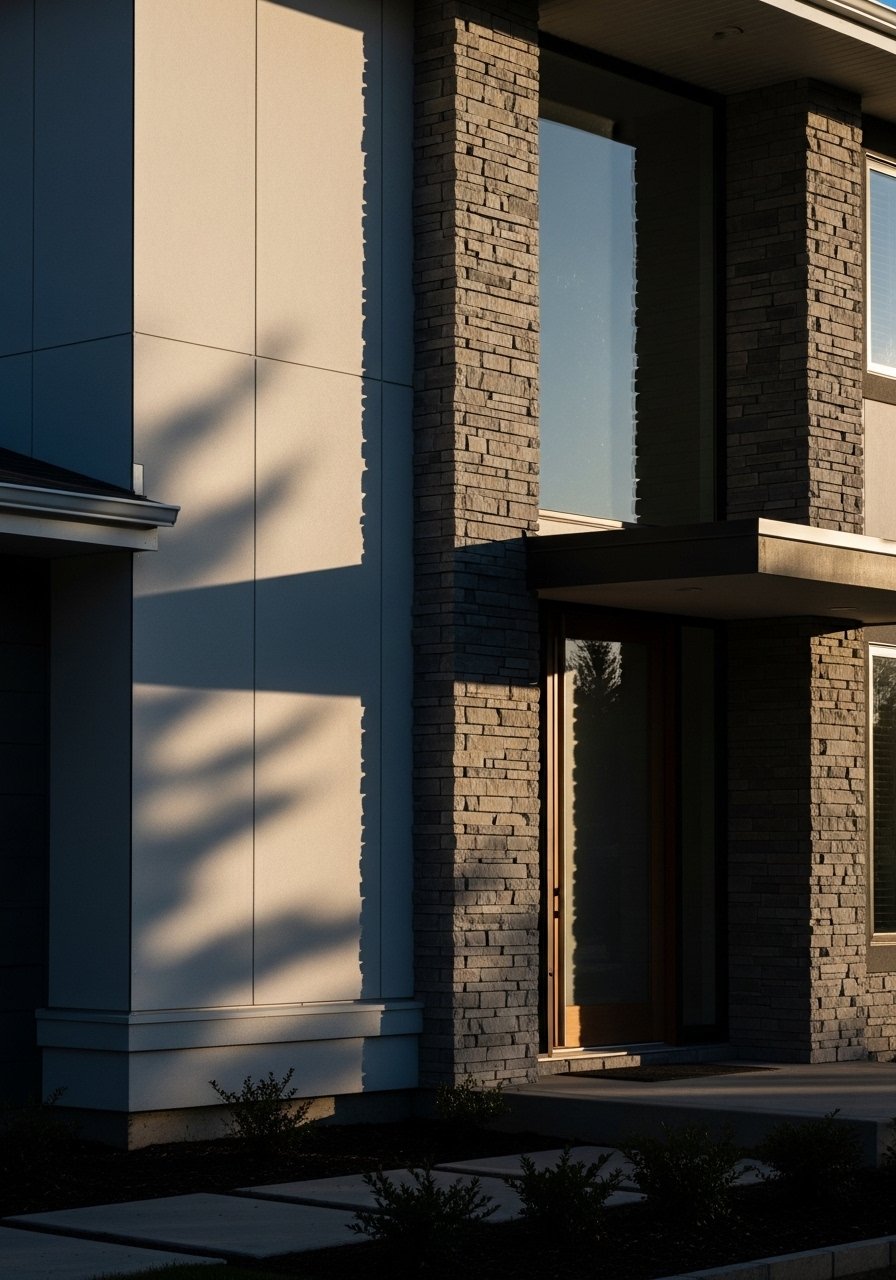
Adding a stone veneer column stopped my friend’s facade from looking flat. It reads expensive, but a thin veneer panel project was about $250 in materials. People often choose a stone tone that clashes with siding. Pick a stone with at least two tones that pick up the trim and siding. For scale, one vertical panel 24 by 48 inches is enough on a small porch. I used a colorpicked mortar and a stone veneer starter kit for a weekend install. Test panels in sun and shade before committing.
Wide Entry Path With Gravel and Concrete Pavers, Landscaping
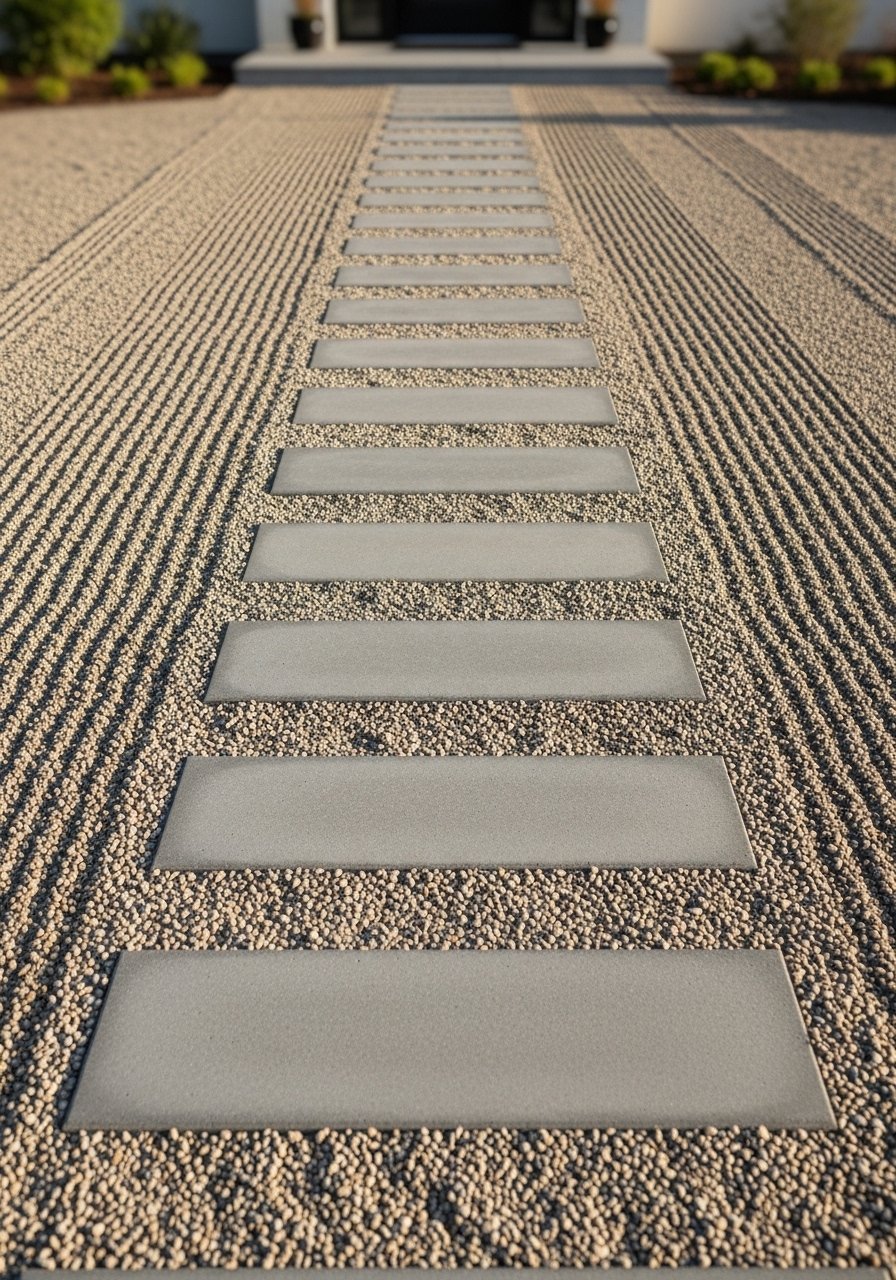
A clean path makes the whole exterior feel composed. We widened a narrow walkway to 42 inches and used compacted gravel between large pavers. Budget was $200 to $500 depending on paver size. Mistakes include choosing pavers too small. Use pavers at least 18 by 18 inches for a balanced look. Add low plantings like lavender so the neutral ground plane has a soft edge. I bought concrete paver kits which helped keep cuts consistent. Eight out of ten bad paints come down to crappy light tests, and the same goes for outdoor materials tested only under store lighting.
Recessed Porch Lighting and Warm Bulbs, Evening Vibe
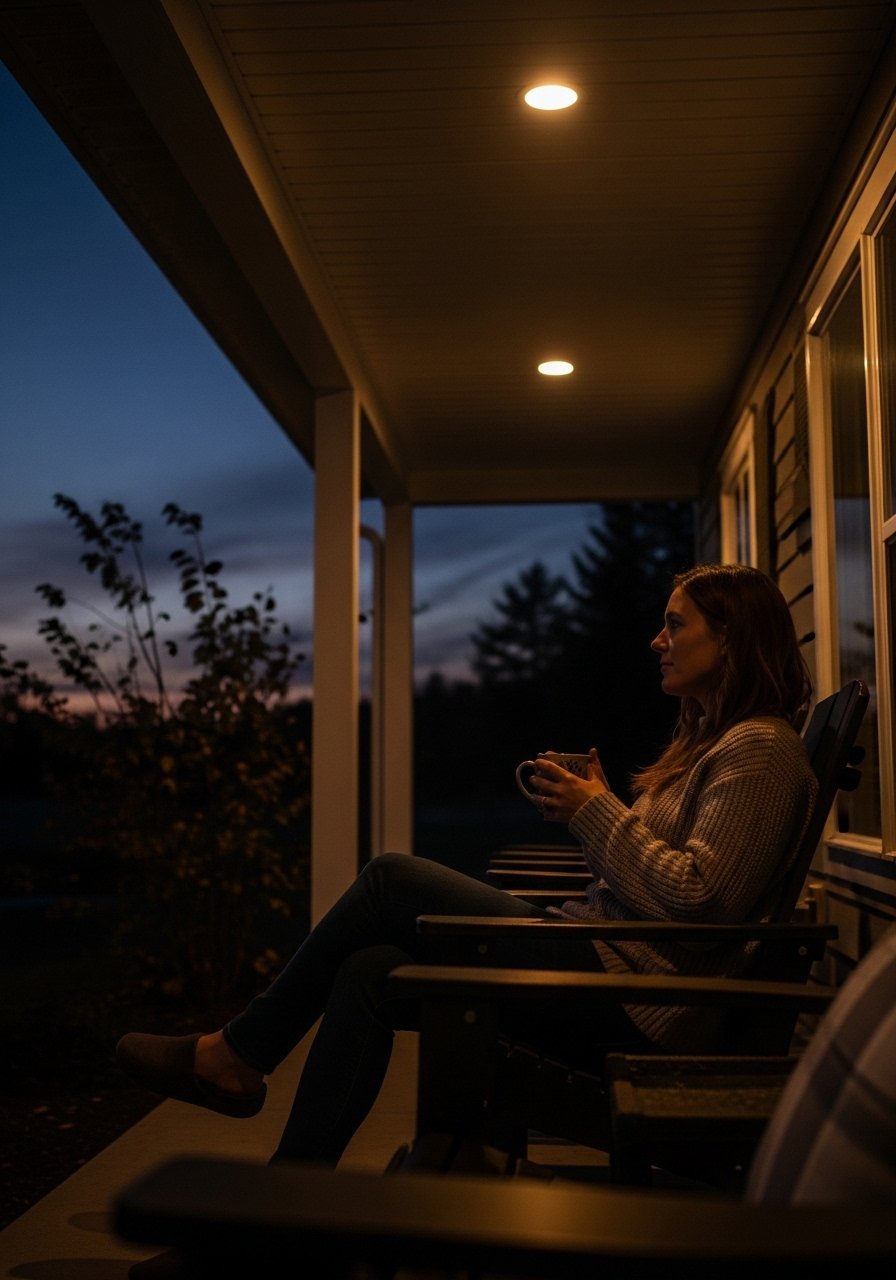
Changing lighting changed our curb appeal more than a new doormat did. We swapped harsh bulbs for 2700K warm LEDs and added two recessed downlights. Aim for 300 to 600 lumens per fixture on small porches. People usually think brighter is better. Warm light makes neutral exteriors feel intentional at night. I used a dimmable outdoor LED like the warm LED recessed light. If you rent, try clip-on warm sconces first so you do not rewire right away.
Neutral Horizontal Siding With Vertical Accents, Modern Cottage
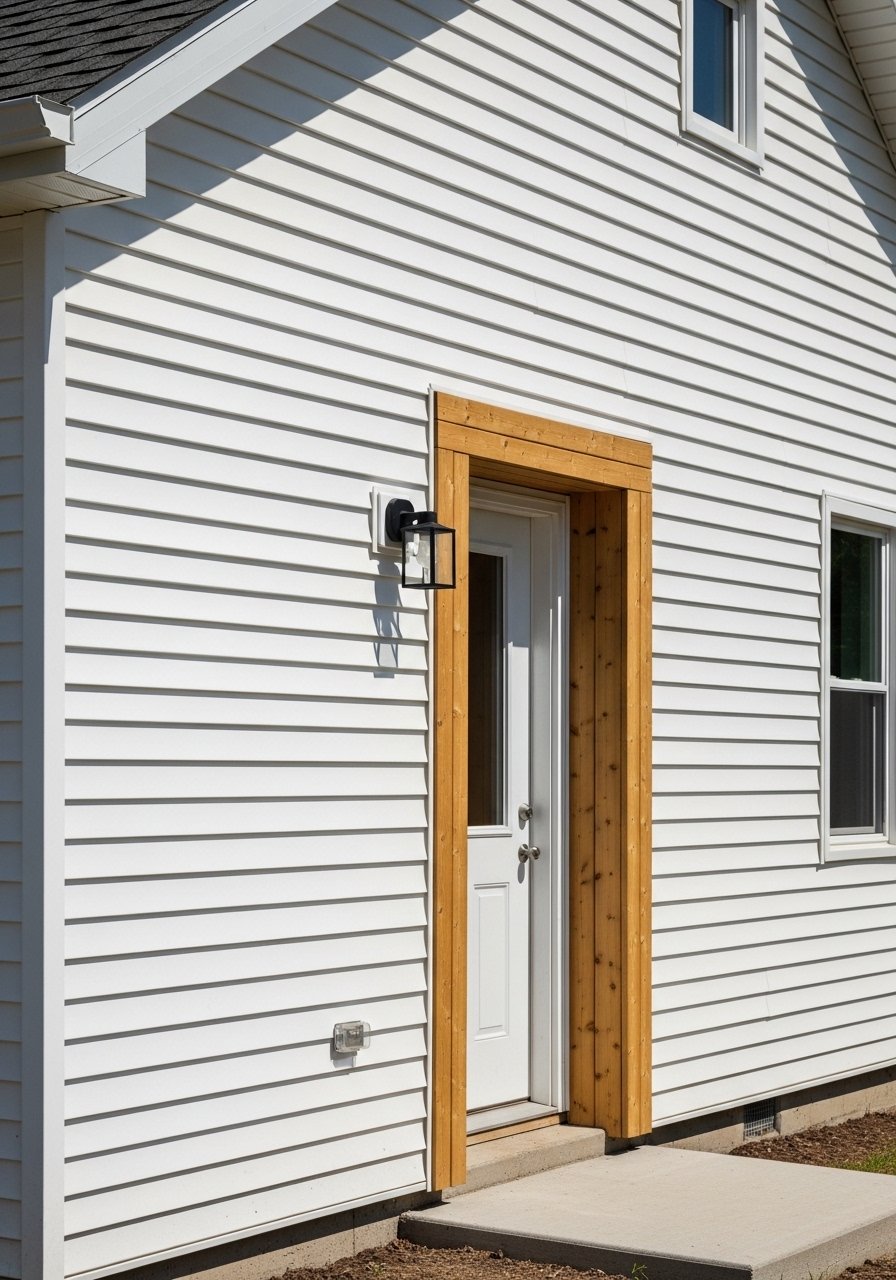
Mixing orientations adds subtle interest. We kept siding neutral and added a vertical board at the entry painted in a slightly darker taupe. The vertical accent was a cheap DIY that cost under $80. Many homeowners overuse accents and the facade reads busy. Keep accents to one or two vertical elements only. For scale, make the vertical board two to three times the width of trim pieces. I used an all-weather exterior paint sample pot to test the accent for 72 hours before rolling the whole project.
Simple Pergola With Climbing Vines, Porch Depth
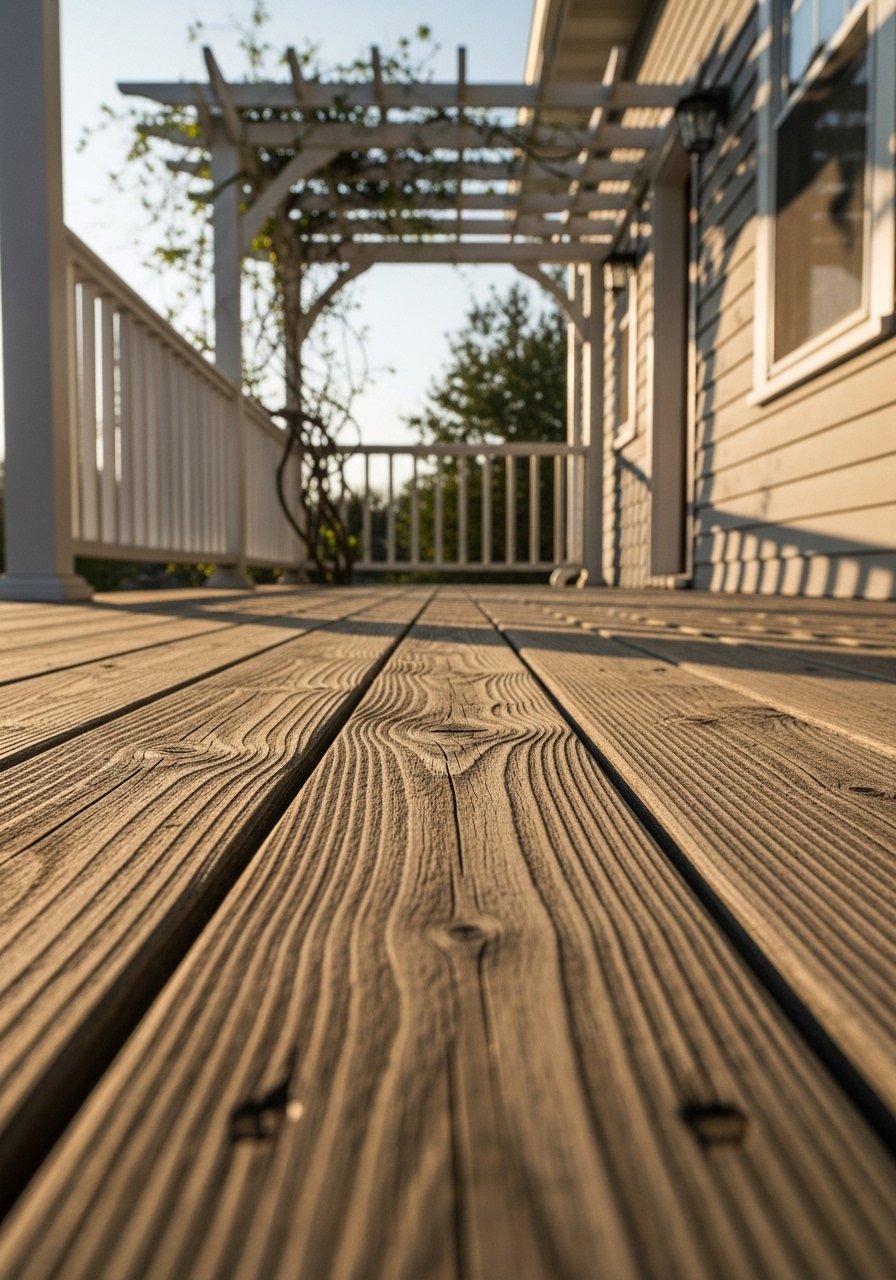
Adding a modest pergola gave our narrow porch depth and a soft shadow pattern. I built a 6 by 3 foot pergola for under $200. People often build it too tall so it overwhelms the door. Keep the bottom of the pergola 8 feet above the porch floor so it reads like a frame, not a roof. Choose hardy vines like clematis in neutral bloom tones. I anchored planters with a set of cedar pergola brackets to avoid big posts. Small-space lighting quirks matter here, test the pergola in late-day light to ensure vines do not block sightlines.
Neutral Fence and Gate With Black Hardware, Front Yard

A fence in a matching neutral ties the landscape to the house. We painted a new fence the same color as the foundation and used black strap hinges for contrast. Budget was around $300 for materials for a 10-foot section. Mistake is painting the fence too bright white against a warm house. Match the LRV within 5 points of the foundation color for cohesion. I installed a durable black gate latch that looks custom. Pet owners should pick scrubbable finishes if dogs rub against it.
Wide, Neutral Front Steps With Contrasting Riser, Entryway
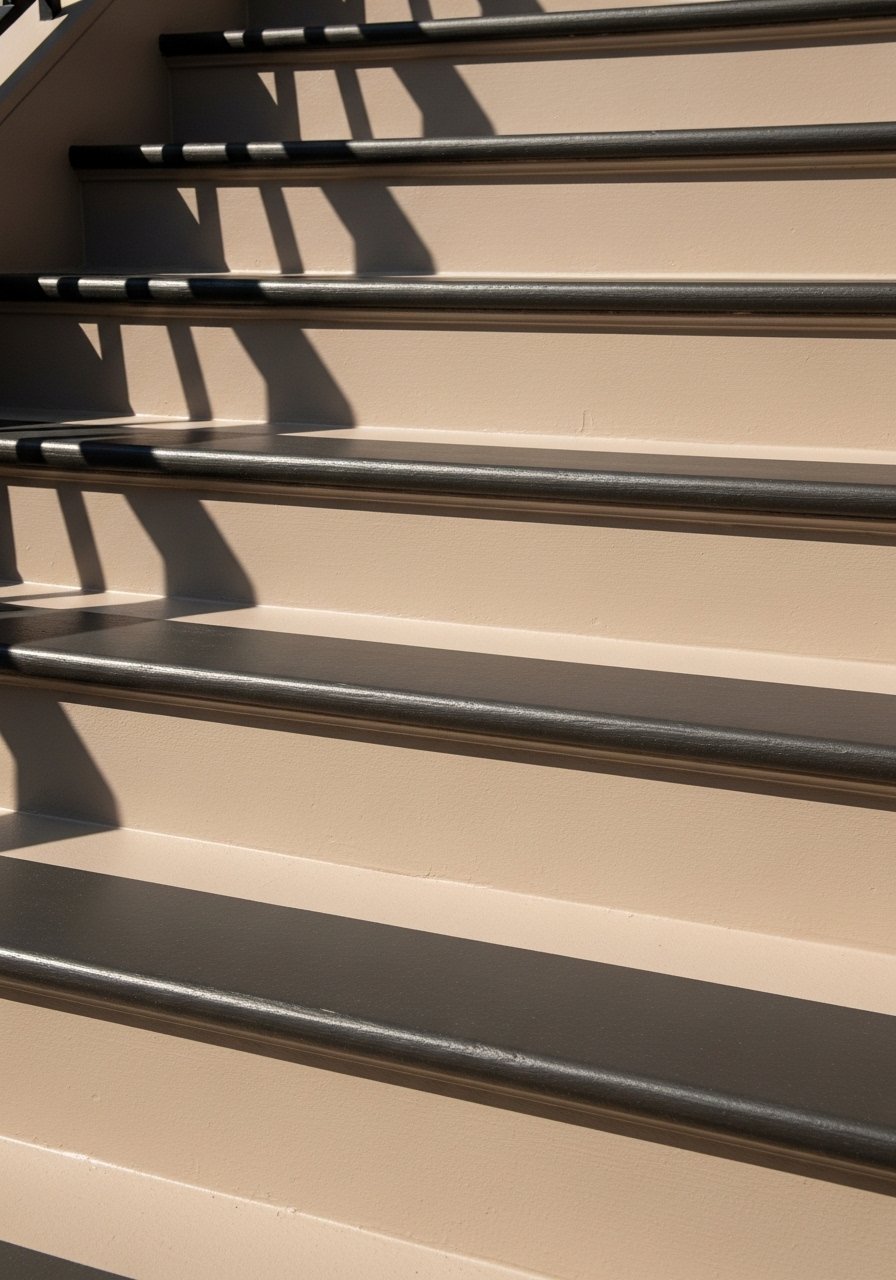
Painting risers a slightly darker tone made our steps pop and hid scuffs. It cost under $60 in paint and primer. People often use high-gloss on steps which shows every scuff. Use an eggshell exterior that cleans easily. A detail most articles skip is painting the second riser from the top in the darker color too, which visually anchors the landing. I used an exterior all-weather porch paint. Allow 24 hours between coats and expect the full project to take a weekend.
Layered Neutral Porch Textiles, Outdoor Seating
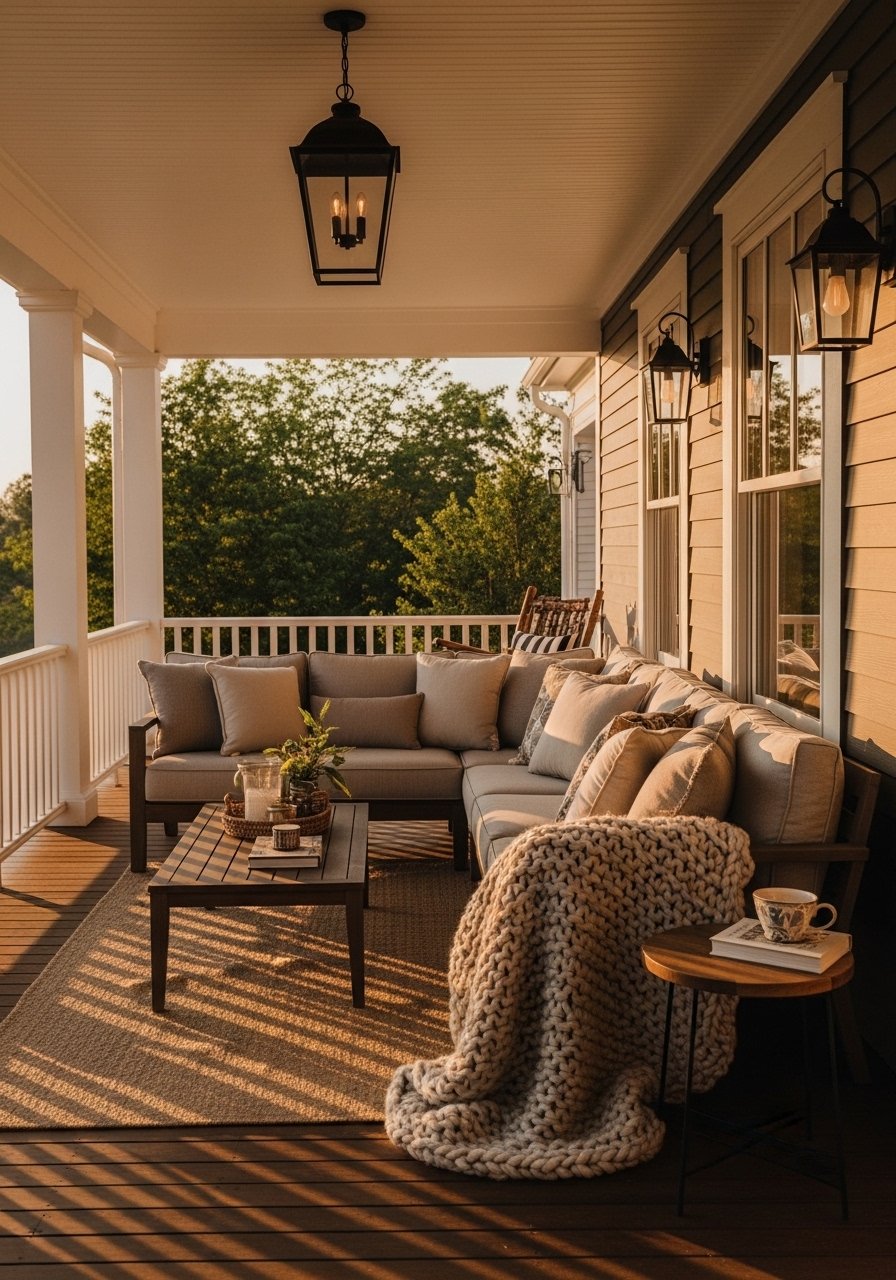
My porch looked like an outdoor showroom until I added textiles with different weaves. I started with a neutral outdoor rug, added 22-inch linen-feel cushion covers, and a chunky throw for contrast. The rug cost $90 and cushion covers were $15 each. A common mistake is matching everything perfectly. Instead, mix textures and pick one warm undertone that repeats in two places. For durability, look for solution-dyed fabrics. I grabbed outdoor cushion covers for easy washing. Renters can use adhesive outdoor rug tape to prevent movement without nails.
Subtle Metallic Accents for Porch Hardware, Detail
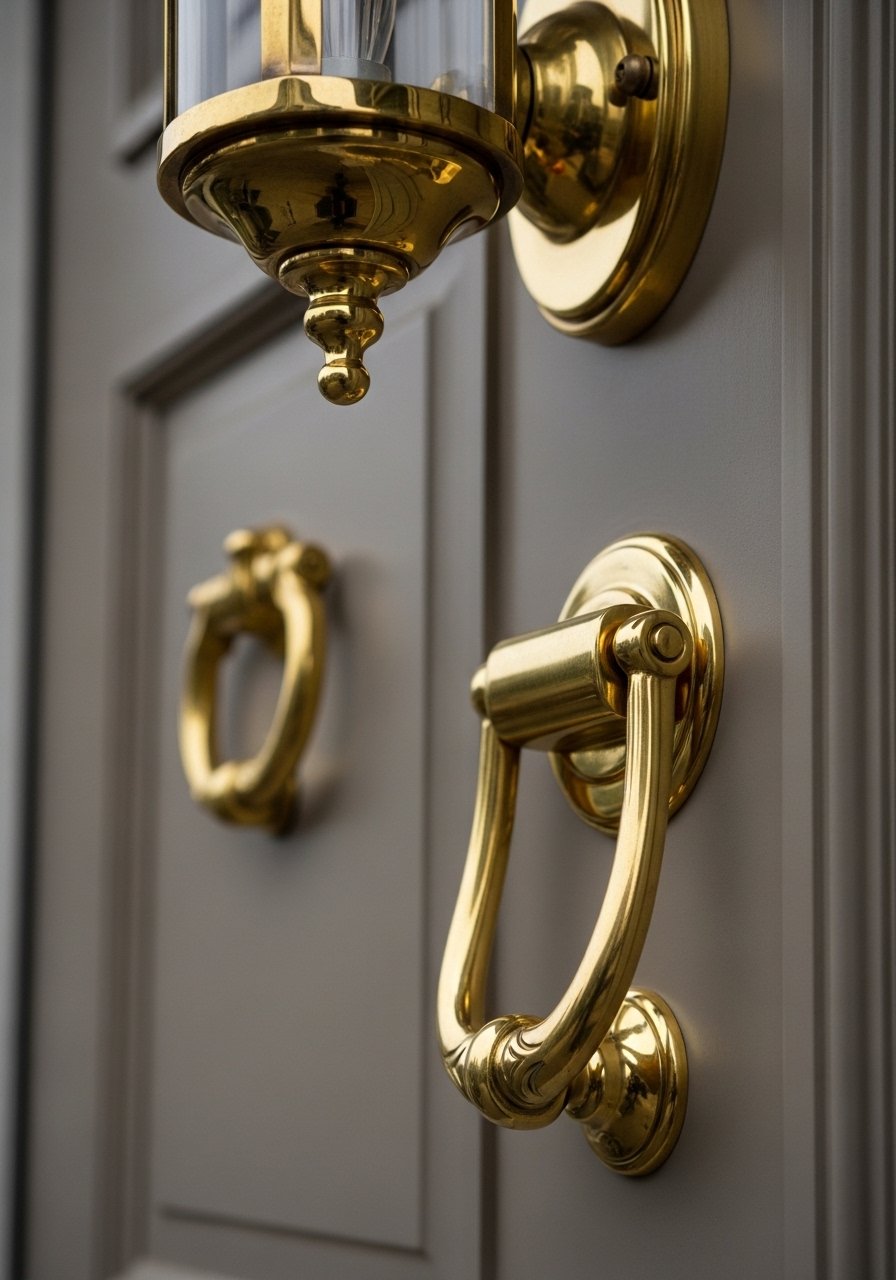
Changing a few hardware finishes made my whole porch feel edited. I swapped mixed metals to two main finishes, brass and matte black, and kept them small scale. Buying a matching knob and knocker set was about $150. People either match everything or mix too many metals. Stick to two metals maximum. One detail I noticed is using brass on a neutral with warm undertones reads more intentional than polished chrome. I used a brass door knocker that patinas nicely over time.
Painted Garage Door in Soft Taupe, Big Surface Fix
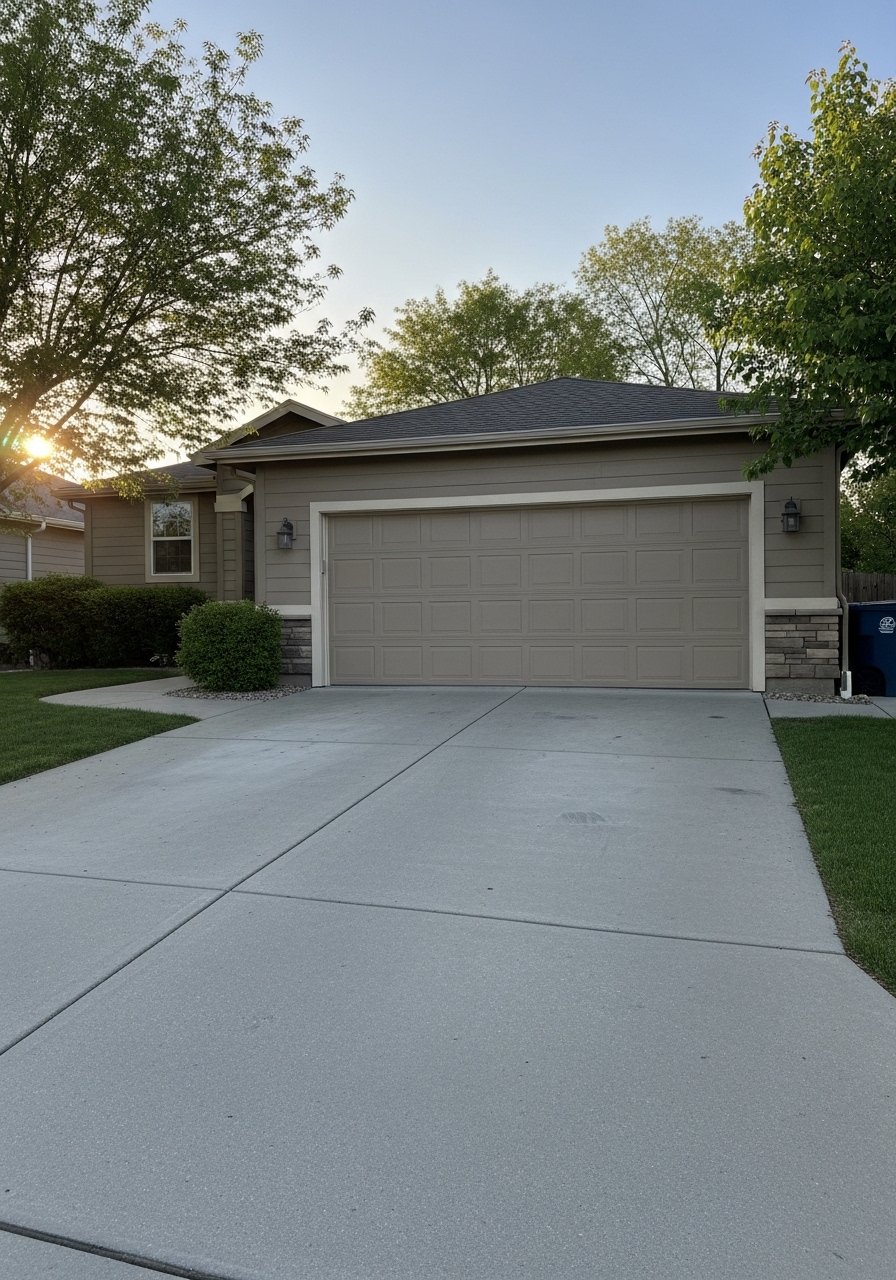
A painted garage door can save you money and instantly update the facade. We painted ours soft taupe to match trim and it stopped dominating the curb. Budget for paint and mask is $120 to $220. Common mistake is neglecting to prime old finishes. Prime first, then two coats of exterior latex. A practical tip most people miss is to paint the door out of direct sun to avoid lap marks. I used a roller kit for garage doors to get consistent texture. Folks often save real cash matching big-name colors at discount spots when they plan the whole facade first.
Reclaimed Wood Bench and Neutral Pillars, Cottage Entry
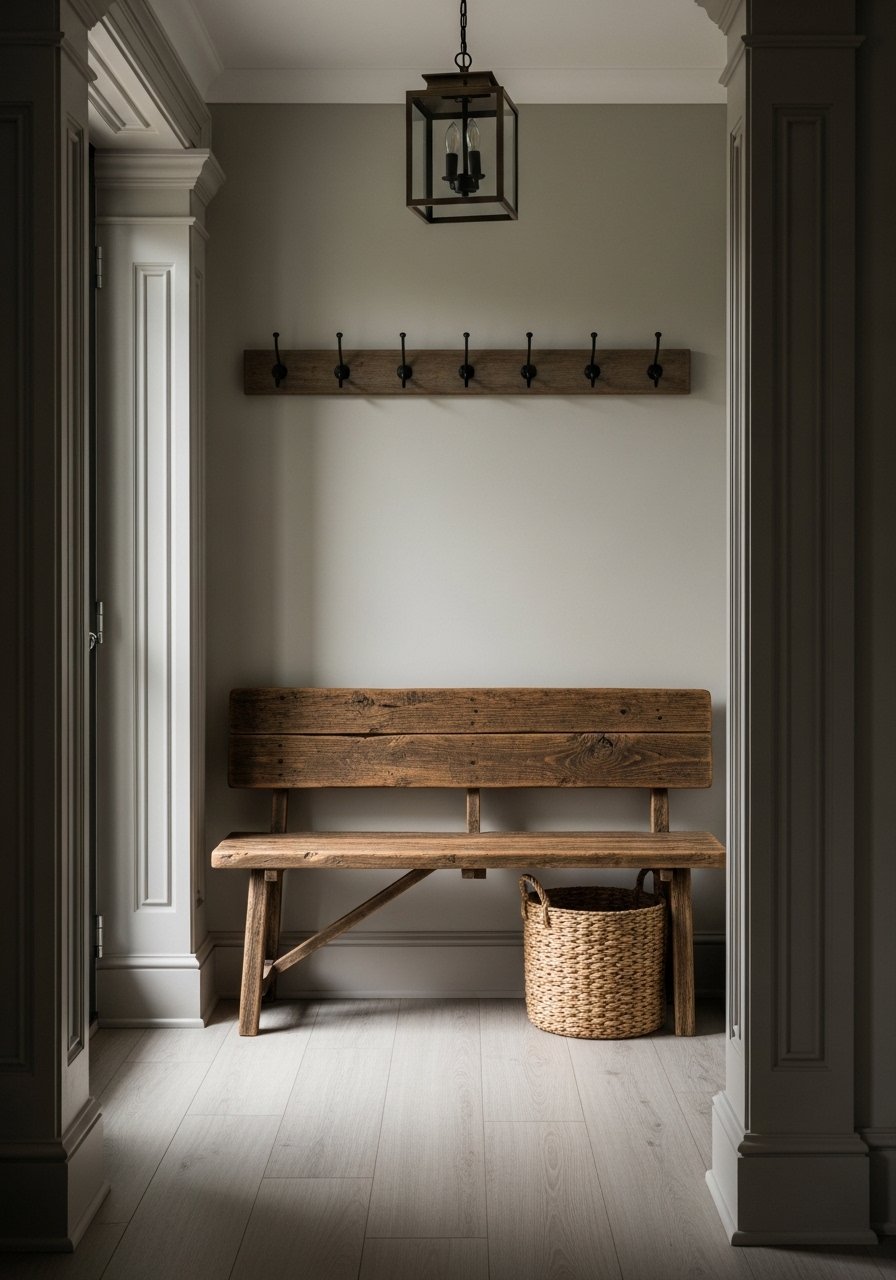
Adding a reclaimed wood bench introduced an organic tone that warmed our neutral facade without adding color. The bench was an $80 DIY. People usually buy a plastic bench that reads cheap. Reclaimed wood pairs best with warm greiges. A detail I try to call out is bench depth. Pick a seat 16 to 18 inches deep for comfort. I anchored the look with a weatherproof woven basket for shoes. If you have kids, pick finishes that stand up to mud and sand.
Your Decor Shopping List
Textiles
- Honestly the best $40 I have spent. 22-inch linen-feel cushion covers, set of 2 in dove and stone for layered seating
- Chunky knit throw in cream (~$35-55). Drape over the bench for instant softness
Wall Decor and Hardware
- Found these while looking for something else. Matte house number set (~$25) in 6-inch size
- Brass door knocker (~$60) pairs with matte black knobs for balanced contrast
Lighting and Fixtures
- Warm LED recessed light outdoor (~$20 each) for soft evening glow
- Black exterior lantern (~$70) for classic porch presence
Planters and Landscaping
- Weatherproof planters, set of 3 (~$45-100) in neutral tones
- Concrete paver kit for entry paths, includes 18×18 inch pavers
Tools and Prep
- Exterior paint sample pot for 48 to 72 hour tests
- Roller kit for garage doors for even coverage
Budget Finds
- Black gate latch (~$15)
- Weatherproof woven basket (~$20) as shoe storage
Similar at Target or HomeGoods: look for neutral jute rugs, linen-feel cushions, and stone-look planters for lower cost options.
Shopping Tips
White oak beats dark wood in 2026. Design feeds have shifted completely. These white oak floating shelves look current, not dated.
Grab outdoor cushion covers for $12 each. Swap them seasonally and the whole porch feels different.
Curtains are not just for windows. Use 96-inch outdoor drapery panels to make a porch feel taller. These 96-inch linen-look panels are wallet friendly.
One large plant beats five small pots. Pick a durable option like a 6-foot fiddle leaf in a neutral planter. Artificial fiddle leaf fig 6ft keeps height without the fuss.
Bring the actual sample when you shop paint or hardware. Use an exterior paint sample pot and test in sun and shade for 48 hours.
Frequently Asked Questions
Q: How do I pick the right neutral for my house exterior?
A: Start by identifying warm or cool undertones in your roof and nearby brick. Take a 4-inch sample of trim or siding when you shop for paint. Test a sample pot on the wall for 48 to 72 hours so you can see it at midday and dusk, and swap bulbs if you add porch lighting.
Q: Can I mix two metal finishes outside without it looking messy?
A: Yes, mix two metals maximum. I usually pick one main finish like matte black and one accent like aged brass. Use the accent sparingly on fixtures such as a knocker or mailbox so the pairing reads intentional.
Q: What repairs are worth doing before painting the exterior?
A: Replace rotten trim, power wash siding, and prime any bare wood. Skipping primer is the most common mistake and leads to uneven drying. Expect one weekend for a small porch prep and a full day per side for primer and drying.
Q: How do I choose exterior paint based on Light Reflectance Value?
A: Use LRV to match base choice. Lighter colors with higher LRV need a lighter base, while darker tones need Base 3 or 4. If you are unsure, test a sample pot and watch for muddy results after it dries.
Q: Are faux plants okay outside?
A: Both real and faux work. Real plants give life and change with the seasons. Faux plants are practical in shaded entries or for renters. I keep one faux tall plant on porches that get limited light. Test fabric and pot colors in the same light as the house.
Q: How do I make a small porch feel larger with neutral colors?
A: Paint porch ceilings one or two tenths lighter than the siding, use narrow vertical accents to draw the eye up, and choose a rug that runs parallel to the house for length. One visual trick I used was a single darker riser on steps to lead the eye to the door.