


My living room had nice furniture and decent lighting but it still felt like a waiting room. Took me embarrassingly long to figure out it was missing texture. Every surface was smooth, every color was flat, and nothing invited you to actually sit down. Small rooms punish sameness, so I learned to add measured contrast, functional pieces, and a couple of cheap fixes that change everything.
These ideas lean modern with a warm neutral palette. Most items are under $75, with a couple of splurges around $120. Works for small living rooms, studio apartments, and den corners where you need to make every inch count.
Low-Profile Sofa and Narrow Console To Keep Sight Lines Open

Choosing a low-profile sofa keeps the room from feeling boxed in. I swapped my deep seat for a 30-inch-deep piece and suddenly the place felt twice as big, because you could see across the room without a tall back blocking light. Pair it with a narrow console table behind the sofa for storage and a surface that does not take floor space. I use a slim console like this narrow-console-table for keys and a tray. Common mistake is buying a chunky console that eats the walking path. Measure the clearance, leave at least 28 inches for a walkway, and keep the console under 12 inches deep so it reads as furnishing, not a barrier.
Floor-to-Ceiling Curtains to Add Height in a Small Room
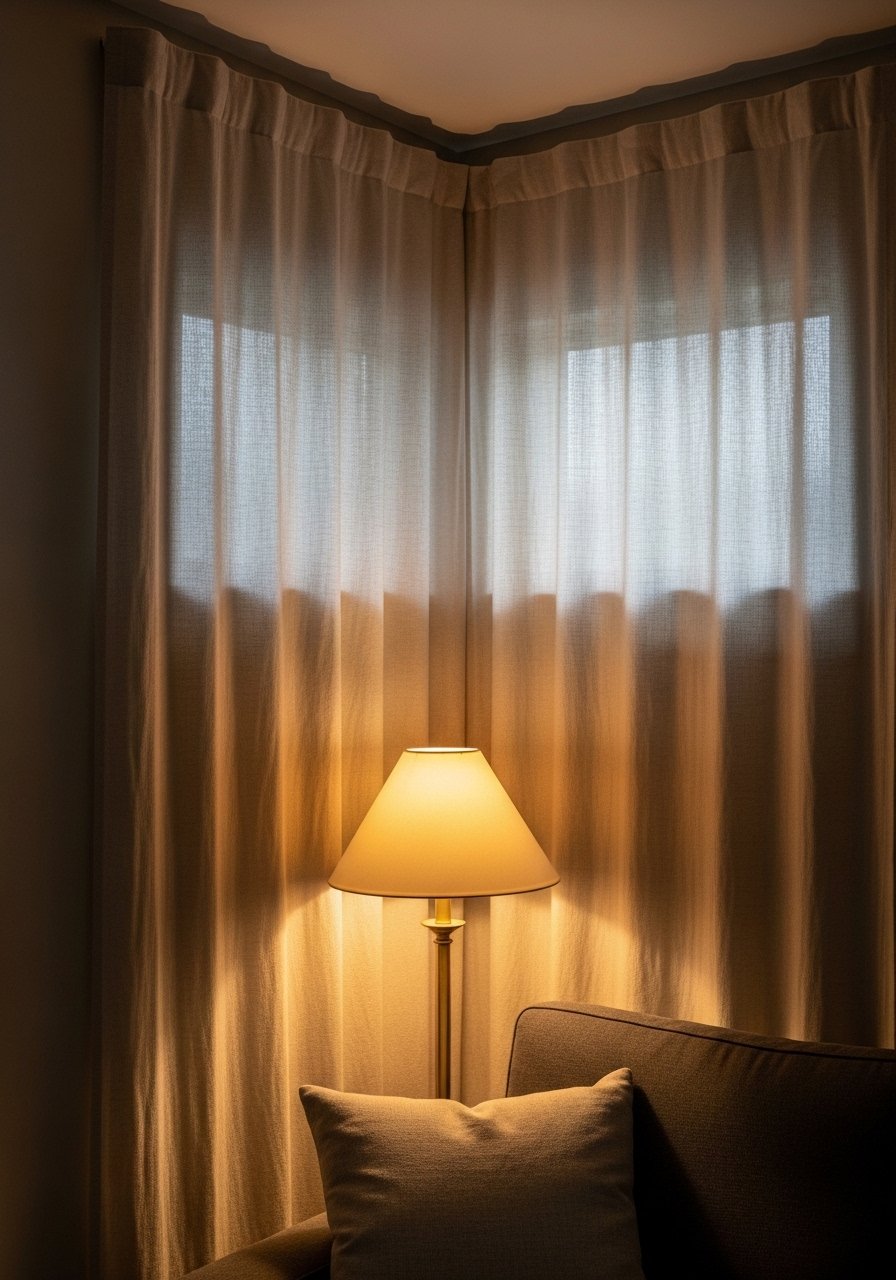
Most people hang curtains right at the window frame. That is why their rooms look shorter than they are. Hang panels six to twelve inches above the frame and let them kiss or puddle the floor. For a standard 8 to 9-foot ceiling, 96-inch linen panels are the right move. I bought these linen-curtains-96-inch and the room read taller immediately. Budget wise you can get good panels under $50 per panel. Mistake to avoid is cutting panels off at the sill, it makes the ceiling look lower. Also test them in your light, because white linen can read warm or cool depending on the window direction.
Multi-Textured Rug Layering to Define Zones
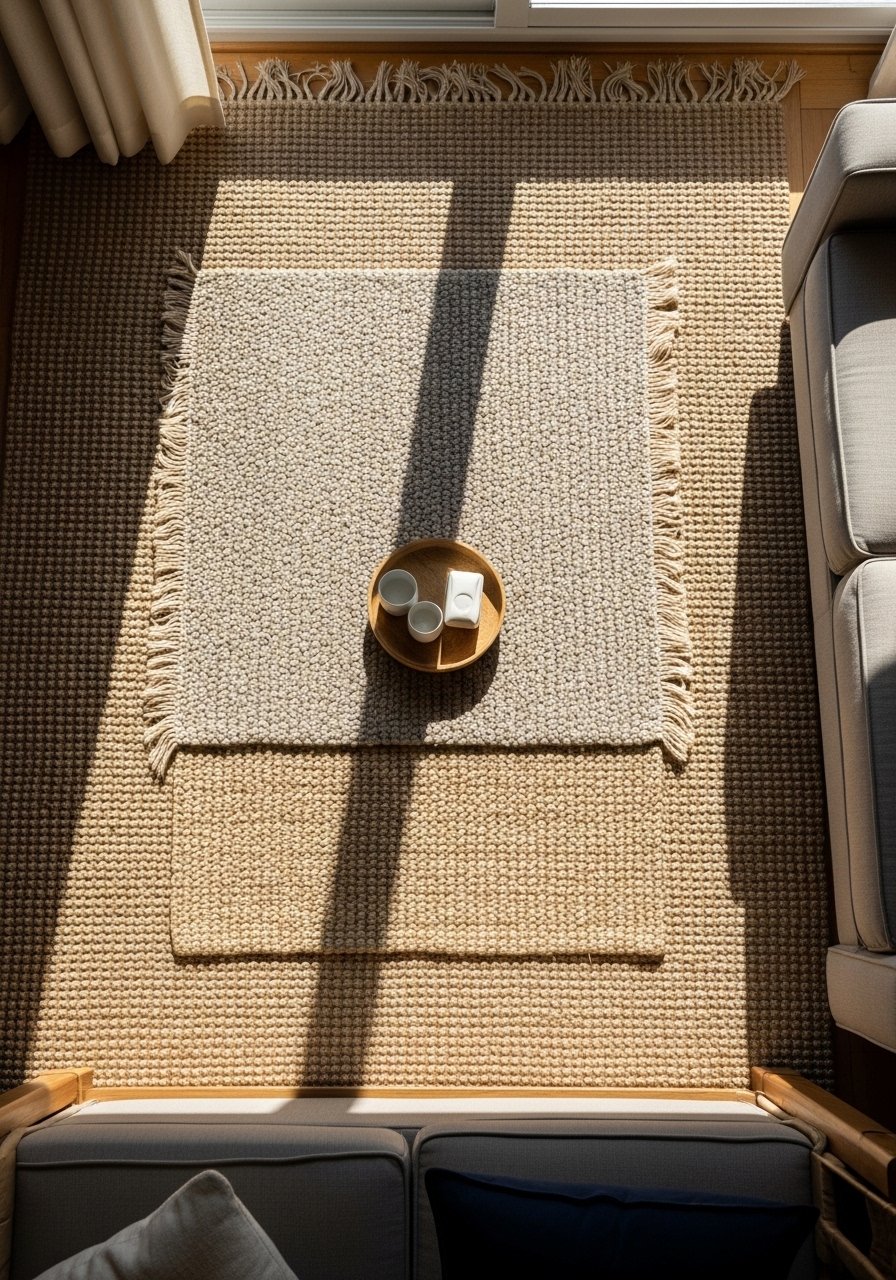
An area rug anchors everything, but in small spaces you want zones not islands. I layer an 8×10 jute base with a smaller 5×7 wool rug offset under the sofa legs to create a seating zone while keeping some floor visible. Go with neutral tones and let texture do the work. The trick is that the larger rug should extend beyond the furniture by at least 12 inches so the layout reads intentional. Try a natural jute like this 8×10-jute-area-rug for durability. Common error is buying a rug that's too small, which makes the room feel chopped up. Layering also hides traffic wear, which matters if you have pets.
Storage Ottoman That Doubles as Extra Seating
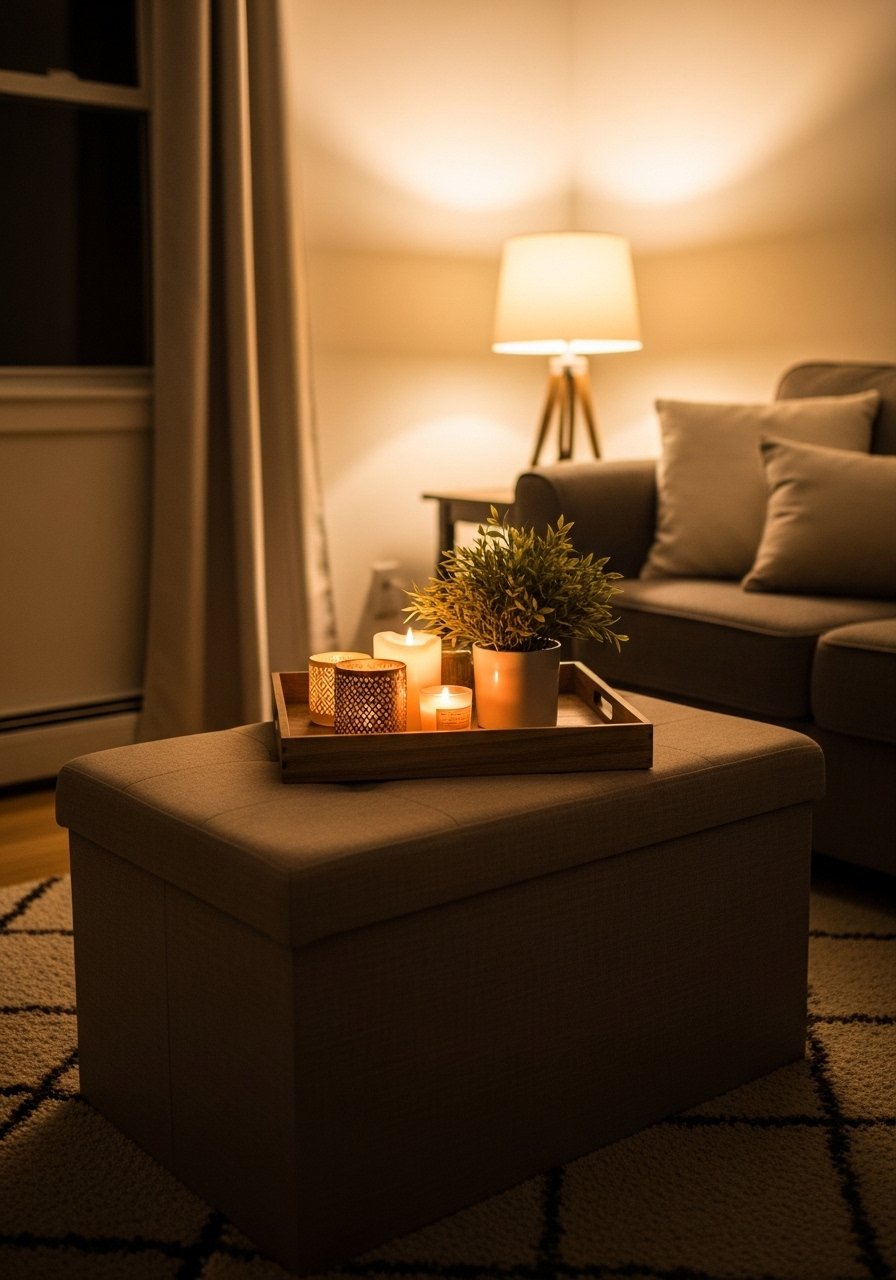
Coffee tables can overwhelm a small footprint. I replaced mine with a storage ottoman that functions as a table, extra seating, and a place to stash throws. I keep a wooden tray on top for drinks and shift it when guests arrive. Look for a 36-inch square or 30×20 rectangle to match your sofa scale. I picked up this storage-ottoman and it saved on clutter instantly. People often forget to test the lid for noise and weight capacity, so put down a book and sit on it in the store if possible. For renters, this avoids building extra open shelving while adding hidden storage.
Slim Wall-Mounted Shelves for Vertical Storage
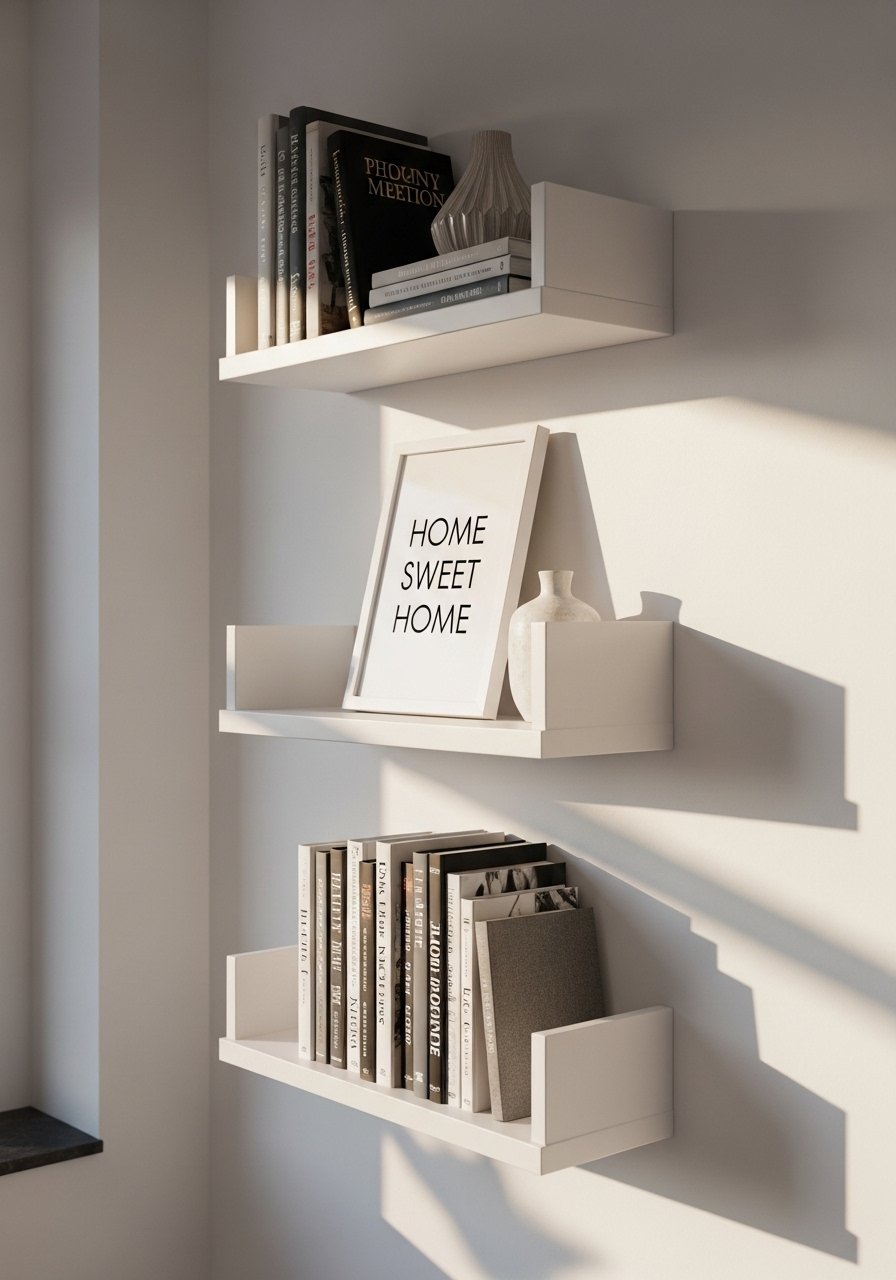
When floor space is precious, go vertical. I installed 8-inch-deep floating shelves to display books and one plant. You get storage without blocking the floor plan. White oak or painted white keeps the look calm. A common mistake is overstuffing the shelves; aim for one-third to two-thirds filled so the wall breathes. I like these white-oak-floating-shelves because they are shallow but sturdy. Test the stud placement before buying and stagger shelf heights to fit taller items like a 12-inch vase. Pros say scanners nail it nine times out of ten. That sentence might sound out of place, but the idea applies here: measure and match your real space, not the store photo.
Leaning Oversized Mirror to Brighten Dark Corners
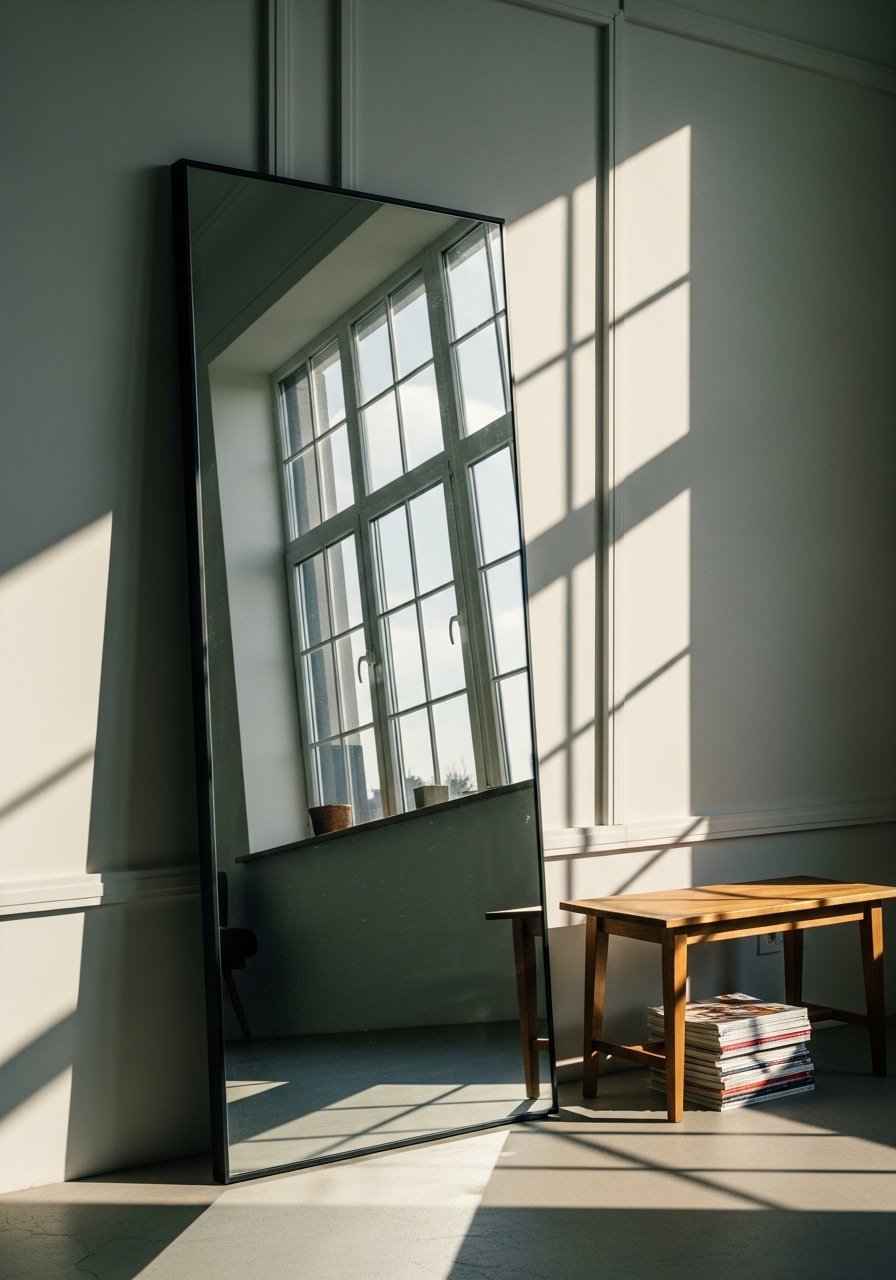
There is something about an oversized mirror that makes a small room feel twice as deep. I leaned a 30×48-inch framed mirror against a dark corner and it immediately bounced light back into the seating area. Leaning mirrors are forgiving with imperfect walls and easier to place than hung versions. Avoid a mirror that reflects clutter. I use this oversized-mirror-leaning on a small rug to create a mini foyer effect. Measure for the reflection you want, not just the wall space. Also check the frame color against your metals, mixing two metal tones looks intentional when done sparingly.
Slim Profile Floor Lamp for Layered Lighting
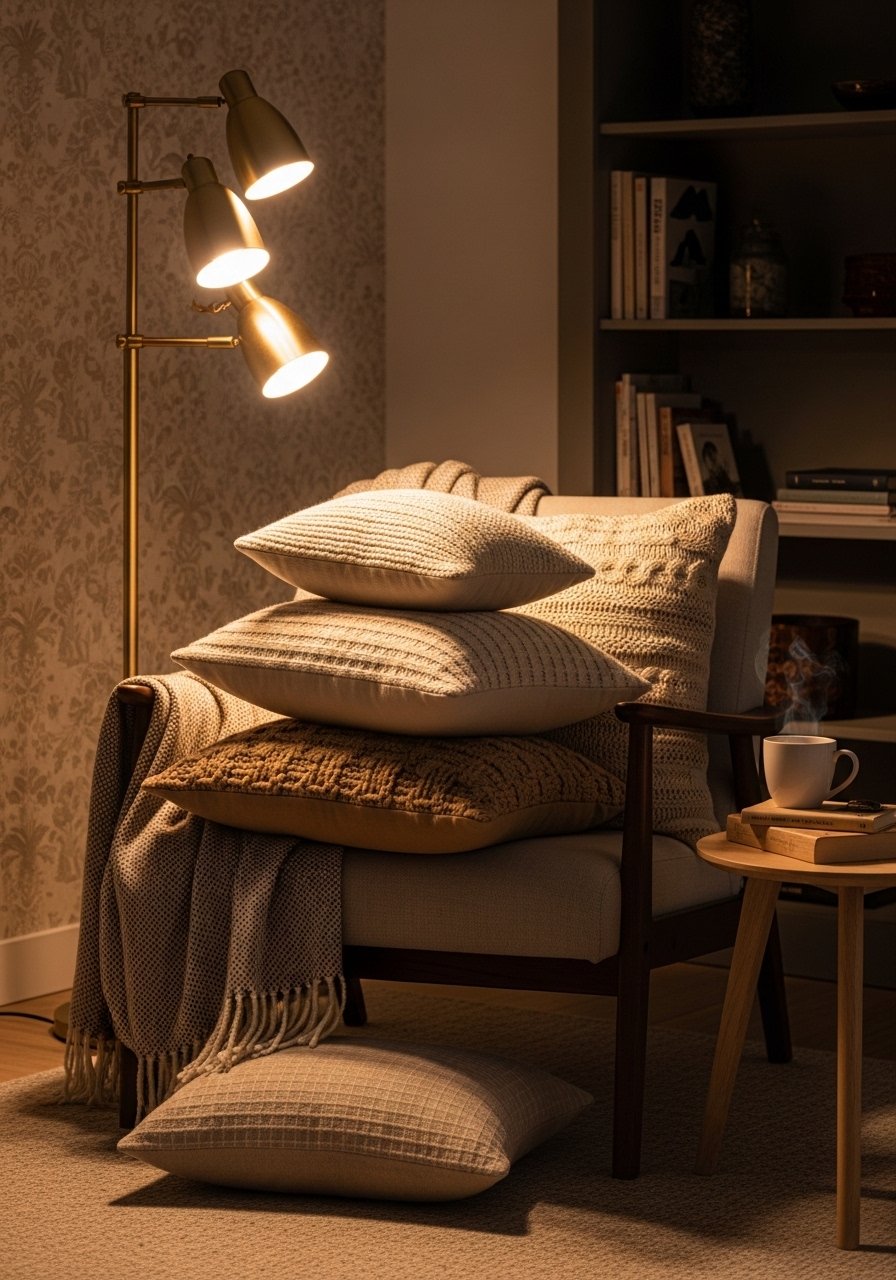
When overhead fixtures make a room feel flat, bring in layered lamps. A slim floor lamp behind a chair adds task light without taking surface space. I swapped a bulky table lamp for a 14-inch square footprint floor lamp and gained a side table. Look for LED bulbs in the 2700K to 3000K range so the neutrals stay warm. This slim-floor-lamp fit next to a narrow console and made my reading corner work. A common mistake is choosing a lamp that is too short, which creates shadows. Pick a lamp tall enough to clear your head when seated. Most folks mess up on light the first go, so test your lamps in the evening before committing to placement.
Gallery Wall in a Cohesive Neutral Palette
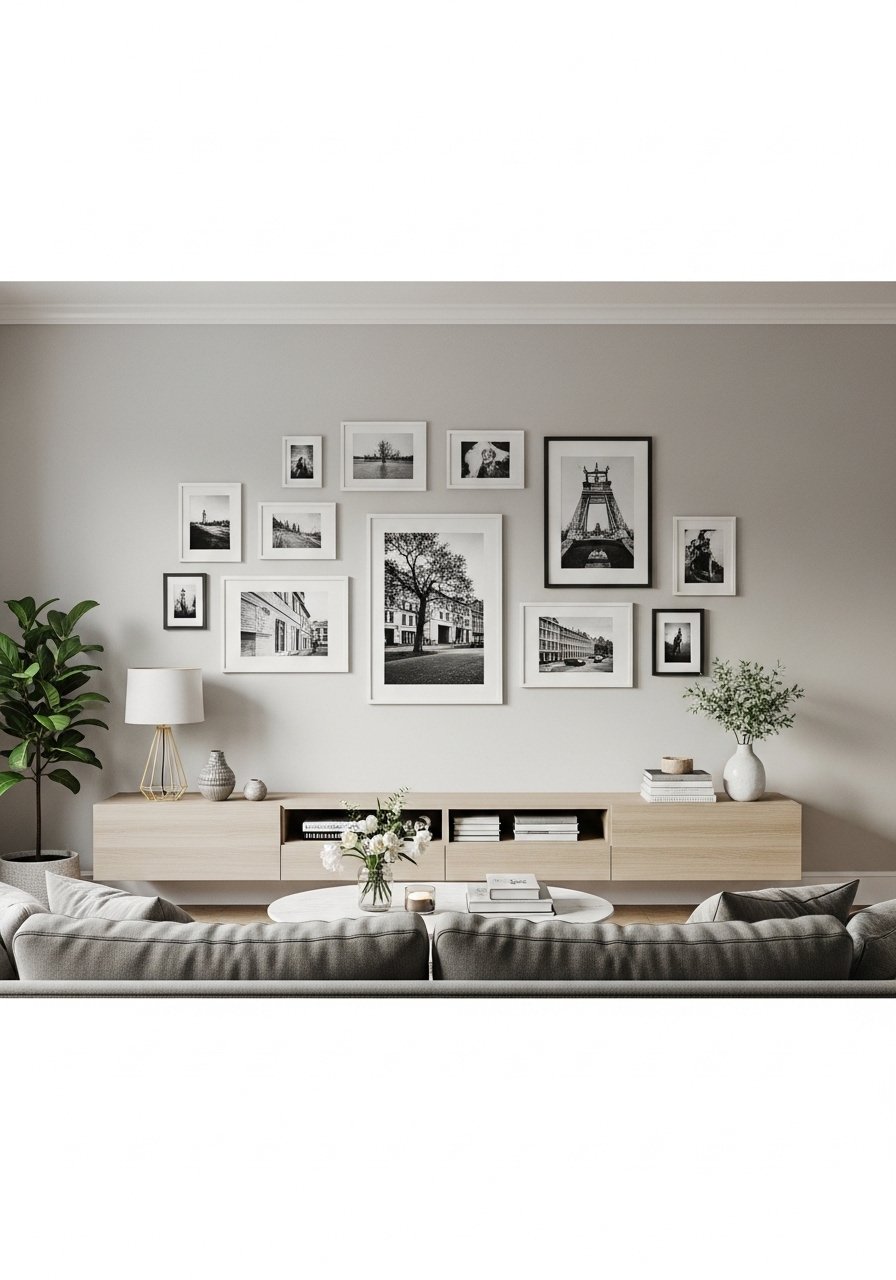
I was terrified of committing to a gallery wall until I limited the palette. Using frames in black and natural wood with 5×7 and 8×10 prints made the layout read calm instead of cluttered. Lay the frames on the floor first and photograph the arrangement to test it in your room light. My rule is to keep the largest frame about one third the width of the sofa for balance. I used these mixed-metal-picture-frames-set to mix finishes without chaos. The common mistake is placing frames too high; center the arrangement at eye level, about 57 inches from the floor to the center of the grouping. Pair this with the curtain trick above for a framed view.
Neutral Accent Pillows and a Chunky Throw for Texture
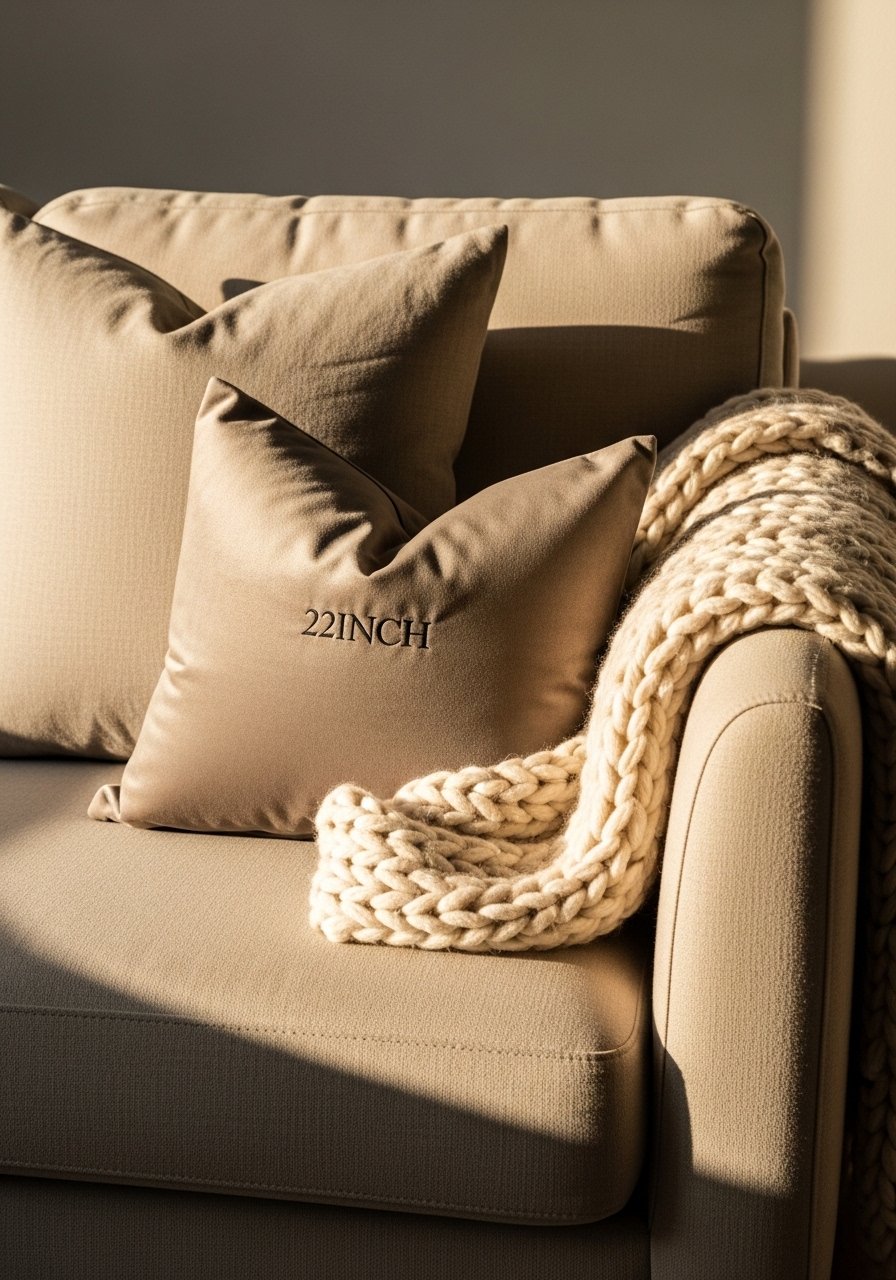
The moment I draped a chunky knit throw over the arm of my gray sofa, the whole room stopped looking flat. Pillows in different textures, like a 22-inch linen cover and a 20-inch velvet cover, create depth without stealing color. I use an 80/20 rule for accents, 80 percent neutral tones and 20 percent one contrasting texture or pattern. Try these velvet-pillow-covers alongside a chunky-knit-throw-blanket-cream. A mistake people make is buying too many small pillows; stick to three to five depending on sofa size. Switching brands often halves the bill when you shop smart, so mix affordable covers with one nicer down insert for comfort.
Your Decor Shopping List
Textiles
- Honestly the best $40 I have spent. Chunky knit throw in cream 50×60 inches, acrylic knit
- Velvet pillow covers, set of 2 20×20 inches, down insert optional
- Linen curtain panels 96-inch per panel, natural color
Wall Decor
- Found these while looking for something else. Mixed metal picture frames set assorted sizes
- Oversized leaning mirror 30×48 in black frame
Storage & Tables
- Storage ottoman 36-inch fabric top, inner bin
- Narrow console table 12-inch deep white oak finish
Lighting & Plants
- Slim floor lamp brass finish, LED compatible
- Artificial fiddle leaf fig 6ft for low light corners, looks realistic
Shopping Tips
Hang curtains high and wide. For a taller feel hang six to twelve inches above the frame. Linen curtain panels 96-inch are a good length for 8-9 foot ceilings.
Grab these velvet pillow covers for $12 each. Swap covers seasonally and the whole room feels different.
Measure twice, buy once. If your sofa depth is under 32 inches, pick a 36-inch ottoman for balance. These storage ottomans 36-inch hide blankets and double as seating.
White oak beats dark wood in 2026. White oak floating shelves look current and keep the palette neutral.
Everyone buys five small succulents. One single artificial fiddle leaf fig 6ft has ten times the visual impact.
Frequently Asked Questions
Q: What size rug do I actually need for a small living room?
A: Bigger than you think. For most small living rooms an 8×10 base rug with a smaller 5×7 layered on top gives you definition without shrinking the floor. Make sure the front legs of seating sit on the rug.
Q: Can I mix metal finishes in a neutral space?
A: Mix them sparingly. Use one dominant metal and a secondary metal for accents, like lamp bases or picture ledges. That contrast reads intentional rather than messy.
Q: How do I test curtain color under my light?
A: Tape a 3×3 inch swatch to the wall and observe it in morning, midday, and evening light. Most folks mess up on light the first go, so this simple multi-time test saves returns.
Q: Is a fake plant okay for a corner with no windows?
A: Yes. Use a tall faux like a 6-foot fiddle leaf fig where you need height but no maintenance. Group it with a real trailing plant if you have one near a window.
Q: What paint or fabric matching mistakes should I avoid?
A: Bring the physical chip or fabric sample to the store, not a phone photo. Pros say scanners nail it nine times out of ten, so use a store scanner if you can and test swatches at home.
Q: Any renter-friendly tips for testing these ideas?
A: Use peelable swatches for paint tests and choose freestanding pieces like leaning mirrors and floor lamps so you do not need to patch holes. A renter-friendly peelable test avoids damage while you figure out the right color and scale.