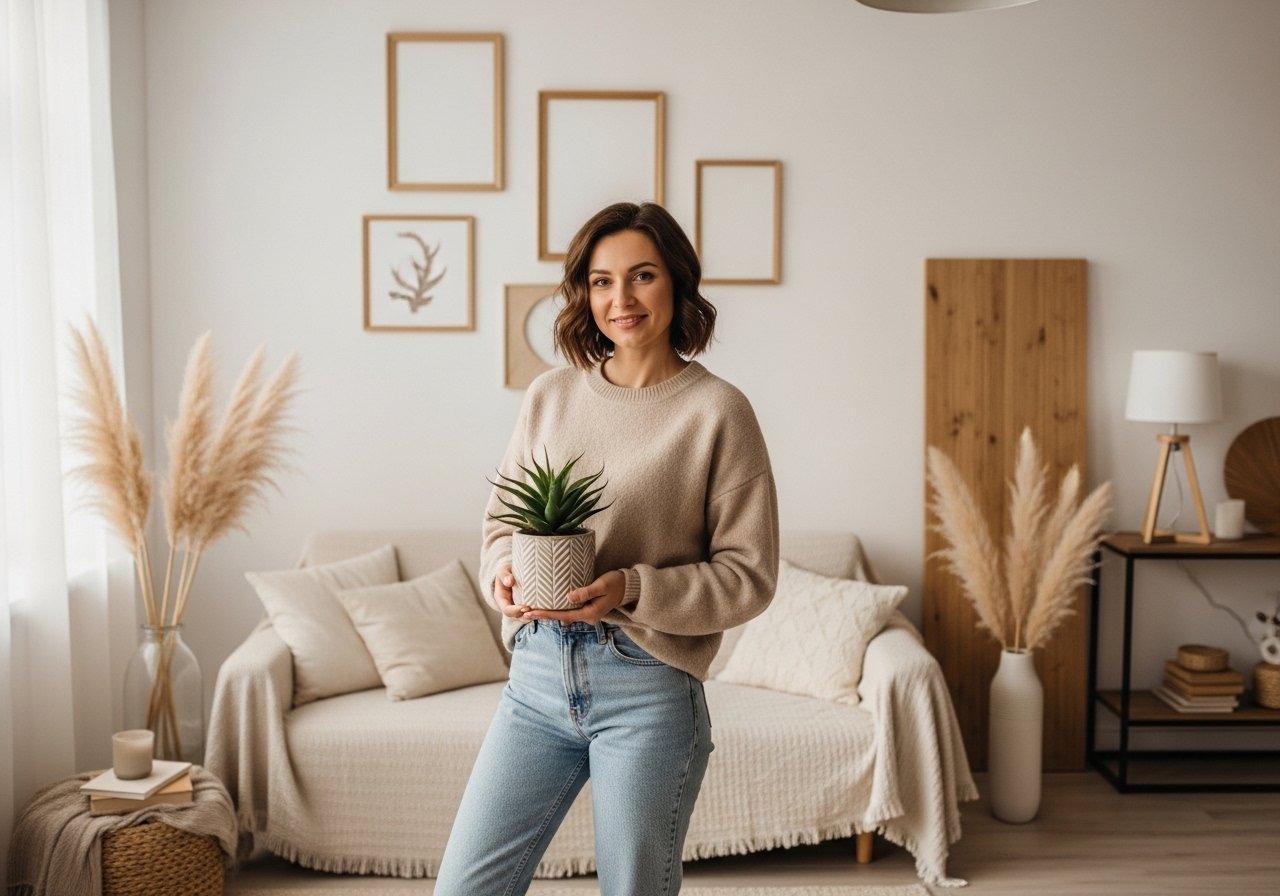
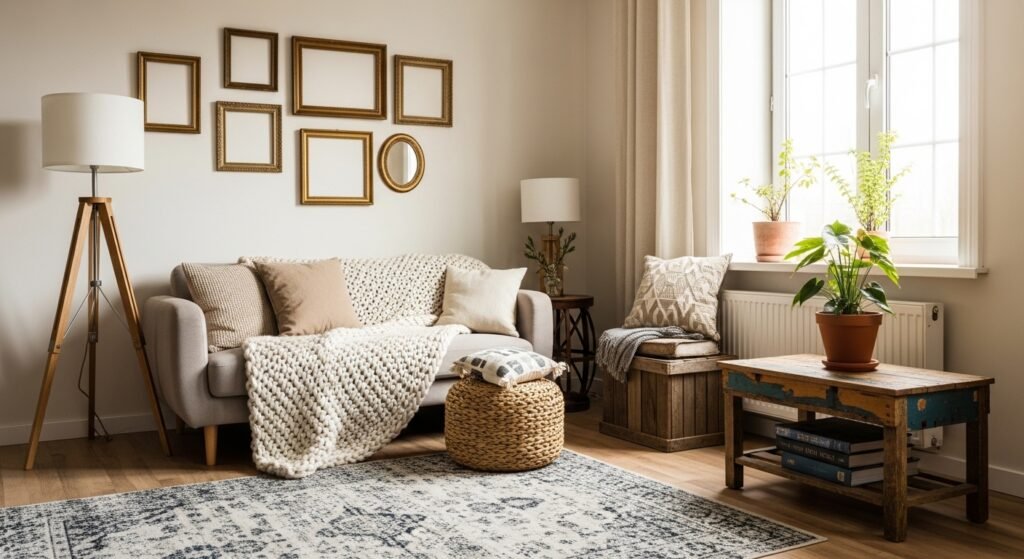
My living room had nice furniture but it still felt like a waiting room. Took me embarrassingly long to figure out it was missing texture. Every surface was smooth, every color was flat, and nothing invited you to actually sit down. Swapping in a few thrifted pieces and soft textiles made it stop feeling staged and start feeling lived in.
These ideas lean cozy vintage with a hint of modern simplicity. Most finds cost under $75, with a few splurges around $100 when I wanted something unique. They work for living rooms, bedrooms, entryways, or any corner that needs more personality and softness.
Layer a Chunky Throw and Off-White Pillows for Instant Warmth
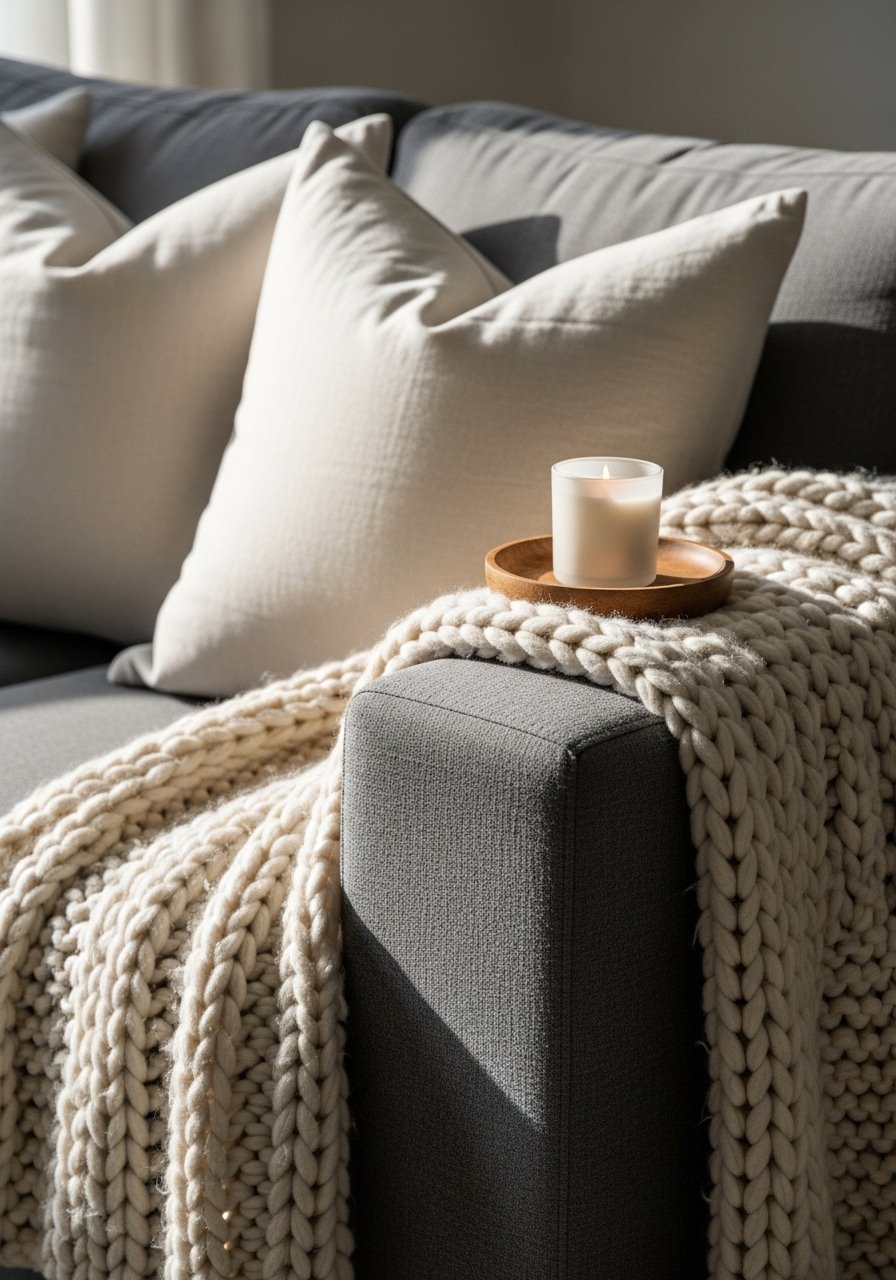
The moment I draped a chunky knit throw over the arm of my gray sofa, the whole room stopped looking flat. Use a 50×60-inch chunky throw in cream to anchor a neutral sofa, then add two 22-inch down-filled linen pillow covers for contrast. I like the 80/20 rule here, 80 percent neutrals and 20 percent one accent color like rust or forest green. Budget ranges from $30 to $60 for the throw and $12 to $25 per pillow cover. A common mistake is piling on tiny pillows that look decorative but feel useless. Instead, pick two full-size pillows and one small lumbar for dimension. Try a chunky knit throw in cream if you want the same tactile ripple mine has.
Curated Vintage Brass Finds for Layered Shine in the Living Room
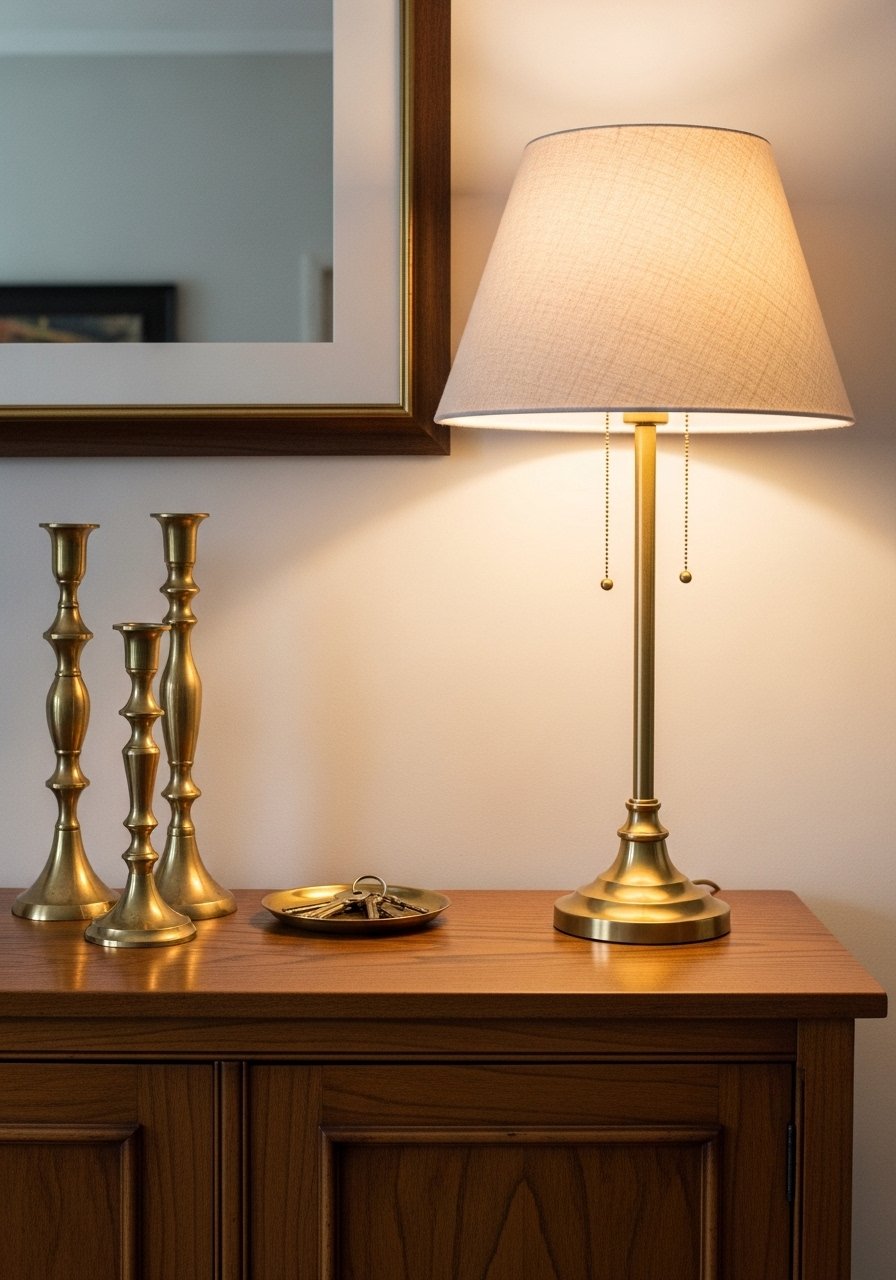
I buy brass pieces one at a time so they feel collected not matched. Mix a tall candlestick, a picture frame, and a small brass tray on a console to get that collected look without trying. Budget for three pieces is usually under $60 if you hunt thrift shops or estate sales. The key visual is mixing heights in a 3-5-8 ratio, where one piece is the tallest, one mid, and one short. Avoid buying all shiny brass at once. I use a thrifted lamp with a linen shade and finish the vignette with a brass tray to catch daily clutter. If the brass looks too yellow next to warm wood, add a black frame or ceramic to calm the palette.
Layer Rugs for Texture and a Cozier Floor in Open Rooms

Stacking an inexpensive jute rug under a thrifted patterned rug gives the warmth of a heavy rug without the heavy price. I size the base rug at least 8×10 for a standard living room and top it with a 5×8 heirloom rug for pattern. The visual trick is letting 12-18 inches of the base rug show around the top rug to create a frame. People often grab a too-small rug. Bigger rugs make seating feel intentional and less like furniture floating in a sea of floor. A flaw I fixed was seating legs off the rug which made the room feel disjointed. For a budget base, try an 8×10 jute rug and hunt thrifted patterned runners or small rugs for layering.
Gallery Wall with Mixed Frames for a Collected Vintage Vibe

I was terrified of committing to a gallery wall until I tried picture ledges. Mix thrifted frames in black, brass, and wood and lean them on two narrow ledges so you can swap art without extra holes. A simple rule I follow is odd numbers for groupings and keeping the center of the arrangement at eye level, about 57 inches from the floor. Budget is flexible, from $15 for a used frame to $60 for a polished vintage find. A common mistake is spacing frames evenly like tiles. Instead, overlap slightly and vary widths so the wall reads collected. I use brass picture ledges when I want to change pieces seasonally.
Repurposed Dresser as an Entry Console for Immediate Character

My entryway used to be a dumping ground for keys and shoes. One console table and a round mirror changed everything. A thrifted six-drawer dresser repainted in a muted green becomes a welcoming console when you remove a top drawer and add baskets inside. Aim for a depth of 18-20 inches to keep walkways open. This is the sort of change that looks expensive but costs under $150 including paint. People think a console must be narrow and buy tiny tables that lose storage. A dresser provides storage and a surface for styling. Add round wall mirror to bounce light and make the space feel larger.
Thrifted Ceramic Vases Grouped for Organic Shape on Shelves
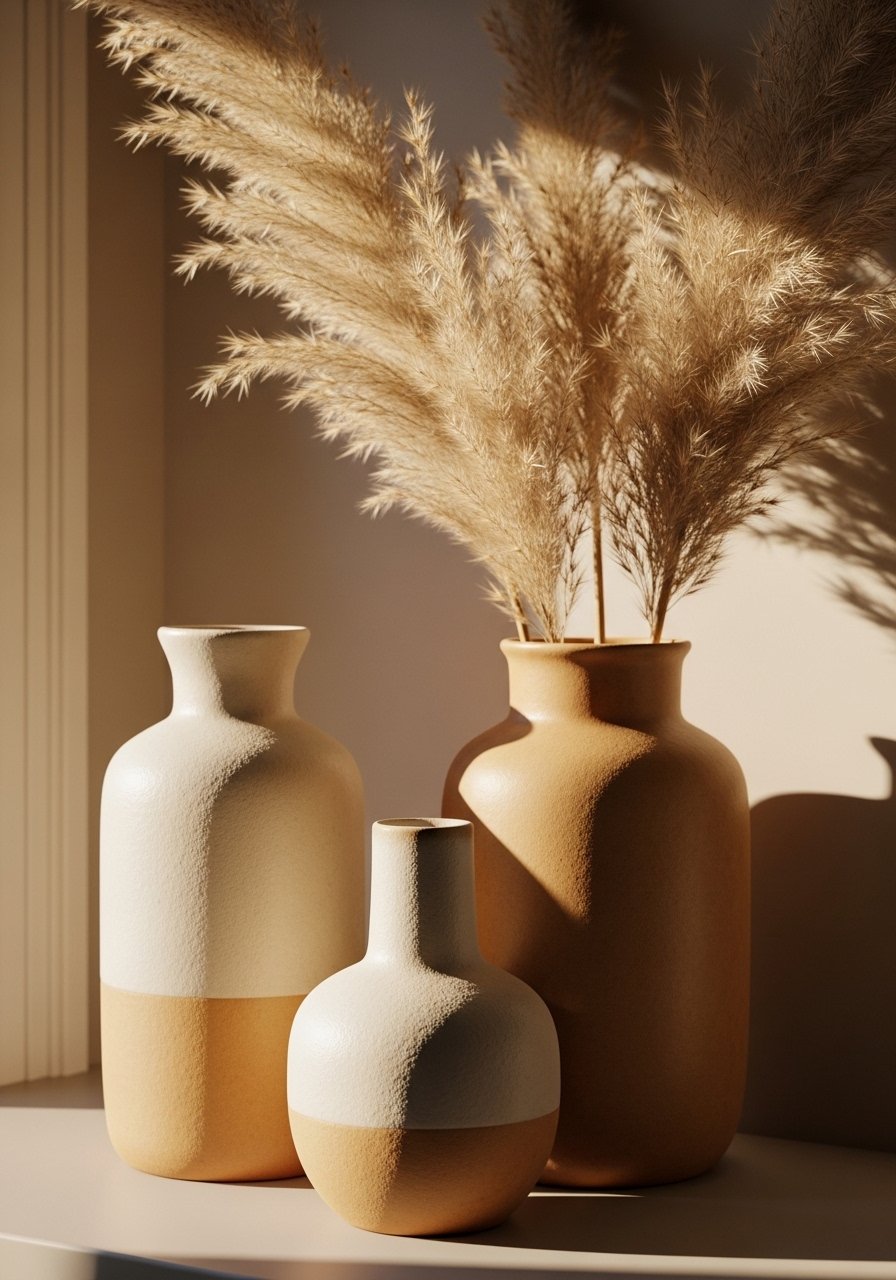
There is something about a reading nook with layered pillows that makes you want to cancel your plans. Same goes for shelves filled with pottery. Pick 2-3 ceramics that repeat a color or tone and vary the shape. On a standard 30-inch-high bookshelf, place one small vase on the left third, a taller vase on the right third, and a low stack of books between. A mistake I see is lining up objects symmetrically. Small asymmetry makes shelves look casual and lived in. Budget for thrifted pottery is usually $5 to $40 per piece. I like to anchor the group with a tall ceramic vase that holds dried stems.
Reading Nook with a Thrifted Lamp and Layered Textiles
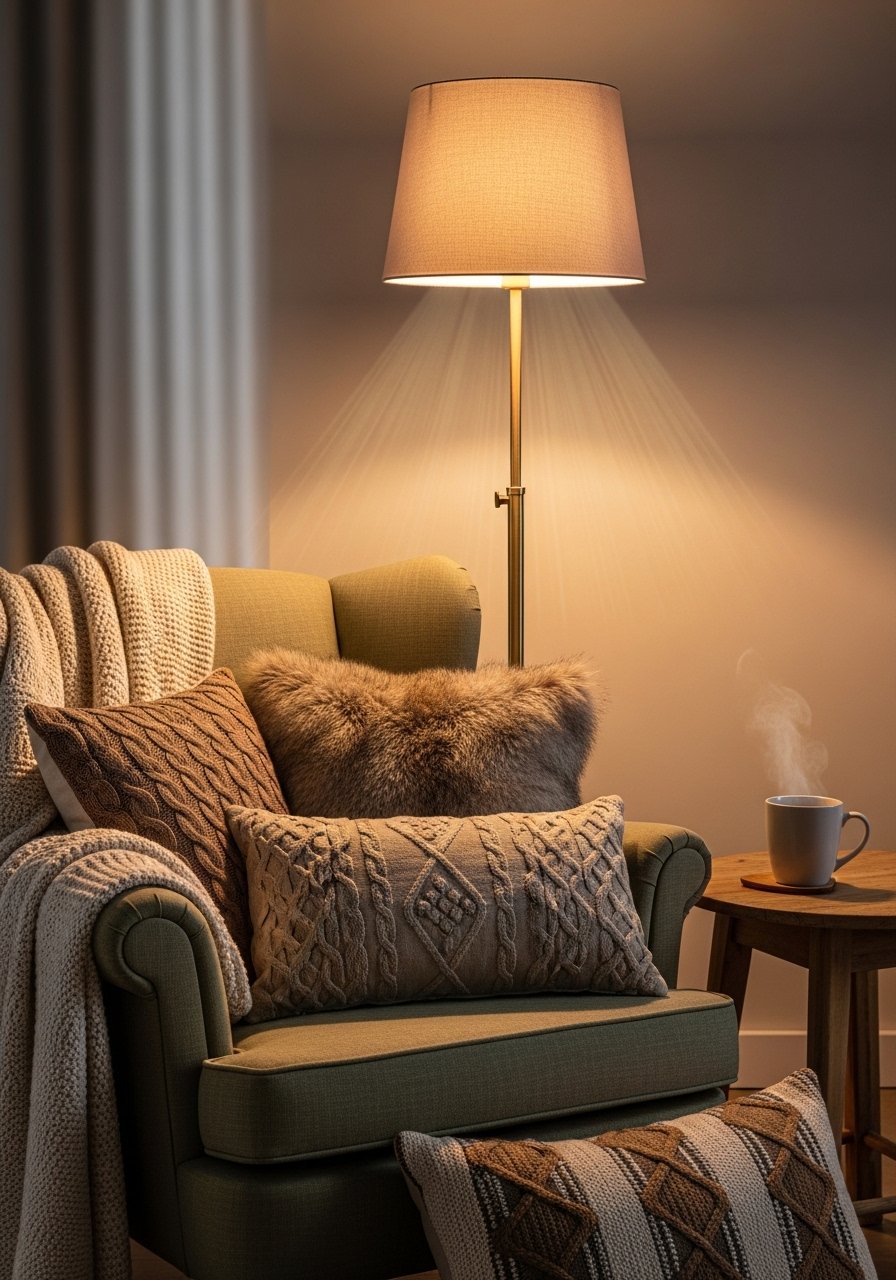
A good lamp makes a chair usable at night. I found a thrifted floor lamp and replaced the shade with a linen one to soften light. For a comfortable reading nook, choose a chair with a seat height around 18 inches and add a 20×14-inch lumbar pillow for back support. Budget for a lamp and shade swap is usually $40 to $90. People get the lamp height wrong. The bottom of the shade should sit close to eye level when you are seated. Pair this nook with the throw trick from earlier and a small linen lamp shade to keep the light warm and cozy.
Window Seat with Floor-to-Ceiling Curtains to Add Height

Most people hang curtains right at the window frame. That is why their rooms look shorter than they are. Hang panels 4-6 inches above the frame and choose panels 10-12 inches wider than the window so they puddle slightly. For a window seat cushion size, order foam 2 inches smaller than the seat depth and cover it with a removable slip in a neutral linen for easy washing. Budget for curtains can be $30 to $100 per panel depending on fabric. A common mistake is buying panels that are too narrow. Instead, use two wider panels to create fullness. Try 96-inch linen curtain panels for standard ceilings.
Curated Bookshelf with Found Objects and a Single Tall Plant

I used to cluster five small succulents. One single 6-foot fiddle leaf fig gives the shelf area vertical energy and looks intentional. Arrange books in blocks, alternating vertical stacks with horizontal ones to create bookends for objects. A real-life detail I use is the rule of three for each shelf: three objects of different heights grouped together. Budget for a tall plant can be $80 to $150 for a good faux, cheaper if real. The mistake is making every shelf perfectly tidy. Leave one shelf slightly messy with a half-read book and a mug for authenticity. Consider a faux fiddle leaf fig 6ft if your light is low.
Mix Textured Wall Hangings and Thrifted Mirrors for Visual Depth
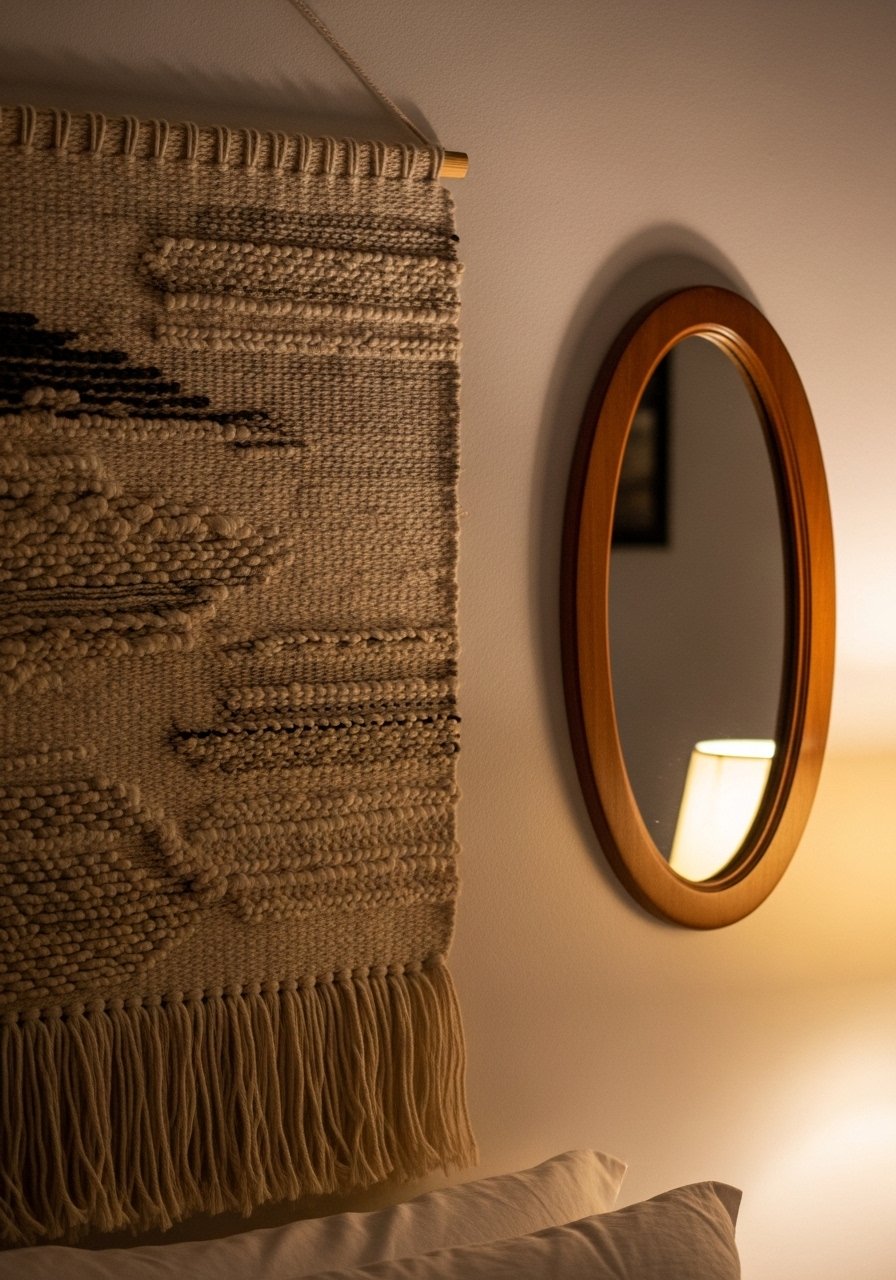
A wall with only frames can feel flat. Add a woven piece or two and offset them with a thrifted mirror to reflect light. I pick one woven hanging around 24×36 inches as a focal point and surround it with smaller mirrors or framed prints. Textures should contrast the wall paint, for example a wool hanging on plaster or drywall. Expect to spend $20 to $75 on thrifted textiles. A common error is scaling pieces too small for the wall. Measure first and aim for the hanging to fill roughly 40 to 60 percent of wall width above a bed or sofa. A 24×36 woven wall hanging gives you that tactile focal point.
Thrifted Kitchen Finds to Make a Small Space Feel Personal
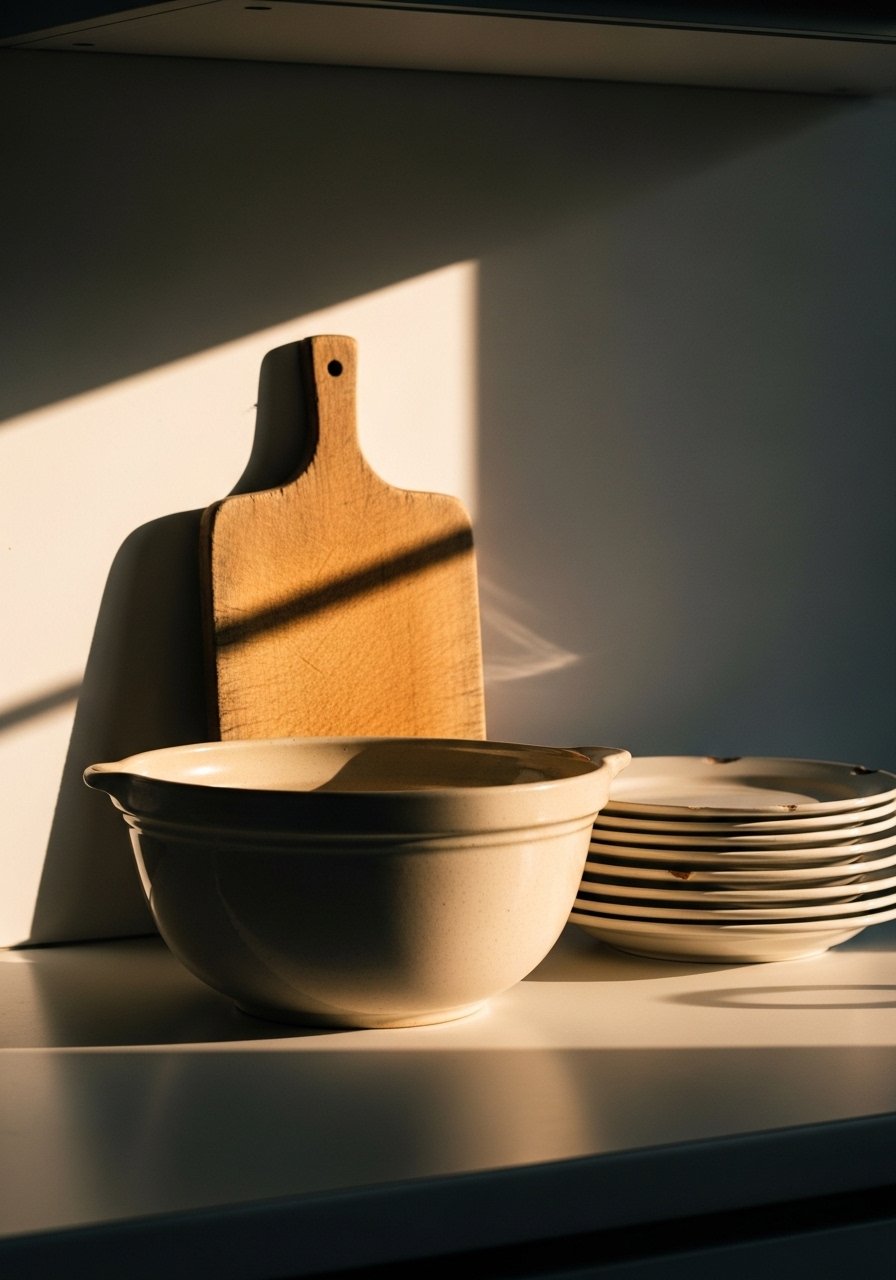
A friend texted me a photo of her bedroom asking why it felt cold. She had zero textiles. No throw, no layered pillows, nothing soft anywhere. Kitchens are the same. Swap out one generic bowl for a thrifted ceramic mixing bowl, display a set of vintage plates on a stand, and keep a small tea towel draped over the oven handle. These tiny touches cost under $30 but change how the space feels when you walk in. People forget to mix practicality and pretty. Keep useful items accessible and styled rather than hidden. I use a vintage-style ceramic mixing bowl to add color and texture.
Your Decor Shopping List
Textiles
- Honestly the best $40 I have spent. Chunky knit throw in cream (50×60 inches).
- 22-inch linen pillow covers, set of 2 in off-white, down-fill recommended.
Wall Decor
- Brass picture ledges (~$20) for swap-friendly gallery walls.
- 24×36 woven wall hanging in neutral tones.
Rugs & Floors
- 8×10 jute area rug as a budget base for layering.
Lighting
- Linen lamp shade 12×12 to soften thrifted lamps.
Plants
- Artificial fiddle leaf fig 6ft when light is limited.
Kitchen Finds
- Vintage ceramic mixing bowl for counter styling.
Budget Finds
- Brass decorative tray small ~ $18.
Splurge Option
- Faded Persian 5×8 rug for pattern when paired with a jute base.
Most items have similar finds at your local thrift store or HomeGoods if you prefer to touch before you buy.
Shopping Tips
White oak beats dark wood in 2026. Design feeds have shifted completely. These white oak floating shelves look current, not dated.
Grab velvet pillow covers for $12 each. Swap them every season and the whole room feels different.
Curtains should puddle or kiss the floor, never hang halfway up. 96-inch linen curtain panels are the right call for standard 9-foot ceilings.
Everyone buys five small succulents. One single 6-foot faux fiddle leaf fig has ten times the visual impact.
If a thrifted ceramic glaze looks too busy, balance it with a matte piece. Try a matte stoneware vase to calm the shelf.
Frequently Asked Questions
Q: How do I make thrifted pieces look intentional and not mismatched?
A: Pick a linking element like color, metal, or shape. I often repeat a cream tone across textiles and ceramics to tie things together. Keep scale in mind and use three items to form a visual group.
Q: Can I mix boho textiles with modern furniture without it looking messy?
A: Yes. Keep furniture lines simple and let textiles add the personality. Use one patterned textile per seating area and neutral solids for the rest. The pattern-to-solid ratio I use is 1:3 for balance.
Q: What size rug do I actually need for the layered rug look?
A: Go larger than you think. For a standard living room aim for an 8×10 base and a 5×8 top rug, leaving 12-18 inches of base visible as a frame.
Q: Should I buy real plants or faux for low-light rooms?
A: Both work. Real snake plants and pothos tolerate neglect. Use a realistic faux like a 6-foot faux fiddle leaf fig where height matters but light does not.
Q: How high should I hang curtains to make ceilings feel taller?
A: Hang panels 4-6 inches above the window frame and extend the rod 10-12 inches beyond each side so the window reads larger and the room feels taller.
Q: My bookshelf still looks staged. What small change makes it feel lived in?
A: Leave one shelf slightly untidy with a mug and a half-read book. Add a thrifted object like a ceramic bowl and a single tall plant nearby to introduce life and imperfect use.