

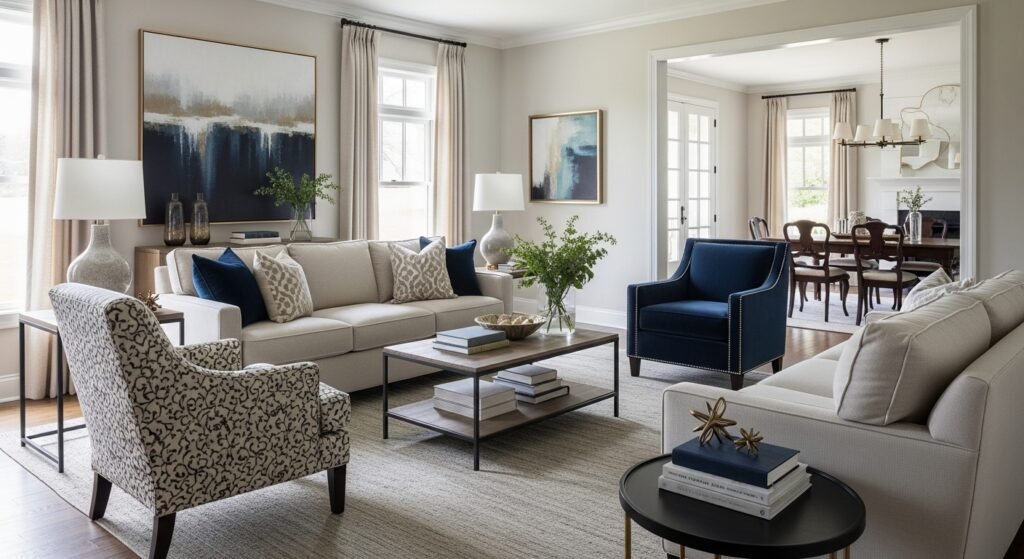
My living room had nice furniture and decent lighting but it still felt like a waiting room. Took me embarrassingly long to figure out it was missing texture. Every surface was smooth, every color was flat, and nothing invited you to actually sit down. After swapping a few textiles and moving one lamp, the room finally felt lived in.
These ideas lean toward transitional living room vibes that mix classic shapes with modern details. Most fixes are under $100 with a few splurges around $200. They work in living rooms, family rooms, and anywhere you want a more polished, pulled-together look.
Layered Neutrals with One Bold Accent Color

The moment I draped a chunky knit throw over the arm of my gray sofa, the whole room stopped looking flat. Layer three neutral textiles in different scales, for example a 22-inch down-filled linen pillow, a woven 18-inch pillow, and a chunky knit throw. Pick one bold accent color like navy or forest green and repeat it in two other small spots so it reads intentional, not random. For textiles, I like a cream chunky knit throw to toss over the sofa and a pair of 22-inch linen pillow covers. A common mistake is matching everything perfectly. That makes a room feel manufactured. Instead vary texture and scale. Try a ratio of 60 percent neutral, 30 percent mid-tones, 10 percent accent so the bold color reads like punctuation, not paint.
Mix Traditional and Modern Furniture for Transitional Balance
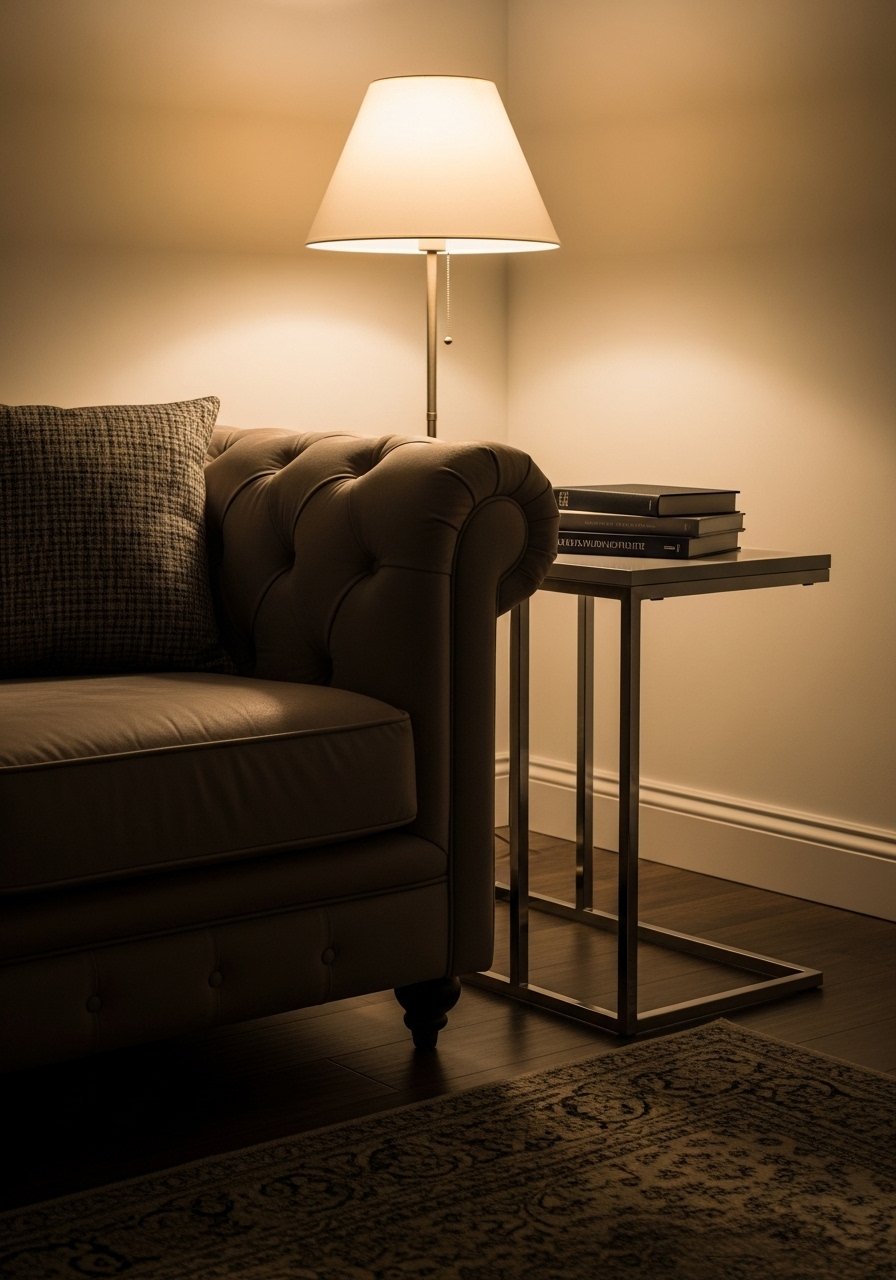
I swapped one mid-century coffee table for a more classic tufted sofa and the room finally made sense. The trick is to let one piece lead on scale and another on line. If your sofa is traditional, pair it with a modern metal-legged side table about 22 to 24 inches high so sight lines feel balanced. I like a low, round wood coffee table tray to group remotes and candles. Most people buy all furniture from one era and the room looks like a catalog. Mixing eras keeps the space transitional and lived in. Also watch scale across the room. If everything is the same height the room reads flat. Vary heights by at least 8 to 12 inches between seating and side tables.
Floor-to-Ceiling Curtains to Add Height in Small Rooms
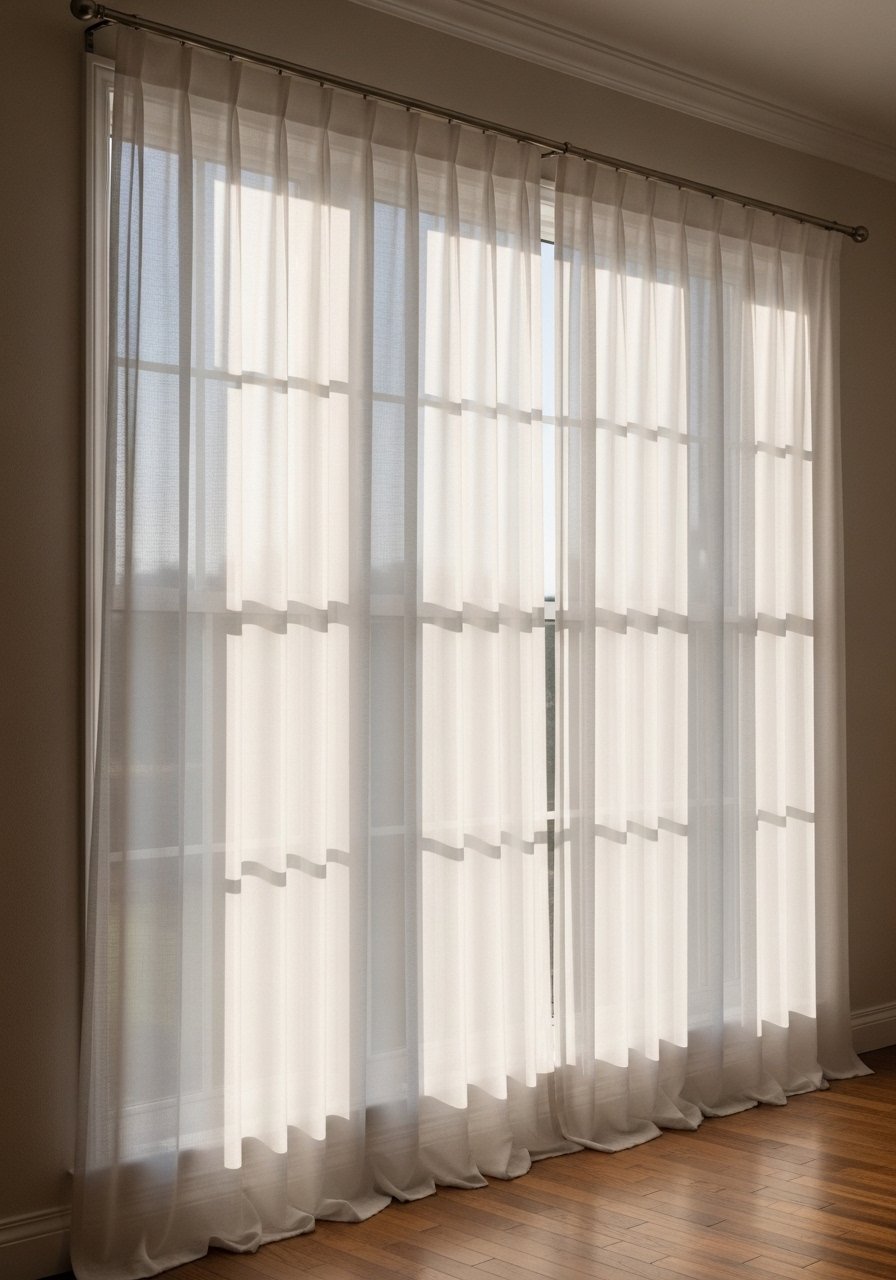
Most people hang curtains right at the window frame. That is why their rooms look shorter than they are. Move the rod up four to six inches above the frame and extend it 10 to 12 inches past each side so the window reads wider and taller. For 9-foot ceilings, 96-inch linen curtain panels are the right call and they cost under $50 a panel. A common mistake is buying the shortest panel because it is cheaper. If you can afford one splurge, choose heavyweight linen that falls properly. Pair this with the layered rug idea below so the curtains do not compete with the floor anchor.
Area Rug That Anchors the Seating Group
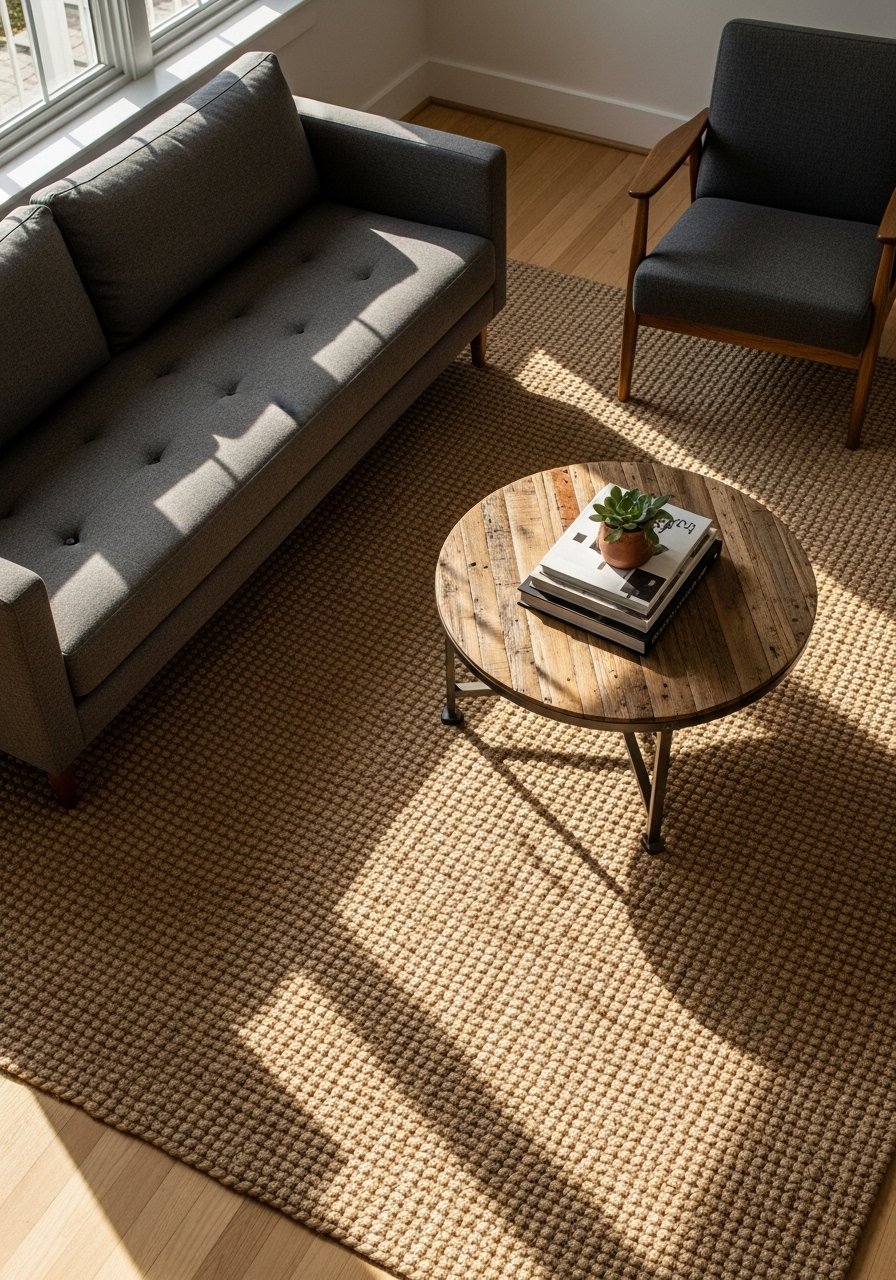
Bigger than you think. For a standard living room go 8×10 minimum and get all front furniture legs on the rug. I learned this after living with a too-small rug for months. The room felt chopped. A neutral 8×10 jute rug is durable and hides high-traffic wear. One mistake is centering the rug in the room instead of anchoring the seating. Also consider layered rugs, a jute under a patterned wool, to add depth without more color. If you rent and cannot glue down rugs, use non-slip pads and a slim rug tape along edges. That keeps everything in place without damage.
Statement Lighting to Update Old Fixtures
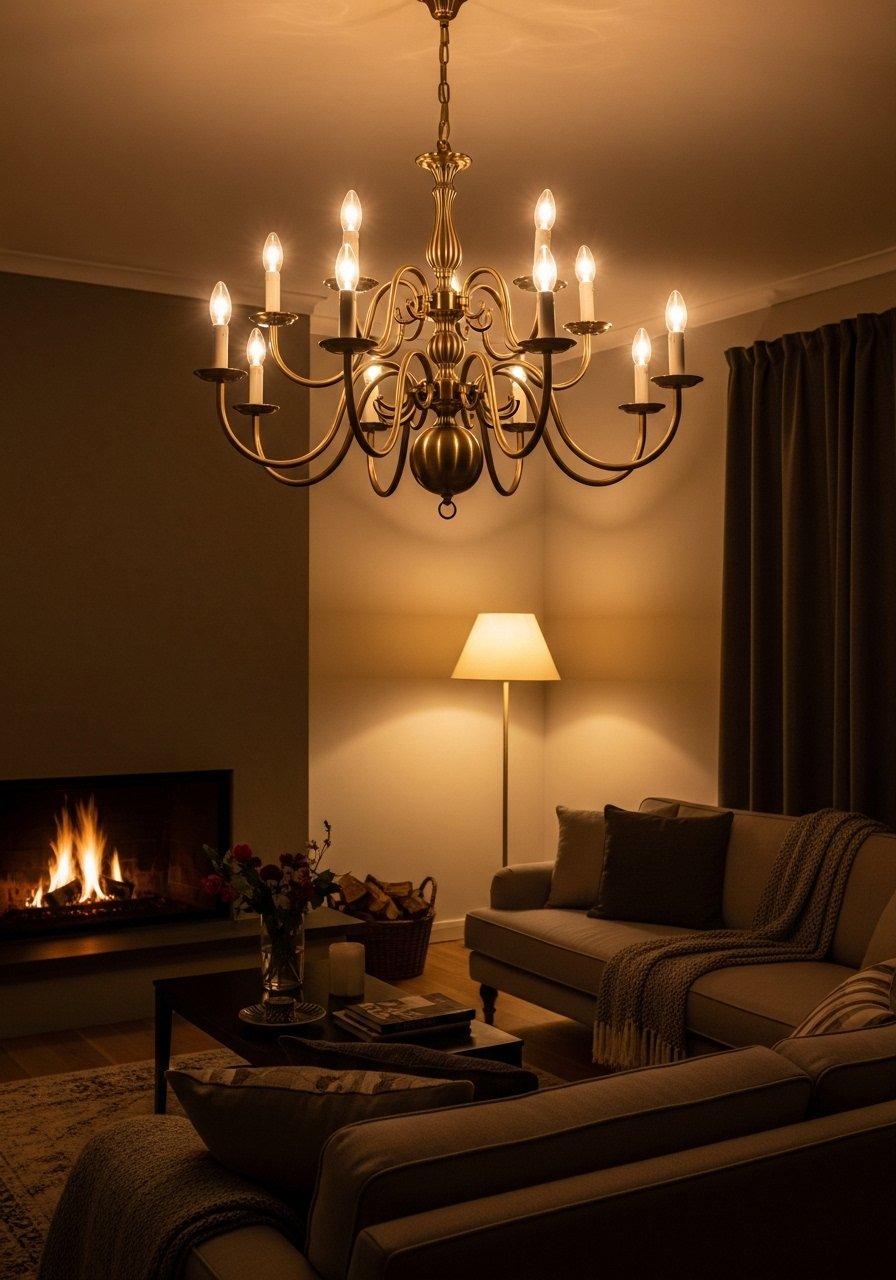
There is no budget item that changes a room’s personality faster than lighting. I replaced a dated flush mount with a small brass chandelier and it felt like a new space. Mix a sculptural overhead with a tall floor lamp about 60 to 65 inches high near reading chairs. A brass floor lamp adds warmth and a modern table lamp on a side table gives flexible light for evenings. People often only think about style and forget scale. Make sure any pendant hangs 28 to 34 inches above the coffee table. Swap dated chain finishes for mixed metals elsewhere in the room to create continuity with other hardware updates in idea 9.
Textured Throws and Pillows for Instant Warmth
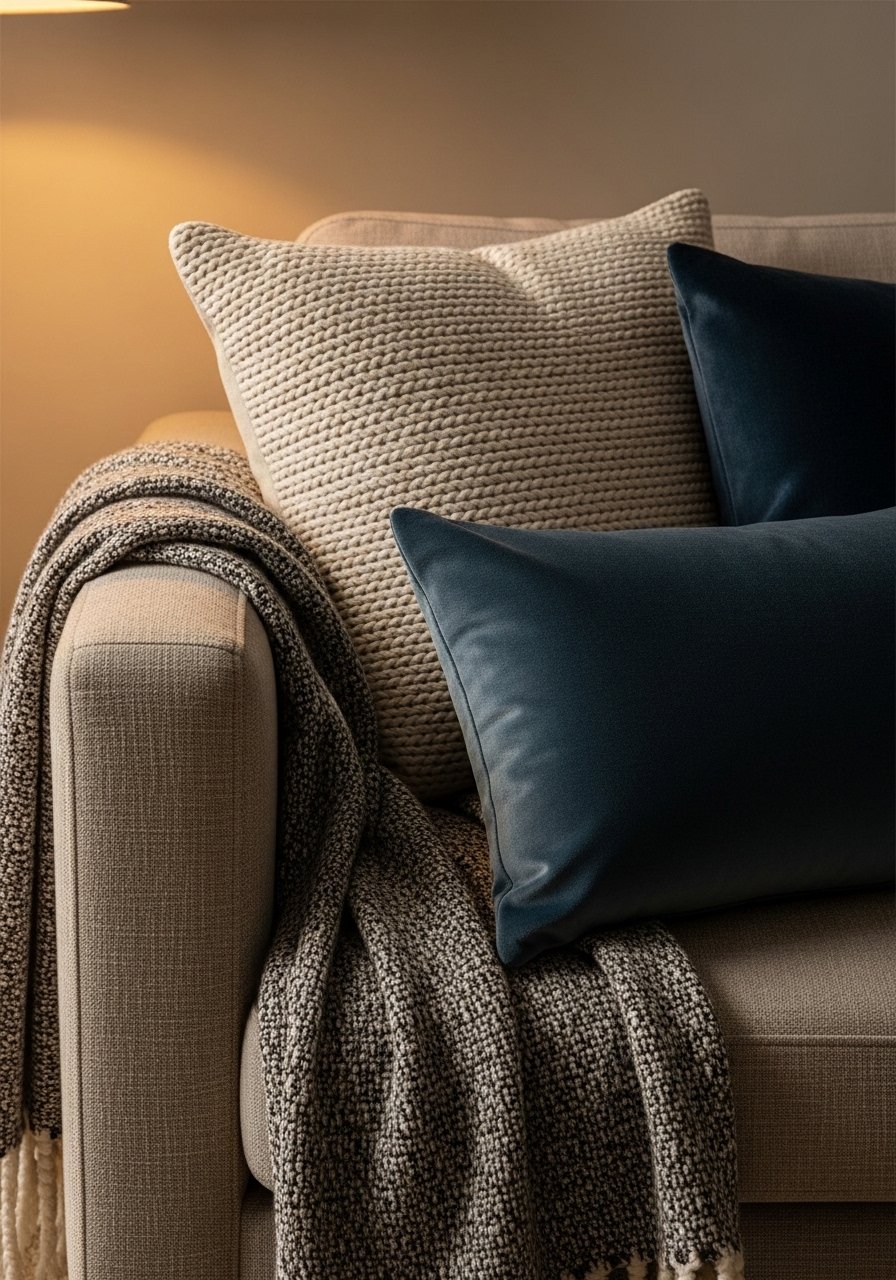
Spent $400 on a new coffee table. Room still looked off. Spent $35 on a throw and three candles. Suddenly everything clicked. Buy a mix of textures, not matching fabrics. Velvet, chunky knit, and a woven lumbar pillow work together. I use velvet pillow covers for color and a woven lumbar pillow for pattern. A mistake is buying exact color matches. Fabrics photograph differently than walls. Test a pillow on the sofa in the natural light you have. Store scanners nail it 85% better than guessing. That is why I bring a fabric sample if I plan to match tones to paint or curtains.
Art Grouping with Mixed Frames for a Polished Wall

I found these brass picture ledges and they solved my gallery wall commitment problem. Layer a large central piece, then group smaller frames around it using a mix of black and brass. Aim for a 2 to 3 inch spacing between frames and keep the center of the group at eye level roughly 57 inches from the floor. Use lightweight ledges so you can swap art without new holes. Brass picture ledges let you change prints seasonally. A common frustration is a gallery wall that feels cluttered because everything is the same size. Vary mat sizes and include one fabric or woven piece to tie back to your textiles.
Multipurpose Coffee Table Styling for Real Life

A friend texted me a photo of her living room asking why it felt cold. She had zero textiles. No throw, no layered pillows, nothing soft anywhere. Style your coffee table with a stack of two hardcover books, a tray for remotes, and one low decorative bowl. Keep one corner free for drinks. I use a round wood coffee table tray and a woven storage basket under the table for throws and toys. The mistake is overstyling. Make sure at least one functional item lives there. If you have kids or pets pick a stain-resistant woven basket and a low, durable lamp with a metal base.
Swap Hardware and Small Details for a Big Refresh
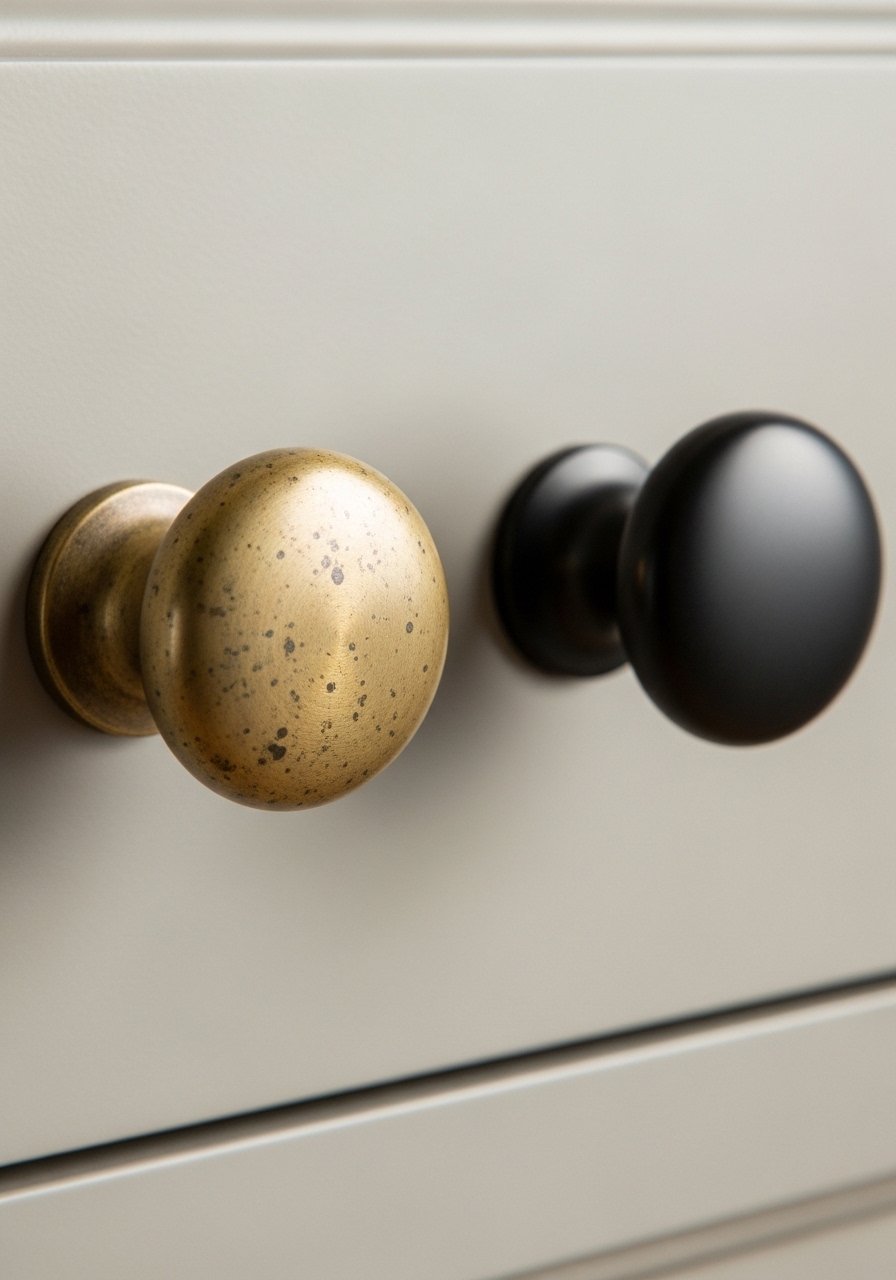
One weekend I swapped every drawer pull and the room looked refreshed without a single splurge. Replace dated brass or cheap chrome with mixed metals and tend to high-touch pieces first. Use knobs about 1.125 to 1.5 inches in diameter on drawers and 3-inch pulls on doors so the scale feels right. Brushed brass cabinet knobs update the look and are an easy DIY. A common mistake is changing hardware but keeping a finish that clashes with lighting. Coordinate the new hardware with at least one lighting finish in the space. For renters choose screws that fit existing holes or use filler kits to avoid extra work.
Your Decor Shopping List
Textiles
- Honestly the best $40 I have spent. Chunky knit throw in cream (~$35-55). Drape over the sofa arm for instant warmth
- 22-inch down-filled linen pillow covers, set of 2 in light gray and oatmeal
- Velvet pillow covers for accent color swaps
Wall Decor
- Found these while looking for something else. Brass picture ledges (~$18-25) let you swap art without new nail holes
- Gallery frames mixed metal set for instant variety
Lighting
- Brass floor lamp, 65-inch for reading nooks
- Small brass chandelier for low to mid ceilings
Rugs and Storage
- 8×10 jute area rug for high traffic rooms
- Woven storage basket medium for blankets and toys
Hardware and Small Details
- Brushed brass cabinet knobs, pack of 10 for an easy swap
Notes: Many of these have similar options at Target or HomeGoods if you want to see them in person. For renters, buy non-damaging hanging strips for lightweight art and use poster board paint samples for testing.
Shopping Tips
White oak beats dark wood in 2026. Design feeds have shifted completely. White oak floating shelves look current, not dated.
Grab velvet pillow covers for $12 each. Swap them every 3 months and the whole room feels different.
Curtains should puddle or kiss the floor, never hang halfway up. 96-inch linen panels are right for standard 9-foot ceilings.
If you have kids or pets, get a washable rug pad. Non-slip rug pads keep layers in place and reduce trips.
Everyone buys five small succulents. One single 6-foot fiddle leaf fig has ten times the visual impact.
Frequently Asked Questions
Q: What size area rug do I actually need?
A: Bigger than you think. For a standard living room go 8×10 minimum and have all front furniture legs sit on the rug. If you want a cheaper natural fiber, 8×10 jute rugs are a good starting point.
Q: Can I mix boho textiles with modern furniture without it looking messy?
A: Yes. Keep color limited and vary texture and scale. Use one grounding neutral and repeat a single accent color in three spots. A velvet pillow, a woven lumbar, and a knit throw balance well.
Q: My paint sample looked totally different at home. What did I miss?
A: Test in your lighting for 48 hours. Most folks repaint once because they skip the light test. Paint a 2×2 foot board and prop it in the room to see morning and evening shifts. Bring the fabric or sample to the store and use a scanner if you want closer accuracy.
Q: Should I match metals or mix them?
A: Mix them. It looks more intentional. Coordinate finishes so one metal appears at least twice in the room, such as lighting and hardware. Try a small mixed set of frames first to see the effect.
Q: I rent and cannot repaint for testing. Any renter-friendly hacks?
A: Make large 2×3 foot poster board sample panels and hang them with removable strips. You can also place textiles and pillows against the wall for a night to see undertones. For color testing at scale, use a fabric sample and a store scanner when possible.
Q: Are store color scanners worth it?
A: Store scanners nail it 85% better than guessing. They are not perfect but they beat eyeballing, especially for tricky undertones. If the color matters, bring a physical swatch and test a board in your room before buying gallons.