

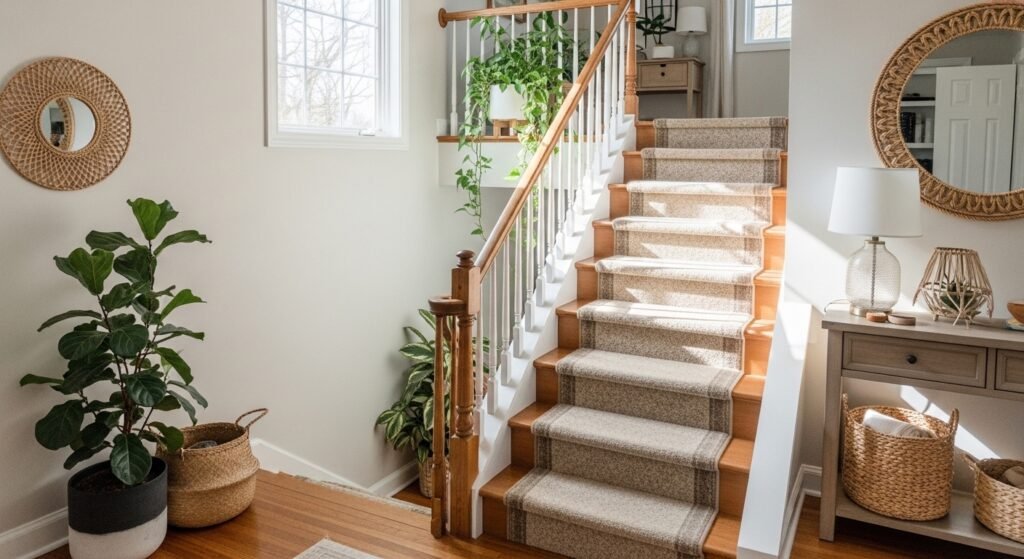
My living room had nice furniture and decent lighting but it still felt like a waiting room. Took me embarrassingly long to figure out it was missing texture. Every surface was smooth, every color was flat, and nothing invited you to actually sit down. That same lesson hit me with stairs. Once I painted just the risers and added a runner, the whole upstairs and downstairs felt connected.
These ideas lean warm and approachable, a mix of modern and vintage touches. Most projects are under $150, with a handful around $200 if you add lighting. Great for entryways, narrow stairwells, and open-plan homes that need a glue piece between floors.
Warm Rosy Risers for Small Entrances
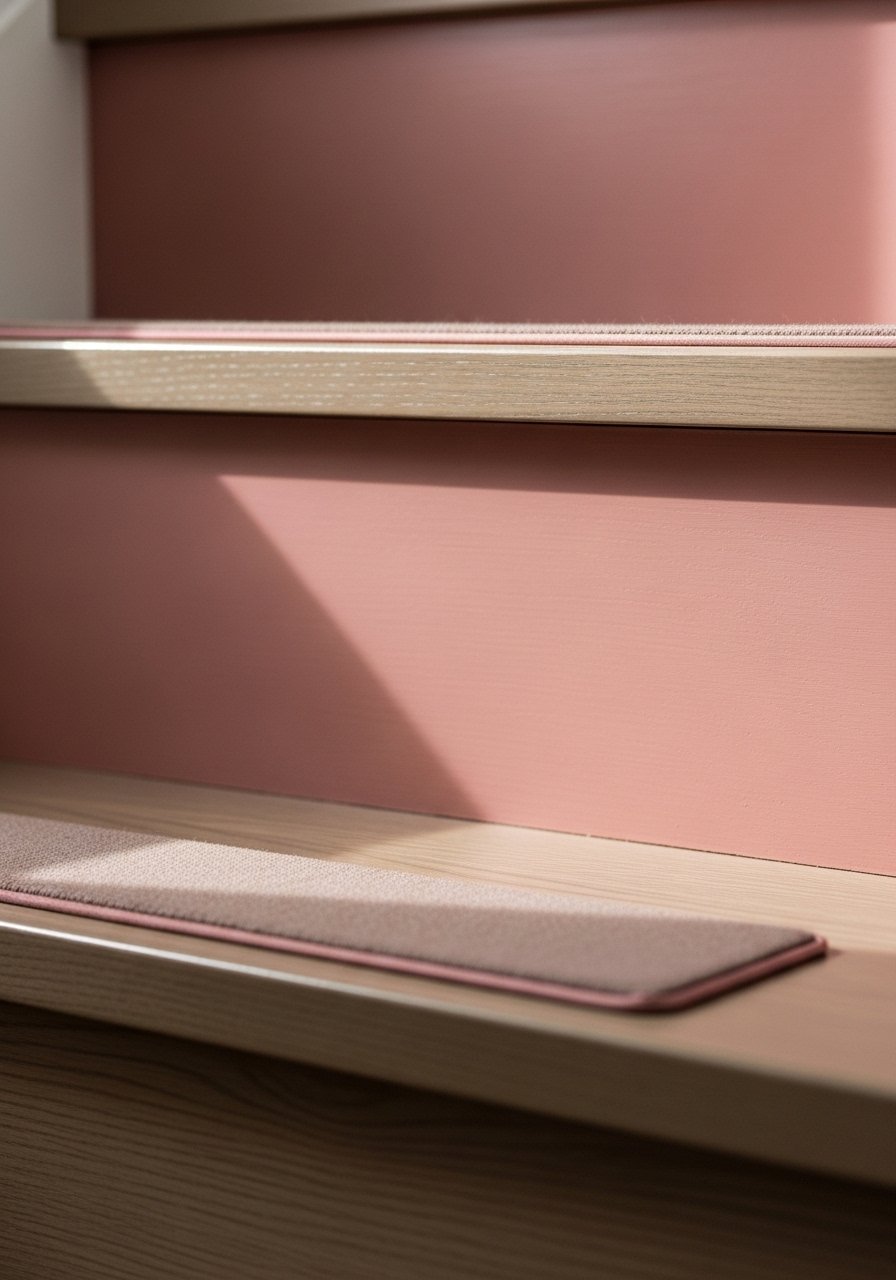
Painted risers in a pinkish-warm like Rosy Apple make tiny entries feel intentional instead of an afterthought. What makes it work is contrast without drama, so I left the treads natural and used a semi-gloss on the risers so they wipe clean. Budget ran about $40 for a quart of paint and a $35 runner. A common mistake is painting everything the same color, which flattens the steps. Try the rule many pros use, 80/20 color ratio, where 80 percent stays neutral and 20 percent is your pop. I used Benjamin Moore Rosy Apple sample and tested it at the top and bottom of the stairwell, because light shifts can make rosy tones read peach from above and dusty pink from below.
Dark Treads, Light Risers for Open Staircases
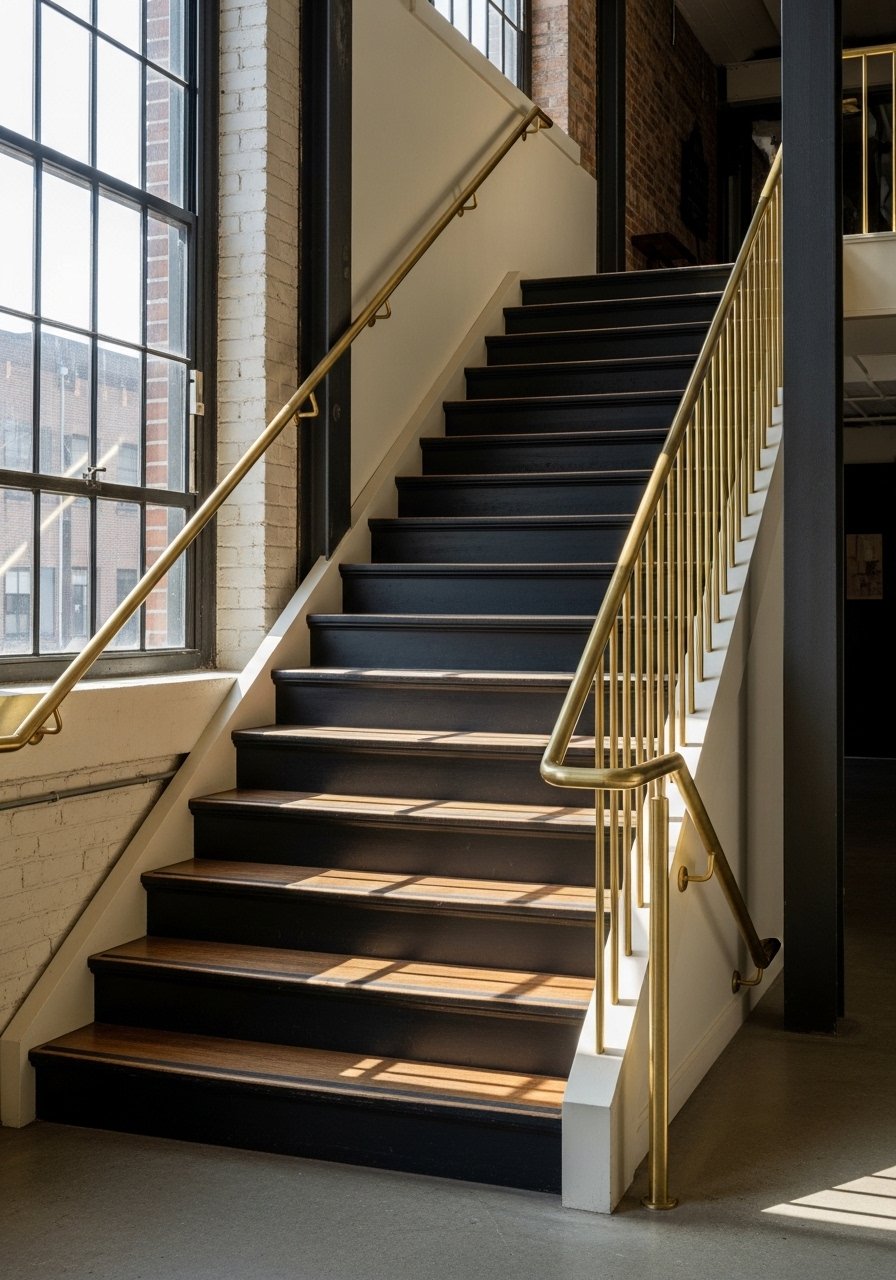
Switching to dark treads and light risers gives an industrial stair a softer edge. It adds personality while keeping the high-traffic surface practical. I spent roughly $80 on stain and finish for the treads and $30 on eggshell paint for the risers. People often pick a very dark paint and then regret how small it feels. Keep the risers at least two shades lighter than the treads to maintain depth. Use a wipeable semi-gloss on risers and a matte seal on treads to hide scuffs. For a renter-friendly nod, try a dark peel-and-stick tread cover instead of staining. I used no-slip stair tread tape to protect the finish during the first busy month.
Bold Emerald Risers for Long Hall Stairways
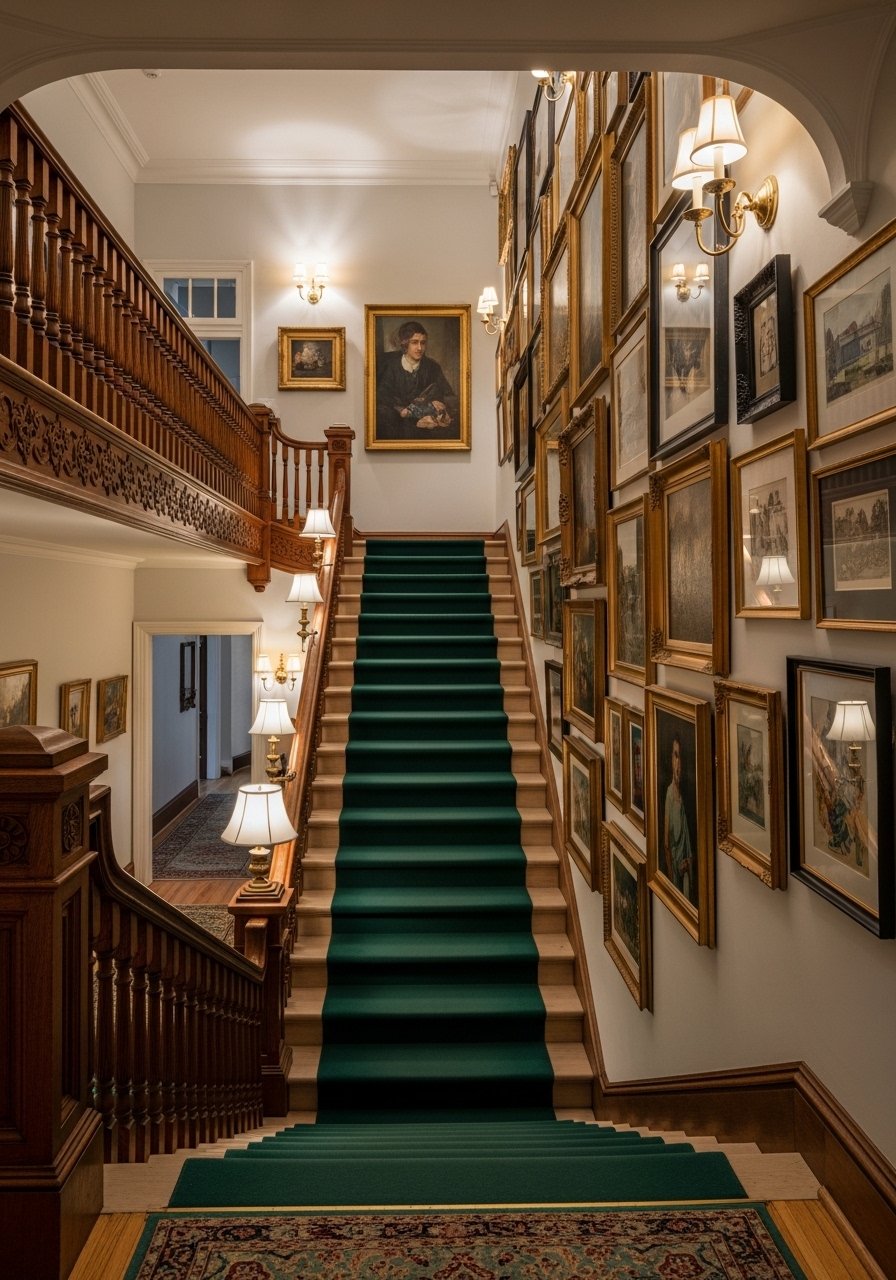
Emerald risers are drama without shouting. They anchor a long hallway and tie into green accents on the landing. Budget friendly if you work off a sample or a pint, about $25 to $60. A mistake is using a gloss that shows every fingerprint. I picked a matte emerald and sealed a high-wear coat on the treads only. Over half go for riser-tread contrast instead of all one color, and this is why. One detail people skip is testing the color at top and bottom. Emerald can read blue from above if your ceiling light is cool, so always sample vertically on two risers. For a quick swap, try green peel-and-stick riser decals if you rent.
Warm Wood-Stain Treads with Painted Balusters

Keeping treads stained warm oak and painting the balusters a soft cream gives a classic look that feels updated. It costs about $60 for stain and a small can of paint, and it suits traditional entryways or a farmhouse hallway. The trick is to keep the painted height confined to the upper two-thirds of the baluster. People often paint the whole thing and lose the vertical line. In my house I kept the bottom 3 inches stained, which hides the scuff zone. I sealed the treads with a clear satin topcoat and used wood stain in warm oak tone for a long-lasting finish.
Painterly Stripe Risers for Eclectic Homes
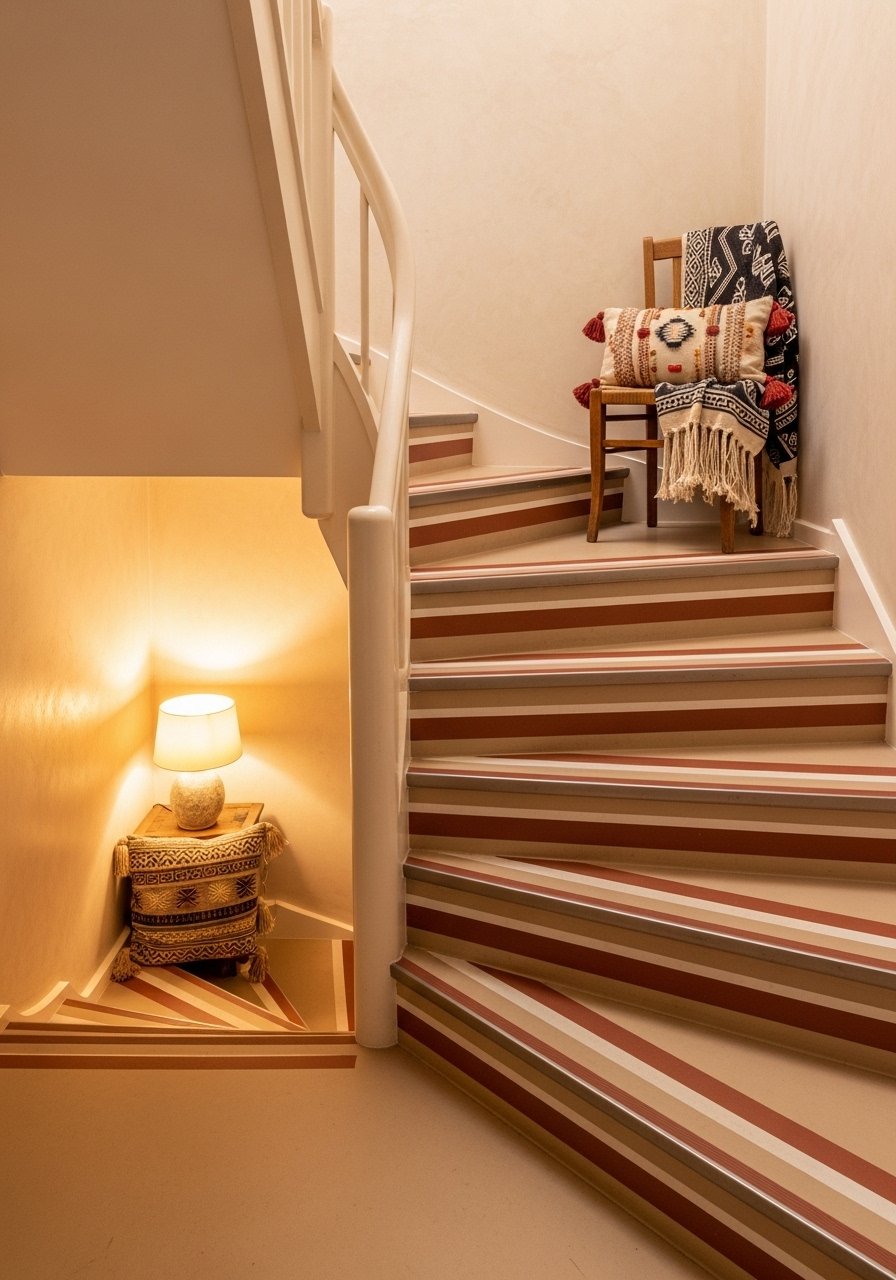
Stripes on risers are playful and pack serious design without changing structure. I mixed a terracotta with a warm beige and kept every stripe 3 inches tall for consistent rhythm down 12 steps. People mess this up by eyeballing the spacing. A tape measure and a level are your best friends. Budget was about $45 for two colors and patience. Use semi-gloss for easy cleaning and choose darker shades for lower risers where shoes hit most. For renters try peel-and-stick stripe films rather than paint. I used terracotta paint sample pot so I could test how it looked in both morning and evening light.
Runner Layering for Narrow, Dim Stairs
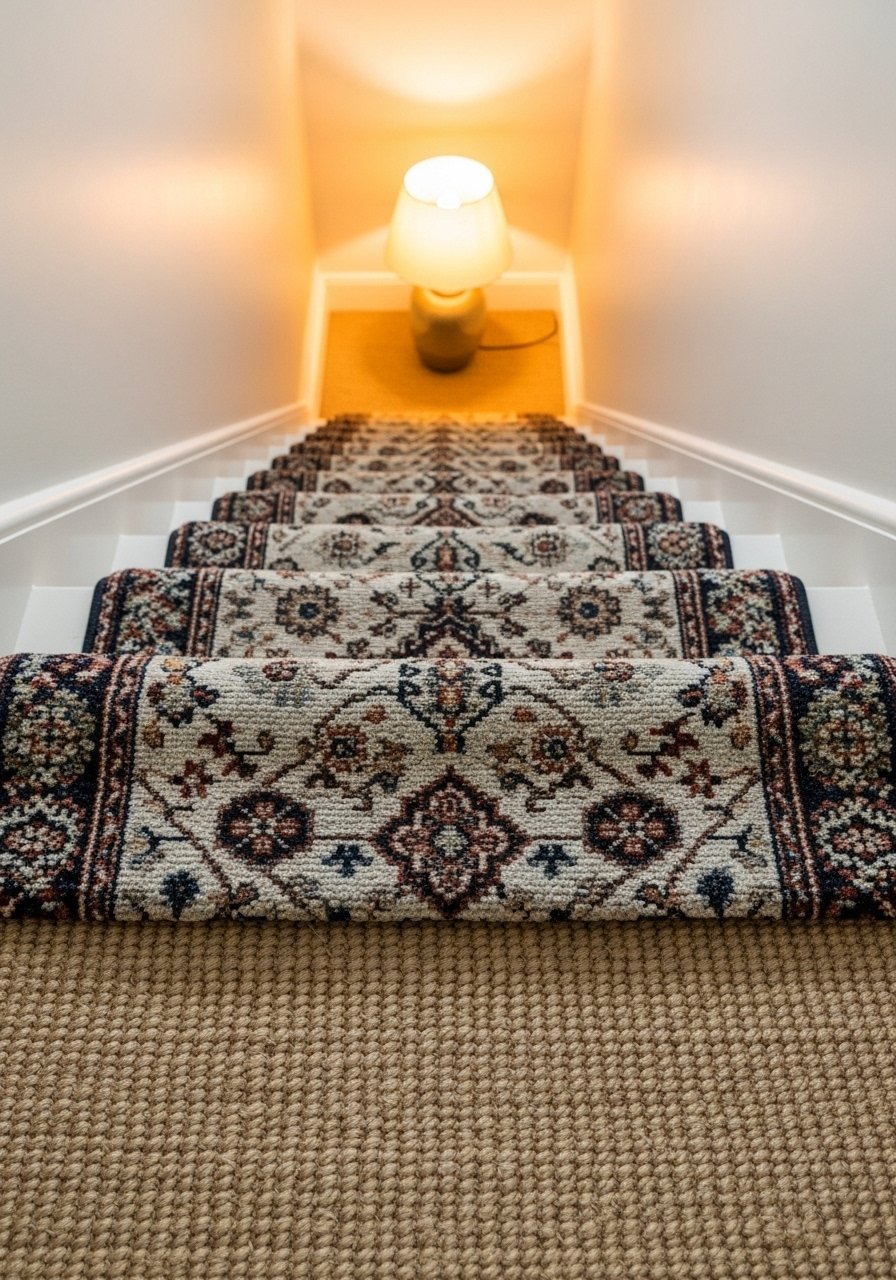
Most narrow stairs feel cave-like until you add a runner and a layer on top. I used a base jute runner for texture and a narrower patterned wool runner for color. The base runner protects the treads and the patterned one hides dirt. People pick runners that are too thin. Aim for at least a 2-inch reveal of the tread on each side so you still see the stairs. Total cost was about $90 and the layered effect stops the stairwell from feeling cold. Good lighting makes stairwells feel way bigger right away, so pair this with a sconce or LED strip under the handrail. I ordered a wool runner 24-inch wide for the top layer.
Painted Handrail Pop for Modern Minimalist Entries

Painting the handrail in a warm metallic tone adds polish without a full renovation. It cost me under $30 in paint and a small brush. The handrail becomes the thread that ties the stair palette to both floors. Avoid painting over loose fittings. Sand, prime, and only paint where the rail is stable. A mistake is matching the rail to the wall color. Instead, pick a complementary tone two shades darker. For quick shopping I used metallic brush-on paint in warm bronze.
Gallery Wall in a Warm Palette for Landing Spaces

A landing gallery makes the stair a destination. I chose 60/40 warm painted pieces to wood frames and plotted out the layout on kraft paper first. People either cram too many small frames or hang them at random heights. Use a 3-inch vertical spacing and keep the center of the grouping at eye level from the landing. It cost around $120 including frames. Pairing this idea with the rosy risers from earlier ties the upstairs and downstairs colors together. Swap frames seasonally with brass picture ledges for easy updates.
Warm LED Riser Lighting for Safety and Mood
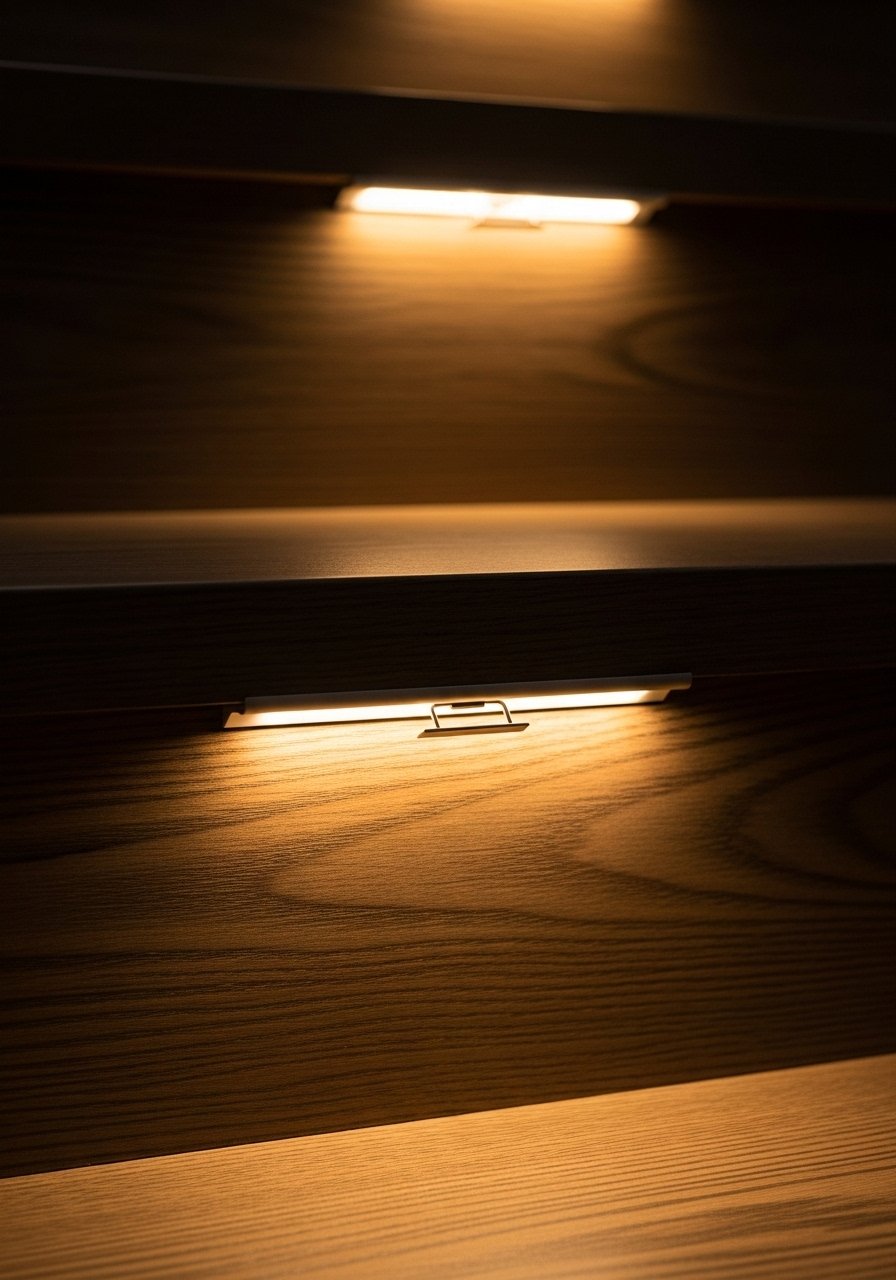
Adding LED strips under each tread changes the stair from dim to intentional. Installation took a weekend and about $120 for a quality kit. A common mistake is choosing cold white. Pick warm white to match warm-toned paint. Most people also forget to test the light position. If mounted too low it glares at eye level. I mounted mine 1 inch back from the nosing and the wash on the riser is even. Most folks end up repainting their stairs after just a few years, so removable LED is great if you plan to change paint later. I used warm white LED stair light kit.
Tread Runner with Invisible Rod for Vintage Vibes
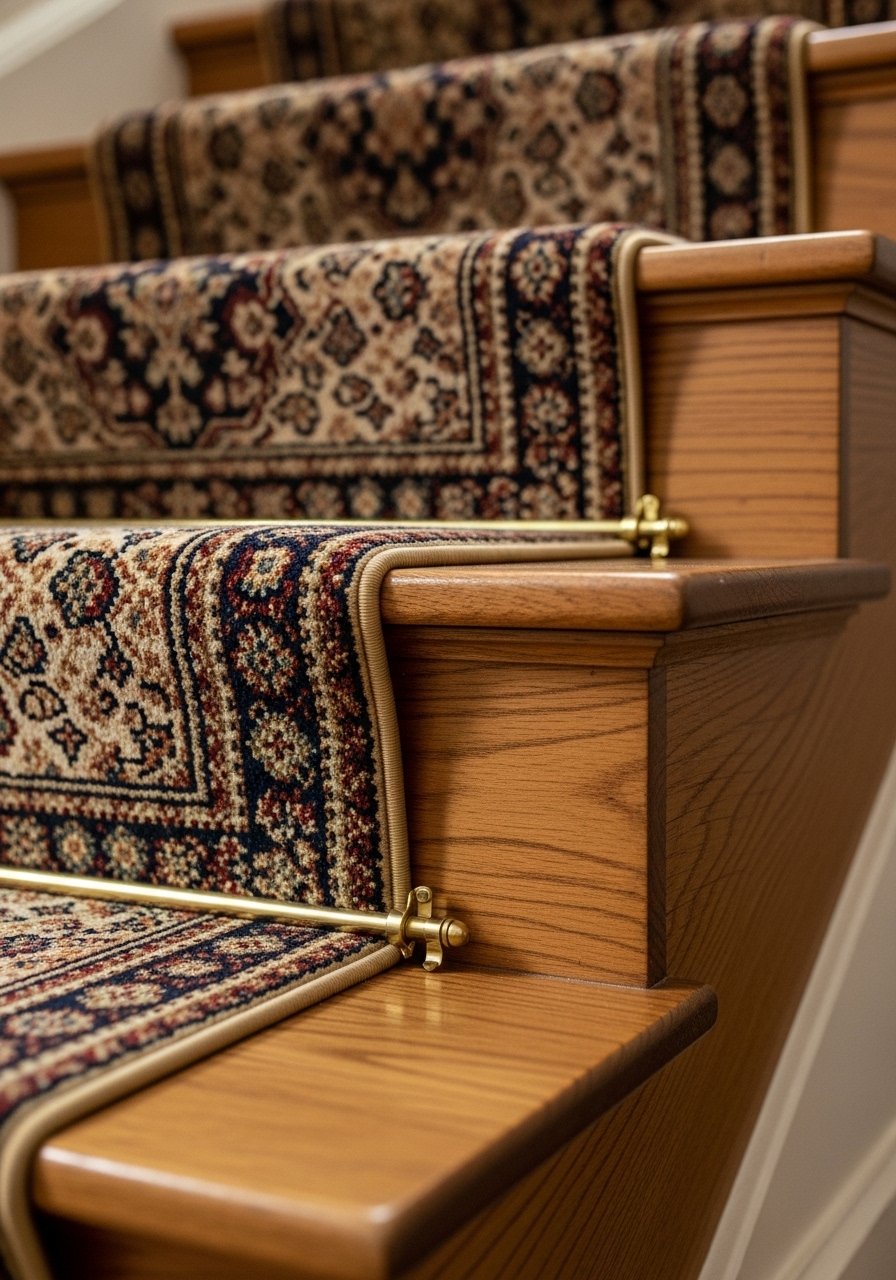
A slim brass rod makes a runner feel period without heavy hardware. I installed flush clips rather than bulky brackets to keep the profile sleek. People often install heavy rods that catch shoes. The right rod sits 1 inch above the tread and secures the runner firmly. Budget for a nice rod and clips was about $90. If you rent consider tension rods designed for fabric rather than drilling holes. I used brass runner clip set that matched other brass accents in my hallway.
Two-Tone Paint That Bridges Two Floors
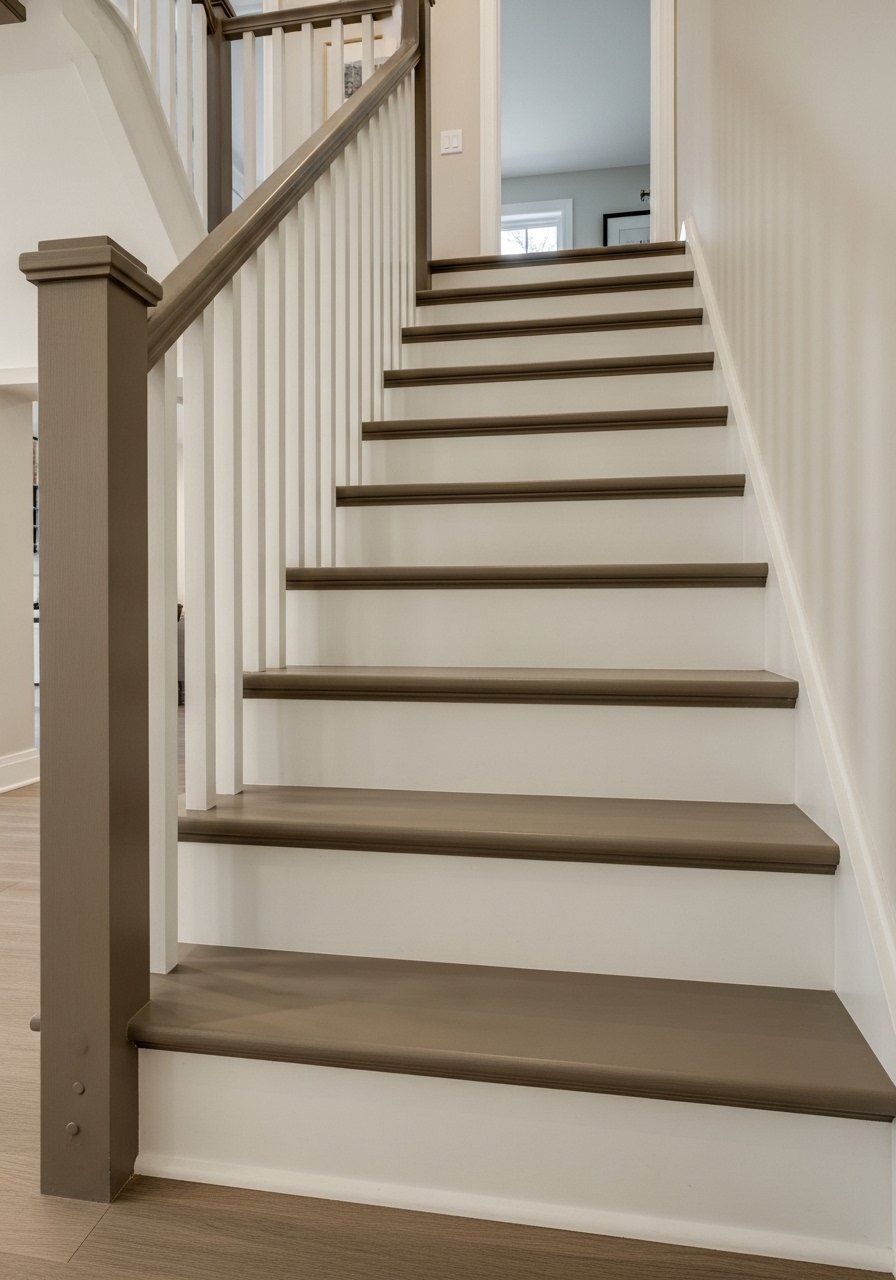
When two floors have different palettes, painting the stairs in a bridging two-tone will make them feel connected. I painted the lower risers to echo the living room rug and the upper risers to hint at the upstairs wallpaper. The visual trick is using one color as the dominant 70 percent and the other as 30 percent. Matching finishes matters. Use semi-gloss on lower risers where shoes touch and satin higher up. People worry about color jumping. Sample multiple risers across the vertical plane, because a stair often sees three light sources. I bought taupe paint sample pots to test transitions.
Pet-Proof Warm Treads for Busy Households
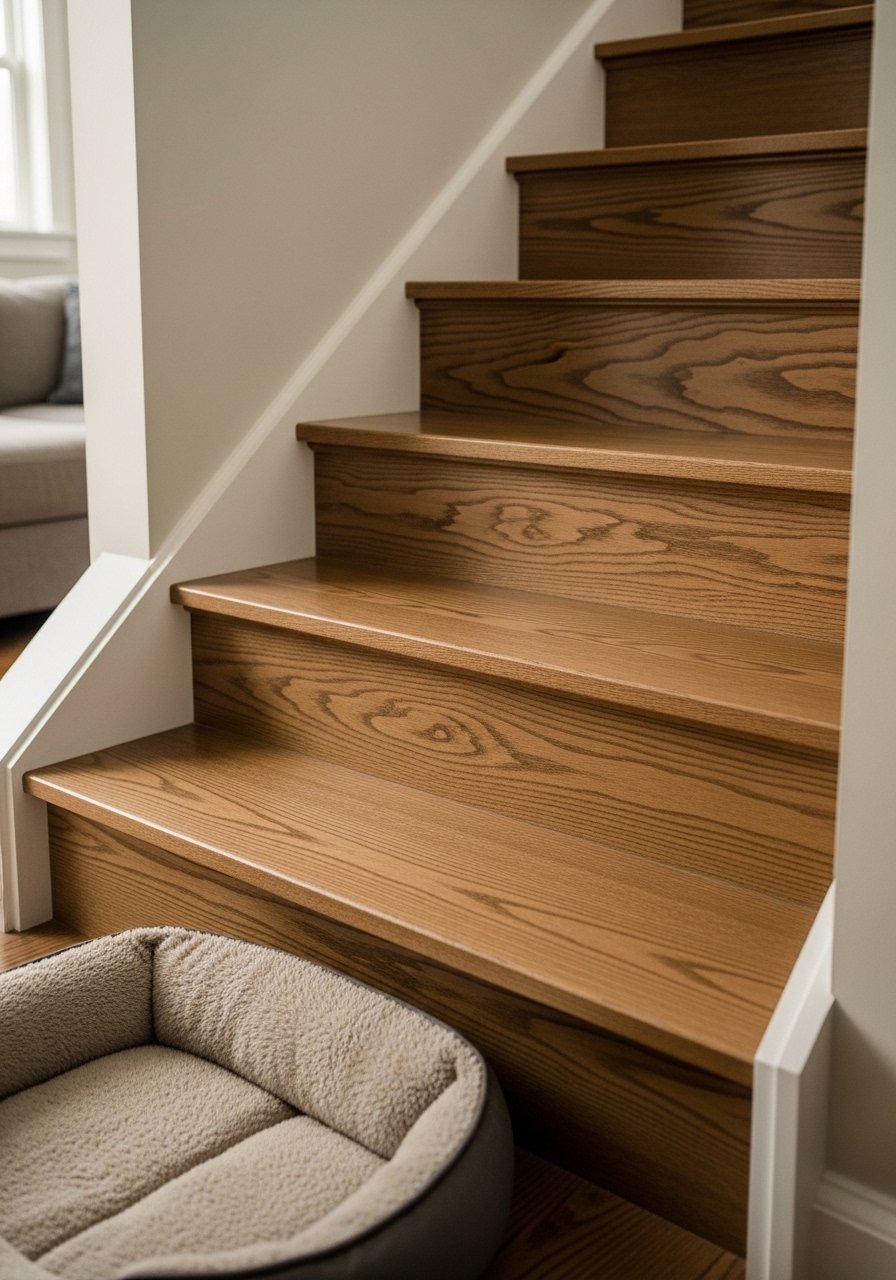
Pet households need finishes that hide wear. I chose a warm walnut stain with a satin clear coat that hides paw scuffs better than glossy finishes. People pick gloss because it looks new, then hate the scratches. A real detail I learned was to leave the first and last tread a touch darker, about 5 percent, since those see the most traffic. That small shift visually balances wear over time. For rental-friendly protection, use a thick runner with a rubber grip underneath. I bought clear satin topcoat 1-quart to seal the treads.
Minimalist Painted Stairs for Scandinavian Style
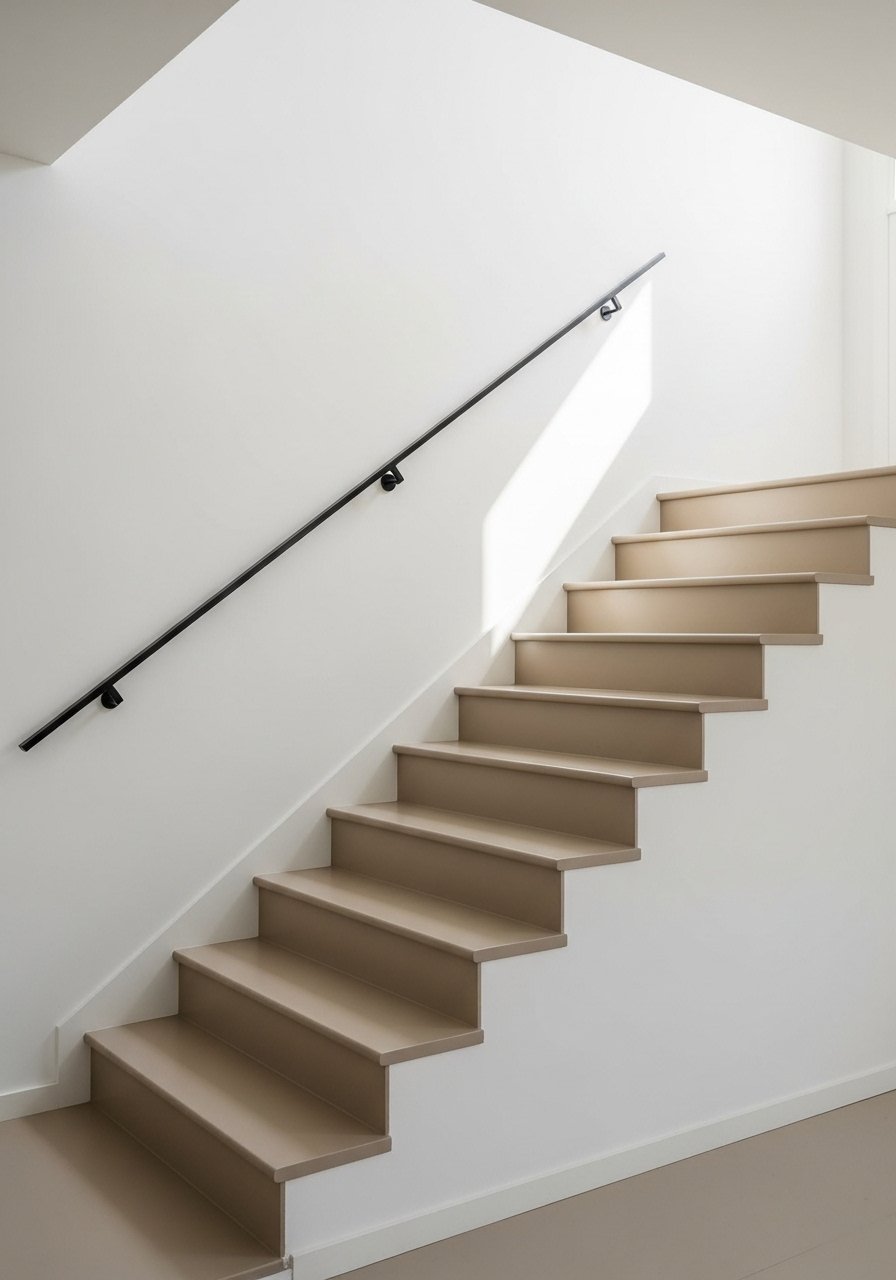
A single warm almond color across risers with white treads simplifies a stair and makes an entry look steady. Budget for paint and minor sanding was about $60. The design works in modern and Scandinavian rooms because it gives a calm line to the house. People sometimes paint the wrong finish and end up with slippery treads. Use matte on treads and semi-gloss on risers. One small tip I learned is to paint the first three risers a shade lighter to avoid the staircase looking top-heavy from the entry. Pair this with the gallery landing idea if you have wall space. I ordered almond paint sample pot before committing.
Peel-and-Stick Riser Decals for Renter-Friendly Warmth
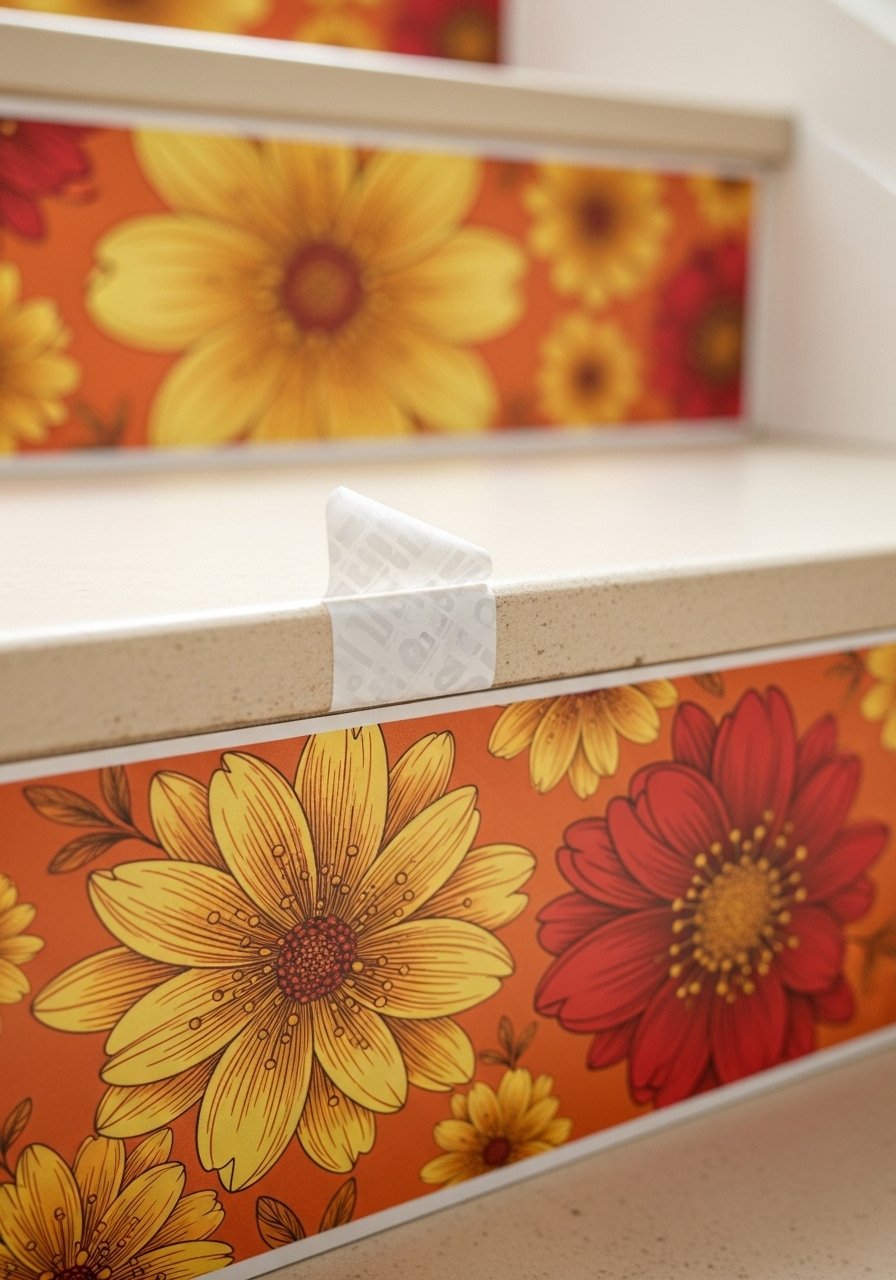
If you cannot paint, peel-and-stick riser decals are the easiest swap. They cost under $80 for a full set and install in an afternoon with a smoothing tool. The mistake is not priming or cleaning the riser first which causes bubbling. I wiped mine with denatured alcohol and allowed full drying time. Try darker tones on lower risers to mask thumb marks. A detail most guides skip is to cut the decal 1/8 inch smaller than the riser to account for expansion. For patterned decals I used warm floral riser decal set.
Mixed Material Steps for Rustic Warmth
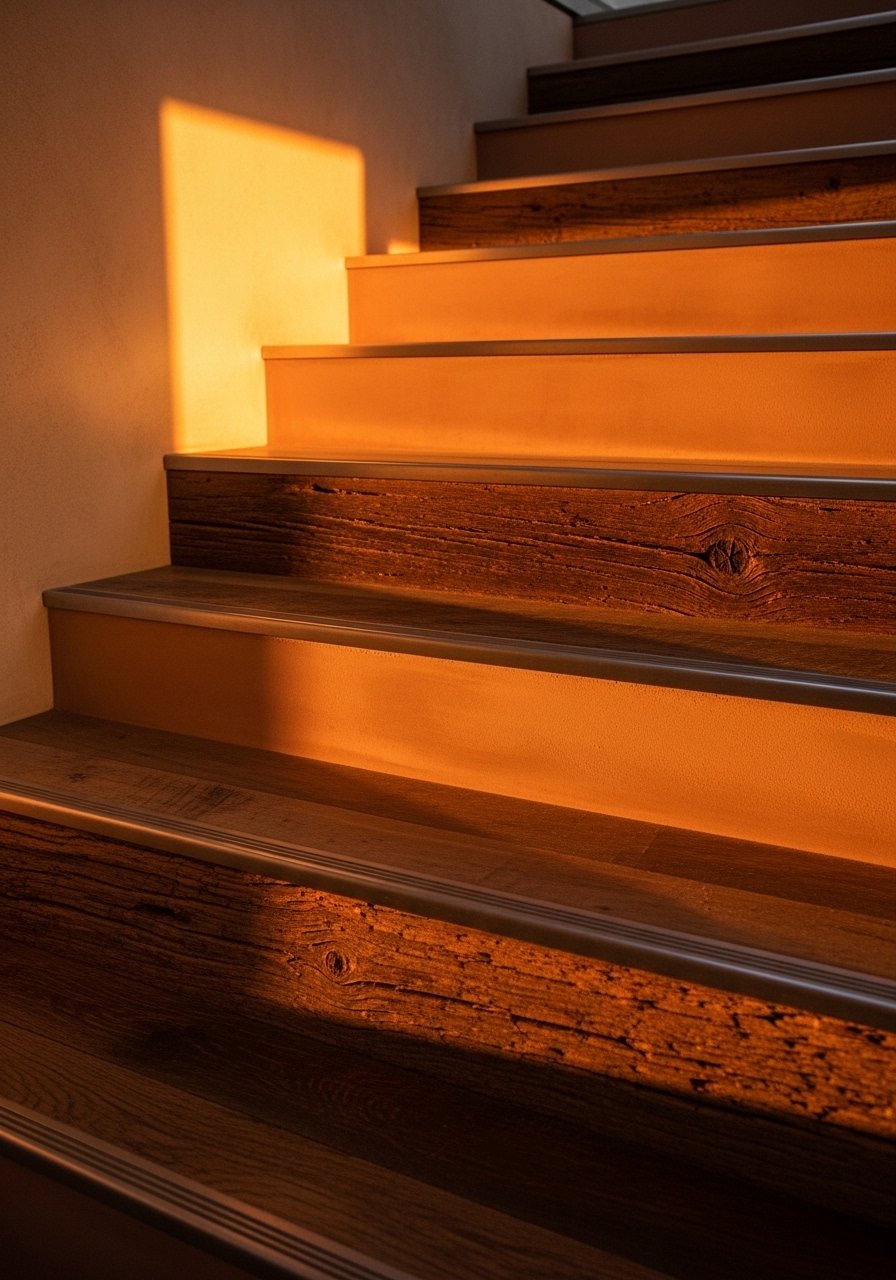
Combining reclaimed wood treads with painted clay risers gives a lived-in feeling that still reads intentional. My budget was higher because of reclaimed wood, about $250, but you can mimic the look with reclaimed-look laminate treads for under $100. Avoid mixing too many finishes. Stick to two materials and one accent metal. A detail to try is a 1-inch metal nosing that protects the wood edge. People forget to pre-drill into reclaimed wood which can split it, so use a countersink. I sourced reclaimed-look stair treads laminate for a budget version.
Your Decor Shopping List
- Textiles: Honestly the best $40 I have spent. Chunky knit throw in cream (~$35-55). Drape over a bench at the landing.
- Paint Samples: For testing at different stair heights. Paint sample pack set (~$10-25).
- Runners: For the runner layering idea, wool runner 24-inch wide (~$60-120).
- Lighting: For subtle riser glow, warm white LED stair light kit (~$80-150).
- Hardware: Found these while looking for something else. Brass runner clip set (~$20-40).
- Protection: For pets and traffic. Clear satin topcoat 1-quart (~$25-45).
- Peel Options: Rental-friendly choice. Warm floral riser decal set (~$50-80). Also similar at Target for quick swaps.
- Frames: For the gallery, brass picture ledges (~$18-25). Can find similar frames at HomeGoods.
Shopping Tips
White oak beats dark wood in 2026. Design feeds have shifted completely. These white oak floating shelves look current, not dated.
Grab these velvet pillow covers for $12 each. Swap them every 3 months and the whole landing feels different.
Curtains should puddle or kiss the floor, never hang halfway up. These 96-inch linen panels are right for standard 9-foot ceilings.
For pet households pick satin finishes over gloss to hide scratches. Clear satin topcoat 1-quart is durable and forgiving.
If you rent, start with peel-and-stick options for risers and runners. Peel-and-stick stair runner protector keeps your security deposit safe.
Frequently Asked Questions
Q: Can I paint just the risers if I have kids and dogs?
A: Yes, paint only the risers and leave treads natural or covered with a durable runner. Use semi-gloss for risers because it wipes clean, and a satin or matte topcoat on treads to hide paw scratches.
Q: How do I choose a warm tone that looks right from top and bottom?
A: Sample on two risers, one near the top and one near the bottom. Light can shift a color from rosy to peach or emerald to teal, so viewing both spots prevents surprises.
Q: What is the best finish to hide scuffs but stay washable?
A: Semi-gloss on vertical surfaces and satin on horizontal treads balances durability with scuff forgiveness. Test a small square and live with it for a week before committing.
Q: Any renter-friendly options that look real?
A: Peel-and-stick riser decals and runner protector strips are your friends. They install in an afternoon and remove cleanly if you prep the surface with alcohol first.
Q: How can I make a narrow, dark stairwell feel larger without repainting everything white?
A: Use a light paint on risers and add layered runners plus warm LED riser lighting. Good lighting makes stairwells feel way bigger right away, and a lighter vertical plane opens the space.
Q: Should I try a bold color on all the stairs or just risers?
A: Start with risers. A bold color on risers gives personality without overwhelming the space. Most folks end up repainting their stairs after just a few years, so risers are easier to change than full treads.